
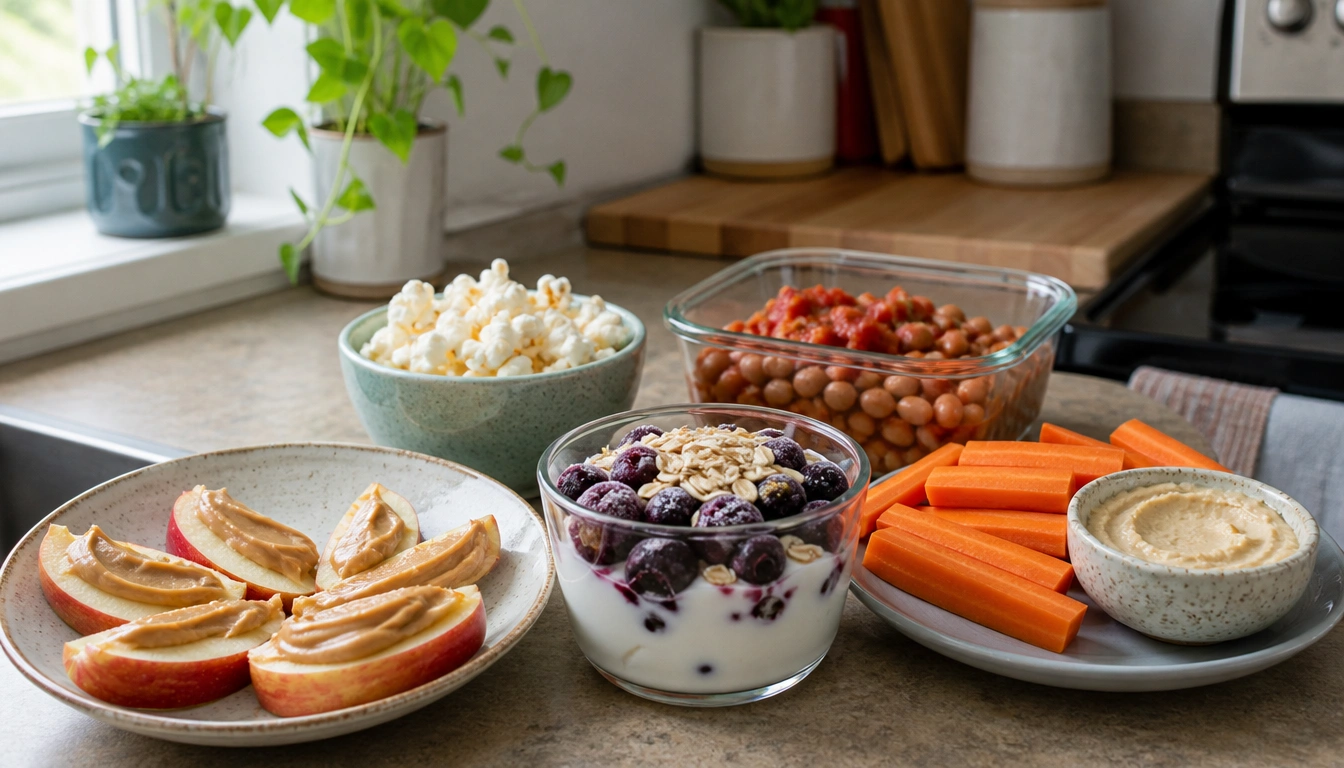
The cheapest, fastest healthy snacks are usually simple protein-plus-produce or protein-plus-fiber pairings made from everyday staples like peanut butter, yogurt, beans, fruit, vegetables, popcorn, tuna, and cheese. These snacks are often more filling than refined-carb-only choices because protein and fiber help steady appetite and energy. With a little planning, you can keep cost, prep time, and food waste low at the same time.
Key Takeaways
- Aim for a protein-and-fiber combo most of the time; it is usually more filling than crackers, chips, or sweets alone.
- Shelf-stable, frozen, and canned ingredients are often the best budget tools because they last longer and can be assembled in under two minutes.
- Buying in bulk, checking unit prices, and pre-portioning snacks can lower both per-serving cost and weekday decision fatigue.
- Most adults do well with snacks around 200 calories, while active people or those with longer gaps between meals may need 200 to 300 calories.
- Kids, teens, older adults, and people managing blood sugar may need different snack shapes, textures, or carb pairings.
- Food safety matters for grab-and-go snacks: perishable items need refrigeration or a cooler bag with an ice pack.
Why the protein-plus-produce formula works
The best healthy snack pattern for budget shoppers is simple: pair one protein food with one fruit, vegetable, or other fiber-rich food. This works because protein and fiber help slow digestion, which supports fullness and can reduce the quick rise-and-fall effect that often follows refined-carb-only snacks such as candy, pretzels, or sweet crackers. Public guidance from groups such as USDA MyPlate and dietetics organizations consistently favors snacks that include more than one food group.
That does not mean every snack has to be elaborate. A snack is doing its job if it helps you make it to the next meal without feeling shaky, overly hungry, or tempted to raid the vending machine. For many people, the combination of protein plus produce gives the best balance of convenience, cost, and staying power.
Refined-carb-only snacks are not “bad,” but they are often less satisfying on their own. If you start with something that has protein, fiber, or both, you usually get better value for your money and a more stable energy pattern through the afternoon.
Budget staples that earn their place
The most useful snack ingredients are the ones that show up in multiple meals and store well. Peanut butter is a classic because it is shelf-stable, inexpensive per serving, and easy to combine with fruit or whole-grain crackers. Plain yogurt in a larger tub is usually cheaper than single-serve cups and can be topped with oats or frozen fruit. Oats add fiber and can turn yogurt or fruit into a more filling snack with little effort.
Popcorn, especially plain air-popped or lightly seasoned popcorn, gives a lot of volume for the cost. Canned beans, canned tuna, and canned salmon are useful when you want a more savory snack with protein. Frozen fruit is one of the easiest ways to keep fruit on hand without worrying about spoilage, and frozen vegetables can do the same for savory snacking.
On the produce side, apples and carrots are practical because they store well and travel reasonably well. Cheese sticks and salsa are also helpful add-ons: cheese can boost protein, and salsa can make beans, crackers, or chopped vegetables more appealing without much extra time.
Fast snack combinations you can make in under two minutes
Assembly-style snacks are the sweet spot for busy households. They use ingredients you can pull straight from the pantry, fridge, or freezer without cooking, blending, or special equipment. That makes them especially useful on school days, workdays, and evenings when energy is low.
- Apple slices with peanut butter.
- Whole-grain crackers with peanut butter and a few apple slices.
- Plain yogurt topped with thawed frozen berries and oats.
- Cheese stick with an apple.
- Carrot sticks with hummus or bean dip.
- Canned beans mixed with salsa and eaten with crackers or vegetables.
- Popcorn with a cheese stick.
- Tuna on whole-grain crackers with sliced cucumber or carrots.
- Frozen fruit thawed into plain yogurt.
- Crackers with peanut butter and a side of baby carrots.
These snacks are not fancy, but they are practical. If you keep the ingredients visible and easy to reach, you are more likely to use them instead of buying a less filling convenience snack on the way home. For many households, that is where the real savings happen.
How to shop smarter without losing nutrition
Unit pricing matters more than the sticker price on the front of the package. A larger tub of yogurt, a bigger bag of oats, or a family-size container of peanut butter may cost more at checkout but often costs less per serving. The same is true for bulk packs of cheese sticks, crackers, or canned beans when you know your household will actually use them.
Frozen and canned foods are especially useful for budget snack planning because they reduce spoilage. Fresh berries can be expensive and fragile; frozen berries are often more affordable and last much longer. Canned beans and tuna are similarly low-waste choices. Store brands often make the biggest difference for plain ingredients such as oats, yogurt, crackers, peanut butter, canned fruit, and canned vegetables, where the quality gap is usually small compared with the price gap.
Fresh produce is still worthwhile, but it pays to be selective. Buy fresh foods that your household eats quickly, and lean more heavily on frozen or canned options for everything else. That approach keeps the snack plan flexible without pushing the grocery bill higher than necessary.
How to keep portions and calories in a useful range
For many adults, snacks around 200 calories are a practical target because they can bridge the gap between meals without turning into an unplanned second lunch. If someone is very active, has a long stretch until the next meal, or tends to eat smaller meals overall, a 200- to 300-calorie snack can make sense. The goal is not to fear calories; it is to match the snack to the situation.
Portioning helps more than willpower does. Putting snacks into a bowl, plate, or container usually works better than eating from the package. A measured serving of peanut butter with fruit, a small bowl of popcorn with cheese, or yogurt with fruit and oats can all land in a reasonable range without much effort.
If you want a quick visual rule, build around one protein food and one produce or fiber food, then adjust the portion size based on hunger. That is often more practical than trying to count every calorie in real time.
How to reduce waste and save time with a simple prep workflow
The fastest way to make healthy snacking easier is to do a little setup right after shopping. Spend a few minutes portioning bulk foods into reusable containers or small bags: crackers, popcorn, carrots, cut fruit, nuts, or oats. Place the ready-to-go snacks where they will actually get used, such as the front of the fridge, a work bag, or a lower pantry shelf.
Pre-portioning lowers decision fatigue because the snack is already “made” before hunger hits. It also reduces the chance that a large bag gets opened, forgotten, and stale before it is finished. For families, snack kits can be a smart middle ground: one container with crackers, one with cheese, one with fruit, or a small box with carrots and hummus. That way, the ingredients are prepared once and used several times.
Try to choose ingredients that overlap across meals. If you buy yogurt for snacks, it can also be used at breakfast. If you buy beans or salsa, they can support dinner as well. Multi-use ingredients reduce waste because they are less likely to linger in the fridge until they are thrown out.
How to adapt snacks for kids, teens, older adults, and blood sugar needs
Kids and teens often do better with structured mini-meals rather than tiny, random bites. They may need more frequent snacks, especially during growth spurts or sports seasons. Budget-friendly choices for them include yogurt with fruit, cheese with crackers, apple slices with peanut butter, or popcorn with milk or cheese on the side. Younger children may need softer textures and safer shapes, so adjust the size and texture of snack pieces to reduce choking risk.
Older adults may need softer snacks if chewing is difficult or appetite is lower. Good options include yogurt, cottage cheese, soft fruit, bean dip, applesauce without a lot of added sugar, or canned fruit packed in juice. If a snack is hard to chew, it may not get eaten, even if it is affordable and nutritious.
For people managing diabetes or prediabetes, the protein-plus-fiber pattern becomes even more useful. Pair carbohydrates with protein, fat, or both, and keep the carbohydrate portion modest. For example, crackers are usually better when paired with tuna, cheese, peanut butter, or beans than when eaten alone. Individual needs vary, so people using glucose-lowering medication or following a medical nutrition plan should tailor snacks with a clinician or registered dietitian.
Safety and substitution tips for real life
Food allergies and intolerances matter when building low-cost snack plans. Peanut butter may need to be replaced with sunflower seed butter or another safe spread. Dairy can be swapped for lactose-free or nondairy options. Gluten-free crackers or oats may be needed for people who avoid wheat. The cheapest snack is not useful if someone cannot safely eat it.
Perishable snacks need the right storage. Yogurt, cheese, cut fruit, bean dip, tuna salad, and other chilled foods should stay refrigerated until eaten. If you pack them for work, school, or travel, use a cooler bag with an ice pack. That matters especially on long days out or in warm weather, when food safety risks rise quickly.
When in doubt, keep the snack simple and stable. Shelf-stable foods such as peanut butter, popcorn, canned beans, crackers, and tuna are easier to manage than highly perishable items when storage is limited. If a snack is going to sit out for hours, choose ingredients that are safer at room temperature or pack the perishables properly.
For households with special medical needs, unintended weight change, chronic fatigue, swallowing difficulty, kidney disease, severe digestive problems, or persistent blood sugar concerns should prompt individualized advice from a primary care clinician or registered dietitian nutritionist.
According to USDA-style food-group guidance and dietetics-based snack planning principles, the most useful budget snacks are the ones you can repeat without much thought. That is why simple, low-cost building blocks matter more than novelty products or trendy packaged snacks.
Frequently Asked Questions
What snack combinations give the best protein-and-fiber balance for satiety?
The most reliable options pair a protein food with fruit, vegetables, or whole grains. Examples include peanut butter with apple slices, yogurt with berries and oats, beans with salsa, or cheese with carrots and crackers. These combinations tend to be more filling than refined-carb snacks alone.
Which shelf-stable or frozen ingredients are the most budget-friendly for healthy snacking?
Peanut butter, oats, popcorn, canned beans, canned tuna, crackers, and shelf-stable salsa are strong picks. Frozen fruit and frozen vegetables are also smart because they reduce spoilage and are easy to keep on hand for quick snack assembly.
How can I keep snack portions under control without spending extra time?
Use pre-portioned containers or small bowls instead of eating from large packages. Choose a simple structure, such as one protein food plus one produce or fiber food, and keep the portions visible and ready in the fridge or pantry.
What healthy snacks work best for kids, teens, or older adults on a budget?
Kids and teens often do well with mini-meals like yogurt and fruit, cheese and crackers, or peanut butter on apples. Older adults may prefer softer choices such as yogurt, cottage cheese, bean dip, or soft fruit if chewing is a concern.
How should people with diabetes or blood sugar concerns choose snacks?
Aim for snacks that pair carbohydrates with protein and fiber, and avoid eating starches or sweets by themselves when possible. A smaller portion of crackers, fruit, or oats tends to work better when paired with tuna, cheese, yogurt, beans, or peanut butter.
The Bottom Line
The cheapest, fastest healthy snacks are usually not specialty products. They are simple, repeatable combinations built from pantry, fridge, freezer, and canned staples that give you protein, fiber, and enough volume to feel satisfying.
If you want the biggest payoff, focus on a few habits: check unit prices, buy some frozen or canned produce, pre-portion snacks after shopping, and keep a short list of combinations you can make in under two minutes. Those steps save money, time, and food waste at the same time.
Medical disclaimer
Medical disclaimer: This content is for educational and informational purposes only and is not a substitute for professional medical advice, diagnosis, or treatment. Dietary needs and supplement suitability vary by individual.
