
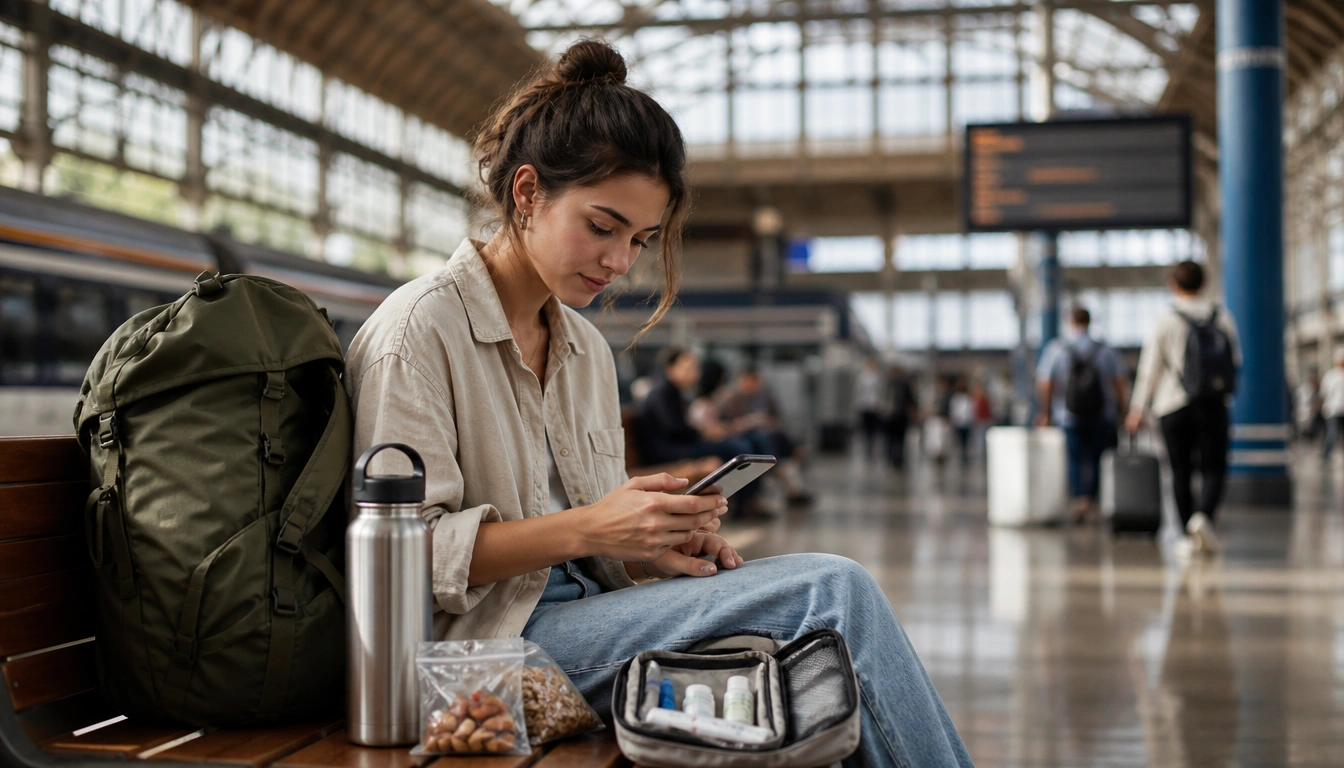
You can keep a healthy routine during travel as a college student by focusing on a few basics: pack a reusable water bottle and simple snacks, protect sleep as much as possible, keep prescriptions in your carry-on, and use basic hygiene in crowded places. Small, repeatable habits matter more than a perfect schedule, especially when you are on a budget or dealing with time zones, long transit days, or shared housing.
Key Takeaways
- Start with the basics: water, food, sleep, medication access, and hand hygiene cover most student travel problems.
- A reusable bottle and low-cost snacks can prevent dehydration and energy crashes without adding much cost.
- Sleep disruption is common after late departures or time-zone changes, so use light, timing, and short rest habits to reset.
- Keep prescription medicines in your carry-on, and check destination rules before you travel with any medication.
- Use simple infection-prevention habits in airports, buses, and hostels: clean hands, avoid touching your face, and clean high-contact items.
- Know the red flags. Fever, trouble breathing, severe dehydration, chest pain, or sudden mental health worsening need medical attention.
Why travel disrupts college routines
For college students, travel often stacks several stressors at once: irregular sleep, skipped meals, more time in crowded places, and less control over what you can eat, drink, or pack. A weekend trip, a holiday flight home, or a study abroad move can all push you away from the habits that normally keep you steady on campus.
The goal of a healthy routine during travel for college students is not perfection. It is keeping a few core habits intact so you do not arrive exhausted, dehydrated, or already sick. Public health agencies such as the CDC and NHS emphasize that simple preparation before departure helps reduce common travel-related problems, especially when schedules are tight and the trip itself is unpredictable.
The issues that matter most are usually practical rather than dramatic: sleep loss, dehydration, food that leaves you sluggish, medication gaps, and extra exposure to germs in airports, stations, buses, and shared rooms. If you plan for those first, the rest becomes easier to manage.
Pre-trip planning that fits a student budget
A student-friendly travel plan does not need to be elaborate. Start with the items that are hardest to replace once you leave. Make sure your ID, tickets, insurance details, emergency contacts, and payment card are easy to reach. If you are traveling internationally, keep copies of important documents in a separate place from the originals in case one bag is lost.
Check your health coverage before you go. For some trips, especially study abroad or remote travel, you may need travel health insurance or a plan that covers urgent care and evacuation. If you take medicines or manage a chronic condition, write down your prescriptions and the generic names, not just the brand names. That makes it easier to replace them if needed.
Vaccines also belong on the checklist. According to the CDC, routine immunizations should be up to date before travel, and destination-specific vaccines may be needed for international trips. If you are leaving the country, review destination guidance early because some vaccines or preventive medicines need time to arrange. A few weeks of lead time can prevent a last-minute scramble.
Budget planning matters too. Build in a small cushion for water, snacks, local transit, and a backup meal if delays hit. That buffer is often cheaper than relying on airport food, convenience-store meals, or multiple last-minute purchases.
Protecting sleep on the move
Sleep is one of the first things to break down during travel, especially if you leave after a late-night study session or social event. When your sleep is short or out of rhythm, you are more likely to feel foggy, irritable, and physically worn down. That can also make it harder to stay alert in crowded spaces or make good food choices.
If your trip involves time zones, aim for a gentle adjustment instead of forcing a dramatic reset. The brief recommends shifting sleep by about 30 to 60 minutes earlier or later for a few days before departure when possible. That small change can make the first day feel less abrupt. If you cannot prepare ahead, use the first morning at your destination to anchor your day with light exposure, movement, and a regular wake-up time.
On the travel day itself, sleep strategy should stay practical. If you can sleep, do it. If you cannot, rest your body in whatever way is realistic: dark glasses, a neck pillow, reduced screen time, and a short nap once you arrive if needed. Avoid assuming that one lost night is harmless, because sleep loss can make dehydration, stress, and infection exposure feel worse.
Try to keep your first meal and your caffeine use somewhat predictable. Too much caffeine late in the day can make the adjustment harder, and large energy swings can leave you more drained once you arrive.
Food and hydration that actually work during transit
The simplest way to stay hydrated is also the cheapest: bring an empty reusable water bottle and refill it after security or at the next safe water source. On long flights, train rides, or bus trips, low humidity and long stretches without fluids can leave you tired, headachy, or less focused. A bottle you already own saves money and makes sipping easier than buying drinks every time you feel thirsty.
Food works best when it is easy to carry, easy to eat, and unlikely to spoil. Good student options include fruit that travels well, nuts or seeds, whole-grain crackers, and low-sugar granola or protein bars. These are not fancy, but they are more reliable than depending entirely on fast food or vending machines. If you know you may miss a meal window, pack enough food to bridge the gap rather than waiting until you are already exhausted.
If you are prone to stomach upset, keep your food choices familiar. Travel is not the moment to test a new supplement or an unfamiliar snack that may not sit well. Eating small amounts at regular intervals often feels better than one large, heavy meal after many hours without food.
Alcohol deserves a cautious approach if your trip includes celebrations. Drinking can worsen dehydration and make jet lag or travel fatigue feel much worse the next day. If you choose to drink, alternate with water and avoid treating alcohol as a way to “reset” after a long travel day.
Staying healthier in crowded transit and shared housing
Airports, bus terminals, train stations, and shared student housing all increase your contact with surfaces and people. That does not mean travel is unsafe, but it does mean basic infection prevention matters more. The CDC recommends washing hands with soap and water for at least 20 seconds when possible, or using an alcohol-based hand sanitizer with at least 60% alcohol when sinks are not available.
Focus your effort on the moments that matter most. Clean your hands before eating, after using the restroom, after touching shared surfaces, and after coughing, sneezing, or handling trash. Try not to touch your eyes, nose, or mouth with unwashed hands. In crowded settings, that small habit can lower the chance of bringing germs into your system.
It also helps to think in terms of touch points. Tray tables, armrests, security bins, door handles, bathroom fixtures, and shared kitchen items can all become part of your routine exposure. A small pack of wipes can be useful for surfaces you will use repeatedly, such as a tray table or your phone. The goal is not to disinfect everything; it is to lower the amount of unnecessary contact you have with high-touch items.
If you are staying in a hostel or shared student accommodation, keep your own towel, toiletries, and water bottle separate from communal items when possible. Good ventilation, hand hygiene, and not borrowing personal items from others go a long way.
Medication and chronic-condition logistics
If you take prescription medicine, travel planning should start before you pack your clothes. Keep all prescriptions in your carry-on bag, not in checked luggage. Bags get delayed or lost, and you do not want your medication separated from you for even one day if it is essential.
Bring a written list of your medications, doses, and the reason you take them. A doctor’s letter can also help if security or customs needs clarification. This is especially useful if you use inhalers, injectables, ADHD medication, anxiety or depression medicines, or any drug that may look unfamiliar to border officials.
Pack extra supply if you can. The brief recommends at least an extra week of medication to cover delays, cancellations, or missed connections. Do not assume you can easily refill a prescription wherever you land. In some places, access may be limited, and even common medicines can be subject to different rules.
That is why destination legality matters. Some medications that are normal in one country may be restricted or prohibited in another. Stimulants used for ADHD, certain cold medicines, and some inhalers or pain medicines can create legal problems at border crossings. Check the destination country’s rules before you leave, especially if you are carrying anything controlled, injectable, or unfamiliar. If needed, ask your prescriber or pharmacist how to travel with it safely.
Mental health, stress, and a small travel kit
Travel can stir up homesickness, anxiety, overstimulation, or loneliness, especially if you are crossing cultures, changing time zones, or sleeping in unfamiliar places. The healthiest response is usually not to create a perfect new routine, but to protect a few anchors that make the trip feel more manageable. That may be a morning check-in with family, a short walk, a familiar playlist, or a daily reminder to eat and sleep at roughly the same times.
Try to keep support contacts easy to reach. Save emergency numbers, campus counseling contacts, family contacts, and any local support resources before you leave. If you already use therapy, medication, or coping strategies at school, bring the most relevant parts of that routine with you rather than assuming you will “wing it” on the road.
A small student health kit can reduce stress when minor problems pop up. Useful items include a digital thermometer, a few days of common pain relievers if they are safe for you, electrolyte rehydration packets, antiseptic wipes, blister bandages, and barrier protection if relevant to you. Keep the kit compact so you will actually carry it. A kit that stays in your bag is more useful than a large one that never leaves your room.
Also make room for flexibility. If one day goes badly, do not treat that as a failure of your entire travel routine. Return to the basics at the next opportunity: water, food, sleep, and a quiet pause.
When to get medical help
Some travel discomfort is expected. Tiredness after a long flight, mild jet lag, or a short-lived headache can happen. But certain symptoms should not be written off as normal travel fatigue.
Seek medical care if you develop a persistent high fever, trouble breathing, chest pain, severe diarrhea, or signs of dehydration such as dizziness or very infrequent urination. Bloody diarrhea, severe vomiting, or confusion are also reasons to get help quickly. If you have a chronic condition and your usual symptoms are suddenly worse, do not wait to see if it passes.
Mental health symptoms deserve attention too. If you become suddenly distressed, panicked, unable to function, or deeply depressed, reach out for support. Travel stress can make existing mental health issues harder to manage, and getting help early is better than waiting until the situation becomes an emergency.
If you are unsure whether something is serious, err on the side of contacting local medical care, a nurse line, or your travel insurer. That is especially important if you are abroad, where medication names, clinic access, and billing systems may be unfamiliar.
Planning ahead does not remove every travel problem, but it can keep a small issue from becoming a big one. The most useful approach is often the least complicated: notice symptoms early, protect your basics, and ask for help when a red flag appears.
Frequently Asked Questions
How should college students pack food and water to stay healthy during travel?
Pack an empty reusable water bottle and refill it after security or at safe water stops. For food, choose low-cost items that travel well, such as fruit, nuts, crackers, and simple bars. The goal is to avoid long gaps without fluids or food, which can lead to headaches, fatigue, and energy crashes.
What sleep strategies help when travel disrupts a student schedule or time zone?
If possible, shift your sleep by 30 to 60 minutes for a few days before departure when crossing time zones. On the travel day, rest when you can, limit late caffeine, and use light exposure and a regular wake-up time to reset after arrival. Small adjustments usually work better than forcing a perfect schedule.
What travel vaccines or routine immunizations should students check before trips?
Students should make sure routine vaccines are up to date, including common childhood and college-related immunizations. For international travel, check destination-specific vaccine advice well ahead of time, because some vaccines or preventive medicines need advance planning. A clinician or travel health clinic can help match recommendations to your destination and timing.
How can students protect themselves from getting sick in airports, stations, or shared housing?
Use hand hygiene often, especially before eating and after touching shared surfaces. Wash with soap and water for at least 20 seconds when you can, or use hand sanitizer with at least 60% alcohol when you cannot. Try not to touch your face, and keep personal items like towels, bottles, and toiletries separate in shared spaces.
What should students with chronic conditions or prescriptions do before traveling?
Keep all medications in your carry-on, not checked luggage, and bring a written list of your prescriptions. If possible, pack an extra week of supply in case of delays. Check destination laws before departure, because some medicines that are common at home may be restricted elsewhere. A doctor’s letter can also help at security or customs.
The Bottom Line
A healthy routine during travel does not need to be complicated or expensive. For most college students, the biggest wins are simple: carry water, pack a few dependable snacks, protect sleep as much as you can, and keep your medicines with you.
The same basics also reduce stress in crowded transit and shared housing. Clean hands, early medication planning, and a small health kit can prevent minor problems from becoming major disruptions. If you know your red flags, you can also decide sooner when travel fatigue is no longer just fatigue.
If you are traveling with a chronic condition, managing prescriptions, or crossing borders, plan a little earlier than you think you need to. A few practical steps before departure usually save time, money, and worry later.
Medical disclaimer
Medical disclaimer: This content is for educational and informational purposes only and is not a substitute for professional medical advice, diagnosis, or treatment. Dietary needs and supplement suitability vary by individual.
Sources
- Centers for Disease Control and Prevention (CDC) — cdc.gov. Accessed November 2026.
- National Health Service (NHS) — wales.nhs.uk. Accessed November 2026.
- Academic Research Institution — colorado.edu. Accessed November 2026.
- Academic Research Institution — princeton.edu. Accessed November 2026.
