
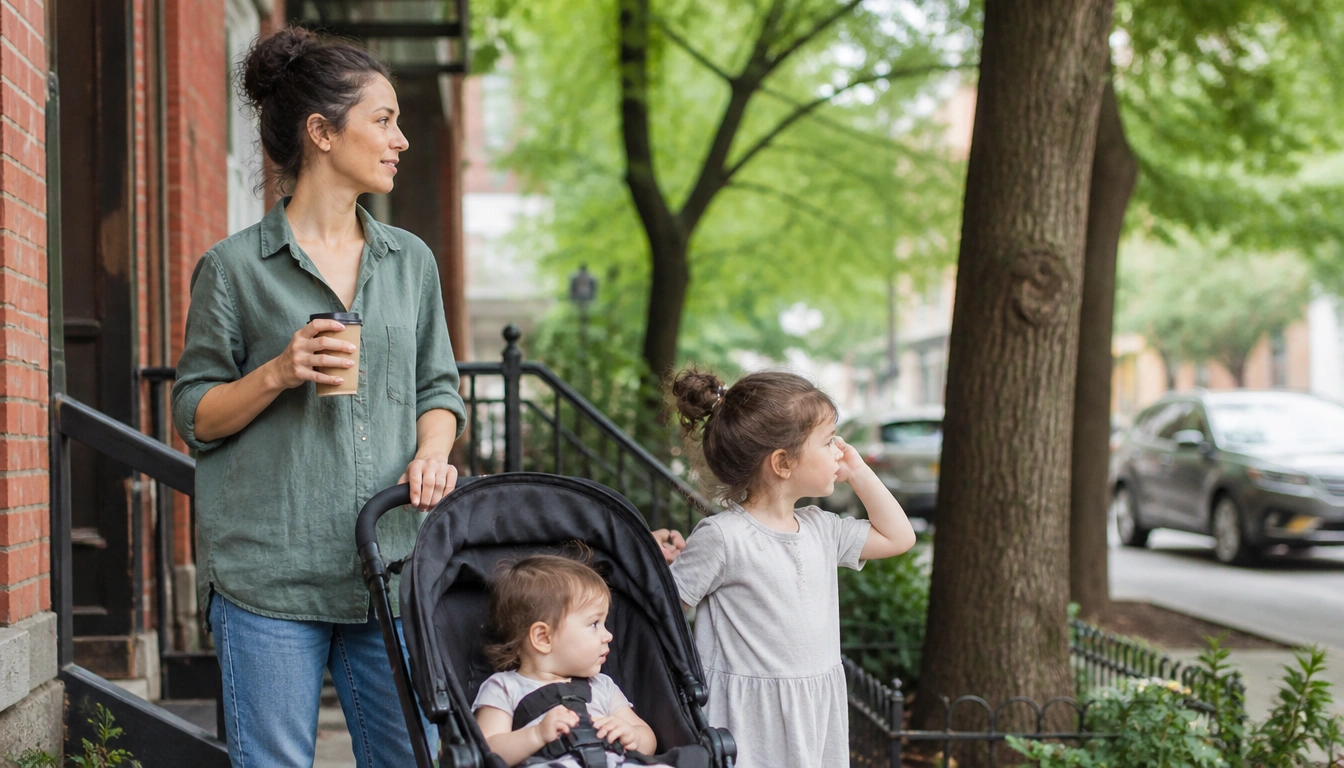
A busy parent can fit meaningful outdoor time into a packed day by using short, repeatable “micro-doses” of time outside instead of waiting for the perfect outing. Even 10 to 15 minutes can help with stress and mood, and about 120 minutes of nature contact per week is a realistic target for many adults. For children, outdoor time should also match age, activity needs, and safety conditions rather than follow one rigid schedule.
Key Takeaways
- Short outdoor breaks can still matter. Even 10 to 15 minutes outside may help restore attention and improve mood.
- A useful weekly goal for adults is about 120 minutes of nature contact, which can be split into small daily segments.
- Children need different amounts and types of outdoor time by age, with toddlers and school-age children needing more active play than infants.
- Outdoor plans should change when AQI, heat, pollen, or sun exposure make time outside less safe.
- Habit stacking works well: pair outdoor time with coffee, school drop-off, lunch, walk-and-talk calls, or evening decompression.
Why daily outdoor time is realistic for busy parents
Daily outdoor time for busy parents works because it does not have to look like a workout, a hike, or a free afternoon. It can be a few minutes on a porch, a loop around the block, time at a playground, or a backyard reset after work. Public health guidance and environmental health research both support the idea that regular movement outdoors and time in natural settings can help with stress, mood, and general well-being.
What counts is nature contact, not a perfect location. That can include a park bench under a tree, a walk on a tree-lined street, a neighborhood greenway, a small backyard, or even a balcony with fresh air and daylight. The benefit comes from making outdoor time part of normal life, not from treating it like a special event that has to happen only on ideal days.
For adults, the most practical framing is a weekly target rather than a daily rule. Research in environmental health suggests that about 120 minutes per week of nature contact is linked with better self-reported health and psychological well-being. That amount does not need to happen all at once. For children and teens, official guidance from the CDC and other public health bodies emphasizes regular daily movement, including at least 60 minutes of moderate-to-vigorous physical activity a day for ages 5 to 17. Younger children need active play throughout the day, with more flexibility and less emphasis on formal exercise.
The benefits that matter most for parents
For parents, the biggest value of outdoor time is often not fitness first, but recovery. Time outside in natural settings is associated with lower stress and better mood, and it can help interrupt the constant mental load of caregiving, planning, and problem-solving. Environmental psychology describes part of this effect as “soft fascination”: the attention-grabbing but low-demand qualities of nature give the brain a brief chance to rest from screens, noise, and multitasking.
Outdoor time can also support physical health in a low-pressure way. A walk with a stroller, a few rounds at a playground, or a neighborhood stroll can add light-to-moderate movement without requiring a gym session. That matters for parents who are already active in bursts but rarely get dedicated exercise time.
Children benefit too. Outdoor time supports gross motor development, attention, emotional regulation, and healthy routines. For school-age children, regular outdoor play can help balance screen-heavy days. For younger children, the outside world offers sensory input, movement opportunities, and a natural transition between activities.
The benefit is often cumulative. You may not feel transformed after one short break, but repeated outdoor moments can make the day feel less compressed and more manageable.
Why short outdoor breaks work
Busy parents often assume that if they cannot “do it right,” it is not worth doing. Outdoor time is a good example of the opposite. Short breaks can be enough to produce a noticeable shift in energy, mood, and mental clarity. A 10- to 15-minute reset outdoors may lower the feeling of being stuck and can help create a mental boundary between one task and the next.
This micro-dose approach is especially useful because many parents do not have long, predictable windows of free time. A short walk after school drop-off, five minutes on the porch before the workday starts, or a quick evening lap around the block can be more realistic than waiting for a long weekend outing. The goal is consistency, not intensity.
Micro-doses also lower the barrier to entry. When the plan is only 10 minutes, it is easier to start even on tired days. That matters because the habit itself becomes the win. Once outdoor time is normal, longer outings often happen naturally when the family has the time and energy for them.
How to build the habit into real life
The easiest way to keep daily outdoor time going is to attach it to something you already do. This is often called habit stacking. Instead of trying to create a new routine from scratch, link outdoor time to an anchor that already exists in your day.
Useful anchors include morning coffee, school or daycare drop-off, lunch, a midday break, the end of the workday, dinner cleanup, or bedtime wind-down. For example, you might step outside with your coffee for five minutes before checking messages, take a walk during a work call that does not require screens, or build a short decompression stop into the drive home.
Here are practical ways to make it work:
- Morning reset: Stand outside with coffee, tea, or breakfast for a few minutes of daylight and fresh air.
- School drop-off: Walk part of the route instead of driving every block, or take a short detour after drop-off before heading home.
- Lunch break: Eat outside when possible, or spend part of lunch walking around the block.
- After-work decompression: Stop at a park, courtyard, or even a quiet sidewalk space before walking into the evening routine.
- Evening wind-down: Take a family walk after dinner or sit outside together for a short, screen-free reset.
The best routine is the one that survives real life. If a full walk is too much, try standing outside for a few minutes. If the toddler is melting down, use the yard instead of a longer outing. Small adjustments protect the habit.
Child age and safety considerations
Outdoor time should match a child’s age and safety needs. Infants under 6 months need extra protection because their skin is very sensitive and they are not ready for direct sun exposure. Shade, lightweight clothing, a hat, and avoiding direct sunlight are important. If the weather is extreme or the baby is overheating, outdoor time may need to be shortened or moved.
Toddlers need movement, but their attention spans and safety awareness are limited. For this age group, outdoor time works best when it is simple and supervised: a fenced yard, a stroller walk, a playground visit, or unstructured play where the adult can keep an eye on them without trying to turn it into a lesson. Many toddlers do well with frequent short sessions rather than one long outing.
School-age children need more active play and can usually handle longer stretches outdoors. Public health guidance for ages 5 to 17 emphasizes at least 60 minutes of moderate-to-vigorous activity daily. That does not mean every minute must be structured exercise. Running around a playground, biking, walking the dog, or helping with yard work can all contribute.
For all ages, safety planning matters. Watch for dehydration, overheating, slippery surfaces, traffic, and age-appropriate supervision. The right amount of outdoor time is the amount that is safe enough to repeat.
Weather, sun, and environmental limits
Outdoor time is useful, but it should not become an all-weather obligation. Parents should adapt plans when the environment makes being outside less safe or less comfortable. The CDC and other public health authorities recommend checking the Air Quality Index when air pollution is a concern. On poor AQI days, outdoor time may need to be shorter, moved to a less polluted part of the day, or replaced with indoor movement.
Heat is another limit. On very hot days, it is often safer to choose early morning or evening and to shorten the outing. Look for shade, light clothing, water, and signs that a child or adult is getting too warm. Pollen can also matter for families with allergies. If symptoms spike, a shorter outing or a different location may be a better choice than forcing the plan.
Sun protection belongs in the routine too. For older infants, children, and adults, that can include shade, hats, sunglasses, and broad-spectrum sunscreen when appropriate. The goal is not to avoid daylight; it is to use it wisely. In some weather conditions, the healthiest plan is a brief outdoor break rather than a long one.
Urban-friendly options when green space is limited
You do not need a forest or a large park to get benefits from being outside. Research suggests that smaller urban green spaces can still offer meaningful restorative effects. If you live in a city or apartment, think in terms of accessible nature contact rather than perfect scenery.
That may mean a tree-lined sidewalk, a pocket park, a community garden, a schoolyard after hours, a shared courtyard, or a balcony with plants. Even brief time in a neighborhood setting can provide daylight, fresh air, and a change of scene. For parents with limited mobility or tight schedules, the most realistic outdoor option is often the one closest to home.
If the family is indoors most of the day, adding a small outdoor ritual can help bridge the gap. Open the door for a few minutes after breakfast, take trash or recycling out as a cue to pause outside, or keep a stroller near the door for quick loops around the block. Urban life often rewards creativity more than distance.
When outdoor time is not enough
Outdoor time can support health, but it is not a substitute for medical or mental health care when symptoms are persistent or severe. If a parent has ongoing depression, anxiety, panic symptoms, sleep disruption, or overwhelming burnout, more support may be needed than a wellness habit alone can provide.
The same is true for children. If a child’s mood, behavior, attention, or sleep problems continue despite consistent routines, it is reasonable to talk with a pediatrician or mental health professional. Outdoor time can be part of a broader care plan, but it should not delay evaluation when concerns are ongoing.
Think of daily outdoor time as a practical support, not a cure-all. It can make a hard day lighter, improve the rhythm of family life, and create small moments of recovery. When used alongside sleep, movement, social support, and professional care when needed, it becomes a habit that is realistic enough to keep.
Frequently Asked Questions
How much outdoor time do adults and children actually need for health benefits?
There is no single universal quota for adults, but research suggests that about 120 minutes of nature contact per week is associated with better health and well-being. For children ages 5 to 17, public health guidance recommends at least 60 minutes of moderate-to-vigorous physical activity daily, much of which can happen outdoors.
What are the best ways to build outdoor time into a parent’s existing routine?
Attach it to something you already do: coffee, school drop-off, lunch, a work call, or evening cleanup. The more the habit is linked to an existing routine, the less planning it requires. Small, repeatable anchors usually work better than trying to schedule a new long outing from scratch.
Does a short 10- to 15-minute outdoor break really help?
Yes. Short breaks outdoors can help with mood, stress recovery, and mental reset, especially when you are tired or overloaded. The goal is not a perfect workout; it is a brief change of setting that is easy to repeat often enough to matter over time.
What should parents do when air quality, heat, pollen, or sun exposure make outdoor time less safe?
Adjust the plan instead of forcing it. Check air quality, shorten the outing on hot or smoky days, choose cooler times of day, and use shade and sun protection. If conditions are poor, a brief outdoor break may be better than a long one, or the outing may need to move indoors that day.
How does outdoor time differ from exercise, and can it still count if I am not working out?
Outdoor time and exercise overlap, but they are not the same thing. You can benefit from being outside even if you are not doing a formal workout. Walking, standing, sitting in natural light, or watching your child play outdoors can still count as meaningful nature contact.
The Bottom Line
Busy parents do not need a perfect nature routine to see value. Short daily outdoor breaks can support mood, stress recovery, attention, and family rhythm, and a weekly total of about 120 minutes of nature contact is a realistic benchmark for many adults.
For children, outdoor time should match age, activity level, and safety needs. Use habit stacking, keep the routine flexible, and adjust for weather, AQI, heat, pollen, and sun exposure rather than treating outdoor time as an all-or-nothing goal. When symptoms are persistent or severe, outdoor time is helpful but not enough on its own.
Medical disclaimer
Medical disclaimer: This content is for educational and informational purposes only and is not a substitute for professional medical advice, diagnosis, or treatment. Dietary needs and supplement suitability vary by individual.
Sources
- National Institutes of Health (NIH) — nih.gov. Accessed November 2026.
- Centers for Disease Control and Prevention (CDC) — cdc.gov. Accessed November 2026.
- Centers for Disease Control and Prevention (CDC) — cdc.gov. Accessed November 2026.
- Academic Research Institution — yale.edu. Accessed November 2026.
