
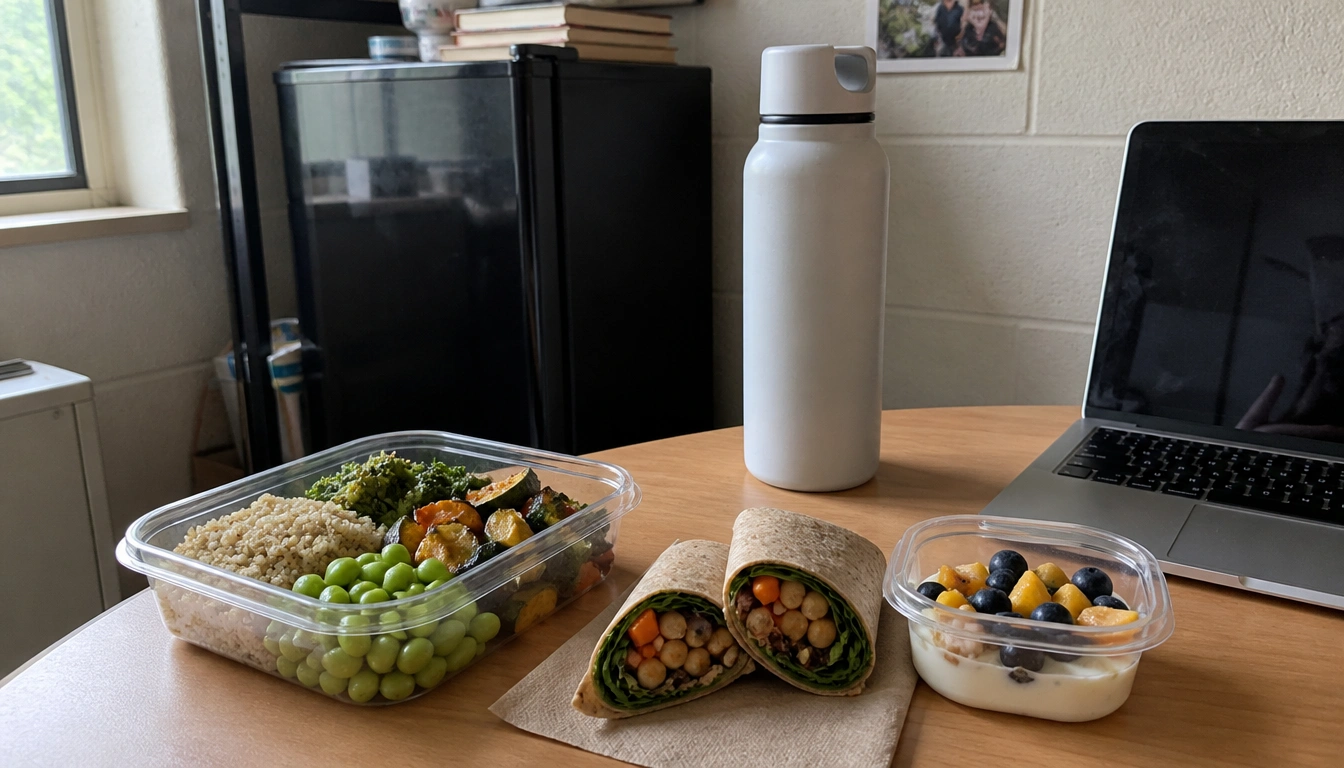
Yes—college students can build easy, budget-friendly vegetarian lunches that are high in protein without a full kitchen. The most practical options are meals built from canned beans, chickpeas, tofu, edamame, Greek yogurt, cottage cheese, eggs, cheese, whole grains, and microwaveable produce. You do not need to combine specific plant proteins in one meal; a varied diet across the day is enough.
Key Takeaways
- Protein-rich vegetarian lunches can help students stay fuller longer and may reduce the afternoon slump that makes studying harder.
- You do not need to perfectly combine proteins at lunch; eating a variety of plant foods across the day covers amino acid needs.
- Lacto-ovo vegetarians can lean on eggs, yogurt, cottage cheese, and cheese for fast protein, while vegans can rely on tofu, edamame, beans, lentils, soy foods, nuts, and seeds.
- Dorm-friendly lunches can be no-cook or microwave-only: wraps, grain bowls, yogurt bowls, quesadillas, and bean salads are all realistic.
- Start slowly with beans and lentils if you are not used to them, and pair plant iron with vitamin C-rich foods for better absorption.
Why protein-rich vegetarian lunches matter in college
For college students, lunch has to do more than taste good. It needs to fit a tight budget, survive a packed schedule, and still carry you through afternoon lectures, labs, or study sessions. A protein-rich vegetarian lunch can help because protein tends to be more satisfying than a snacky, mostly refined-carb meal. It slows digestion, supports steadier energy, and may help reduce the after-lunch crash that makes it hard to stay focused.
That matters when you have back-to-back classes and little time to recover between them. A lunch built around protein, fiber, and produce can keep you full longer and make it easier to avoid grazing on ultra-processed snacks later. The goal is not a “perfect” meal; it is a lunch that is cheap enough, fast enough, and filling enough to be repeated during a busy semester.
The good news is that vegetarian lunches can meet those needs without fancy ingredients. Canned beans, lentils, tofu, yogurt, eggs, cheese, whole grains, frozen vegetables, and shelf-stable sauces are enough to build meals that are practical for dorm life.
How to think about protein on a vegetarian diet in college
Vegetarian students often worry too much about whether one lunch is “complete.” Current nutrition guidance does not require perfectly matched plant proteins at every meal. Amino acids are pooled and used across the day, so variety matters more than obsessing over one specific pairing. A bean wrap at lunch and a peanut butter sandwich later can still fit into a balanced day of eating.
The bigger question is adequacy. The USDA and academic nutrition guidance note that most people can meet protein needs with enough total food intake and a varied diet. Students who are very active may need more than the baseline recommendation, while others may need less. You do not need to calculate every gram to make smart lunch choices; instead, aim to include a clear protein source at the center of the meal.
A useful dorm formula is simple: protein base + fiber-rich carb + produce + flavor/fat. For example, black beans plus a tortilla, salsa, and avocado; Greek yogurt plus fruit and oats; tofu plus microwavable rice and frozen vegetables. This structure keeps lunch satisfying without overcomplicating prep.
Lunch examples that fit the formula:
- Chickpeas, whole-grain wrap, spinach, and hummus.
- Greek yogurt, berries, granola, and pumpkin seeds.
- Microwaved rice, tofu, edamame, and soy sauce.
- Egg salad on whole-grain bread with sliced tomatoes.
No-cook and microwave-friendly lunch ideas
The best college vegetarian lunch ideas are the ones you will actually eat between classes. No-cook and microwave-only meals are especially useful when you have a mini-fridge, a communal microwave, or almost no time between lectures.
No-cook ideas: A chickpea salad wrap made from canned chickpeas, hummus, lemon juice, and chopped cucumber; a cottage cheese bowl with tomatoes, pepper, and whole-grain crackers; or a hummus-and-edamame pita with shredded carrots. These meals take only a few minutes and use foods that are easy to store.
Microwave-friendly ideas: A quinoa-and-edamame bowl with soy sauce and sesame oil; a black bean and cheese quesadilla warmed in the microwave; or a rice bowl topped with tofu, frozen vegetables, and a bottled sauce. If your dorm allows a small skillet or hot plate, the same ingredients can be turned into warm wraps, scrambles, or grain bowls with very little extra effort.
Fast meal combinations worth repeating:
- Microwaved rice + edamame + shredded carrots + peanut sauce.
- Whole-wheat tortilla + refried beans + cheese + salsa.
- Greek yogurt + fruit + oats + nuts.
- Tofu cubes + instant noodles + frozen vegetables + broth or soy sauce.
These lunches work because they balance protein with carbs and fiber, which helps them feel like a real meal rather than a snack spread out on a plate.
Budget-friendly protein staples to keep on hand
College food budgets stretch further when you rely on ingredients that can appear in multiple lunches. Some of the most cost-effective vegetarian proteins are shelf-stable, freezer-friendly, or easy to buy in bulk. They also help reduce food waste, which matters when your fridge space is tiny and unpredictable.
For lacto-ovo vegetarians: Greek yogurt, cottage cheese, eggs, shredded cheese, milk, and string cheese are all convenient. They do not need much prep and can be combined with fruit, crackers, tortillas, or leftover grains.
For vegans: Canned beans, lentils, tofu, tempeh, edamame, hummus, soy milk, peanut butter, and pumpkin seeds are especially useful. These foods can show up in wraps, bowls, salads, or sandwiches with very little cooking.
Budget-friendly staples to stock:
- Canned chickpeas, black beans, or lentils.
- Microwaveable brown rice, quinoa, or whole-grain tortillas.
- Frozen edamame and frozen mixed vegetables.
- Peanut butter, hummus, salsa, and soy sauce.
- Whole-grain bread, pita, or crackers.
Using a small set of staples repeatedly is not boring if you rotate the flavor profile. One week can lean Mediterranean, another can lean Mexican-inspired, and another can be built around soy sauce, sesame, and peanut flavors.
Vegan vs. lacto-ovo lunch swaps
Many lunch ideas work in both styles with a few ingredient changes. That is useful in college because your budget, fridge space, and class schedule may change from week to week. The biggest difference is convenience: lacto-ovo vegetarians can lean on dairy and eggs for fast protein, while vegans need to plan around soy foods, legumes, nuts, and seeds.
Easy swap examples: A Greek yogurt bowl becomes a soy yogurt bowl with seeds and fruit. A cottage cheese savory bowl becomes a tofu bowl with tomatoes, cucumbers, and crackers. A hard-boiled egg wrap becomes a hummus and chickpea wrap. A cheese quesadilla becomes a bean-and-avocado wrap or a tofu-and-salsa burrito.
| Meal idea | Lacto-ovo version | Vegan version |
|---|---|---|
| Savory bowl | Cottage cheese, tomatoes, cucumbers, crackers | Tofu, tomatoes, cucumbers, crackers |
| Lunch wrap | Egg salad or cheese with greens | Chickpeas, hummus, greens |
| Microwave bowl | Rice, vegetables, egg, sauce | Rice, vegetables, tofu or edamame, sauce |
Vegan students should also keep an eye on vitamin B12, since it is not naturally present in unfortified plant foods. Fortified foods or a supplement are commonly needed, and that is separate from the lunch itself. For both diets, using vitamin C-rich foods with plant iron can help support iron absorption—for example, bell peppers with hummus or salsa with bean bowls.
Food safety and storage in dorm fridges
Dorm food safety is easy to overlook until something smells off or a shared fridge gets crowded. Cooked grains, tofu, beans, and chopped vegetables should be kept cold and eaten within a reasonable window. The USDA and university food safety guidance generally advise using refrigerated meal-prepped foods within about 3 to 4 days and keeping hot foods out of the temperature danger zone for too long.
That means planning portions you can finish in a few days rather than trying to prep a week’s worth of lunch in a tiny shared fridge. Use clear containers, label them with the date, and keep raw ingredients separate from ready-to-eat food. If your dorm fridge is packed, place the most perishable items toward the back where the temperature is usually steadier.
Food safety habits that help in shared spaces:
- Cool cooked food before refrigerating it.
- Use sealed containers to prevent spills and odor transfer.
- Do not leave dairy, eggs, tofu, or cooked grains at room temperature for long.
- Discard leftovers that have been stored too long or smell unusual.
These habits matter even more for lunches made ahead on Sunday and eaten across a busy week. Safe storage is part of making vegetarian meal prep actually work in college.
Fiber tolerance and digestive comfort
Beans, lentils, chickpeas, and other pulses are excellent lunch ingredients, but they can be a shock if your diet has been low in fiber. A sudden jump in fiber may cause gas, bloating, or cramping, especially when students start relying on bean-heavy lunches every day. That does not mean these foods are a bad choice. It usually means your digestive system needs time to adapt.
A gradual ramp-up works better than an overnight overhaul. Start with smaller portions of beans or lentils and build up over time. If canned beans are easier on your stomach, rinse them well before using. Pair them with water throughout the day and mix them with lower-fiber foods at first, such as rice, tortillas, yogurt, or tofu.
Helpful adjustments include using hummus in moderation before jumping to large bean salads, choosing lentils in soup or grain bowls rather than huge dry servings, and spacing out high-fiber meals so your gut can adjust. If high-FODMAP legumes consistently cause major discomfort, it is worth talking with a registered dietitian or clinician rather than forcing a meal pattern that does not suit you.
A practical meal-prep workflow for busy class days
Meal prep only works in college if it is simple enough to repeat when you are tired. A realistic workflow starts with building lunches from a few overlapping ingredients instead of cooking separate recipes every time. Prep one protein, one grain or wrap, one or two vegetables, and one sauce. Then mix and match across several lunches.
For example, cook or buy a batch of rice, rinse a can of black beans, chop cucumber or bell pepper, and keep salsa or hummus on hand. That can become a wrap, a rice bowl, or a quick salad depending on the day. The same logic works for tofu, quinoa, edamame, and yogurt bowls. You are not trying to become a meal-prep influencer; you are trying to save time and avoid skipping lunch.
A low-effort prep plan for the week:
- Pick two protein anchors: one plant-based, one dairy or egg option if you eat them.
- Choose one grain or bread and one backup option.
- Stock one fresh produce item and one frozen produce item.
- Keep one sauce or spread that makes plain ingredients taste better.
If classes run long, make one lunch fully portable so it can live in your backpack with an ice pack until you are ready for it. That flexibility is often the difference between eating a balanced meal and grabbing whatever is easiest.
Frequently Asked Questions
How much protein does a college student need at lunch or per day on a vegetarian diet?
There is no single lunch target for everyone. The baseline protein recommendation for adults is commonly around 0.8 grams per kilogram of body weight per day, with higher needs for very active students. A practical approach is to include a clear protein source at lunch so the meal actually keeps you satisfied.
Do vegetarian lunches need to combine specific proteins at the same meal to be complete?
No. That older idea is mostly a myth. Your body pools amino acids over the day, so variety across meals matters more than matching beans and rice at every lunch. A diverse vegetarian diet usually covers essential amino acids without extra effort.
What are the best high-protein vegetarian lunch options for a dorm room with only a microwave or mini-fridge?
Good options include Greek yogurt or cottage cheese bowls, chickpea wraps, microwave rice with edamame and tofu, bean-and-cheese quesadillas, and hummus with whole-grain pita. These are low-prep, portable, and realistic when you do not have a full kitchen.
How can a vegetarian student get enough protein on a tight budget?
Build meals around inexpensive staples such as canned beans, lentils, eggs, yogurt, tofu, peanut butter, frozen edamame, tortillas, and whole grains. Buying a few versatile ingredients and reusing them in different lunches is usually cheaper than buying lots of single-serve items.
What should students do if beans or lentils cause digestive discomfort?
Increase them gradually instead of eating large amounts right away. Start with smaller portions, rinse canned beans, drink enough fluid, and combine legumes with lower-fiber foods at first. If symptoms are severe or ongoing, speak with a healthcare professional or dietitian.
The Bottom Line
Protein-rich vegetarian lunches can be simple, affordable, and dorm-friendly. You do not need a perfect meal plan or a kitchen full of equipment—just a few dependable staples, a protein source, and an easy way to turn them into repeatable lunches.
For lacto-ovo vegetarians, dairy and eggs make lunch fast. For vegans, tofu, beans, lentils, edamame, soy foods, nuts, and seeds do the job well. Add vitamin C foods with plant iron, build fiber up slowly, and use safe storage habits so your prep actually lasts through the week.
Medical disclaimer
Medical disclaimer: This content is for educational and informational purposes only and is not a substitute for professional medical advice, diagnosis, or treatment. Dietary needs and supplement suitability vary by individual.
Sources
- U.S. Government / Health Authority — usda.gov. Accessed November 2026.
- Academic Research Institution — ufl.edu. Accessed November 2026.
- Academic Research Institution — rutgers.edu. Accessed November 2026.
- Academic Research Institution — dartmouth.edu. Accessed November 2026.
- Johns Hopkins Medicine — hopkinsmedicine.org. Accessed November 2026.
