
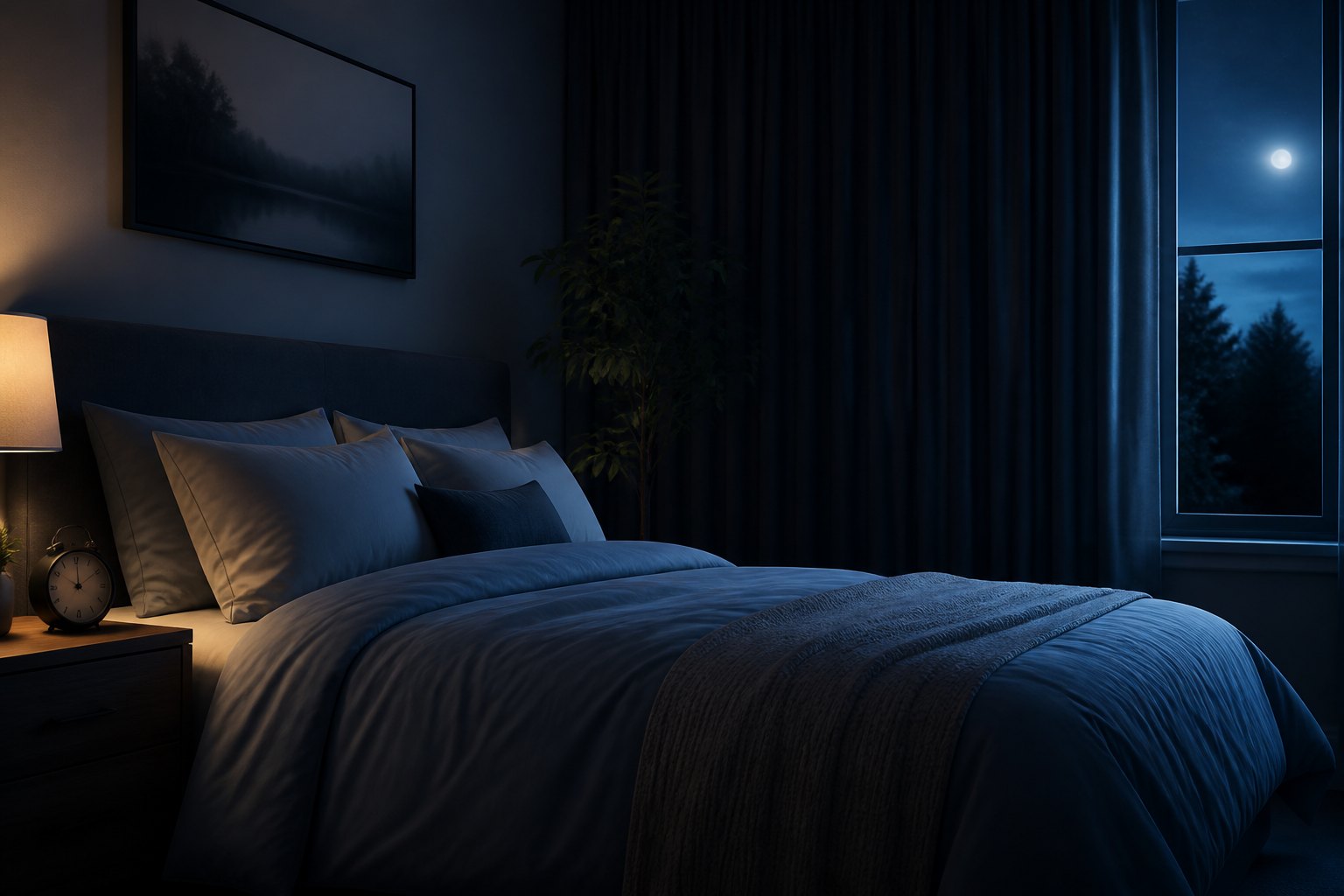
Deep sleep optimization is less about forcing one sleep stage and more about creating the conditions for healthy sleep overall. Consistent sleep timing, enough total sleep, regular daytime activity, a dark and quiet bedroom, sensible caffeine and alcohol habits, and treatment of problems such as insomnia or sleep apnea can all support more restorative sleep. Consumer sleep trackers can provide trends, but they cannot precisely measure sleep stages like a clinical sleep study.
Key Takeaways
- Deep sleep is one part of normal sleep architecture; trying to maximize it in isolation is usually less useful than improving overall sleep quality.
- Adults generally need at least seven hours of sleep on a regular basis, with individual needs varying.
- Regular sleep and wake times, sufficient time in bed, daytime physical activity, and a cool, dark, quiet bedroom support healthy sleep.
- Alcohol can make sleep lighter and increase nighttime waking, while caffeine and nicotine can interfere with sleep.
- Persistent unrefreshing sleep, loud snoring, gasping, or chronic insomnia should prompt evaluation for an underlying sleep disorder.
What Is Deep Sleep?
Sleep is not a single uniform state. Across the night, the brain cycles through different stages of non-rapid eye movement sleep and rapid eye movement sleep. Deep sleep generally refers to the deepest stage of non-REM sleep, often called slow-wave sleep.
Deep sleep is considered restorative, but healthy sleep requires more than one stage. REM sleep and lighter non-REM stages also have normal roles. For that reason, a goal such as “maximize deep sleep at all costs” can be misleading. Healthy sleep depends on duration, timing, regularity, continuity, quality, and the absence of untreated sleep disorders.
Better goal: Instead of trying to engineer a specific percentage of deep sleep, focus on getting enough high-quality sleep on a stable schedule and addressing factors that repeatedly fragment sleep.
How Much Deep Sleep Do You Need?
There is no single deep-sleep target that every healthy adult needs to reach each night. Sleep architecture changes with age, sleep pressure, recent sleep loss, health, medications, alcohol exposure, and other factors.
A more established target is adequate total sleep. The American Academy of Sleep Medicine and Sleep Research Society recommend that healthy adults regularly obtain at least seven hours of sleep. They also emphasize that healthy sleep involves appropriate timing, regularity, good quality, and the absence of sleep disorders.
Evidence-Based Ways to Support Restorative Sleep
Give Yourself Enough Time to Sleep
No optimization strategy can fully compensate for chronically inadequate sleep opportunity. If you need to wake at a fixed time, work backward to create enough time for sleep rather than assuming that a shorter night can be made “more efficient.”
Sleep need varies, but repeatedly cutting sleep short can increase sleep deficiency even if a wearable later reports a relatively high percentage of deep sleep.
Keep a Consistent Sleep-Wake Schedule
NHLBI recommends going to bed and waking around the same time each day, including weekends. Large swings in timing can disrupt the body’s sleep-wake rhythm and make sleep less predictable.
A stable wake time is often especially useful because it anchors the daily schedule. If your sleep timing has been highly irregular, gradual changes may be easier to maintain than dramatic overnight shifts.
Get Regular Daytime Physical Activity
Regular physical activity is part of established healthy-sleep guidance. It can support sleep quality while also benefiting cardiovascular, metabolic, and mental health.
Exercise timing is individual. NHLBI guidance generally favors daytime activity and notes that vigorous exercise close to bedtime can make falling asleep harder for some people. If evening exercise does not disturb your sleep, the practical priority is maintaining a regular activity routine.
Use Light to Support Your Body Clock
Light is one of the environmental signals that helps regulate sleep-wake timing. Spending time outside during the day and reducing bright artificial light close to bedtime can support a clearer distinction between daytime alertness and nighttime sleep.
You do not necessarily need to eliminate every screen at night. The more practical goal is to avoid prolonged bright, stimulating device use when it delays bedtime or makes it harder for you to wind down.
Make the Bedroom Cool, Dark, and Quiet
NHLBI consistently recommends a cool, quiet, dark sleeping environment. Blackout shades, comfortable bedding, reduced notification sounds, and addressing disruptive noise can help reduce unnecessary awakenings.
There is no universal bedroom temperature that is ideal for every person. Comfort, bedding, clothing, hormones, health conditions, and climate all matter.
Caffeine, Alcohol, and Deep Sleep
Caffeine
Caffeine can interfere with falling asleep and staying asleep, especially when consumed later in the day. Sensitivity varies substantially, so a fixed cutoff time is less useful than observing your own response.
If you regularly need caffeine late in the day because you are exhausted, consider whether it is contributing to a cycle of poorer nighttime sleep and greater next-day fatigue.
Alcohol
Alcohol may make falling asleep feel easier, but NHLBI notes that it can lead to lighter sleep and make nighttime awakening more likely. That makes alcohol a poor strategy for improving restorative sleep.
If you are troubleshooting fragmented or unrefreshing sleep, reducing or avoiding alcohol near bedtime is a practical variable to test.
Nicotine
Nicotine can interfere with sleep and is included among substances NHLBI recommends avoiding close to bedtime. Sleep benefits are another reason to consider evidence-based support for quitting nicotine products.
A Practical Deep Sleep Optimization Routine
| Time | Useful habit | Why it may help |
|---|---|---|
| Morning | Wake at a consistent time and get outdoor light when practical | Supports a stable sleep-wake schedule |
| Daytime | Be physically active and avoid relying on late caffeine | Supports sleep drive and reduces stimulant-related disruption |
| Evening | Reduce bright stimulation and avoid using alcohol as a sleep aid | Supports wind-down and may reduce fragmented sleep |
| Bedtime | Use a dark, quiet, comfortable bedroom and allow enough sleep opportunity | Reduces environmental interruptions and protects total sleep time |
Can Naps Reduce Deep Sleep at Night?
Naps are not automatically harmful, but long or late naps can reduce nighttime sleepiness for some people. NHLBI advises avoiding naps, particularly in the afternoon, when insomnia or difficulty sleeping through the night is a problem.
If you sleep well at night and feel good during the day, there may be no reason to eliminate a brief nap solely to increase a sleep-tracker score. The more important question is whether daytime sleep is interfering with nighttime sleep.
Do Sleep Trackers Accurately Measure Deep Sleep?
Consumer watches and rings estimate sleep stages using signals such as movement and heart-related measurements. They can be useful for observing broad trends such as bedtime consistency or estimated sleep duration, but they do not directly measure brain waves in the same way as clinical polysomnography.
A single night showing “low deep sleep” is therefore not a diagnosis. Pay more attention to persistent patterns in how you sleep and function during the day than to small nightly fluctuations in an app.
Use trackers as trend tools: They can help identify changes in bedtime, wake time, and estimated duration. Avoid treating consumer-generated sleep-stage percentages as precise clinical measurements.
Can Supplements Increase Deep Sleep?
No supplement should be assumed to reliably increase deep sleep simply because it is marketed for relaxation or recovery. Sleep supplements differ in evidence, dose, purity, drug interactions, and suitability for different individuals.
If poor sleep is persistent, the more useful first step is often to identify the underlying problem. For example, insomnia, sleep apnea, restless legs symptoms, pain, medication effects, and circadian disruption require different approaches.
Supplement caution: Check with a healthcare professional or pharmacist before combining sleep supplements with prescription medicines, sedatives, alcohol, or other products that can cause drowsiness.
When Sleep Hygiene Is Not Enough
Good sleep habits are valuable, but persistent sleep problems are not always solved by a darker bedroom or an earlier bedtime. Chronic insomnia, sleep apnea, restless legs syndrome, circadian rhythm disorders, pain, mental health conditions, medications, and other health issues may need targeted evaluation and treatment.
For long-term insomnia, NHLBI identifies cognitive behavioral therapy for insomnia, or CBT-I, as a usual first treatment option. CBT-I includes strategies such as sleep education, cognitive therapy, stimulus control, relaxation, and carefully managed changes in time spent in bed.
When to Talk With a Healthcare Professional
Consider professional evaluation when you consistently feel unrefreshed despite allowing enough sleep time, or when sleep problems are interfering with work, school, driving, mood, concentration, or daily functioning.
- You have loud habitual snoring, gasping, choking, or witnessed pauses in breathing.
- You regularly struggle to fall asleep, stay asleep, or return to sleep after waking.
- You are excessively sleepy during the day despite adequate time in bed.
- You have uncomfortable leg sensations or repeated leg movements that disturb sleep.
- A medication, medical condition, pain, or mental health symptom appears to be affecting sleep.
- You are becoming anxious or preoccupied with sleep-tracker data despite otherwise functioning well.
Frequently Asked Questions
The Bottom Line
Deep sleep optimization works best when it means optimizing healthy sleep overall. Protect enough total sleep time, keep your schedule reasonably consistent, stay physically active, get daytime light, create a dark and quiet sleep environment, and be cautious with late caffeine, nicotine, and alcohol.
Avoid chasing a perfect deep-sleep percentage from a wearable. If your sleep remains unrefreshing or you have symptoms such as chronic insomnia, loud snoring, gasping, or marked daytime sleepiness, identifying and treating the underlying problem is more important than optimizing a tracker score.
Medical disclaimer
Medical disclaimer: This content is for educational and informational purposes only and is not a substitute for professional medical advice, diagnosis, or treatment. Dietary needs and supplement suitability vary by individual.
Sources
- National Heart, Lung, and Blood Institute, Sleep Deprivation and Deficiency: Healthy Sleep Habits, accessed September 2026.
- National Heart, Lung, and Blood Institute, Insomnia: Treatment, accessed September 2026.
- National Heart, Lung, and Blood Institute, Insomnia: Causes and Risk Factors, accessed September 2026.
- National Heart, Lung, and Blood Institute, Sleep Disorder Treatments, accessed September 2026.
- American Academy of Sleep Medicine and Sleep Research Society, Recommended Amount of Sleep for a Healthy Adult: Joint Consensus Statement, accessed September 2026.
