
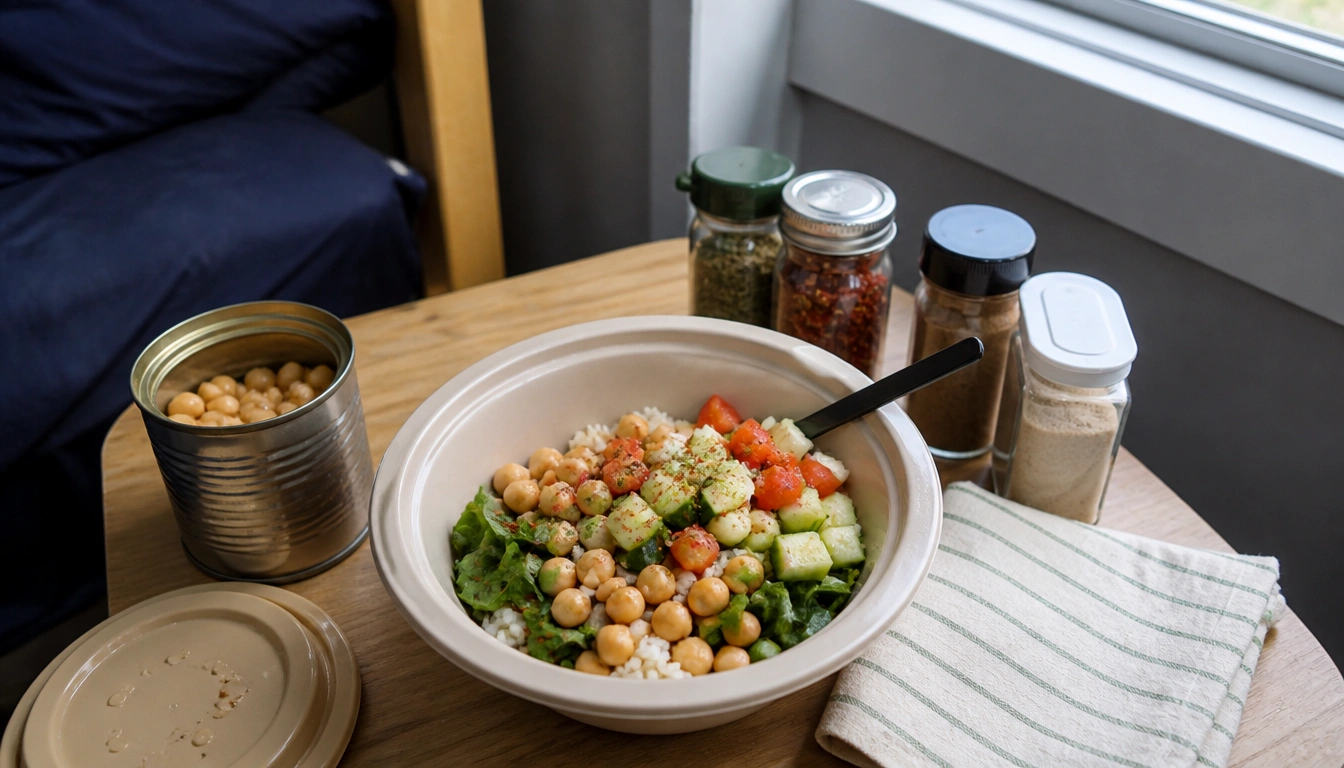
The easiest, cheapest, and most filling chickpea dinners for college students usually start with canned chickpeas, a microwaveable grain, and any vegetables you can get. You can make a solid dinner as a bowl, curry, crispy sheet-pan meal, or sandwich filling with very little equipment. Rinsing canned chickpeas, seasoning them well, and adding fiber-rich vegetables helps make the meal tastier and more balanced.
Key Takeaways
- Canned chickpeas are a budget-friendly pantry staple that save time, reduce food waste, and need no soaking or long cooking.
- For a more filling dinner, pair chickpeas with vegetables and a whole grain using the MyPlate idea of a balanced plate.
- Rinsing canned chickpeas can help lower sodium and improve their flavor before seasoning.
- Start with smaller portions if you are not used to beans; building up gradually can help limit bloating or gas.
- You can make chickpea dinners with a microwave, hot plate, toaster oven, or one pan—no full kitchen required.
Why chickpeas are a smart college dinner staple
Chickpeas are one of the most useful foods to keep around when you are juggling classes, a tight budget, and limited kitchen equipment. A can of chickpeas is shelf-stable, inexpensive, and ready to eat after a quick rinse. That makes it easier to cook something real instead of defaulting to snack foods or takeout.
They also help meals feel more satisfying. Chickpeas bring together plant protein and fiber, a combination that can keep you full longer than a refined-carb meal by itself. That matters on long study days, especially when you need dinner to carry you through the evening without another snack run.
Public health guidance from USDA MyPlate encourages a plate built around vegetables, protein, and grains. Chickpeas fit that model well because they can play the protein role while still contributing fiber and complex carbohydrates. The USDA also treats beans and other legumes as economical staples that work well in many healthy meal patterns.
For college cooking, the real advantage is flexibility. Chickpeas can be eaten warm or cold, mashed or whole, crispy or saucy. They work in bowls, wraps, salads, curries, and toast. If you only have a microwave, a single burner, or a toaster oven, they still make dinner doable.
What makes a chickpea dinner actually filling: protein, fiber, and balanced plate building
A chickpea dinner feels more complete when it has three parts: a protein base, a vegetable, and a grain or starch. Chickpeas cover a lot of the protein and fiber on their own, but a bowl that only contains beans can still feel flat. Adding vegetables brings volume and color, while grains or bread add enough substance to make the meal feel like dinner instead of a side dish.
A simple dorm-friendly formula is: base + protein + vegetable + flavor. The base might be microwave rice, couscous, toast, tortillas, or greens. The protein is usually chickpeas, though you can add eggs, yogurt, cheese, or tofu if you want. The vegetable can be fresh, frozen, canned, or bagged salad mix. Flavor comes from a sauce, spice blend, dressing, salsa, pesto, curry paste, or lemon juice.
Using the MyPlate idea makes this easier: aim for about half the meal from vegetables and fruit, one quarter from whole grains or other quality carbohydrates, and one quarter from protein foods like chickpeas. You do not need to measure perfectly. The point is to avoid a bowl that is all starch or all beans. Mixing in vegetables and whole grains improves texture, keeps the meal more balanced, and helps it feel less repetitive.
Texture matters too. Chickpeas taste better when you give them contrast. Pair soft chickpeas with crunchy cucumber, roasted broccoli, toasted bread, or a crisp tortilla. That small detail can turn a basic pantry dinner into something you actually want to eat after a long day.
Recipe 1: 5-minute Mediterranean chickpea bowl with microwave grains
This is the fastest chickpea dinner for a dorm room or shared kitchen, especially if you keep microwave rice or another ready-to-heat grain on hand. It works well when you want something fresh but do not want to cook from scratch.
How to build it
- Microwave a pouch or cup of brown rice, quinoa, or another grain.
- Rinse and drain canned chickpeas, then add them to the bowl.
- Top with chopped cucumber, tomatoes, spinach, or any salad mix you have.
- Finish with olive oil, lemon juice, salt, pepper, and herbs.
- Add feta, hummus, or plain yogurt if you want more richness.
This bowl is forgiving. If you do not have fresh vegetables, use frozen corn, jarred roasted peppers, or even leftover steamed vegetables from campus dining. If you want more flavor, stir the chickpeas with garlic powder, oregano, paprika, or a spoonful of pesto before adding them to the bowl. For students with only a microwave, this is one of the easiest ways to use canned chickpeas without needing a skillet or oven.
Recipe 2: sheet-pan crispy spiced chickpeas and roasted vegetables
If you have access to a toaster oven or oven, this version gives chickpeas a crisp texture that feels more like a real roasted dinner. It also works well for meal prep because you can make several servings at once.
Simple method
- Drain chickpeas and pat them dry so they roast instead of steam.
- Toss them with a little oil, cumin, paprika, garlic powder, salt, and pepper.
- Add chopped vegetables such as broccoli, bell peppers, onions, or zucchini.
- Roast on a sheet pan until the vegetables are tender and the chickpeas are browned.
- Serve in a tortilla, over greens, or with rice.
The easiest version uses vegetables that roast at about the same rate. Broccoli, cauliflower, onions, and bell peppers are reliable choices. If you want more of a meal-prep format, make extra and store the roasted chickpeas and vegetables separately so the chickpeas do not lose all their texture. A yogurt sauce, tahini dressing, or salsa can help tie everything together.
This recipe is especially useful if your dorm or apartment has a toaster oven but not a full stovetop. It gives you a hot, savory meal with very little active work and makes the cheapest pantry protein feel more substantial.
Recipe 3: quick skillet chickpea curry for one-pan cooking
A quick chickpea curry is one of the best hot plate dinners because the sauce carries a lot of the flavor. You do not need a long ingredient list. A skillet or small saucepan is enough.
One-pan approach
- Warm a little oil in a skillet on a hot plate.
- Add curry powder or curry paste and stir briefly until fragrant.
- Pour in rinsed chickpeas and a little coconut milk, broth, or tomato sauce.
- Simmer until the sauce thickens.
- Add spinach, frozen peas, or any quick-cooking vegetable at the end.
Serve it with microwave rice, naan, toast, or any grain you already have. If your pantry is limited, tomato sauce alone can carry the dish, especially with garlic and cumin. If you want a creamier curry, use coconut milk, but you can keep it lighter with broth and a spoonful of yogurt at the end.
For college cooking, this format is useful because it turns basic pantry ingredients into something warm and filling without much cleanup. You can also adjust the texture: mash a few chickpeas into the sauce to make it thicker, or leave them whole for a chunkier meal.
Smashed chickpea melt or sandwich filling works well when you need a fast dinner without sitting down to a bowl. Mash drained chickpeas with mustard, mayonnaise or yogurt, chopped pickles or celery, salt, and pepper. Spread it on bread or a tortilla, add cheese if you want, and heat it in a toaster oven or skillet until warm. It is a good way to use small amounts of leftover vegetables too.
Budget, storage, and shopping tips for students buying canned versus dried chickpeas
For most students, canned chickpeas are the easiest starting point. They cost a little more than dried chickpeas in some stores, but they save time, need no soaking, and are less likely to go unused. That matters when you have limited storage and do not want ingredients sitting around for weeks. Dried chickpeas can be a smart buy if you cook regularly, have space to store them, and are comfortable with the extra prep.
The most practical student strategy is to keep a few cans in the pantry and buy dried chickpeas only if you know you will use them. Shelf-stable ingredients reduce waste because they do not spoil quickly, which is helpful when your schedule changes from week to week.
To make canned chickpeas taste better, rinse and drain them first. This can help lower sodium and remove some of the canned flavor. After rinsing, season them more boldly than you might expect. Chickpeas are mild on their own, so they usually need salt, acid, herbs, spices, or a sauce. Garlic powder, cumin, curry powder, chili flakes, lemon juice, vinegar, and olive oil all help.
Texture upgrades matter too. Patting chickpeas dry before roasting, warming them in a skillet with spices, or lightly smashing them for a sandwich filling can make them more satisfying. If you only have a microwave, even a quick heat with sauce or seasoning helps them taste less plain.
Digestive comfort tips for increasing fiber without overdoing it
Chickpeas are a good fiber source, but if you are not used to eating many beans, your stomach may need time to adjust. Starting with a large portion all at once can lead to temporary bloating or gas for some people. That does not mean chickpeas are a bad fit. It usually means your intake needs to build more gradually.
A practical approach is to begin with a small serving and spread chickpea meals across the week instead of loading up in one sitting. Pair them with enough water and other foods, especially vegetables and grains, rather than eating them alone. Gentle seasoning, rinsing canned beans, and choosing softer cooking methods can also feel easier on digestion than very large portions of dry-roasted chickpeas.
If you are new to high-fiber meals, pay attention to your own pattern. Some people tolerate chickpeas well in soups, curries, or mashed fillings but not as a large salad topping at first. You can experiment with portion size, preparation method, and frequency. If digestive symptoms are severe, persistent, or painful, that is a reason to check in with a healthcare professional rather than trying to push through it.
Simple swaps for vegetarian, vegan, and gluten-free needs
Chickpea dinners are naturally flexible, which makes them useful in shared housing where people eat differently. For vegetarian meals, cheese, yogurt, and eggs can add extra protein or richness without changing the core recipe. For vegan meals, use olive oil, hummus, tahini, avocado, or a plant-based yogurt instead.
For gluten-free needs, chickpeas themselves are naturally gluten-free, but the rest of the meal matters. Use rice, potatoes, corn tortillas, gluten-free bread, or quinoa instead of wheat bread or regular pasta. Check labels on curry paste, seasoning blends, sauces, and canned products if cross-contact matters to you.
These swaps let the same basic dinner formula stay useful across different budgets and dietary needs. A chickpea bowl, curry, roasted tray, or sandwich filling can be adjusted without starting over, which is exactly what college cooking needs most: less friction, not more rules.
Frequently Asked Questions
How do I make chickpeas taste good with almost no cooking tools?
Rinse and drain them, then use bold seasoning and acid. Lemon juice, vinegar, garlic powder, cumin, chili flakes, pesto, salsa, or hummus can make canned chickpeas much more flavorful even if you only have a microwave or a bowl.
Are canned chickpeas healthy for everyday college meals?
Yes, they can fit well in everyday meals. Canned chickpeas provide protein, fiber, and useful minerals, and they are convenient for busy students. Choosing low-sodium versions and rinsing them helps make them a better everyday pantry food.
What can I do to reduce sodium in canned chickpeas?
Choose low-sodium or no-salt-added cans when possible, then rinse and drain the chickpeas before using them. That simple step can help reduce salt content and also improve flavor by washing away some of the canning liquid.
How can I make chickpea dinners more filling and balanced?
Use the MyPlate idea: pair chickpeas with vegetables and a grain or starch. For example, make a bowl with rice and spinach, a wrap with roasted vegetables, or a curry with bread or rice. That combination is more satisfying than chickpeas alone.
What are some dorm-friendly chickpea meals for a microwave, hot plate, or mini-fridge setup?
Try a microwave rice bowl, a quick hot plate curry, a smashed chickpea sandwich filling, or chickpeas mixed into a salad kit. If you have a toaster oven, roasted chickpeas and vegetables are another easy option.
The Bottom Line
Chickpeas are one of the best budget dinners for college students because they are cheap, shelf-stable, filling, and easy to turn into different meals with minimal equipment. A can plus a grain and a vegetable is often enough for a solid dinner.
If you want the easiest path, start with rinsed canned chickpeas, add strong seasoning, and build around what your kitchen can handle. Microwave bowls, quick curries, roasted trays, and sandwich fillings all work within a dorm-friendly routine.
Medical disclaimer
Medical disclaimer: This content is for educational and informational purposes only and is not a substitute for professional medical advice, diagnosis, or treatment. Dietary needs and supplement suitability vary by individual.
