
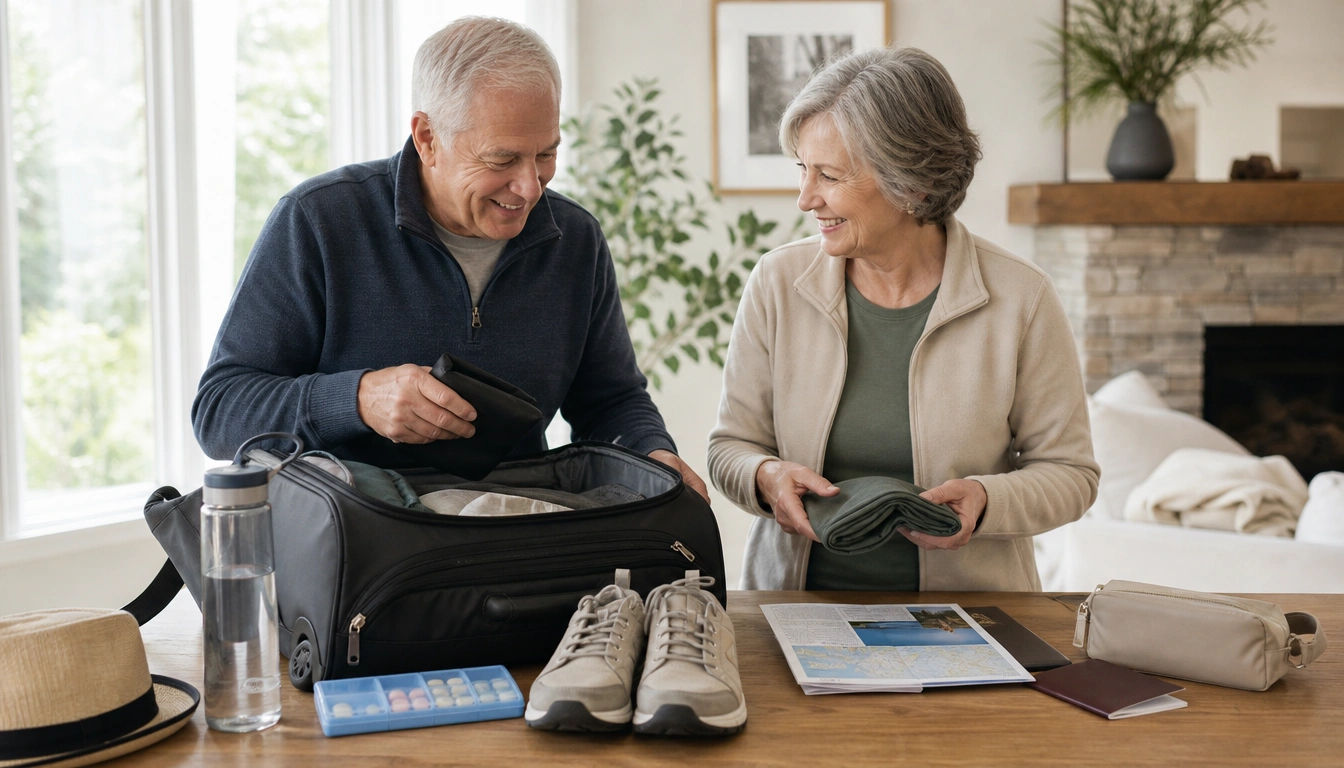
If you are over 60, the best way to stay stable while traveling is to plan early, keep medicines and documents in your carry-on, protect hydration and sleep, move regularly, and make the trip easier on your body with realistic pacing. A pre-travel medical visit at least 4 to 6 weeks before departure gives you time to review vaccines, medications, chronic conditions, and any mobility or fall-risk concerns.
Key Takeaways
- Schedule a pre-travel medical visit at least 4 to 6 weeks before departure so there is time to update vaccines, review conditions, and adjust plans.
- Keep essential medicines, a written schedule, and a clinician’s medication list in your carry-on, not your checked bag.
- Use small routine anchors during travel: regular water, planned meals, short walks, rest breaks, and enough sleep.
- Reduce clot risk on long flights or rides by moving often, wearing loose clothing, staying hydrated, and asking a clinician if compression stockings are appropriate.
- Choose accessible lodging and realistic sightseeing plans so stairs, uneven ground, and over-scheduled days do not wear you down.
- Watch for urgent symptoms such as chest pain, one-sided leg swelling, severe dehydration, confusion, or trouble breathing, and get help promptly.
Older-adult travel planning timeline
The healthiest trip often starts weeks before you leave. Public health and travel medicine guidance recommend a pre-travel visit at least 4 to 6 weeks before departure. That window matters because it gives you time to review current health conditions, update vaccines, check whether prescriptions are current, and plan for any mobility or nutrition concerns that could affect your trip.
Use that visit to talk through your destination, trip length, altitude or climate changes, and any medicine that could be disrupted by time zones. If you have diabetes, heart disease, blood pressure concerns, lung disease, kidney disease, or a history of blood clots, ask for a fitness-to-travel review rather than assuming your usual routine will translate neatly to travel days.
It also helps to think through practical details early: whether your lodging has an elevator, whether you need a ground-floor room, how you will get from the airport or station to your stay, and whether your itinerary has enough rest built in. For many travelers over 60, the biggest problem is not the distance itself but the accumulation of small stressors.
If you travel internationally, consider travel health insurance and emergency coverage early as well. Standard domestic coverage often does not help overseas, so sorting out medical protection before you leave can prevent a financial emergency from becoming a health emergency too.
Medication and document system for travel days
Keep essential medications in your carry-on bag, never in checked luggage. That includes daily prescriptions, rescue medicines, and any over-the-counter products you rely on in a steady routine. A checked bag can be delayed, lost, or inaccessible at exactly the wrong time. Keep the original labeled containers when possible, and bring enough medication for the trip plus a buffer in case of delays.
Pack a written medication list that includes each medicine’s name, dose, timing, and why you take it. A doctor’s summary letter can help if you need refills, have a medical device, or need to explain a treatment plan to a clinician abroad. Keep copies of insurance details, emergency contacts, passport or ID, and any important instructions in a separate place from the originals.
A backup system is useful for people and caregivers alike. Save photos or scans of the documents in a secure phone folder or cloud account, and keep paper copies in the bag you use most often. If you take medicines that must be refrigerated, need special devices, or require strict timing, ask your clinician before you leave how to handle the trip day and possible delays.
For older adults, the goal is not just packing medicines. It is making them easy to find, easy to verify, and hard to lose under travel stress.
How to keep your body on a stable rhythm while traveling
Travel disrupts routines because sleep, meals, movement, and bathroom access are less predictable. To keep your body steadier, build a simpler version of your home schedule rather than trying to run on adrenaline. Eat at regular intervals if you can, drink water on purpose, and choose a pace that leaves some energy in reserve.
That may mean one active outing and one quieter block in the same day, instead of filling every hour. A calm afternoon rest, a shorter walking route, or a lower-exertion sightseeing day can protect energy for the whole trip. If you normally take an afternoon break at home, keep that habit while away.
Hydration deserves special attention because travel often reduces water intake. Cabin air is dry, long drives are dehydrating, and busy sightseeing makes people forget to drink. Carry a reusable bottle when allowed, refill it when safe and practical, and sip regularly rather than waiting until you feel thirsty. If local water safety is uncertain, use bottled or purified water as appropriate.
Sleep and light activity also work together. Try to get daylight and gentle movement when you arrive, but avoid making the first day a marathon. Walking a little, stretching, and unpacking can help you settle in without draining yourself.
Blood clot prevention during flights, car rides, and train trips
Older adults have a higher risk of deep-vein thrombosis, or DVT, during long periods of sitting. The risk rises when you stay still for many hours on a plane, in a car, or on a train. The most useful prevention steps are simple: move, avoid tight clothing, and stay hydrated.
Try to stand and walk when it is safe and practical, or at least change position regularly. In a seat, do ankle pumps and flex your feet often to keep blood moving in the legs. Avoid crossing your legs for long stretches if possible, and choose loose, comfortable clothing that does not restrict circulation. These are practical habits, not magic fixes, but they do help reduce stasis.
Some travelers may benefit from compression stockings, but that should be discussed with a clinician first, especially if you have circulation problems, diabetes, leg swelling, or previous clotting issues. Compression is not a one-size-fits-all decision. Your doctor can tell you whether it is appropriate and how to use it safely.
Also watch for the difference between normal stiffness and a possible clot. New one-sided leg swelling, calf pain, warmth, or tenderness should not be brushed off after a long trip.
Vaccines, infection prevention, and food and water safety
Age brings changes in immune function, and travel adds exposure to crowded terminals, new pathogens, and unfamiliar food and water systems. Before you go, review routine vaccines and destination-specific needs with your clinician. Common review points include influenza, COVID-19, pneumococcal vaccination, RSV, tetanus-diphtheria-pertussis, and shingles, along with any vaccines recommended for the destination.
Infection prevention is partly about preparation and partly about daily choices. Wash your hands often, carry sanitizer when soap and water are not nearby, and avoid touching your face in crowded settings as much as possible. If you are going somewhere with questionable sanitation, pay close attention to what you drink and eat. Tap water, ice, raw produce, and unpasteurized dairy may carry more risk in some places.
Food- and water-related illness can hit older adults harder because dehydration happens faster and recovery may take longer. If you develop diarrhea, vomiting, fever, or a respiratory illness while traveling, do not try to simply push through it. Rest, replace fluids, and seek care promptly if symptoms are severe, persistent, or interfere with keeping water down.
A cautious approach does not mean avoiding every new food or activity. It means reducing avoidable exposure so a minor illness does not become the thing that knocks you off your trip.
Choosing lodging, routes, and daily activities that reduce fall risk
Mobility planning matters just as much as sightseeing planning. Older travelers often do better when they choose lodging with elevators, accessible bathrooms, and fewer stairs. If stairs are a concern, ask specifically about the room location, elevator access, shower setup, and the distance from the entrance to your room.
Pack supportive, broken-in walking shoes. New shoes can cause blisters, change your gait, and raise fall risk on uneven sidewalks or cobblestones. A stable shoe is often more useful than a stylish one when you are crossing unfamiliar streets or walking longer than usual.
It also helps to resist over-scheduling. Many travel injuries and flare-ups come from trying to do too much in one day. Group your plans so you are not forced into long walks, repeated stairs, or late-night transit after a full day of activity. If a destination is known for hills, uneven pavement, or crowded transport, build in more time and fewer commitments.
For caregivers helping an older traveler, the best support is often logistical: checking the route, confirming accessibility, and leaving room for rest. That kind of planning protects energy without making the trip feel clinical.
How to manage chronic conditions and time-zone changes
Time-zone shifts can complicate medication schedules, especially for medicines that must be taken at precise intervals. Ask your clinician before the trip whether you should keep taking medicines on home time, shift them gradually, or adapt them to the destination schedule. That question is especially important for critical medicines such as anticoagulants, insulin, or certain blood pressure treatments.
Do not guess based on convenience alone. Changing the timing of some medicines too abruptly can lead to missed doses, accidental double-dosing, or symptoms that are harder to interpret while traveling. A written schedule that shows what to take and when can prevent confusion on long travel days and after you arrive.
If you manage a chronic condition, bring the tools you need to monitor it. That may include a blood glucose meter, a blood pressure cuff, or other supplies your clinician says are relevant. Keep them accessible rather than buried in checked baggage. Also think about meal timing, since missed meals can affect energy, blood sugar, and medication tolerance.
After arrival, give yourself a day or two to settle into a steady pattern. Sleep, hydrate, eat, and take medicines consistently before trying to pack the itinerary full again.
When to stop and get medical help
Seek urgent medical attention if you have chest pain, pressure, sudden shortness of breath, fainting, or sudden confusion. Those can signal a serious heart, lung, or neurologic problem and should not wait for the end of the trip.
Get evaluated promptly for one-sided leg swelling, calf pain, warmth, or tenderness after long travel because those can be signs of DVT. Also seek care if you have vomiting or diarrhea that is severe, persistent, or leaves you unable to keep fluids down. Dehydration can develop quickly in older adults and can become dangerous before it feels dramatic.
If you have a fever, worsening cough, trouble breathing, or a suspected infection that is not improving, get help rather than hoping it will pass on its own. The same applies to falls with head injury, new weakness, speech changes, or any symptom that feels sudden or unusual for you.
Travel is easier when you know your red flags in advance. That way, you can enjoy the trip without ignoring the moments when medical care is the safer choice.
Frequently Asked Questions
How far in advance should an older adult see a doctor before traveling?
A pre-travel medical visit is recommended at least 4 to 6 weeks before departure. That gives time to review vaccines, prescriptions, chronic conditions, mobility concerns, and any destination-specific risks before you leave.
What medications and documents should I pack in my carry-on instead of checked luggage?
Pack all essential prescription medicines, rescue medications, and any supplies you may need during the trip. Keep them in original labeled containers when possible, along with a written medication list, doctor’s summary letter if needed, insurance information, and emergency contacts.
How can I reduce DVT risk on long flights or long car rides?
Move regularly, do ankle pumps, avoid tight clothing, and stay hydrated. If you have clotting risks or circulation problems, ask a clinician whether compression stockings are appropriate for you before the trip.
How should adults over 60 manage medications across time zones?
Do not assume a one-size-fits-all schedule. Ask your clinician whether to keep home-time dosing, shift gradually, or adjust to the destination time zone, especially for critical medicines such as insulin, anticoagulants, or certain blood pressure drugs.
Which vaccines should older adults review before travel?
Review routine vaccines and destination-specific needs with your clinician. Common ones to discuss include flu, COVID-19, pneumococcal vaccine, RSV, tetanus-diphtheria-pertussis, shingles, and any travel vaccines required for the destination.
The Bottom Line
A healthy travel routine after 60 is built before the trip starts: check in with a clinician early, organize medications and documents, and plan for accessibility, rest, and realistic pacing. Small steps make a big difference when you are away from home.
During the trip, protect the basics that keep you steady: drink water regularly, move often, eat on a schedule, keep medicines on time, and watch for infection, dehydration, clotting, or fall-related symptoms. If something feels off, get medical help sooner rather than later.
Medical disclaimer
Medical disclaimer: This content is for educational and informational purposes only and is not a substitute for professional medical advice, diagnosis, or treatment. Dietary needs and supplement suitability vary by individual.
Sources
- National Institutes of Health (NIH) — nih.gov. Accessed November 2026.
- National Institutes of Health (NIH) — nih.gov. Accessed November 2026.
- healthinaging.org — healthinaging.org. Accessed November 2026.
