
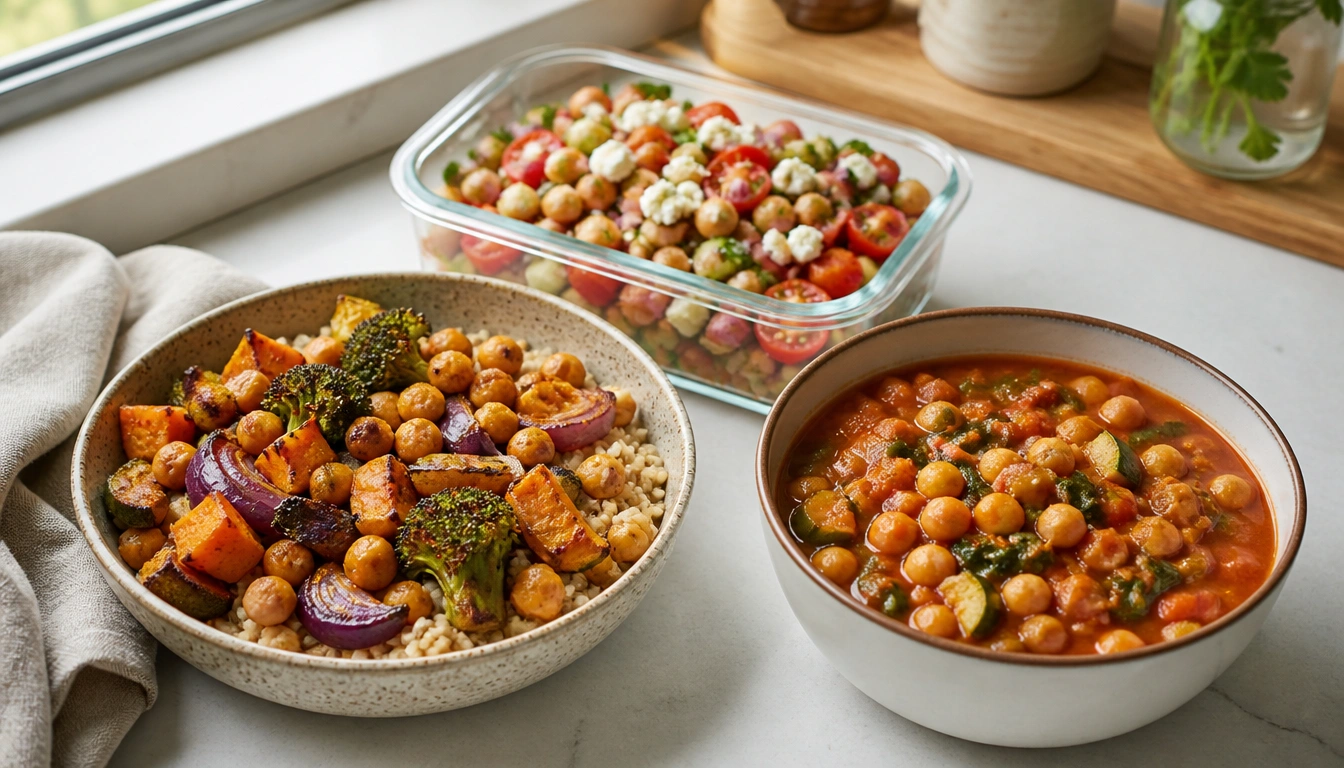
The easiest chickpea dinners for meal-prep beginners are the ones that need little technique and hold up well in storage: sheet-pan roasted chickpea and vegetable grain bowls, a no-cook Mediterranean chickpea salad, and a simple chickpea vegetable stew. Canned chickpeas are the easiest starting point because they save time, and rinsing them first can help with sodium management.
Key Takeaways
- Canned chickpeas are the simplest beginner option, especially when you want fast prep and reliable results.
- Chickpeas work best in balanced meals built from protein, vegetables, whole grains, and a simple sauce or dressing.
- Sheet-pan bowls are a strong starter meal prep because roasted chickpeas and sturdy vegetables keep their texture for several days.
- No-cook chickpea salad is the fastest option and is useful when you want a dinner that tastes good straight from the fridge.
- A simmered chickpea stew is the best freezer-friendly choice if you want make-ahead dinners beyond the next few days.
Why chickpeas work so well for beginner meal prep
If you are looking for easy chickpea dinner ideas for meal-prep beginners, chickpeas are a smart place to start because they are forgiving. They do not need complicated seasoning, they pair with many vegetables and grains, and they stay structured better than many other plant foods after a few days in the fridge. That makes them especially helpful when you are still building confidence in the kitchen.
Public health guidance from the USDA Dietary Guidelines and related federal food guidance encourages building meals from protein foods, vegetables, whole grains, and healthy oils. Chickpeas fit naturally into that pattern. They bring plant protein, fiber, and slow-digesting carbohydrates, which helps a meal feel more satisfying without requiring much effort from the cook.
For beginners, canned chickpeas are usually the easiest starting point. They are ready to use after draining and rinsing, which cuts down on soaking, cooking, and planning. Dried chickpeas can be a good choice later if you enjoy batch cooking, but they require more time and a little more confidence with timing. If your goal this week is a dinner that feels manageable, canned chickpeas are the practical choice.
A simple meal-prep formula also helps: chickpeas + vegetables + whole grain + sauce. Once you know that pattern, you can swap ingredients based on what is in your kitchen. Brown rice, quinoa, farro, or whole-wheat couscous can be the grain; broccoli, peppers, cucumbers, tomatoes, spinach, or carrots can be the vegetables; tahini, yogurt-based dressing, lemon vinaigrette, or a tomato sauce can finish the bowl. That structure keeps dinner balanced without making the process feel rigid.
Sheet-pan bowls, no-cook salads, and a simple stew
The easiest chickpea dinners usually fall into three categories: a warm roasted bowl, a chilled salad, or a one-pot stew. Each one works for a different kind of week, but all three are beginner-friendly because they keep the ingredient list short and the steps clear.
Sheet-pan roasted chickpea and vegetable grain bowls
This is the most flexible option if you want a hearty dinner that reheats well. Drain and rinse canned chickpeas, then pat them dry so they roast instead of steaming. Toss them with olive oil, garlic powder, cumin, or paprika, then spread them on a sheet pan with sturdy vegetables such as broccoli, cauliflower, bell peppers, onions, or cubed sweet potato. Roast until the vegetables are tender and the chickpeas have a little texture on the outside.
Serve the roasted mixture over a whole grain such as brown rice or quinoa. Add a sauce on the side so the grain stays fresh instead of soggy. A tahini-lemon sauce, a yogurt-herb sauce, or even a simple olive oil and lemon dressing works well. This style is especially useful when you want a dinner that feels complete without requiring multiple pans.
No-cook Mediterranean chickpea salad
If you need the fastest possible dinner, a no-cook salad may be the best answer. Combine rinsed chickpeas with cucumbers, cherry tomatoes, red onion, olives, parsley, and a little feta if you eat dairy. Dress it with olive oil, lemon juice, oregano, salt, and pepper. That is enough for a bright, satisfying meal that can be eaten cold or spooned over greens and whole grains.
This version is ideal for beginners because there is no stove or oven work, and the flavors improve after resting overnight. It is also a useful template for using leftovers. Add chopped bell peppers, shredded carrots, or cooked farro if you want more volume and staying power. Keep extra dressing separate if you want the vegetables to stay crisp longer.
Slow-simmered chickpea and vegetable stew
When you want something comforting and freezer-friendly, a simple stew is the best fit. Start with onion and garlic in a pot, then add canned tomatoes, broth, chickpeas, and vegetables such as carrots, celery, spinach, or kale. Season with cumin, chili powder, smoked paprika, or dried thyme. Let the mixture simmer until the vegetables are tender and the broth thickens slightly.
This approach is less about precision and more about balance. You get protein from the chickpeas, vegetables for color and texture, and enough liquid to make a warm dinner that reheats smoothly. It also freezes well, which makes it a good choice if you like making a large batch and portioning it for later in the month.
A simple comparison for planning your week
If you are choosing between these chickpea dinner ideas, think about how much time you have, how you want the food to feel after storage, and whether you need something for the fridge or freezer. The three recipes solve different problems.
| Meal idea | Prep style | Best fridge life | Freezer use | Texture note |
|---|---|---|---|---|
| Sheet-pan roasted chickpea bowls | Hands-off once chopped | About 3 to 4 days | Possible, but not the best choice | Best when sauce is kept separate |
| No-cook Mediterranean chickpea salad | Fast assembly | About 3 to 4 days | Not recommended | Stays crisp if watery ingredients are limited |
| Chickpea and vegetable stew | One-pot simmer | About 4 to 5 days | Yes, about 2 to 3 months | Soft and comforting rather than crisp |
A single prep session can cover all three if you want variety. Cook one grain, roast a tray of vegetables, and mix a simple dressing or sauce. Then use the same chickpeas in different formats: some roasted for bowls, some tossed into a salad, and some simmered into stew. That gives you more flexibility without doubling your work.
To stay efficient, wash and chop vegetables first, then handle the chickpeas, then cook the grain last or use a microwave packet if that is easier. Keep a few small containers ready for sauces and toppings. This small step makes a big difference in texture, because it prevents dressings from soaking into everything before you are ready to eat.
Storage and food-safety basics for chickpea meal prep
Good storage matters as much as the recipe. The USDA and CDC advise refrigerating cooked food promptly, ideally within two hours of cooking, and within one hour if the room is very hot. Use shallow containers when possible so food cools faster, and keep your refrigerator cold enough for safe storage.
For chickpea meal prep, components do not all need the same container. Pack sauces separately when you can. Keep crunchy vegetables, greens, and warm grains apart until serving if you want better texture. Roasted chickpeas and vegetables can be stored together, but delicate ingredients such as lettuce, cucumber, and fresh herbs hold up better if they are added right before eating.
As a practical rule, grain bowls and salads are usually best within 3 to 4 days, while stews often hold a bit longer and can be frozen for later. If you know you will not finish a batch in that window, freeze it right away in single portions. That is especially helpful for stew, which reheats well from frozen and avoids waste.
Food safety is also simpler when you avoid overpacking containers. Leave a little room for airflow as food cools, and do not stack warm containers tightly in the fridge. The goal is to chill food quickly and consistently, not just to store it somewhere cold.
Adjusting for digestion, fiber tolerance, and sodium
Chickpeas are high in fiber, which is part of what makes them so useful in a balanced meal. Still, if you are new to eating more legumes, your digestion may need time to adapt. Some people notice temporary bloating or gas when they suddenly increase fiber and certain fermentable carbohydrates. That does not mean chickpeas are a bad choice; it usually means your body may do better with a gradual start.
Begin with a smaller portion and see how you feel. If you tolerate it well, build up over time. Drinking enough water during the day also helps fiber move through the digestive system more comfortably. If you have a medical condition that affects how you handle high-fiber foods, personalized advice from a clinician or registered dietitian can be useful.
Sodium is another common issue with canned chickpeas. A simple fix is to rinse them thoroughly under cold running water before using them. You can also choose no-salt-added canned chickpeas when available. That keeps the convenience of canned beans while giving you more control over the overall sodium level in the meal.
If you want even more control, build flavor with herbs, citrus, garlic, vinegar, cumin, smoked paprika, or chili flakes instead of leaning only on salt. Those ingredients make the meal taste fuller without making sodium the main seasoning strategy.
Easy flavor upgrades and mix-and-match sauce ideas
Once the base meal is set, flavor is the easiest place to vary chickpea dinners without adding much work. The same bowl can taste very different depending on the sauce and finishing ingredients.
For a Mediterranean direction, use lemon juice, olive oil, garlic, dill, parsley, and a spoonful of yogurt or tahini. For a warmer, cozier flavor, use cumin, coriander, paprika, tomato, and a drizzle of olive oil. For a brighter grain bowl, try a vinaigrette with lemon, mustard, and herbs. These options work because they match the natural flavor of chickpeas rather than hiding it.
Healthy fats are useful here, not just for taste but also for satisfaction. Olive oil, avocado, tahini, seeds, and nuts can round out a meal that might otherwise feel dry. Add them in small amounts as finishing elements rather than cooking the whole meal in heavy sauces.
Mix-and-match toppings can also help you use what you already have. Toasted pumpkin seeds, chopped walnuts, crumbled feta, diced avocado, fresh herbs, or pickled onions can all make a simple chickpea dinner feel more complete. Keep the toppings separate until serving so they stay fresh and textured.
Troubleshooting sogginess, blandness, and overcooking
If your chickpea meal prep gets soggy, the problem is usually moisture management, not the chickpeas themselves. Dry the chickpeas well before roasting, cool cooked food before sealing the container, and keep sauces separate. For salads, use sturdy vegetables and reduce watery ingredients such as tomatoes or cucumbers if you are planning to store the meal for several days.
If the food tastes bland, it usually needs acid, salt, or a more assertive seasoning blend. A squeeze of lemon, a splash of vinegar, or a spoonful of tahini sauce can brighten the whole container. Roasted chickpeas also benefit from being seasoned before and after cooking, especially if you want them to stand out in a grain bowl.
Overcooking is mostly a concern with vegetables and grains rather than canned chickpeas. Choose sturdier vegetables for roasting, and cook grains just until tender so they do not collapse when reheated. If you plan to freeze stew, slightly undercooking the vegetables can help them hold their texture better after thawing.
If you want one extra safeguard, taste a small spoonful before packing the meal into containers. That gives you a chance to adjust acidity, seasoning, or texture while the food is still easy to fix.
Choosing the best chickpea dinner for your schedule
The best chickpea dinner is the one you will actually finish. If you want the simplest start, choose the no-cook salad. If you want a warm, filling dinner that stays appealing for several days, make the sheet-pan bowl. If you want the most freezer flexibility, choose the stew. All three are beginner-friendly because they use the same core ingredient in different ways without requiring advanced technique.
Chickpeas are useful for meal prep because they are easy to stock, easy to flavor, and easy to combine with vegetables, grains, and healthy fats. Once you have one or two versions in rotation, you can stop relying on takeout or last-minute pantry scrambling and instead keep a few balanced dinners ready to go.
Frequently Asked Questions
How do I keep chickpea meal-prep dinners from getting soggy?
Store sauces separately, dry the chickpeas before roasting, and choose sturdy vegetables for bowls and salads. If you are packing a cold salad, keep watery ingredients to a minimum or add them right before eating. Cooling food before sealing it also helps reduce trapped steam.
Should I use canned or dried chickpeas for beginner meal prep?
Canned chickpeas are usually the easiest starting point because they are already cooked and ready to use after draining and rinsing. Dried chickpeas can be a good later option if you want to batch cook larger amounts, but they take more time and planning.
How long do chickpea meal-prep dinners last in the fridge or freezer?
Most chickpea grain bowls and salads keep well for about 3 to 4 days in the fridge. Chickpea stew usually lasts about 4 to 5 days refrigerated and can be frozen for about 2 to 3 months. Store meals promptly and freeze portions you will not eat soon.
How can I make chickpea dinners more filling and balanced?
Build the meal around chickpeas plus vegetables, a whole grain, and a healthy fat or sauce. That combination gives better balance than chickpeas alone. Brown rice, quinoa, roasted vegetables, olive oil, tahini, avocado, or a yogurt-based sauce all work well.
What should I do if chickpeas cause bloating or gas?
Start with a smaller portion, increase gradually, and drink enough water through the day. Some people need time to adjust to more fiber and legumes. If digestive symptoms are persistent, severe, or tied to a medical condition, ask a clinician or dietitian for personalized advice.
The Bottom Line
The easiest chickpea dinners for meal-prep beginners are the ones built from a simple formula: chickpeas, vegetables, whole grains, and a sauce kept separate until serving. That structure gives you flexibility without adding much work.
For the fastest path, use canned chickpeas. Rinse them well if sodium is a concern, and choose a recipe based on your schedule: salad for speed, sheet-pan bowls for a hearty fridge meal, or stew for the freezer. Keep an eye on storage time, and give your digestion a little time to adjust if you are new to higher-fiber meals.
Medical disclaimer
Medical disclaimer: This content is for educational and informational purposes only and is not a substitute for professional medical advice, diagnosis, or treatment. Dietary needs and supplement suitability vary by individual.
Sources
- U.S. Government / Health Authority — health.gov. Accessed November 2026.
- U.S. Government / Health Authority — usda.gov. Accessed November 2026.
- U.S. Government / Health Authority — foodsafety.gov. Accessed November 2026.
- Academic Research Institution — harvard.edu. Accessed November 2026.
