
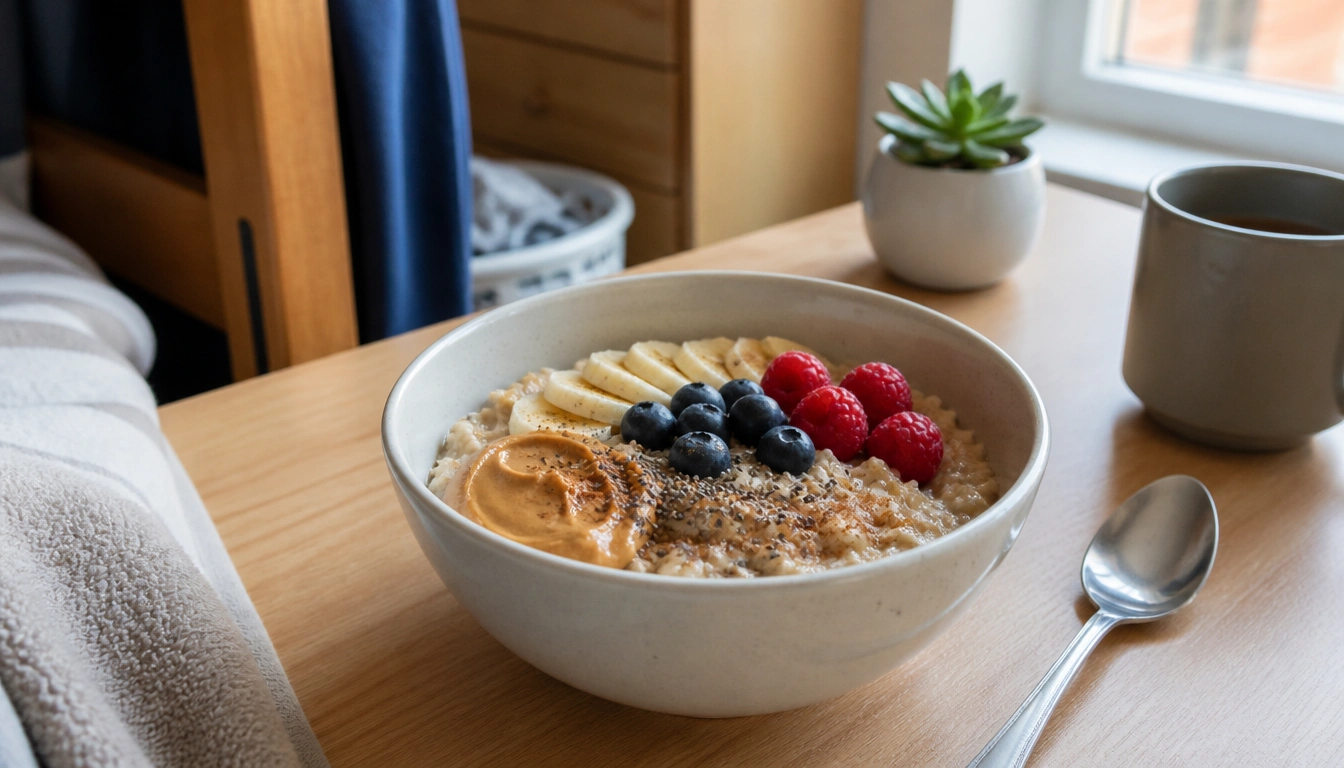
The best affordable foods to add to oatmeal for college students are peanut butter, yogurt or cottage cheese, nuts, seeds, bananas, frozen berries, cinnamon, vanilla, and unsweetened cocoa. These ingredients make oatmeal more filling, more flavorful, and more balanced without needing a full kitchen. If you want the biggest payoff on a budget, focus on one protein or fat source, one fruit, and one simple spice.
Key Takeaways
- Add-ins that include protein or healthy fat, such as nut butter, yogurt, nuts, or seeds, help oatmeal keep you full longer.
- Fruit like bananas, apples, and frozen berries adds natural sweetness, fiber, and micronutrients without much prep.
- Cinnamon, vanilla, nutmeg, and unsweetened cocoa can improve flavor without turning oatmeal into a sugar bomb.
- Shelf-stable and freezer-friendly staples are the easiest dorm options because they store well and work in a microwave.
- If you add more oats, seeds, and berries, keep hydration in mind because a big jump in fiber can feel uncomfortable without enough water.
Why oatmeal works so well for college life
For students juggling early classes, late-night study sessions, and limited dorm kitchen access, oatmeal is one of the most practical base meals available. It is inexpensive, quick to make in a microwave, and flexible enough to fit sweet or savory preferences. Oats are also a whole grain, and they naturally contain soluble fiber called beta-glucan, which helps slow digestion and support satiety.
That makes plain oatmeal a useful starting point, but not always a complete meal by itself. On its own, oats are mostly carbohydrate, so a bowl with only water and oats may leave you hungry again sooner than you want. Adding foods with protein, healthy fats, and extra fiber helps create a steadier energy pattern for classes, labs, and long afternoons at the library.
The good news is that you do not need specialty ingredients to make oatmeal more useful. A few low-cost toppings can change the texture, flavor, and nutrition profile without making breakfast complicated. The best choices are the ones you will actually keep on hand, eat regularly, and prepare in a dorm-safe way.
How to choose add-ins based on your goal
Before buying toppings, think about what you want the bowl to do. If you need something that keeps you full through back-to-back classes, choose ingredients with protein, fat, or extra fiber. If you want a quick meal before a workout, you may want a lighter bowl with fruit and a moderate amount of fat. If you are trying to keep calories lower, measure denser toppings instead of free-pouring them.
A useful rule is to build oatmeal in layers. Start with the oats, then add one ingredient for fullness, one ingredient for taste, and one ingredient for nutrition or variety. For example, peanut butter plus banana is simple and filling. Greek yogurt plus berries gives you protein and freshness. Cinnamon plus cocoa can make a basic bowl taste richer without adding much sugar.
This also helps prevent oatmeal fatigue. Eating the same plain bowl every morning can get old fast, especially if you are already relying on simple dorm food. Small changes in topping combinations make oatmeal feel like a different meal even when the base stays the same.
Best protein and healthy-fat add-ins
If your main goal is staying full, protein and fat are the most useful oatmeal upgrades. Peanut butter, almond butter, or sunflower seed butter are easy dorm staples because they are shelf-stable, portable, and simple to stir into hot oats. They add creaminess and a richer taste, and they pair especially well with banana, apple slices, or cinnamon. Because nut butters are calorie-dense, a measured spoonful is usually enough for most students.
Nuts and seeds are another smart option. Walnuts, almonds, chia seeds, and ground flaxseed all work well in oatmeal. Walnuts bring crunch and plant fats, while chia and flax add extra fiber and a thicker texture. These toppings are easy to keep in a resealable container or small jar, which matters in a dorm where storage space is limited.
Greek yogurt and cottage cheese are useful when you want more protein without relying on powders or cooking extra foods. Stirring them into warm oats can make the texture creamy and more satisfying. If you prefer sweet oatmeal, yogurt also works well with fruit and cinnamon. If you prefer a neutral bowl, cottage cheese can make oats feel more like a savory breakfast base.
These toppings can be especially helpful for student-athletes or students with high energy needs. If you are active and struggle to eat enough, nut butters, nuts, seeds, and full-fat dairy can make oatmeal more substantial. If weight management is your goal, portioning matters more, because these foods can raise the calorie total quickly.
Best fruit add-ins for natural sweetness
Fruit is one of the easiest ways to make oatmeal taste better while adding fiber, vitamins, and a little natural sweetness. Bananas are probably the most dorm-friendly option. A ripe banana can be sliced on top or mashed directly into the oats while they cook. Mashed banana thickens the bowl and reduces the need for added sugar.
Apples are another good budget choice, especially if you buy them in a bag and keep them in your room or shared fridge. Thin slices, diced apples, or even applesauce can work, depending on what you have. Apples pair well with cinnamon and a little nut butter, which creates a classic flavor without much effort.
Frozen berries are especially practical for students because they usually cost less than fresh berries and last much longer. They also work well in microwaved oats, where they soften quickly and release juice into the bowl. That makes the oats taste brighter without needing syrup or extra sweeteners. If you buy one fruit topping on a budget, frozen berries are one of the most versatile choices.
Dried fruit can also work, but it is easier to overdo because it is more concentrated than fresh fruit. A small handful of raisins, chopped dates, or dried cranberries can add sweetness and texture, but they are best used as a supporting ingredient rather than the main topping. Fresh, frozen, and dried fruit all have a place; the best option depends on storage, cost, and how much sweetness you want.
Best flavor add-ins without much sugar
Spices and pantry flavorings are underrated oatmeal upgrades. Cinnamon is one of the simplest and cheapest ways to make oatmeal taste warmer and less plain. Nutmeg adds depth in small amounts, and vanilla extract can make a bowl smell and taste more like a dessert even when you use little or no added sugar.
Unsweetened cocoa powder is another strong option if you want a chocolate flavor without turning breakfast into a candy-like meal. It pairs well with banana, peanut butter, or a little milk. Cocoa can make oatmeal feel more indulgent while keeping the ingredient list short and affordable.
These flavor add-ins are useful because they help you rely less on brown sugar, flavored syrups, or sweetened creamers. Public health guidance encourages keeping added sugars low, and flavor from spices can help you do that without making breakfast boring. If you are trying to build a routine that lasts all semester, the goal is not to eliminate sweetness entirely. It is to make the bowl appealing enough that you do not feel pushed toward sugary toppings every day.
A good dorm strategy is to keep one spice, one extract, and one unsweetened “dessert” ingredient on hand. That small pantry setup gives you variety without taking up much space or money.
Budget and dorm-life buying tips
College food choices are often shaped by storage, transport, and shelf life as much as by nutrition. For oatmeal toppings, the most practical buys are usually shelf-stable or freezer-friendly. Peanut butter, chia seeds, flaxseed, nuts, cinnamon, vanilla, and cocoa powder can sit in a dorm room or pantry for a long time if stored well. Oats themselves are also inexpensive and easy to stock up on.
Frozen fruit can be a smart compromise if you have access to a freezer, even a small shared one. It often costs less than fresh berries and avoids the pressure to eat fruit before it spoils. If freezer space is limited, bananas and apples are easier to manage because they do not require much prep. For small spaces, airtight containers or resealable bags help prevent spills and reduce pest concerns.
Bulk buying can save money if you know what you will use. Large jars of nut butter, family-size oats, and bigger bags of nuts or seeds are often cheaper per serving than individual packs. The tradeoff is storage, so only buy in bulk if you can keep the food sealed and dry. In a dorm, that matters both for freshness and for cleanliness.
Microwave-friendly prep also matters. Use a bowl with enough room so the oats do not boil over, and add toppings after cooking when possible. That keeps textures better and reduces mess. If you are using fruit that cooks down quickly, such as frozen berries or mashed banana, you can add it before microwaving. More delicate toppings, such as yogurt or chopped nuts, usually work better stirred in at the end.
Simple oatmeal combinations for busy students
Sometimes the hardest part is not knowing how the ingredients fit together. A few repeatable combinations can make oatmeal much easier during a busy week. For a fast morning bowl, try oats with peanut butter and banana. It is cheap, filling, and easy to assemble even when you are running late. If you want something brighter, oats with frozen berries and cinnamon are simple and taste more interesting than plain oatmeal.
For a late-night study session, try oats with Greek yogurt, a little cocoa, and sliced banana. That bowl feels more substantial than plain cereal and is less likely to leave you wanting a vending-machine snack right away. If you need a heavier meal after practice or a long workout, oats with nut butter, chia seeds, and walnuts give you more calories and a more durable sense of fullness.
If you want a bowl that tastes like dessert without much added sugar, combine oats with vanilla, cinnamon, and unsweetened cocoa, then top with a few berries or a small spoonful of nut butter. The point is not to chase endless combinations. It is to have a few reliable templates that fit different school-day needs.
Students who do best with routines often keep two or three “default bowls” in rotation. That can reduce decision fatigue and make it easier to eat breakfast consistently, even during exams. It also helps you notice what actually keeps you satisfied, which is often more useful than trying to make every bowl look different.
Portion guidance and when to be cautious
Even healthy add-ins can work against your goals if the portions get too large. Nut butters, nuts, seeds, and dried fruit are all nutrient-rich, but they are also calorie-dense. If weight management matters to you, measuring toppings instead of pouring freely can make a real difference. If you are a student-athlete or someone with a high activity level, the same ingredients can be helpful for meeting energy needs.
Fiber is another area where moderation matters. Oats already provide a meaningful amount of fiber, and adding chia, flax, berries, or large amounts of fruit can increase it further. If your body is not used to that much fiber, you may feel bloated or uncomfortable, especially if you are not drinking enough water. A gradual increase is usually easier than a sudden jump.
Hydration is easy to overlook in college, but it matters when your breakfast is more fiber-heavy. If you increase oatmeal toppings like seeds and berries, make sure your fluid intake stays steady during the day. That can help the meal feel better in your stomach and support normal digestion.
It is also worth paying attention to your overall pattern. If oatmeal is leaving you overly hungry, sluggish, or unwell despite thoughtful toppings, the issue may be meal timing, total intake, or something else entirely. Persistent digestive symptoms, unusual fatigue, or unexplained weight change deserve a conversation with a campus health clinician or registered dietitian.
For most students, though, the safest and smartest approach is simple: build oatmeal with one protein or fat source, one fruit, and one flavor booster. That combination usually gives you a better breakfast without making your morning harder.
Frequently Asked Questions
How can I make oatmeal more filling without spending much money?
Add one low-cost protein or fat source, such as peanut butter, chia seeds, ground flax, or plain yogurt, plus fruit for volume and flavor. These ingredients help oatmeal keep you full longer without requiring expensive toppings or a lot of prep.
What are the best high-protein toppings for oatmeal in a dorm?
Plain Greek yogurt, cottage cheese, nut butter, nuts, chia seeds, and flaxseed are all practical choices. They work well in a microwave-only setup and can be stored easily if you keep them sealed and cold when needed.
What are the healthiest fruits to mix into oatmeal on a budget?
Bananas, apples, and frozen berries are usually the best budget-friendly choices. Bananas are easy to mash into oats, apples are convenient and durable, and frozen berries are often cheaper than fresh fruit while still adding fiber and flavor.
How do I add flavor to oatmeal without lots of sugar?
Use cinnamon, vanilla, nutmeg, or unsweetened cocoa powder. These add depth and make oatmeal taste better without relying on syrup, brown sugar, or flavored creamers. Fruit can also add sweetness naturally.
Can oatmeal help with energy and focus for long class days?
Yes, especially when it includes protein, fat, and fiber. Oatmeal on its own can digest relatively quickly, but add-ins like nut butter, yogurt, and fruit can support steadier energy through a long morning or afternoon.
The Bottom Line
Oatmeal is one of the easiest college meals to improve without spending much or using a real kitchen. The most useful add-ins are the ones that help you stay full, taste good, and fit your dorm setup: nut butter, yogurt, nuts, seeds, bananas, frozen berries, cinnamon, vanilla, and cocoa.
If you want a smarter bowl, aim for balance rather than complexity. One protein or fat source, one fruit, and one flavor booster is usually enough. Keep an eye on portions for calorie-dense toppings, and drink enough water if you increase fiber.
A few repeatable oatmeal combinations can carry you through busy weeks, late study nights, and active days. That kind of simple routine is often more realistic than chasing perfect meals every morning.
Medical disclaimer
Medical disclaimer: This content is for educational and informational purposes only and is not a substitute for professional medical advice, diagnosis, or treatment. Dietary needs and supplement suitability vary by individual.
Sources
- U.S. Government / Health Authority — medlineplus.gov. Accessed November 2026.
- U.S. Government / Health Authority — realfood.gov. Accessed November 2026.
- wholegrainscouncil.org — wholegrainscouncil.org. Accessed November 2026.
