
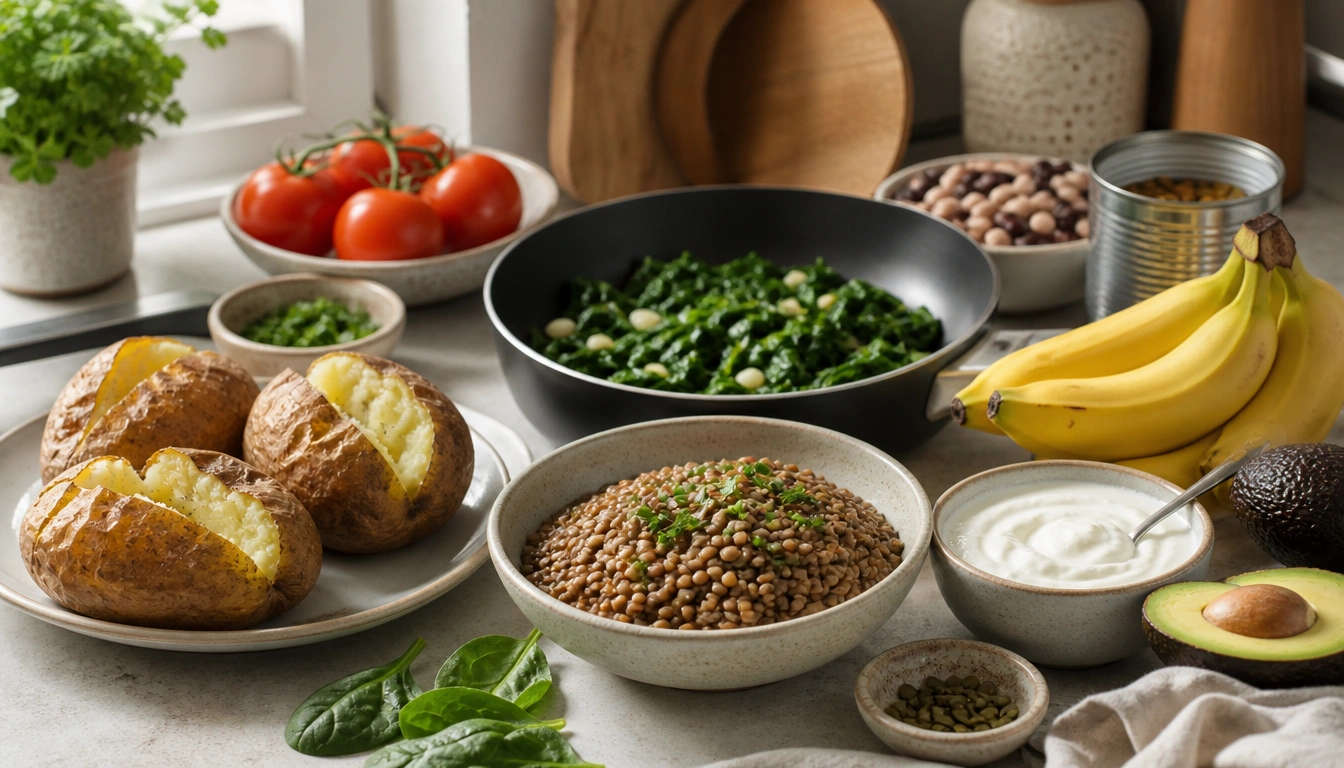
The highest-potassium everyday vegetarian foods are usually whole plant foods: beans and lentils, baked potatoes and sweet potatoes, cooked leafy greens, tomato products, bananas, dried fruit, avocados, dairy, and fortified soy foods. For most healthy adults, a food-first vegetarian pattern can meet potassium needs without supplements. The safest approach is to build meals around these foods, while getting individualized advice if you have kidney disease or take certain blood pressure medicines.
Key Takeaways
- Whole plant foods are the easiest way to raise potassium on a vegetarian diet, especially beans, potatoes, leafy greens, fruit, and tomato products.
- Adult potassium targets differ by life stage: men generally need more than women, and pregnancy and breastfeeding have their own targets.
- Processed vegetarian convenience foods can be low in potassium and high in sodium, which weakens the sodium-to-potassium balance.
- Canned beans, frozen greens, yogurt, bananas, and potatoes are practical beginner foods because they are affordable and easy to prepare.
- People with kidney disease, potassium-sparing medications, ACE inhibitors, or potassium-based salt substitutes need personalized medical guidance before increasing potassium.
Why potassium fits well into a vegetarian diet
Potassium is an essential electrolyte that helps the body manage fluid balance, nerve signaling, and muscle contraction. It also helps offset the effects of sodium on blood pressure. That is one reason a vegetarian pattern can work especially well for potassium: the nutrient is naturally concentrated in many whole plant foods.
For beginners, the simplest strategy is food first. Beans, lentils, potatoes, leafy greens, fruits, tomatoes, and dairy or fortified soy foods can all contribute meaningful potassium without supplements. A mixed vegetarian pattern built around these foods often makes it easier to meet daily needs than a pattern built around frozen meat alternatives, salty snacks, white-flour baked goods, and other highly processed convenience foods.
The practical goal is not perfection. It is to make potassium-rich foods a normal part of meals often enough that the pattern supports health without becoming complicated.
How much potassium adults need
According to the National Academies of Sciences, Engineering, and Medicine as summarized by the NIH Office of Dietary Supplements, potassium needs vary by sex and life stage. These are Adequate Intake levels, which are used when a true recommended dietary allowance has not been set.
| Group | Daily potassium target |
|---|---|
| Adult men, 19 years and older | 3,400 mg |
| Adult women, 19 years and older | 2,600 mg |
| Pregnant women | 2,900 mg |
| Breastfeeding women | 2,800 mg |
These targets are useful because they turn a vague idea like “eat more potassium” into something concrete. A vegetarian beginner does not need to chase one perfect food. Instead, think in terms of several potassium-rich choices spread across the day: a potato at dinner, beans at lunch, yogurt or fortified soy milk at breakfast, and fruit or dried fruit as a snack.
People who sweat heavily, train hard, or have changing fluid needs may need more planning, but that does not automatically mean they need supplements. Healthy kidneys usually keep potassium in range by adjusting what is excreted.
The best everyday vegetarian potassium sources
The most reliable sources are the foods you can buy regularly and prepare without much effort. A helpful way to organize them is by food group.
Beans and lentils: Cooked lentils, black beans, white beans, kidney beans, and soy foods such as edamame are among the most useful staples. They bring potassium together with protein and fiber, which makes them especially valuable in vegetarian meals.
Potatoes and sweet potatoes: White potatoes and sweet potatoes are practical potassium foods, especially when baked or roasted with the skin on. The skin helps preserve nutrients and adds texture without requiring extra work.
Leafy greens: Cooked spinach, Swiss chard, and beet greens are concentrated sources because cooking reduces volume. Frozen greens are often just as useful as fresh ones for quick meals.
Fruits: Bananas are the best-known example, but cantaloupe, honeydew, avocados, and dried fruit such as prunes and raisins can also help. Dried fruit is more concentrated, so a small portion can go a long way.
Dairy and fortified soy foods: Yogurt, milk, and fortified soy milk can contribute potassium and are convenient for breakfast or snacks, especially for lacto-ovo vegetarians.
Tomato paste and other thick tomato products deserve special mention. Because they are concentrated, they can be an efficient way to add potassium to soups, sauces, chili, and pasta without much effort.
Easy high-potassium staples for busy beginners
If you are new to vegetarian eating, convenience matters. The easiest potassium-rich foods are the ones that need little preparation and fit into familiar meals.
Canned beans: Keep low-sodium or no-salt-added beans in the pantry. Rinsing canned beans can reduce sodium while still leaving a useful amount of potassium. Stir them into rice bowls, salads, soups, tacos, and pasta.
Potatoes: A baked potato or microwaved potato can become a full meal base with minimal effort. Top it with beans, yogurt, salsa, or sautéed greens instead of relying on salty cheese sauce or packaged toppings.
Bananas: Bananas are portable, inexpensive, and easy to use in breakfast or snacks. They are not the only potassium-rich fruit, but they are one of the simplest starting points.
Yogurt: Plain yogurt works well with fruit, oats, or nuts. It gives beginners a quick option when they need something filling and familiar.
Frozen greens: Frozen spinach or chopped greens can be added to eggs, pasta, beans, soups, or grain bowls in minutes. They are especially helpful for people who do not enjoy washing and chopping fresh produce.
These foods matter because they reduce friction. A potassium-friendly pattern is easier to maintain when the ingredients are already in your kitchen and require almost no decision-making at mealtime.
The processed-food trap
Many vegetarian convenience foods are not especially rich in potassium. Some are also high in sodium, which can work against the sodium-to-potassium balance that supports healthy blood pressure. This is where vegetarian beginners can get tripped up: a meal may be meatless, yet still be low in potassium and heavy in salt.
Examples include frozen meat alternatives, instant noodles, packaged snack foods, salty frozen pizzas, white-flour baked goods, and some ready-to-heat meals. These foods can be useful sometimes, but they should not crowd out whole foods like beans, potatoes, leafy greens, and fruit.
That does not mean every convenience food is a problem. A can of beans, a bag of frozen vegetables, plain yogurt, or a jar of tomato sauce can save time while still supporting potassium intake. The main question is whether the convenience food is helping you build a meal around whole ingredients or replacing those ingredients entirely.
One easy check is to compare the food’s sodium and its usefulness in a meal. If a processed item is high in sodium but brings little potassium, fiber, or protein, it is usually a weaker choice for everyday use.
Simple meal and snack swaps that add potassium
You do not need complicated recipes to improve intake. Small swaps done repeatedly are often enough.
Breakfast: Try yogurt with banana and oats; eggs with cooked spinach; or fortified soy milk in a smoothie with fruit. These options are simple and can be repeated often.
Lunch: Build a grain bowl with beans, greens, and roasted sweet potato. Or use lentil soup with whole-grain bread and fruit on the side.
Dinner: Pair a baked potato with black beans and sautéed greens, or make pasta with tomato paste-based sauce and a side salad that includes avocado or beans.
Snacks: Choose a banana, dried fruit, plain yogurt, or a small container of edamame instead of chips or salty crackers.
Two habits make these swaps easier. First, keep potassium-rich foods visible and ready to use. Second, repeat meals you already like. A vegetarian beginner does not need a new menu every day; the same few high-potassium meals can work very well.
Special situations and safety boundaries
For many healthy adults, potassium from food is safe and useful. But some people need individualized advice before increasing intake.
Kidney disease: Chronic kidney disease can reduce the body’s ability to remove excess potassium. In that setting, “more” is not automatically better, and advice should come from a clinician or renal dietitian who understands the stage of disease and the person’s lab results.
Blood pressure medicines and related drugs: Some medicines, including potassium-sparing diuretics, ACE inhibitors, and certain NSAIDs, can raise potassium levels. If you take these medications, ask your prescriber before making a major change in potassium intake.
Salt substitutes: Many salt substitutes use potassium chloride. They may seem like a healthy swap, but they are not appropriate for everyone, especially people with kidney problems or those on certain medicines.
Pregnancy and breastfeeding: Targets are slightly different during pregnancy and lactation, and a balanced food-first pattern usually makes sense. If nausea, appetite changes, or food aversions make eating difficult, a clinician or dietitian can help adjust the plan without guessing.
Heavy exercise: Sweat loss changes fluid and electrolyte needs, but most healthy people still do best with food-based potassium rather than supplements. If exercise is intense, endurance-based, or paired with illness, dehydration, or medication use, get individualized guidance.
Do not start potassium supplements on your own unless a clinician has recommended them. Supplements and salt substitutes are more likely than food to push intake too high in people who are at risk.
How to build a potassium-friendly vegetarian plate
A food-first habit system is easier to sustain than counting every milligram. Think in terms of the plate and the pantry.
At most meals, include one potassium-dense food: beans, lentils, potatoes, sweet potatoes, cooked greens, fruit, yogurt, or fortified soy milk. If you combine two of them, such as beans plus potato or yogurt plus fruit, you are usually moving in the right direction without extra work.
Next, make the pantry support the habit. Stock canned beans, low-sodium tomato products, potatoes, frozen greens, bananas, and plain yogurt or fortified soy milk. Those foods can become breakfast, lunch, dinner, or snacks with only a few minutes of prep.
Finally, keep the pattern flexible. Some days will be more potassium-rich than others. Over the week, the goal is a steady vegetarian routine built around whole foods rather than processed meatless convenience items. That approach makes potassium easier to get and gives your meals more fiber, protein, and overall nutrient quality at the same time.
Frequently Asked Questions
How much potassium do adult men and women need each day?
According to the National Academies, adult men generally need 3,400 mg per day and adult women generally need 2,600 mg per day. Pregnancy and breastfeeding have slightly different targets. These are adequate intake goals, not exact prescriptions for every person.
Which vegetarian foods are the easiest high-potassium staples for beginners?
The easiest staples are canned beans, lentils, baked potatoes, sweet potatoes, bananas, yogurt, fortified soy milk, frozen spinach or other greens, and tomato products. These foods are affordable, widely available, and easy to combine into simple meals.
Are bananas the best potassium food, or are there better options?
Bananas are convenient, but they are not the only or even the richest everyday choice. Beans, potatoes, cooked leafy greens, tomato paste, and some dairy or soy foods can provide more potassium per practical serving, depending on the food and portion size.
How can a vegetarian get more potassium from simple meals and snacks?
Use one potassium-rich food at each meal and snack. Examples include yogurt and fruit at breakfast, beans in a lunch bowl, a baked potato at dinner, or bananas and dried fruit as snacks. Repeating a few easy combinations is usually enough.
Should people with kidney disease or certain medications avoid high-potassium foods or salt substitutes?
They should not make major potassium changes without medical guidance. Kidney disease, potassium-sparing diuretics, ACE inhibitors, and some NSAIDs can all increase the risk of high blood potassium. Potassium-based salt substitutes are especially important to review with a clinician first.
The Bottom Line
A vegetarian diet can make potassium easier to get, especially when meals are built around beans, lentils, potatoes, leafy greens, fruit, tomato products, yogurt, and fortified soy foods. Those foods are practical, filling, and easy to fit into everyday eating.
The biggest obstacle for many beginners is not a lack of potassium-rich foods, but relying too often on processed vegetarian convenience foods that are high in sodium and low in potassium. A few simple swaps can change that pattern quickly.
If you have kidney disease, take certain blood pressure medicines, or use potassium-based salt substitutes, get personalized advice before increasing potassium. For everyone else, a steady food-first routine is usually the safest and simplest path.
Medical disclaimer
Medical disclaimer: This content is for educational and informational purposes only and is not a substitute for professional medical advice, diagnosis, or treatment. Dietary needs and supplement suitability vary by individual.
Sources
- National Institutes of Health (NIH) — nih.gov. Accessed November 2026.
- U.S. Government / Health Authority — dietaryguidelines.gov. Accessed November 2026.
- World Health Organization (WHO) — who.int. Accessed November 2026.
- National Institutes of Health (NIH) — nih.gov. Accessed November 2026.
- National Institutes of Health (NIH) — nih.gov. Accessed November 2026.
