
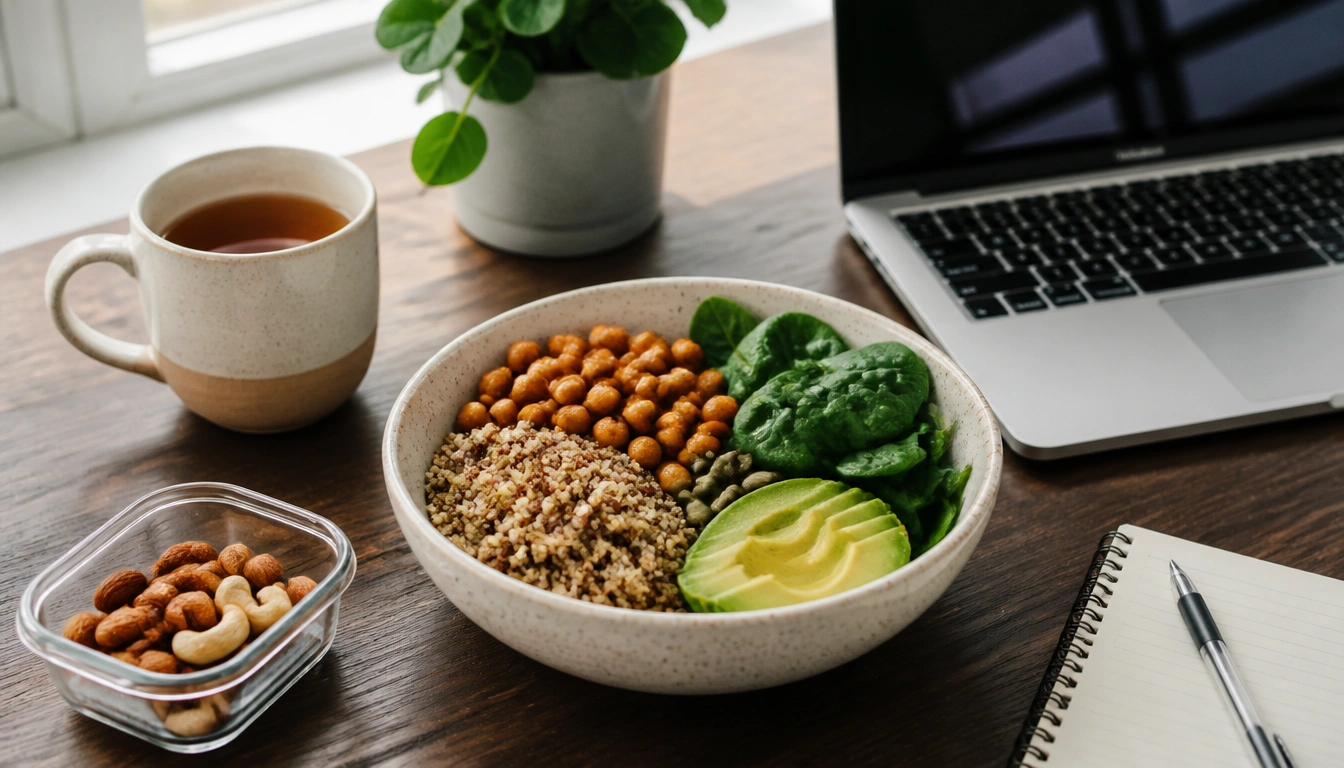
Yes—busy professionals can realistically meet much of their magnesium needs from food. The easiest options are nuts and seeds, beans and lentils, leafy greens, whole grains, and fortified or minimally processed staples you can keep at work or assemble in minutes. A food-first approach is usually the safest starting point, especially because magnesium from food does not carry the same upper-limit concerns as supplements.
Key Takeaways
- Magnesium supports energy production, nerve function, and muscle relaxation, so consistent intake matters during stressful, high-output workdays.
- Adults need about 310–320 mg per day for most women and 400–420 mg for most men, with higher needs during pregnancy and lactation.
- Desk snacks like pumpkin seeds, almonds, and cashews can make a real dent in daily intake without meal prep.
- No-cook foods such as canned beans, baby spinach, and microwaveable whole grains are practical magnesium sources for office or remote routines.
- Plant foods remain valuable even though phytic acid can slightly reduce absorption; soaking, sprouting, and fermenting can help.
- Food magnesium is generally safe, while supplements can cause side effects and may be inappropriate for some people, especially those with kidney disease or medication interactions.
Why magnesium matters on a busy work schedule
Magnesium-rich foods matter because magnesium helps the body make energy, supports normal nerve signaling, and contributes to muscle relaxation and heart rhythm stability. It is involved in more than 300 enzyme systems, so low intake can show up as a vague mix of tiredness, low stamina, or feeling run down rather than one clear symptom.
Stress is part of the picture for many busy professionals. Research summarized by the National Institutes of Health indicates that ongoing psychological stress can increase magnesium turnover and urinary losses, which makes steady intake more relevant during demanding periods. That does not mean stress automatically causes deficiency, but it does help explain why inconsistent eating patterns can become a problem.
For practical use, the goal is not perfection. The goal is to keep magnesium-rich foods showing up often enough that workdays do not become nutrient deserts built from coffee, refined snacks, and skipped meals.
How much magnesium adults need and which foods help most
The National Academies’ dietary reference intakes list magnesium needs by sex and life stage. For healthy adults, the target is about 400–420 mg daily for men and 310–320 mg daily for women. During pregnancy, needs rise to about 350–360 mg daily, and during lactation they remain about 310–320 mg daily. Older adults may benefit from paying closer attention because intake often falls while appetite, convenience, and medication use can complicate nutrition.
That number can feel abstract, so it helps to think in food patterns rather than single foods. Magnesium is concentrated in plant foods that are already useful for workday eating: nuts, seeds, beans, lentils, soy foods, whole grains, and dark leafy greens. You do not need exotic powders or complicated recipes to move toward the target.
A useful reality check: one high-magnesium food rarely needs to “cover” the whole day. A small handful of seeds, a bean-based lunch, and a whole-grain side can add up quickly. Consistency matters more than any one meal.
Desk-friendly snacks: nuts, seeds, and easy add-ons
For the office, home office, or shift work, the simplest magnesium foods are the ones you can store, grab, and eat without planning. Pumpkin seeds, almonds, cashews, peanuts, sunflower seeds, and chia seeds are especially practical because they are portable and shelf-stable. They also pair easily with the foods many busy people already eat.
Think in terms of add-ons. A small container of seeds can be stirred into yogurt, sprinkled over oatmeal, or eaten with fruit. Nuts work well with apples, pears, or a piece of cheese. If you keep a desk drawer or work bag stocked, you lower the chance that an afternoon slump sends you straight to ultra-processed snacks.
For people who need convenience first, pre-portioned snack packs can help with consistency. The magnesium benefit comes not from the packaging but from having a ready option when meetings run long or lunch gets delayed.
No-cook and minimal-cook magnesium foods for workdays
Some of the best magnesium sources fit a microwave, a can opener, or no cooking at all. Baby spinach and other leafy greens can be used raw in salads or wilted into soup, grain bowls, or takeout leftovers. Canned black beans, chickpeas, and lentils are equally useful because they require no kitchen skills beyond rinsing and draining.
Microwaveable whole grains such as brown rice, quinoa, or grain blends are another workday staple. They pair well with canned beans, frozen vegetables, eggs, tuna, tofu, or rotisserie chicken. If you are relying on takeout, look for bowls that include greens, beans, seeds, or whole grains rather than only refined starches.
For remote workers, a minimalist lunch can be as simple as pre-washed greens, a microwave grain cup, rinsed beans, and a drizzle of olive oil or salsa. That is not gourmet, but it is fast, filling, and far more magnesium-friendly than skipping lunch and snacking later on processed foods.
How to build a magnesium-forward lunch or snack without meal prep
The easiest way to build a magnesium-forward meal is to combine one or two core food groups instead of hunting for a perfect recipe. Start with a base such as leafy greens, whole grains, or beans. Then add a protein source and a crunchy seed or nut if you can. This creates more magnesium density without adding much work.
Examples can be very simple: a salad with spinach, chickpeas, and sunflower seeds; a microwave quinoa bowl with black beans and avocado; oatmeal topped with chia seeds and almonds; or whole-grain toast with peanut butter and a side of fruit. If you eat at a desk, these options are easy to pack and do not require reheating every component.
Another practical strategy is to pair magnesium foods with meals you already eat regularly. If breakfast is nonnegotiable, make it count with oats, chia, nuts, or nut butter. If lunch is usually bought outside, add beans or greens when possible. Small repeatable changes usually beat ambitious meal prep plans that collapse after one long week.
Food-first strategies that improve consistency on hectic schedules
Consistency usually fails because the food system around the workday is not set up for it. If the easiest available option is a pastry or a refined snack, magnesium intake will drift down. A food-first strategy works better when it is built into the environment: keep a backup stash at work, keep freezer and pantry staples at home, and choose foods that need little thought when energy is low.
Helpful habits include stocking one shelf-stable magnesium snack at your desk, keeping one canned legume and one microwavable grain on hand, and buying greens that are ready to use. You can also batch tiny tasks rather than full meal prep: rinse beans once, portion seeds into containers, or place a bag of spinach where you will actually see it.
The goal is not rigid discipline. It is reducing friction so a decent choice is almost as easy as a less helpful one.
Plant-based diets, absorption, and what matters in practice
Plant-forward diets are often strong sources of magnesium because the mineral is concentrated in whole grains, legumes, nuts, seeds, and greens. One nuance is that phytic acid in some plant foods can modestly reduce mineral absorption. In real life, that does not cancel out the value of these foods. It just means preparation methods can help a little.
Soaking, sprouting, and fermenting grains and legumes can reduce phytate levels and improve mineral availability. That matters most for people whose diets lean heavily on minimally processed grains and beans. Even then, the practical takeaway is simple: keep eating the plant foods. Their overall nutrient package still makes them worth choosing.
If you eat mostly plant-based, variety helps. Rotate between oats, brown rice, quinoa, beans, tofu, seeds, nuts, and leafy greens rather than depending on one staple. That approach supports magnesium intake while also improving protein, fiber, and overall diet quality.
When food is enough and when supplements need caution
For most healthy adults, food sources are the preferred way to get magnesium. Magnesium from food does not have the same upper-limit issue as supplements, and the body usually handles dietary magnesium well. That makes food the safest first-line strategy for busy people who want to improve intake without creating new problems.
Supplement caution matters because the tolerable upper limit of 350 mg per day applies to supplemental magnesium, not food. Higher supplemental intakes commonly cause diarrhea, nausea, or abdominal cramping. People with kidney disease need particular caution because reduced kidney function can make it harder to clear excess magnesium. Magnesium supplements can also interact with certain antibiotics, bisphosphonates, and diuretics.
If you are considering supplements because of a medical condition, medication use, persistent symptoms, or a known deficiency, a clinician can help decide whether testing or personalized advice is appropriate. For everyone else, improving food intake is usually the best place to start.
Common barriers and the small swaps that work
Convenience foods are not a moral failing; they are often the most accessible option during a packed week. The problem is that many processed snacks are low in magnesium and easy to overeat without delivering much nutritional value. Stress eating can also push choices toward salty, refined foods that feel satisfying in the moment but do little for long-term intake.
Small swaps work better than all-or-nothing rules. Trade one refined snack for nuts or seeds. Add canned beans to a soup or wrap. Swap white rice for a microwaveable whole grain once or twice a week. Keep baby spinach in the fridge and use it in anything from eggs to takeout bowls. These are modest moves, but repeated over time they matter.
For busy professionals, the most realistic magnesium plan is one that survives a full calendar, not one that looks perfect on paper. Food that is ready when you are, easy to store, and simple to repeat is the kind most likely to stick.
Frequently Asked Questions
How much magnesium do adults need each day by sex and life stage?
For healthy adults, the National Academies list about 400–420 mg daily for men and 310–320 mg daily for women. Pregnancy rises to about 350–360 mg daily, and lactation remains about 310–320 mg daily. Needs can vary with age, diet, and medical conditions.
Which magnesium-rich foods are the most practical for desk snacks and quick meals?
Pumpkin seeds, almonds, cashews, peanuts, sunflower seeds, beans, lentils, spinach, quinoa, oats, and whole-grain breads are all practical choices. The best options are the ones you can keep at work or assemble quickly between meetings.
Can a food-first approach provide enough magnesium without supplements?
Yes, many adults can get enough magnesium from food alone, especially if they regularly eat nuts, seeds, beans, whole grains, and leafy greens. A food-first approach is also safer for most people because it avoids the side effects and medication issues that can come with supplements.
What are the best no-cook or minimal-prep magnesium food options for workdays?
Rinsed canned beans, baby spinach, pre-cooked microwaveable quinoa or brown rice, overnight oats, nut butter, and snack-sized portions of nuts or seeds are all practical. These foods fit office lunches, remote work, and even commute-friendly eating.
Do plant-based foods affect magnesium absorption, and does that matter in practice?
Some plant foods contain phytic acid, which can slightly reduce absorption of minerals. In practice, this usually does not outweigh the benefits of plant foods. Soaking, sprouting, and fermenting can help, but the bigger priority is simply eating a varied, plant-forward pattern consistently.
The Bottom Line
Busy professionals do not need a complicated plan to get more magnesium. A rotation of nuts, seeds, beans, leafy greens, and whole grains can meaningfully improve intake without turning lunch into a project.
The most reliable strategy is to make magnesium foods easy to reach during the workday: keep snacks at your desk, use canned legumes and microwaveable grains, and build meals around what is already convenient. Food is usually the safest first choice, while supplements deserve more caution, especially for people with kidney problems or medication interactions.
Medical disclaimer
Medical disclaimer: This content is for educational and informational purposes only and is not a substitute for professional medical advice, diagnosis, or treatment. Dietary needs and supplement suitability vary by individual.
Sources
- National Institutes of Health (NIH) — nih.gov. Accessed October 2026.
- Academic Research Institution — harvard.edu. Accessed October 2026.
