
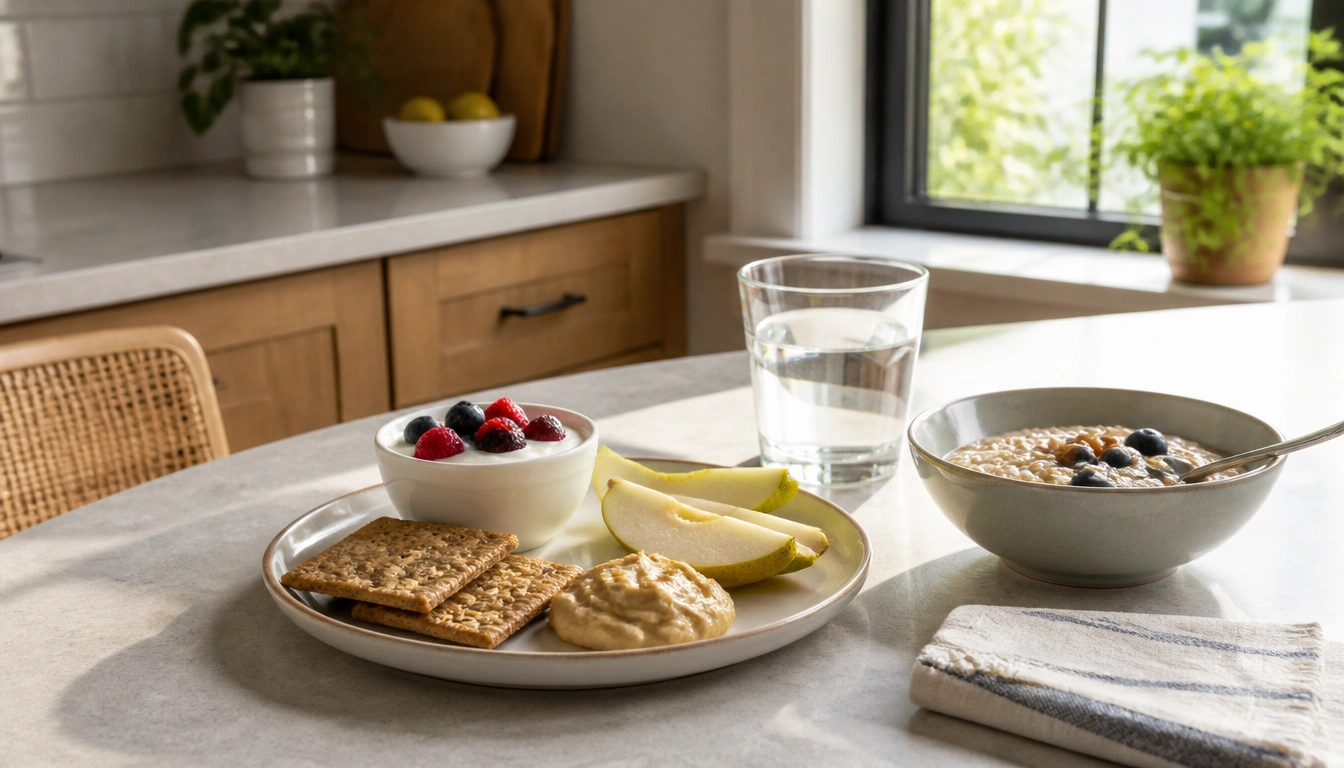
The best healthy snack ideas for adults over 60 are nutrient-dense, easy to eat, and simple to repeat: Greek yogurt with fruit, cottage cheese with soft fruit, nut butters on whole-grain toast or crackers, hummus with tender vegetables, eggs, oatmeal, and low-sodium soups or smoothies. Good snack planning focuses on protein, fiber, fluids, and food safety, while also adapting choices for chewing problems and conditions such as diabetes, kidney disease, or high blood pressure.
Key Takeaways
- Older adults often need fewer calories but still need the same nutrients, so snacks should emphasize protein, fiber, vitamins, and minerals rather than empty calories.
- Spreading protein across meals and snacks can support muscle maintenance, strength, and day-to-day independence.
- Soft, moist snacks are often easier to manage than crunchy or dry foods when chewing or swallowing is difficult.
- Pair snacks with fluids because thirst can decline with age and dehydration may be easier to miss.
- Snack choices sometimes need to change for diabetes, kidney disease, or high blood pressure, so one-size-fits-all advice does not work.
Age-related nutrition changes and why snack planning matters after 60
Healthy snack planning for adults over 60 starts with a simple shift: calories often go down, but nutrient needs do not. The National Institute on Aging and the USDA both emphasize that older adults may need fewer total calories because activity and metabolic rate can decline, yet they still need enough protein, vitamins, minerals, and fiber. That makes snack choice more important, not less.
For many older adults, snacks are not just “extra food.” They can help fill gaps when appetite is smaller, meals are missed, or breakfast and dinner are farther apart than they used to be. A snack that is mostly chips, candy, or baked sweets may be easy to eat, but it gives very little nutrition for the space it takes up. A better snack does more work in a smaller portion.
That matters for weight stability, muscle maintenance, bowel regularity, and daily energy. It also matters for independence. A practical snack plan can support walking, shopping, cooking, and other everyday tasks by helping the body get steady fuel across the day.
How to build a snack that actually helps
A useful snack usually combines at least two of these: protein, fiber, fluids, and a nutrient source such as calcium, potassium, or vitamin D. That combination helps the snack feel more satisfying and more useful between meals.
Protein is especially important. Older adults are at higher risk for age-related muscle loss, and spreading protein through the day can help support muscle maintenance. Good snack-sized protein choices include Greek yogurt, cottage cheese, milk or fortified soy milk, eggs, hummus, edamame, tuna packets, nut butters, and unsalted nuts or seeds.
Fiber helps support digestion and regularity. It can come from fruit, vegetables, beans, oats, whole-grain crackers, or popcorn if chewing is not an issue. Pairing fiber with protein is often more satisfying than choosing either one alone. For example, apple slices with peanut butter or whole-grain crackers with cottage cheese offer more staying power than a sweet snack alone.
Fluids deserve a place in snack planning too. Thirst can decline with age, so snacks are a good reminder to drink water, milk, herbal tea, or another appropriate beverage. If constipation is a concern, a snack plus fluid routine can be especially useful.
Best snack categories for older adults
The most reliable snacks usually come from a few familiar food groups. Dairy or fortified alternatives can provide protein and calcium, which supports bone health. Plain Greek yogurt with berries, cottage cheese with peaches, or fortified soy yogurt are practical examples. Choosing plain versions helps reduce added sugar.
Fruits and vegetables are useful because they add fiber, fluid, and vitamins without a large calorie load. Soft fruit such as bananas, ripe pears, melon, or thawed berries are often easier to manage than very firm produce. Tender vegetables such as cucumber slices, steamed carrot coins, cherry tomatoes cut in half, or mashed avocado can fit easily into a snack routine.
Whole grains help provide fiber and steady energy. Think whole-grain toast, oatmeal cups, whole-grain crackers, or a small bowl of unsweetened cereal. Nuts and seeds can be a smart option too, especially when appetite is small, because they are calorie-dense and nutrient-rich in a compact serving. Lean proteins such as turkey, tuna, hard-boiled eggs, or bean dips round out the list.
A practical mix-and-match approach works well: one fruit or vegetable, one protein, and one fluid. That keeps snacks balanced without making them complicated.
Soft, easy-to-chew, and low-prep snack swaps
Chewing problems, dentures, dry mouth, and swallowing discomfort can make some snack foods feel off-limits. In many cases, the fix is not to skip snacks but to change their texture.
Crunchy apples can become unsweetened applesauce or thin slices of very ripe pear. Raw carrots can become steamed carrots or soft cucumber slices. Hard pretzels can be replaced with whole-grain crackers softened with hummus, cottage cheese, or nut butter. Nuts can be switched to smooth nut butter, or to very finely chopped nuts mixed into yogurt if texture is safe and comfortable.
Dry snacks are often harder to swallow than moist ones. That is why yogurt, pudding made with less sugar, oatmeal, soups, smoothies, mashed avocado, and soft scrambled eggs are often easier choices. If swallowing is a concern, any snack that feels sticky, crumbly, or very dry may need to be modified or avoided until a clinician reviews it.
Low-prep options are worth keeping on hand for days when fatigue or mobility limits cooking. Shelf-stable tuna packets, single-serve yogurt, canned fruit packed in water or 100% juice, microwavable oatmeal, pre-washed greens, and hummus cups can save energy without reducing nutrition.
How to portion snacks when appetite is small or weight loss is a concern
Small appetite can make healthy snacking feel tricky. The goal is usually not larger meals; it is making each bite count. Smaller portions are often easier to finish and less overwhelming than a large plate or a full-size sandwich.
When weight loss is a concern, include a protein source plus a bit of calorie density. Examples include yogurt with fruit and granola, toast with peanut butter, crackers with cheese, or a smoothie made with milk or fortified soy milk. These are still modest portions, but they pack more nutrition into a manageable amount of food.
If fullness comes on quickly, try snacks between meals rather than right before them. That can help protect the appetite for mealtimes. For some people, eating a few planned snacks daily works better than trying to force three large meals.
A small bowl or plate is useful because it helps avoid mindless eating from a large package. It also makes it easier for caregivers to see how much is being eaten and whether intake is changing over time.
How to adapt snack choices for diabetes, kidney disease, or high blood pressure
Some snack ideas need modification when an older adult has diabetes, kidney disease, or high blood pressure. The same snack will not fit everyone, and snack planning should match the person’s medical plan.
For diabetes, snacks that pair carbohydrate with protein or healthy fat are often more useful than carbohydrate alone. Plain yogurt with berries, whole-grain crackers with cheese, or apple slices with peanut butter may work better than juice, pastries, or sweetened granola bars. Portion size matters, and some people need to account for snacks in their overall carbohydrate plan.
For kidney disease, choices may need to be adjusted for protein, sodium, potassium, and phosphorus depending on the person’s stage of disease and lab values. That is why popular “healthy” foods like nuts, dairy, bananas, tomatoes, or certain protein foods may or may not fit. This is a case where individualized guidance from a clinician or registered dietitian is important.
For high blood pressure, the main issue is often sodium. Many packaged snacks, soups, deli meats, cheese products, and crackers can be surprisingly salty. Choosing lower-sodium versions, limiting highly processed snack foods, and flavoring foods with herbs or spices instead of salt can help. The Dietary Guidelines for Americans and CDC both support limiting excess sodium, added sugars, and saturated fat.
Food safety and storage tips for perishable snacks
Food safety matters more with age because older adults can be more vulnerable to serious foodborne illness. Perishable snacks need the same care as full meals, even if they are small portions.
Keep cold snacks cold and hot snacks hot. Do not leave yogurt, cut fruit, cheese, eggs, milk-based smoothies, or leftovers sitting out for long periods. If a snack has been at room temperature too long, it is safer to throw it away. Check use-by dates and pay attention to the smell, texture, and appearance of foods that may have spoiled.
Use shallow containers for leftovers so they cool faster in the refrigerator. Store snacks at eye level when possible, so the safest choices are easy to reach. Pre-portioning also helps avoid repeated handling of a larger container, which can reduce waste and make the fridge easier to organize.
For caregivers, a simple rule is helpful: if it looks uncertain, smells off, or has been left out too long, do not serve it.
Simple snack-planning routines for home, travel, and caregiving support
A good snack plan should fit real life. At home, it helps to keep a short list of “go-to” choices on hand: yogurt, fruit, whole-grain crackers, nut butter, hummus, eggs, cottage cheese, and a few easy vegetables. Stock the most useful items where they are easy to see and reach.
For travel or appointments, pack snacks that are portable, not messy, and safe at room temperature for the expected time. Examples include a banana, unsalted nuts if chewing is comfortable, whole-grain crackers, single-serve shelf-stable milk, or a soft sandwich half. Bring water unless fluid restriction is part of the medical plan.
Caregivers can make snack planning easier by creating a repeatable routine. For example, one snack can be built around protein, another around fruit and dairy, and another around vegetables and a dip. That keeps the menu from becoming repetitive while still reducing decision fatigue.
If appetite suddenly drops, swallowing becomes harder, food is being pocketed in the cheeks, or there is unexplained weight loss, a healthcare professional should evaluate the problem. Those changes can signal something more than ordinary aging and should not be ignored.
Frequently Asked Questions
How often should older adults snack during the day?
There is no single rule for everyone. Many older adults do well with one to three planned snacks between meals, especially if appetite is small or meals are far apart. The goal is to support nutrition without crowding out meals or causing discomfort.
What snack foods help older adults get enough protein?
Good protein-focused snacks include Greek yogurt, cottage cheese, eggs, milk or fortified soy milk, hummus, tuna packets, nut butter, and unsalted nuts or seeds. Pairing protein with fruit, vegetables, or whole grains makes the snack more balanced.
What are soft snack options for people with chewing problems or dentures?
Soft options include yogurt, applesauce, oatmeal, mashed avocado, cottage cheese, soft ripe fruit, smoothies, scrambled eggs, and hummus with tender vegetables or soft crackers. Dry, hard, or sticky foods may need to be swapped for moister choices.
How can older adults snack safely if they have diabetes, kidney disease, or high blood pressure?
They should adapt snacks to their medical plan. Diabetes may call for carb-aware snacks with protein. Kidney disease may require limits on potassium, phosphorus, sodium, or protein. High blood pressure usually means watching sodium. A clinician or dietitian can tailor the plan.
How can snacks help prevent dehydration in older adults?
Snacks can be paired with a drink to build a regular hydration habit, which is helpful because thirst may decline with age. Foods with high water content, such as fruit, yogurt, soups, and smoothies, can also add fluids. Fluid needs may differ if a person has a medical restriction.
The Bottom Line
Healthy snack planning for adults over 60 works best when snacks are treated as small tools for nutrition, not just something to tide you over. Choose foods that deliver protein, fiber, fluids, and key nutrients in a form that is easy to chew and easy to manage.
The most practical options are often the simplest: yogurt and fruit, cottage cheese and soft produce, whole-grain crackers with hummus, eggs, oatmeal, nut butter, or a nutrient-rich smoothie. Adjust texture, sodium, sugar, and potassium as needed for specific health conditions.
If appetite, swallowing, weight, or hydration suddenly changes, get medical advice rather than trying to solve it with snacks alone. A registered dietitian, speech-language pathologist, or other clinician can help match snack choices to the person’s needs.
Medical disclaimer
Medical disclaimer: This content is for educational and informational purposes only and is not a substitute for professional medical advice, diagnosis, or treatment. Dietary needs and supplement suitability vary by individual.
Sources
- National Institutes of Health (NIH) — nih.gov. Accessed October 2026.
- U.S. Government / Health Authority — medlineplus.gov. Accessed October 2026.
- U.S. Government / Health Authority — acl.gov. Accessed October 2026.
- Centers for Disease Control and Prevention (CDC) — cdc.gov. Accessed October 2026.
