
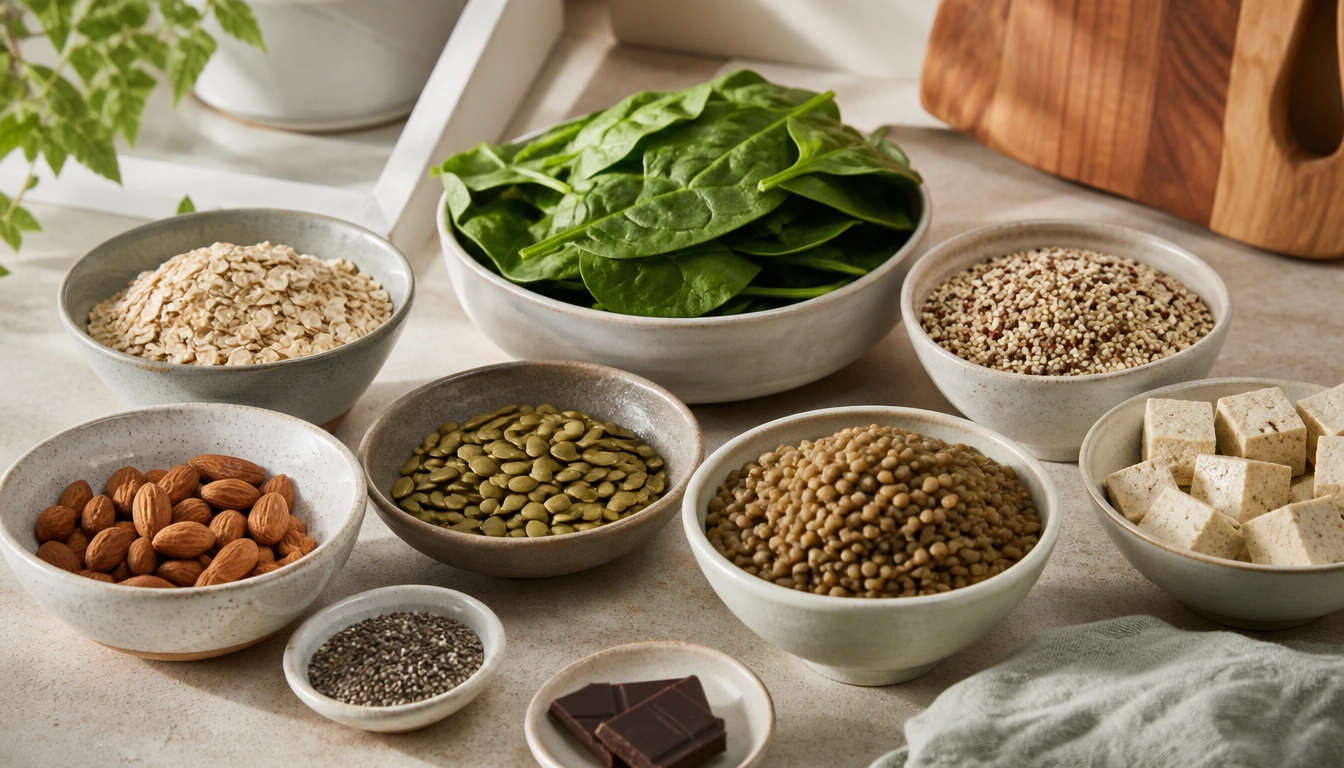
The highest-magnesium vegetarian foods are usually seeds, nuts, legumes, whole grains, dark leafy greens, tofu, and some dark chocolate. You do not need to count every milligram to get enough. For most beginners, the easiest path is to build meals around beans, whole grains, greens, and a daily seed habit, then use soaking, sprouting, fermenting, or boiling to support mineral availability when possible.
Key Takeaways
- Pumpkin seeds, chia seeds, beans, lentils, spinach, quinoa, oats, almonds, cashews, tofu, and dark chocolate are among the most useful vegetarian magnesium foods.
- Magnesium from plants comes packaged with fiber and protein, which helps make meals more filling and practical for beginners.
- Phytates in unrefined plant foods can reduce mineral absorption, but soaking, sprouting, fermenting, and boiling can help improve uptake.
- Adult men generally need more magnesium than adult women; pregnancy and lactation change needs, too, and kidney disease changes the safety conversation.
- Food sources do not have the same upper-limit concern as supplemental magnesium, which can cause diarrhea and other digestive side effects.
Best plant-based magnesium food groups to prioritize first
If you are new to vegetarian eating, the most efficient way to raise magnesium intake is to prioritize the foods that naturally deliver it in meaningful amounts. Seeds and nuts are often the most concentrated per bite. Pumpkin seeds, chia seeds, almonds, and cashews are especially useful because they are easy to add to meals without changing your whole routine.
Legumes are another strong foundation. Beans, lentils, chickpeas, and edamame bring magnesium together with protein and fiber, which is one reason they fit well into a vegetarian pattern. Whole grains such as oats, brown rice, quinoa, and whole-wheat bread also contribute regularly when they replace refined grains.
Dark leafy greens deserve special attention because magnesium sits at the center of chlorophyll, the pigment that makes plants green. Spinach and Swiss chard are especially helpful, and cooked greens are often easier to eat in larger amounts than raw salads. Tofu can also contribute meaningfully, especially depending on how it is made. A small amount of dark chocolate can round things out, but it works best as an extra source rather than your main strategy.
The pattern matters more than any single food. A vegetarian diet built from seeds, legumes, grains, and greens makes it much easier to reach your needs consistently than relying on one “superfood.”
How to build a magnesium-rich vegetarian day without tracking every milligram
You do not need to calculate magnesium at every meal to do well. A more realistic beginner approach is to include one or two magnesium-rich foods at each eating occasion. For breakfast, that might be oatmeal topped with chia seeds and almonds, or toast with nut butter and a side of fruit. If you use yogurt or milk, those can fit in too, especially for lacto-vegetarians, but the main magnesium lift usually comes from the plant foods.
At lunch, think in combinations rather than ingredients. A bean bowl with brown rice, greens, and salsa is a simple example. A lentil soup with whole-grain bread also works. At dinner, tofu stir-fry with vegetables over quinoa can cover several food groups at once. If snacks help you stay consistent, pumpkin seeds, trail mix, hummus with whole-grain crackers, or a small piece of dark chocolate can all play a role.
The goal is repeatable meals, not perfection. If most days include a seed, a legume, a whole grain, and some greens, you are already using a strong magnesium pattern. That approach is often easier and more sustainable than trying to memorize every food value on day one.
Why plant-based magnesium is sometimes harder to absorb
Plant foods do provide magnesium, but some of the magnesium can be less available because of phytic acid, also called phytate. Phytates are naturally present in unrefined grains, legumes, nuts, and seeds, and they can bind minerals such as magnesium, iron, and zinc. That does not make these foods “bad”; it just means preparation can matter.
Traditional kitchen methods can reduce phytates and improve mineral uptake. Soaking dried beans, lentils, grains, or seeds before cooking can help. Sprouting can also lower phytate levels in some foods. Fermenting, as with sourdough or certain cultured foods, can improve mineral availability too. Boiling legumes and greens can further support digestibility and, in some cases, the usability of minerals.
This is one reason a varied vegetarian diet works so well. Even if one food has slightly lower absorption, the overall pattern can still deliver enough magnesium across the day. Practical preparation usually matters more than chasing a perfect “bioavailable” food list.
How magnesium needs differ by sex and life stage
The National Institutes of Health lists different Recommended Dietary Allowances for magnesium based on age, sex, pregnancy, and lactation. Adult men generally need more magnesium than adult women. Pregnancy raises the need compared with nonpregnant adulthood, and lactation has its own target as well. Those differences matter because a one-size-fits-all goal can understate or overstate what a given person actually needs.
For vegetarian beginners, the practical takeaway is simple: if you are an adult man, you may need to be especially intentional about daily magnesium-rich foods. If you are an adult woman, you still need regular intake, even if your target is somewhat lower. During pregnancy or lactation, diet quality matters even more, and it can be worth checking intake with a clinician or registered dietitian if your appetite, digestion, or food access changes.
Lacto-vegetarians can count dairy as part of the overall diet, but milk and yogurt are not the main magnesium heavyweights. They can add some intake, yet the biggest contributors still tend to come from plant foods. If you eat mostly plants, build your base around seeds, legumes, whole grains, and greens rather than assuming dairy will cover the gap.
How to increase magnesium-rich foods without upsetting your digestion
Many beginners feel great adding more plants, but a sudden jump in fiber can cause temporary gas, bloating, or a feeling of fullness that is uncomfortable. That reaction is common when the gut is adjusting to more legumes, whole grains, and vegetables. The fix is usually gradual change, not avoidance.
Start with small additions instead of major overhauls. Add one tablespoon of seeds to breakfast, then increase later if it feels fine. Swap one refined grain for a whole grain once a day. Add a handful of spinach to soup, pasta sauce, or a smoothie rather than making every meal a giant salad. If beans bother you at first, begin with smaller portions, rinsed canned beans, or well-cooked lentils.
Cooking also helps. Soaking dried beans, cooking grains fully, and choosing softer preparations such as soups, stews, and blended sauces can make a vegetarian pattern easier on the digestive system. If you move gradually, your diet can become higher in magnesium and still feel comfortable.
When food may not be enough
Most vegetarian beginners can meet magnesium needs from food, but some situations deserve extra caution. People with kidney disease should not assume that more magnesium is always better, because the kidneys help regulate magnesium balance. If kidney function is reduced, magnesium can build up more easily, and supplements deserve medical supervision.
Symptoms that may warrant medical review include persistent muscle cramps, unusual fatigue, numbness or tingling, or abnormal heart rhythm symptoms. These signs are not specific to magnesium alone, but they are worth discussing with a healthcare professional. A blood test can be part of the evaluation, although it does not capture every detail of body stores.
If a clinician does recommend supplementation, that is a different situation from food-based intake. The National Institutes of Health notes that the upper limit of 350 mg per day applies to supplemental magnesium, not magnesium naturally present in foods. Supplemental magnesium can cause diarrhea, cramping, and nausea, so it should be used thoughtfully and for a clear reason.
Simple pantry and meal-prep habits that make magnesium easier to get
Beginner success often comes from small systems, not complicated nutrition plans. Keep a visible jar of pumpkin seeds or chia seeds on the counter so you remember to use them. Store nuts in a place where you will actually reach for them. Buy a few dependable grains, such as oats, brown rice, quinoa, or whole-wheat bread, and keep them on repeat instead of shopping from scratch every week.
Batch cooking can help too. Prepare a pot of beans or lentils once, then use them in salads, wraps, soups, and bowls over several days. Wash and chop greens in advance so they are easy to add to eggs, tofu scrambles, pasta, or smoothies. If you use canned beans, rinsing them is a fast, budget-friendly shortcut that still supports a magnesium-rich routine.
Try building a “default day” that you can repeat when life is busy: oatmeal with seeds, a bean-and-grain lunch, a tofu or lentil dinner, and one green side dish. That is often enough to make magnesium intake feel automatic. The simplest vegetarian pattern is usually the one you can sustain long enough to become second nature.
Frequently Asked Questions
How much magnesium do vegetarian adults need each day?
According to the National Institutes of Health, adult men generally need more magnesium than adult women, and needs change during pregnancy and lactation. The exact target depends on age and life stage, but the practical goal is to eat magnesium-rich foods regularly instead of relying on occasional large portions.
Which vegetarian foods are the richest sources of magnesium per serving?
Pumpkin seeds, chia seeds, almonds, cashews, beans, lentils, chickpeas, edamame, oats, quinoa, spinach, Swiss chard, tofu, and dark chocolate are among the most useful options. Seeds and nuts are often the most concentrated, while legumes and whole grains help you meet needs consistently.
Do soaking, sprouting, or fermenting really help the body absorb magnesium better?
Yes, these methods can help by lowering phytates, which bind minerals in some plant foods. Soaking, sprouting, fermenting, and boiling do not make phytates disappear completely, but they can improve mineral availability and make foods easier to digest at the same time.
Can lacto-vegetarians get meaningful magnesium from dairy foods too?
Dairy foods contribute some magnesium, so they can be part of the picture for lacto-vegetarians. Still, the largest magnesium contributions usually come from plant foods such as seeds, legumes, whole grains, and leafy greens, so those should remain the foundation.
When is magnesium supplementation or medical evaluation necessary?
If you have kidney disease, possible low-magnesium symptoms, or a health condition that affects absorption, medical review is appropriate. Supplements may be considered in some cases, but they should be guided by a clinician because supplemental magnesium can cause diarrhea and other side effects.
The Bottom Line
Vegetarian beginners can meet magnesium needs with a food-first routine built around seeds, nuts, legumes, whole grains, leafy greens, tofu, and small amounts of dark chocolate. You do not need to track every milligram to make good progress.
The smartest strategy is habit-based: add seeds daily, swap in whole grains, include beans or lentils often, and use soaking, sprouting, fermenting, or boiling when practical. If you have kidney disease or possible deficiency symptoms, get medical guidance before using supplements.
For most people, magnesium-rich vegetarian eating is less about perfection and more about consistency. A few repeatable meals and pantry staples can cover the basics without making dinner feel complicated.
Medical disclaimer
Medical disclaimer: This content is for educational and informational purposes only and is not a substitute for professional medical advice, diagnosis, or treatment. Dietary needs and supplement suitability vary by individual.
Sources
- National Institutes of Health (NIH) — nih.gov. Accessed October 2026.
- National Institutes of Health (NIH) — nih.gov. Accessed October 2026.
- Academic Research Institution — osumc.edu. Accessed October 2026.
- health.clevelandclinic.org — clevelandclinic.org. Accessed October 2026.
