
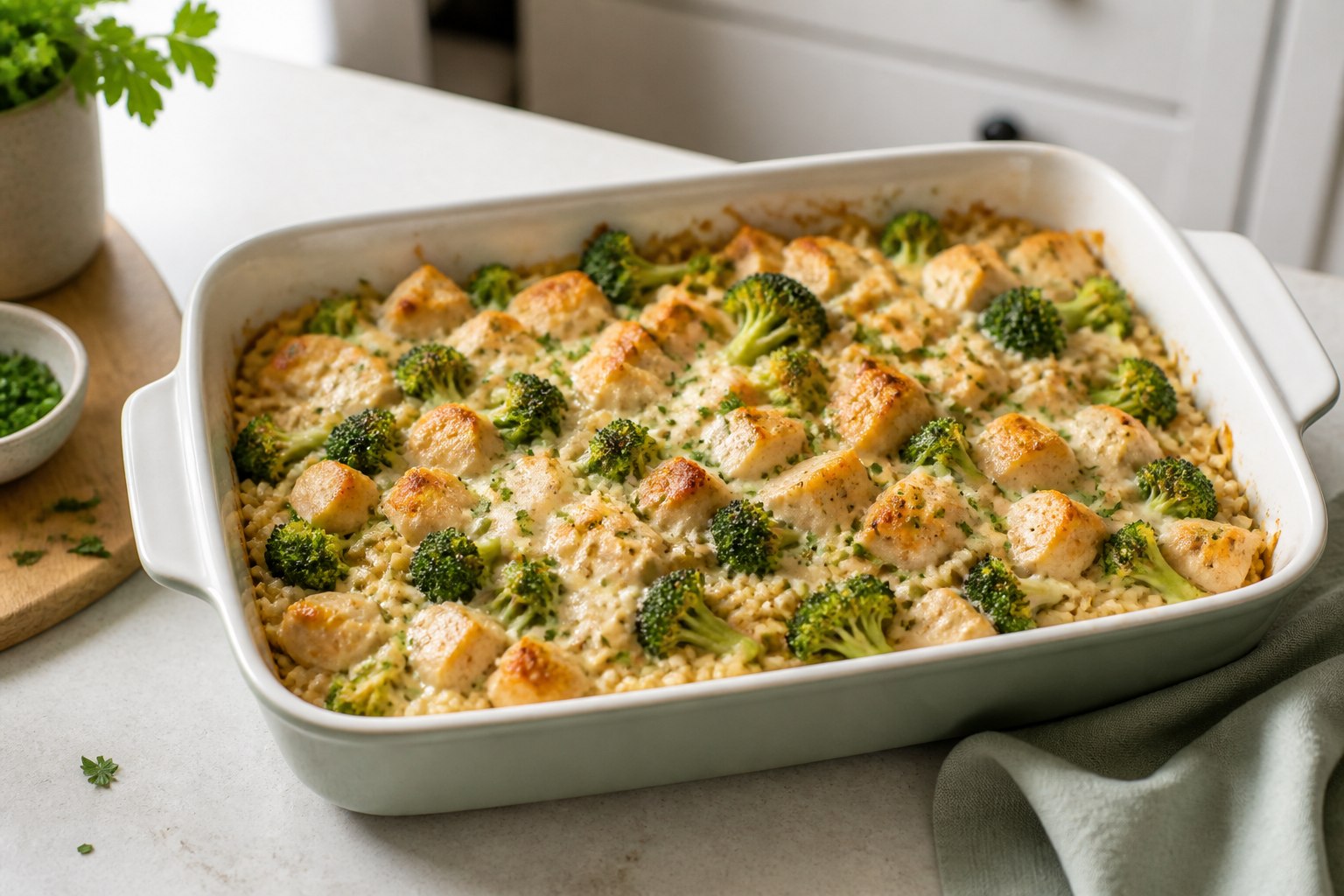
A high-protein chicken casserole is one of the easiest ways to turn a few familiar ingredients into several satisfying lunches or dinners. This version combines cooked chicken, brown rice, broccoli, Greek yogurt, and a modest amount of cheese in one make-ahead dish. It is creamy without relying on canned condensed soup, easy to customize, and designed with safe storage and reheating in mind.
This recipe is intended for general education and home cooking, not individualized nutrition or medical advice. People with allergies, kidney disease, or other conditions that affect protein needs should follow guidance from their healthcare professional.
Why This High-Protein Chicken Casserole Works
Chicken supplies most of the protein, while Greek yogurt and cheese contribute additional protein and help create a creamy texture. Brown rice adds whole-grain carbohydrates, and broccoli brings color, texture, and vegetables into the same pan. The result is a practical mixed meal rather than a dish that focuses on protein alone.
Current U.S. dietary guidance emphasizes prioritizing whole, nutritious foods as part of an overall eating pattern. No single casserole needs to meet every nutrition goal, but combining protein, vegetables, and a whole grain can make a prepared meal easier to round out with fruit, a salad, or another vegetable.
Healthy Chicken Casserole Recipe
Ingredients
- 4 cups diced or shredded fully cooked, skinless chicken breast
- 3 cups cooked brown rice
- 4 cups small broccoli florets, lightly steamed or thawed if frozen
- 1½ cups plain Greek yogurt
- ¾ cup low-sodium chicken broth, plus more if needed
- 1 cup shredded cheddar or Monterey Jack cheese, divided
- 1 tablespoon olive oil
- 1 teaspoon garlic powder
- 1 teaspoon dried Italian seasoning
- ½ teaspoon onion powder
- ¼ teaspoon black pepper
- Salt to taste, depending on the broth and cheese used
- Optional: chopped parsley, sliced green onion, or red-pepper flakes
Instructions
- Prepare the oven and pan. Heat the oven to 375°F. Lightly coat a 9-by-13-inch baking dish with cooking spray or a thin layer of olive oil.
- Make the sauce. In a large bowl, whisk together the Greek yogurt, broth, olive oil, garlic powder, Italian seasoning, onion powder, and black pepper. Stir in half of the cheese.
- Combine. Fold in the cooked chicken, cooked brown rice, and broccoli. The mixture should be moist but not soupy. Add a small splash of broth if it seems dry.
- Fill the dish. Spread the mixture evenly in the prepared baking dish and sprinkle the remaining cheese over the top.
- Bake safely. Bake uncovered for 25–30 minutes, or until bubbling and the center reaches 165°F when checked with a food thermometer.
- Rest and portion. Let the casserole stand for 5–10 minutes before serving. For meal prep, divide it into shallow containers and refrigerate promptly.
How to Adjust the Casserole Without Losing Balance
A flexible recipe is more likely to become part of your regular meal-prep routine. Keep the basic structure—cooked protein, vegetables, a grain or other base, and enough sauce to prevent dryness—then make one change at a time.
If you change the ingredient amounts, do not assume the original protein estimate or serving size still applies. For a precise value, enter the exact brands and quantities into a reliable recipe calculator or ask a registered dietitian for help.

Make-Ahead, Storage, and Reheating Tips
Refrigerating
Transfer leftovers to shallow, covered containers and refrigerate within two hours. USDA guidance recommends using most cooked leftovers, including chicken casseroles, within 3–4 days when the refrigerator is maintained at 40°F or below. Labeling containers with the date makes that window easier to track.
Freezing
For longer storage, freeze individual portions in airtight, freezer-safe containers. The USDA notes that cooked chicken casseroles can maintain best quality for several months in the freezer, although flavor and texture may decline over time. Greek-yogurt sauces can separate slightly after freezing; gentle reheating and stirring can improve the texture.
Reheating
Reheat only the portion you plan to eat. Cover it to retain moisture and heat until the center reaches 165°F. A food thermometer is more reliable than judging safety by steam, color, or cooking time alone.
Common Chicken Meal-Prep Mistakes
- Leaving the casserole on the counter too long: portion and refrigerate promptly rather than waiting for the entire pan to become cold.
- Using a deep storage container: shallow containers help food cool more rapidly and evenly.
- Adding wet frozen vegetables: thaw and drain them to prevent a watery sauce.
- Assuming every serving has the same protein: portion size and ingredient distribution matter.
- Relying on time alone when reheating: verify 165°F in the center.
Frequently Asked Questions
How much protein is in chicken casserole?
There is no universal amount. Protein varies with the amount and type of chicken, yogurt, cheese, grain, brands, yield, and serving size. Calculate the recipe with your exact ingredients if you need a specific number.
Can I assemble this chicken casserole the night before?
Yes. Combine the chilled ingredients, cover the dish, and refrigerate promptly. Bake it the next day and verify that the center reaches 165°F. A cold casserole may need a little extra oven time.
How long does chicken casserole last in the refrigerator?
USDA guidance recommends using cooked chicken casseroles and most leftovers within 3–4 days when stored at 40°F or below. Refrigerate the food within two hours and use shallow, covered containers.
Can I freeze a healthy chicken casserole?
Yes. Freeze cooled portions in airtight containers. Quality is best when the casserole is not kept frozen indefinitely, and a yogurt-based sauce may separate slightly after thawing. Reheat the center to 165°F.
Can I make this casserole without rice?
Yes. Quinoa, whole-grain pasta, beans, or additional vegetables can replace the rice. Cook grains or pasta first, drain excess moisture, and adjust the broth so the finished mixture is creamy rather than watery.
Sources
- USDA Food Safety and Inspection Service: Keep Food Safe! Food Safety Basics
- USDA Food Safety and Inspection Service: Chicken from Farm to Table
- USDA Food Safety and Inspection Service: Leftovers and Food Safety
- U.S. Departments of Agriculture and Health and Human Services: Current Dietary Guidelines for Americans
This content is for general educational purposes and is not a substitute for personalized medical or nutrition advice.
