

Heart-healthy salmon can make a weekly meal plan more varied, practical, and satisfying. Salmon provides protein and the long-chain omega-3 fats EPA and DHA, but its value comes from how it fits into an overall eating pattern—not from acting as a stand-alone treatment or guarantee against heart disease.
This article is for general education and does not replace individualized medical or nutrition advice. People with fish allergies, specific dietary restrictions, or cardiovascular conditions should follow guidance from their qualified healthcare professional.
What Makes Salmon a Heart-Healthy Choice?
Salmon is a fatty fish that naturally contains EPA and DHA, two marine omega-3 fatty acids. It also provides complete protein and a range of vitamins and minerals. The strongest practical case for salmon is not that one nutrient works in isolation, but that non-fried fish can replace some meals built around more heavily processed or higher-saturated-fat protein choices.
Preparation still matters. Deep-frying salmon or covering it with a very salty glaze changes the overall meal. Baking it with herbs, citrus, garlic, pepper, and a small amount of olive oil keeps the focus on the fish and makes sodium easier to manage.
How to Build a Balanced Salmon Plate
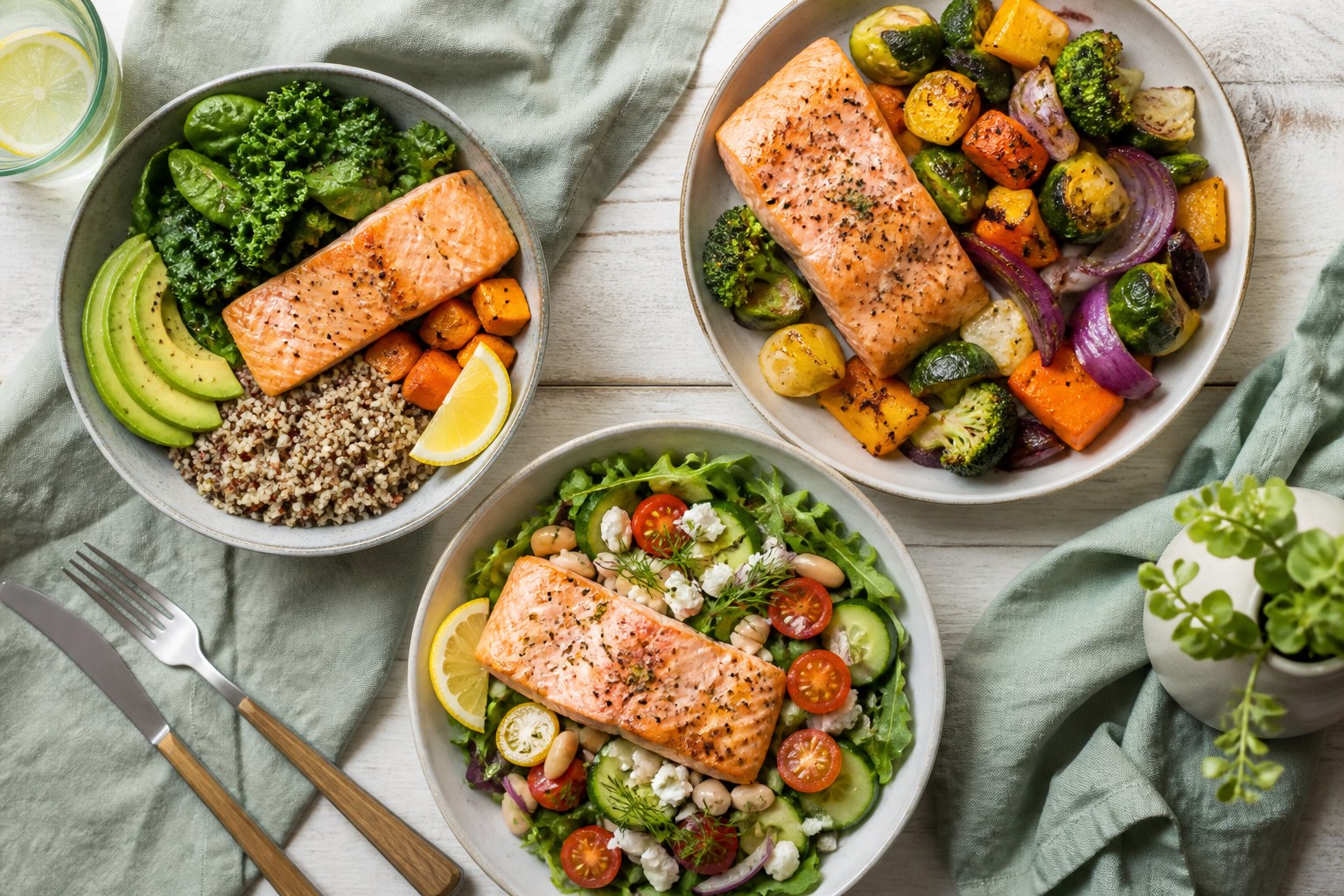
A simple formula can turn salmon into a complete meal without requiring a complicated recipe. Start with a reasonable portion of cooked salmon, add at least one colorful vegetable, choose a fiber-containing carbohydrate, and finish with an unsaturated-fat-rich sauce or garnish if desired.
A meal can be heart-conscious without being perfect. If frozen vegetables, microwaveable brown rice, or canned beans make the meal realistic on a busy night, they can be useful tools. Compare labels when choosing packaged foods, especially for sodium and added sugars.
Easy Lemon-Herb Baked Salmon
Ingredients
- Four salmon fillets, about 4–5 ounces each
- 1 tablespoon olive oil
- 1 lemon, half sliced and half reserved for juice
- 2 cloves garlic, finely minced
- 1 teaspoon dried oregano or Italian seasoning
- ¼ teaspoon black pepper
- 2 tablespoons chopped fresh dill or parsley
- Optional: a small pinch of salt, based on individual needs
Instructions
- Heat the oven to 400°F and line a rimmed sheet pan with parchment paper or lightly oil it.
- Place the salmon skin-side down. Brush with olive oil, then add garlic, oregano, pepper, lemon juice, and lemon slices.
- Bake for approximately 10–15 minutes, depending on thickness. Check the thickest part with a food thermometer.
- Cook fish to 145°F, or until the flesh is no longer translucent and separates easily with a fork, following federal food-safety guidance.
- Finish with fresh dill or parsley. Serve with vegetables and a whole grain, beans, or another fiber-rich side.
A Practical Weekly Salmon Meal Plan
Two fish meals do not have to be identical. Cook enough salmon for dinner and one planned leftover, or use individually frozen fillets so each meal feels fresh. Keep variety in the vegetables, grains, and sauces rather than relying on a heavy glaze.
| Meal | Salmon preparation | Plant foods | Easy flavor |
|---|---|---|---|
| Weeknight dinner | Lemon-herb baked salmon | Roasted asparagus and quinoa | Lemon and dill |
| Lunch bowl | Flaked leftover salmon | Brown rice, greens, cucumber, and beans | Yogurt-herb sauce |
| Fast salad | Canned salmon with lower sodium when available | Leafy greens, tomatoes, white beans, and whole-grain toast | Olive oil and vinegar |
Fresh, Frozen, Canned, or Farmed Salmon?
All four can fit a balanced eating pattern. Frozen fillets are convenient and may reduce waste because you can cook only what you need. Canned salmon is shelf-stable and works well in salads, patties, or grain bowls; compare sodium on the Nutrition Facts label. Fresh salmon can be a good choice when you plan to cook it promptly.
Wild and farmed salmon differ by species, feed, environment, fat content, price, and availability. Neither label automatically tells you everything about nutrition, sustainability, or quality. Use the information available for the specific product rather than assuming one category is always superior.
Mercury, Pregnancy, and Individual Considerations
The FDA and EPA list salmon among the “Best Choices” for people who are or might become pregnant, those who are breastfeeding, and children. Their advice for adults in these groups is 2–3 servings per week from the lower-mercury “Best Choices” category, using a 4-ounce serving measured before cooking. Children need smaller age-appropriate portions.
That guidance does not remove every individual consideration. Fish allergy requires avoidance, and people following medically prescribed diets may need personalized advice about portion size, potassium, phosphorus, sodium, or total protein. If your clinician has given you a specific plan, use that plan rather than general online guidance.
Common Mistakes That Make Salmon Meals Less Helpful
- Treating salmon as a cure: it is one food within an overall dietary pattern, not a treatment by itself.
- Using very salty marinades: bottled sauces can add substantial sodium; compare labels and measure portions.
- Deep-frying every serving: baked, grilled, poached, and air-fried preparations make it easier to control added fat and breading.
- Skipping plant foods: add vegetables, beans, or whole grains so the plate provides more than protein.
- Guessing doneness by color alone: use a food thermometer and check the thickest part.
Frequently Asked Questions
How often should you eat salmon for heart health?
The American Heart Association recommends two servings of fish per week, particularly fatty fish. Salmon can be one of those choices, but variety and the overall eating pattern still matter.
Is salmon healthier baked or fried?
Baking, grilling, poaching, or air-frying generally makes it easier to limit breading and added oil. Deep-frying does not erase salmon’s nutrients, but it changes the overall calorie and fat profile of the meal.
Is frozen salmon heart-healthy?
Plain frozen salmon can be a practical heart-conscious option. Check the ingredient list and Nutrition Facts panel because preseasoned products may contain more sodium or added sugar.
Can pregnant people eat salmon?
The FDA and EPA list salmon as a lower-mercury “Best Choice.” Their guidance recommends 2–3 servings per week from that category for people who are or might become pregnant or are breastfeeding. Follow current FDA advice and personal medical guidance.
What should I serve with salmon for a balanced meal?
Pair salmon with vegetables and a fiber-rich food such as beans, lentils, quinoa, brown rice, barley, or a skin-on potato. Use herbs, citrus, or a measured vinaigrette for flavor.
Sources
- American Heart Association: Fish and Omega-3 Fatty Acids
- U.S. Food and Drug Administration: Questions and Answers on FDA/EPA Advice About Eating Fish
- FoodSafety.gov: Safe Minimum Internal Temperatures
- U.S. Departments of Agriculture and Health and Human Services: Current Dietary Guidelines for Americans
This content is for general educational purposes and is not a substitute for professional medical or nutrition advice.
