
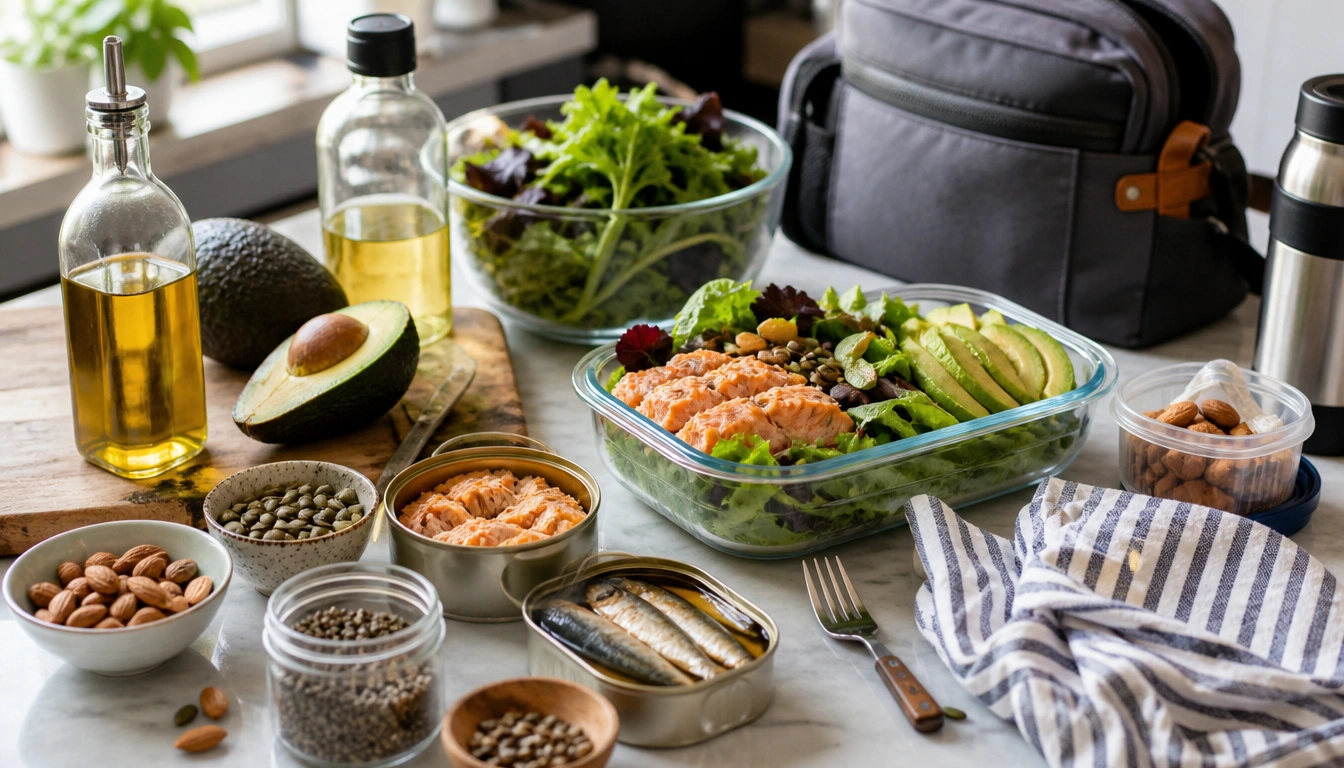
If you are busy and want healthy fats that are easy to buy and use, start with extra virgin olive oil, avocado oil, nuts, seeds, avocados, and canned fish such as salmon, sardines, or tuna. These options are practical, portable, and heart-conscious when used in reasonable portions. The best choices are the ones you can actually keep on hand, pack, and assemble into meals without much prep.
Key Takeaways
- Choose fats that fit your routine first: shelf-stable nuts, seeds, oils, and canned fish are easier to use consistently than specialized ingredients.
- For everyday cooking, extra virgin olive oil works well for cold dishes and light sautéing; avocado oil is useful when you need higher heat.
- Healthy fats still add up quickly. For sedentary workdays, portion awareness matters as much as food quality.
- Pre-washed greens plus canned salmon, sardines, or tuna can become a fast, heart-conscious lunch in minutes.
- People with elevated LDL cholesterol, diabetes, or familial hypercholesterolemia may need more personalized fat guidance.
- If nuts, seeds, or oils are new to your routine, add them gradually to reduce the chance of bloating or stomach discomfort.
Start with the store sections that save the most time
A useful healthy fats grocery guide for busy professionals starts with where the food lives in the store. If a food is easy to grab, store, and use at work or on the road, you are more likely to keep eating it. That consistency matters more than chasing trendy ingredients.
In the pantry and oil aisle, look for extra virgin olive oil, avocado oil, and single-serve or resealable nuts and seeds. These are the backbone of fast meals because they require no cooking. In the refrigerated section, avocados and plain yogurt can help round out meals, especially when you need something creamy and filling without much effort.
In the produce section, choose items that travel reasonably well and do not demand complicated prep: avocados, pre-washed greens, cherry tomatoes, and other salad-ready vegetables. In the seafood and freezer aisles, stock canned salmon, sardines, and tuna, plus a few frozen fillets if you want a backup dinner that cooks quickly. The most practical grocery list is the one you can use on a weekday night after a long meeting.
Best healthy fats for low-effort meals and snacks
For quick meals, the best healthy fats are the ones that do double duty. They should be portable, useful in more than one recipe, and easy to portion. Nuts are one of the simplest desk or travel options because they store well and can be eaten plain or added to yogurt, oatmeal, or salad. Almonds, walnuts, pistachios, and mixed nuts are all reasonable choices, especially if they are unsalted or lightly salted.
Seeds are another smart option. Pumpkin seeds and chia seeds fit into snacks, salads, and yogurt bowls with almost no preparation. Chia seeds are useful when you want a thicker texture in breakfast foods, while pumpkin seeds add crunch and convenience. If you like a creamy fat source, avocados are one of the most flexible produce items because they work in sandwiches, grain bowls, and simple salads.
Canned fish is the fastest omega-3 source for many busy people. Canned salmon and sardines are especially useful because they are fully cooked and ready to eat. Tuna can also be convenient, especially for no-cook lunches, though variety matters if you eat it often. According to the USDA and the American Heart Association, seafood and unsaturated fats are part of a heart-conscious pattern when they replace foods higher in saturated fat.
For dairy-based convenience, plain Greek yogurt or cottage cheese can help if you want a mix of protein and fat in one container. These are not the same as oil-based fats, but they can make a snack more filling and more practical than reaching for a refined snack food. Use them as a base, then add nuts, seeds, or avocado for texture and staying power.
Build a one-week grocery list for workdays, travel days, and no-cook lunches
A one-week list should match your schedule, not your ideal cooking habits. For workdays, focus on foods that can live in a desk drawer, office fridge, or travel bag. A practical combination might include a container of mixed nuts, a packet of seeds, a bottle of extra virgin olive oil, a bottle of avocado oil, and several cans of salmon, sardines, or tuna. Add pre-washed greens and a few avocados if you have access to a refrigerator.
For travel days, single-serve and shelf-stable choices matter most. Keep unsalted nuts, individual seed packs, tuna packets, or small cans of fish, and a few whole fruit options if possible. If you can get to a grocery store near your hotel, buy a salad kit, avocado, and a simple vinaigrette. That combination can cover lunch without needing a kitchen.
For no-cook lunches, think in components rather than recipes. A bowl of greens, a can of salmon or sardines, sliced avocado, and a drizzle of olive oil or vinaigrette can become a complete meal with minimal effort. If you need more staying power, add whole-grain crackers or a piece of fruit. The best grocery list is one that supports several meal combinations, not just one perfect lunch.
Cooking with olive oil and avocado oil without overthinking it
Extra virgin olive oil and avocado oil are both useful, but they are not interchangeable in every situation. Extra virgin olive oil is especially practical for cold use, salad dressings, finishing vegetables, and light sautéing. It also adds flavor, which helps simple meals feel more complete without adding much work. If you are making a quick vinaigrette or drizzling oil over fish and greens, olive oil is usually the first bottle to reach for.
Avocado oil is helpful when you want a more neutral taste or a higher-heat cooking option. It works well for roasting, searing, and other cooking methods where you may want a little more heat tolerance. That makes it a good backup oil for busy people who do not want to think too hard about technique.
Storage matters too. Keep oils tightly sealed and out of direct heat or light when possible. Store nuts and seeds in airtight containers, and if you buy larger bags, consider moving part of the supply to the refrigerator or freezer to help keep them fresh. Canned fish should be checked for expiration dates and stored in a cool, dry place. Convenience foods only stay convenient if they are easy to reach and still taste good when you need them.
Keep healthy fats heart-smart when your day is mostly sitting
Healthy fats are still calorie-dense, which is worth remembering if your workday is mostly seated. Fats provide a lot of energy in a small amount of food, so “healthy” does not mean unlimited. For many professionals, the challenge is not finding the right fat but using enough to feel satisfied without turning every snack into a high-calorie meal.
Portion awareness is more practical than strict counting for most people. A small handful of nuts is often enough for a snack, and a few tablespoons of seeds can go a long way in yogurt or salad. A spoonful or two of oil is usually enough for dressing or cooking most individual meals. If you are adding avocado, a portion that supports the meal is usually better than piling on half the fruit because it tastes good.
The American Heart Association recommends limiting saturated fat and replacing it with unsaturated fats when possible. That does not mean you need to fear all fat; it means the fat source and the amount both matter. If your daily routine includes long periods at a desk, a calorie-conscious approach helps keep healthy fats aligned with your overall nutrition goals.
Who should personalize this advice
General heart-healthy fat guidance is helpful, but it is not identical for everyone. If you have elevated LDL cholesterol, diabetes, a strong family history of cardiovascular disease, or familial hypercholesterolemia, your best fat pattern may need to be more specific. In those cases, food quality is still important, but the overall pattern of your diet and your medical history matter too.
People with these conditions may need help deciding how much saturated fat to limit, which oils to use most often, and how often to include foods like cheese, butter, fatty meats, or coconut-based products. A clinician or registered dietitian can help tailor the plan to your lab values, medications, and personal food preferences.
GI tolerance also deserves attention. If you are not used to eating many nuts, seeds, oils, or rich foods, increasing them quickly can cause bloating, loose stools, or general discomfort. Gradual changes are usually easier to tolerate than a sudden switch to a much higher-fat pattern. If a food seems beneficial but feels rough on your stomach, reduce the amount and build up more slowly.
Fast meal ideas built from the grocery list
Simple assembly meals are often the easiest way to use healthy fats during a packed week. One fast lunch is pre-washed greens topped with canned salmon or sardines, sliced avocado, and a drizzle of olive oil or vinaigrette. If you want a little more texture, add pumpkin seeds or a few whole-grain crackers. This kind of meal takes only a few minutes and requires almost no planning.
Another option is a yogurt bowl with walnuts, chia seeds, and fruit. That works well for breakfast or a desk snack when you need something portable and filling. For a more savory snack, try avocado on whole-grain toast with canned tuna on the side, or a small container of mixed nuts paired with fruit and plain yogurt.
If you are traveling, think of your grocery list as a portable toolkit. A packet of nuts, a can of fish, and a bag of salad greens can cover a surprising number of situations. Healthy fats become much easier to use when the goal is not perfection but having a few reliable defaults you can repeat during the week.
Frequently Asked Questions
What are the best shelf-stable healthy fat staples for a desk, car, or office drawer?
The most useful shelf-stable options are unsalted nuts, seeds, single-serve nut packs, canned salmon, sardines, or tuna, and a bottle of olive oil for home use. These foods are easy to store and can turn an emergency snack into a more balanced meal.
How much saturated fat should I aim for if I’m trying to protect heart health?
The American Heart Association recommends limiting saturated fat and replacing it with unsaturated fats when possible. A common target is less than 6% of daily calories from saturated fat, but your personal needs may differ if you have high LDL cholesterol or another medical condition.
Are olive oil and avocado oil interchangeable for everyday cooking?
They overlap, but they are not identical. Extra virgin olive oil is especially useful for salad dressings, finishing food, and light sautéing. Avocado oil is often chosen when you want a higher-heat cooking oil or a more neutral taste.
Which canned fish options are the fastest omega-3 sources?
Canned salmon and sardines are especially convenient because they are ready to eat and naturally rich in omega-3 fats. Canned tuna is also fast and convenient, though it is a good idea to vary your seafood choices over time.
Can eating more healthy fats cause stomach upset or weight gain?
Yes, it can if the increase is abrupt or the portions are large. Nuts, seeds, and oils can cause bloating or discomfort in some people, and all fats are calorie-dense. Start gradually and keep portions realistic for your activity level.
The Bottom Line
For busy professionals, the most useful healthy fats are the ones you can store, carry, and use quickly: olive oil, avocado oil, nuts, seeds, avocados, and canned fish. These foods work best when they replace less heart-friendly choices and fit the way you actually eat during the week.
Think in small systems rather than perfect meals. Keep a few shelf-stable items at work or in your bag, use olive oil for cold dishes and avocado oil for higher-heat cooking, and build quick lunches from greens, fish, avocado, and a simple dressing.
If you have elevated LDL cholesterol, diabetes, familial hypercholesterolemia, or a sensitive stomach, it is worth personalizing your fat choices with a clinician or registered dietitian.
Medical disclaimer
Medical disclaimer: This content is for educational and informational purposes only and is not a substitute for professional medical advice, diagnosis, or treatment. Dietary needs and supplement suitability vary by individual.
Sources
- U.S. Government / Health Authority — usda.gov. Accessed October 2026.
- U.S. Government / Health Authority — realfood.gov. Accessed October 2026.
- Academic / Medical Research Institution — heart.org. Accessed October 2026.
- Academic Research Institution — harvard.edu. Accessed October 2026.
