
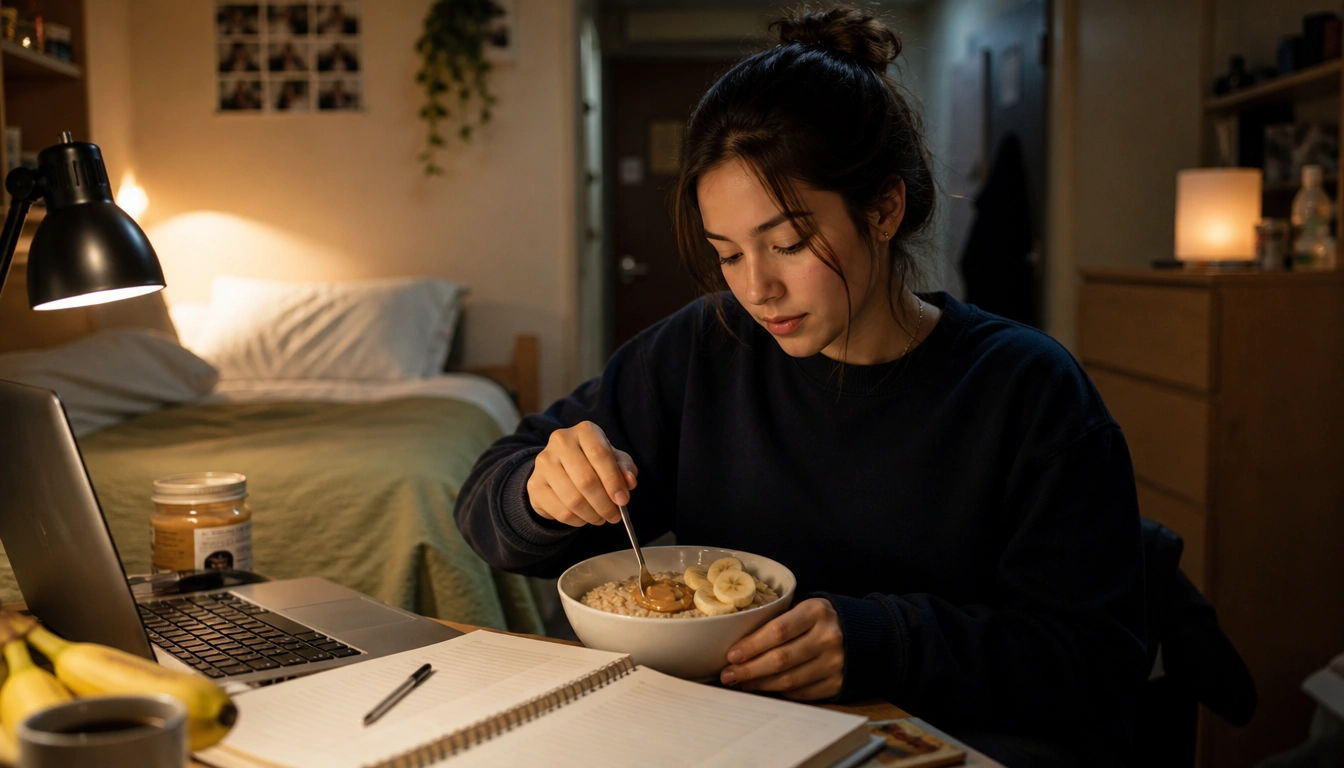
If you’re a college student and you’re hungry at night, the best choice is usually a small, light snack that combines complex carbohydrates with a little protein, and it should be finished at least 2–3 hours before bed when possible. That can help you stay satisfied without overloading digestion or making reflux and sleep latency worse. Think “bridge to morning,” not “second dinner.”
Key Takeaways
- Aim for a small snack, not a full meal, especially if bedtime is within 2–3 hours.
- Choose combinations like whole-grain carbs plus a little protein to support steadier fullness and a calmer bedtime routine.
- Dorm-friendly options can be simple: oatmeal, crackers with hummus, banana with nut butter, or warm milk.
- If you have reflux or a sensitive stomach, avoid heavy, greasy, spicy, or acidic foods late at night.
- Caffeine, chocolate-heavy snacks, and alcohol can all make sleep worse even if they feel relaxing at first.
Why bedtime snacks matter for sleep quality in college students
Late-night hunger is common in college because meals often happen around classes, work shifts, social plans, and study sessions. If you wait too long to eat, you may end up ravenous right before bed and reach for whatever is easiest. That is where a sleep-friendly snack can help: it can take the edge off hunger without turning into a second dinner.
Sleep and food timing interact in a practical way. A student who goes to bed hungry may keep waking up to think about food, while a student who eats too much too late may feel uncomfortably full. The sweet spot is usually a modest snack that helps you feel settled, not stuffed. The National Institutes of Health and other sleep-focused guidance describe a consistent pattern: heavy evening eating tends to work against sleep quality, especially when it becomes a habit close to bedtime.
For college students, the goal is not perfection. It is to reduce the odds that hunger, stomach discomfort, or stress eating will interfere with falling asleep and staying asleep. A small, planned snack can be more helpful than random vending-machine choices made when you are already exhausted.
How late-night eating affects sleep: digestion, reflux, and sleep latency
When you eat right before bed, your body has to keep digesting while the rest of you is trying to wind down. That can make you feel too alert, too full, or both. Heavy meals and large snacks are more likely to increase sleep latency, which is the time it takes to fall asleep. They can also lead to more nighttime awakenings, especially if the food is greasy, spicy, or oversized.
Research in student populations has linked heavy meals and dense snacks eaten within about 2 to 3 hours of bedtime with poorer sleep quality and less efficient sleep. That does not mean a tiny snack is always a problem. It means portion size and food choice matter more than the clock alone. A modest snack is much less likely to interfere with sleep than a large late meal.
Reflux is another reason timing matters. Lying down soon after eating can make it easier for stomach contents to move upward, which may cause heartburn, coughing, or a sour taste in the mouth. Students who already have acid reflux or a sensitive stomach often notice this most after high-fat, acidic, or very spicy foods. If that sounds familiar, the safest late-night choice is usually a smaller, blander snack eaten earlier rather than a rich meal right before sleep.
What makes a snack more sleep-friendly: light portions, complex carbs, and calming protein
The most practical sleep-friendly snacks are light, balanced, and easy to digest. A small amount of complex carbohydrate paired with a little protein is often a better choice than something sugary or greasy. That pairing can help you feel satisfied while supporting the sleep-related physiology tied to tryptophan, an amino acid used to make serotonin and melatonin.
Here is the basic idea: carbohydrates can create a small insulin response, which helps clear some competing amino acids from the bloodstream. That can make it easier for tryptophan to reach the brain, where it supports the pathways involved in relaxation and sleep regulation. You do not need to micromanage chemistry at midnight. You just need a snack that is modest, not highly processed, and not loaded with sugar or fat.
Good sleep-friendly snack patterns often look like this:
- A small portion of oats, whole grains, or fruit for gentle carbohydrates
- A modest amount of milk, yogurt, nut butter, cheese, hummus, or another protein source
- Low added sugar
- Low grease and low spice
- Enough food to reduce hunger, but not enough to feel heavy
A useful rule is to choose something you could imagine eating and then going to bed comfortably within a couple of hours. If the snack feels more like a meal, it is probably too much for late night.
Best dorm-friendly snack ideas by situation
College life is not ideal for elaborate food prep, so the best options are usually the ones you can assemble quickly in a dorm, shared kitchen, or campus apartment. The right snack depends on what you have access to and how much energy you have left after studying.
Quick and low-prep
If you need something in minutes, try a banana with a small spoonful of peanut or almond butter. You get fruit, carbohydrates, and a little fat and protein for staying power. Whole-grain crackers with hummus or a slice of cheese are another easy option. Plain yogurt with a few oats or a small handful of granola can also work if the portion stays modest.
Warm and comforting
Warm foods can feel especially calming after a long study block. A small bowl of oatmeal made with milk is a classic option because it is gentle, filling, and easy to portion. Warm milk, dairy or plant-based, can also feel soothing, especially if you add a little honey rather than a lot of sugar. If you want something more substantial, keep the bowl small and stop before it starts to feel like a full meal.
No-cook and budget-friendly
For students watching their budget, shelf-stable foods matter. Oatmeal packets with low added sugar, whole-grain crackers, shelf-stable milk, peanut butter, apples, bananas, and canned or single-serve hummus can all fit into a dorm setup. A handful of tart cherries or a small glass of tart cherry juice is another option some students like, though it is best treated as a possible add-on rather than a must-have sleep fix.
What to choose by goal
| If you want… | Try this | Why it fits |
|---|---|---|
| Something very light | Banana or apple with a little nut butter | Simple, easy to digest, and not overly heavy |
| Something warming | Small oatmeal bowl with milk | Comforting, filling, and easy to portion |
| Something savory | Whole-grain crackers with hummus or cheese | Balances carbs with a little protein |
| Something after a long study night | Warm milk with a small snack on the side | Gentle and less likely to feel like a full meal |
The best dorm snack is the one you can prepare consistently without raiding the vending machine for chips or candy every night.
How to build a sleep-friendly snack from what you already have on campus
You do not need a special sleep product to make a better evening snack. Start by looking at what is already in your dorm fridge, desk drawer, or campus store. Then build around three questions: Is it small? Is it easy on my stomach? Does it combine a carbohydrate with a little protein?
For example, if you have oatmeal, choose a small portion and add milk rather than making a huge bowl. If you have fruit, pair it with a modest amount of nut butter or yogurt. If you only have crackers, choose whole-grain crackers and add hummus or cheese instead of eating a whole sleeve plain. The aim is to make the snack more satisfying so you are less tempted to keep grazing.
This is also where behavior matters. If stress is driving the craving, pause and ask whether you are hungry or simply overloaded. A snack can still be the right choice, but making it intentional helps you avoid eating until you feel heavy. Think of the snack as a bridge to tomorrow morning, not a replacement for dinner or a reward for surviving the day.
That framing can be surprisingly useful for college students who eat late because of studying, not because they truly need another large meal. A planned snack can calm hunger, mark the end of work, and make it easier to stop eating for the night.
When a snack is the wrong choice: heavy meals, sugary foods, caffeine, and alcohol
Some foods are poor choices near bedtime because they are more likely to disrupt sleep or trigger discomfort. Heavy, greasy, or fried foods are common culprits. So are very sugary snacks, which can leave you feeling wired or hungry again soon after. Large portions of dessert, chips, fast food, or pizza late at night often fit this pattern.
Caffeine is another issue. Coffee, energy drinks, matcha, caffeinated teas, and even some chocolate-based snacks can interfere with sleep far longer than students expect. If you are trying to wind down, check whether your snack or drink contains hidden caffeine. A late-night sweet snack may seem harmless, but if it includes chocolate or an energy drink, it may work against your goal.
Alcohol deserves special mention. Some students use it like a sleep shortcut because it can make them feel drowsy at first. But alcohol tends to worsen sleep quality later in the night, leading to more awakenings and less restorative sleep. If your goal is better recovery for class and studying, alcohol is not a good bedtime strategy.
If you are already close to sleep and you are truly hungry, choose the smallest calming option available. If you are not hungry but stressed, a snack may not be the answer at all. Water, a brief wind-down routine, or a screen break may help more than food.
Special considerations for students with reflux, stress eating, or irregular schedules
Students with reflux or a sensitive stomach usually need stricter boundaries at night. Fatty, spicy, acidic, or very large foods are more likely to cause symptoms when you lie down. That means late-night tomato-based foods, fried foods, citrus-heavy snacks, and heavy fast food are often poor choices. A bland, small snack eaten earlier is usually safer than waiting until you are starving and then eating something rich.
Students who stress eat may need a different approach. The problem is not only what is in the snack, but why it is happening. If you notice that every late-night study session ends with overeating, set up a routine before the craving starts. Pack a planned snack, portion it out ahead of time, and decide when you will stop eating. That can reduce the “all or nothing” feeling that leads to grazing.
Irregular schedules add another layer. If your evening shifts, labs, or rehearsals make dinner unpredictable, the solution may be a small pre-bed snack that fills the gap without replacing dinner. In that case, timing matters more than a perfect food choice. Keep the snack light, keep it predictable, and avoid the foods most likely to keep you awake.
If you have ongoing reflux, frequent stomach pain, persistent insomnia, or daytime fatigue that keeps affecting school and daily life, it is worth getting evaluated by a campus health clinician or other healthcare professional. Sleep problems can have more than one cause, and food is only part of the picture.
Simple timing rules for late studying and bedtime hunger
A few practical timing rules can make late-night eating easier to manage. If you can, finish your last substantial meal or heavy snack 2 to 3 hours before bedtime. That gives digestion time to calm down before you lie flat. If you are hungry closer to bed, switch from “meal mode” to “snack mode.”
Snack mode means smaller portions, simpler foods, and less grease or sugar. It also means stopping once the edge of hunger is gone. You are not trying to feel full; you are trying to feel settled enough to sleep. That distinction matters on nights when stress tells you to keep eating even after you are satisfied.
If you are hungry 30 minutes before sleep, choose the smallest reasonable option and keep it bland. If you are hungry after a late study session but do not want a full meal, oatmeal, banana with nut butter, crackers with hummus, or warm milk are all more sleep-friendly than chips, fast food, or dessert. Over time, the best late-night snack is the one that helps you feel steady enough to sleep and functional enough to wake up without regret the next morning.
Frequently Asked Questions
How late is too late to eat before bed?
A good target is to finish a substantial meal or heavy snack about 2 to 3 hours before bedtime. If you are hungry closer to sleep, a small snack is usually a better choice than forcing yourself to go to bed very hungry or eating a full meal.
Which snacks are most likely to help me feel sleepy without being heavy?
Small snacks that combine complex carbohydrates with a little protein are often the best fit. Good examples include oatmeal with milk, a banana with a small amount of nut butter, or whole-grain crackers with hummus or cheese.
What foods should I avoid before sleep if I have acid reflux or a sensitive stomach?
Late at night, reflux-prone students usually do better avoiding fatty, spicy, or acidic foods. That often means limiting fried foods, pizza, tomato-heavy meals, citrus-heavy snacks, and very rich desserts close to bedtime.
Can a small snack actually help sleep, or should I skip food entirely at night?
A small snack can help if hunger is keeping you awake or making you uncomfortable. The goal is not to eat a lot; it is to take the edge off hunger without creating fullness, reflux, or a blood sugar roller coaster.
What should I do if I’m hungry after a late study session but don’t want a full meal?
Choose one small, simple option and stop there. Good choices include a banana, oatmeal, crackers with hummus, yogurt with a few oats, or warm milk. Then shift into your bedtime routine so food does not turn into another hour of snacking.
The Bottom Line
For college students, the best bedtime snack is usually small, balanced, and boring enough to be easy on your stomach. Think complex carbohydrate plus a little protein, not a second dinner.
If you can finish eating 2 to 3 hours before bed, that is ideal. If not, keep the portion modest and skip the greasy, sugary, caffeinated, or very acidic choices that are most likely to make sleep worse.
If reflux, stress eating, or chronic sleep problems keep showing up, food may be part of the picture but not the whole answer. A campus clinician can help you sort out what is driving the problem.
Medical disclaimer
Medical disclaimer: This content is for educational and informational purposes only and is not a substitute for professional medical advice, diagnosis, or treatment. Dietary needs and supplement suitability vary by individual.
