
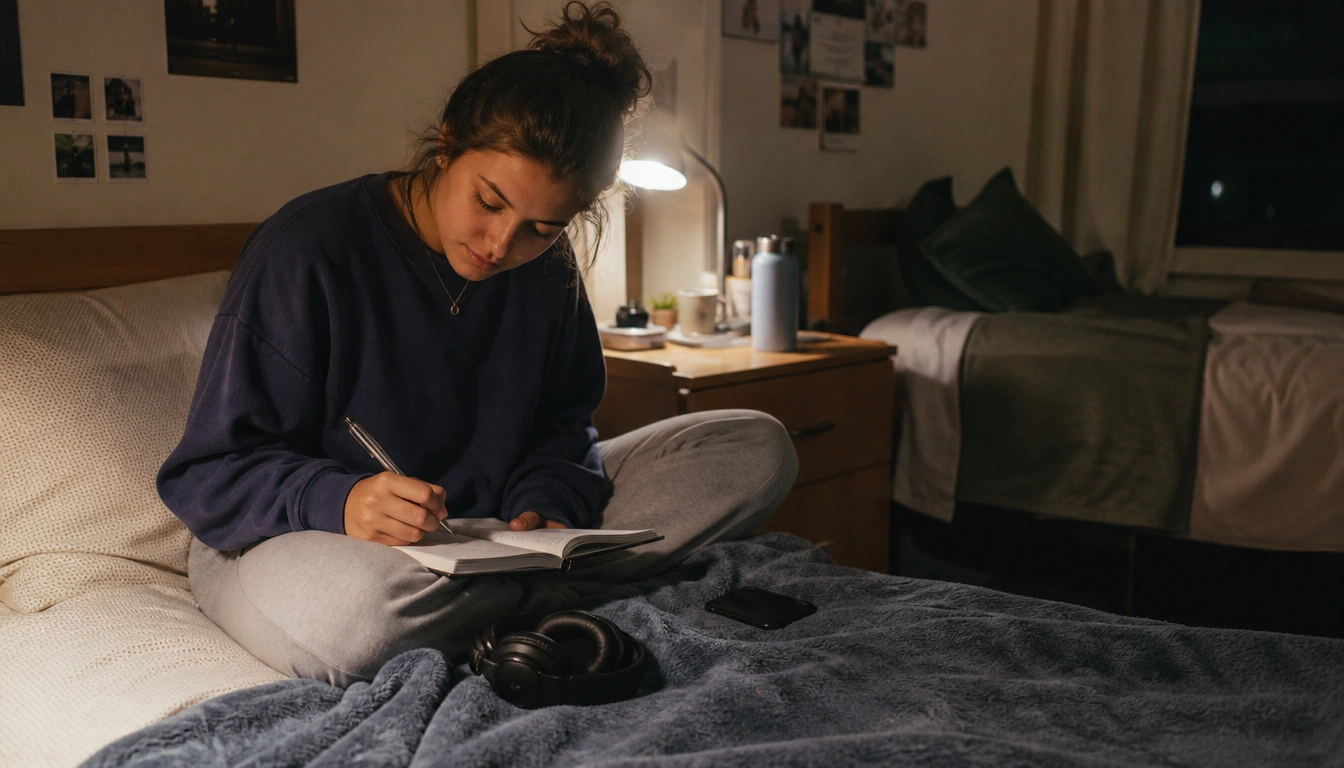
Start winding down about 60 minutes before bed: stop active schoolwork, dim your screens, write down tomorrow’s tasks, and switch to low-stimulation habits. About 30 minutes before bed, do hygiene, light reading, or gentle stretching. In the last 15 minutes, make your sleep space dark, cool, and quieter, then get into bed at a fairly consistent time. The goal is to lower mental and physical alertness in a repeatable order.
Key Takeaways
- Young adults generally need 7 to 9 hours of sleep, and a steady sleep-wake schedule usually helps more than trying to sleep in a lot on weekends.
- A good college wind-down routine starts before bed, not after you are already exhausted. The final hour matters most.
- If your mind races, use a quick brain dump on paper so unfinished tasks do not keep looping in your head.
- Screens, caffeine, alcohol, and late intense exercise can all interfere with falling asleep or staying asleep.
- In dorms or shared housing, you may not control everything, but you can still adjust light, noise, and habits to make sleep easier.
- If sleep problems persist for weeks or come with loud snoring, gasping, or major daytime sleepiness, campus health or a clinician should evaluate it.
Why a wind-down routine matters for college students
A steady evening wind-down checklist for college students works because sleep is not just a switch you flip. Your body uses light, routine, and timing to keep your circadian rhythm on track. As evening approaches, melatonin rises and helps create sleepiness. Late-night studying, bright screens, and stress can push that process later.
College life makes this harder. Class times change, social events run late, and many students do homework in the same space where they try to sleep. That can leave the brain in a “still working” mode long after the day is over. A routine tells your nervous system that the high-alert part of the day is ending.
Public health guidance says adults ages 18 to 25 generally need 7 to 9 hours of sleep each night. The CDC and other health organizations also emphasize that consistent sleep and wake times matter. Sleeping very late on weekends may feel like recovery, but it usually does not fully fix an erratic schedule.
A realistic 60-minute plan:
- At 60 minutes: stop active assignments if you can, save your work, and set a clear stopping point.
- At 45 to 60 minutes: reduce screen time and shift into lower-energy tasks.
- At 30 minutes: do hygiene, light reading, stretching, or another calm habit.
- At 15 minutes: make your room as sleep-friendly as possible and get into bed.
If your schedule is messy, the exact clock time can change. The order matters more than perfection: work fades out first, then mental clutter, then body cues, then the sleep environment.
Digital sunset: how to handle phones, laptops, and blue light without ruining homework time
Many students cannot avoid screens until late evening. The goal is not to ban devices all day; it is to stop the kind of screen use that keeps your brain engaged right before bed. Blue light from phones, laptops, and tablets can suppress melatonin and push sleep later, especially when the light is bright and the content is stimulating.
Try a “digital sunset” during the last hour before sleep. Finish necessary academic work first, then move from active use to passive use. That means no new tabs, no email checking, no group chat spirals, and no last-minute scrolling that turns into 40 more minutes.
If you still need a device for an assignment, make the session as sleep-friendly as possible: lower brightness, use night mode if available, enlarge text so you can read faster, and avoid multitasking. Keep the work task specific, such as submitting one file or reviewing one page of notes, rather than opening the whole course load again.
For many students, the hardest part is not the light itself but the mental stimulation. A laptop can pull you back into problem-solving mode. If you know that happens, put the device away sooner and switch to a non-screen activity before bed.
Brain dump and mental shutdown tools for racing thoughts and unfinished assignments
If your brain gets loud at night, you do not need to force it to be quiet. Give it a place to put the noise. A short brain dump can lower bedtime cognitive arousal by moving tasks, worries, and reminders out of short-term mental space and onto paper.
Use a notebook, sticky note, or notes app if that is truly easier, though paper is often better because it is less likely to pull you back into screen use. Write down unfinished assignments, tomorrow’s top three priorities, questions you need to answer, and anything that feels unfinished. Then add the next step for each item, even if that step is tiny.
Examples:
- “Email professor about extension” becomes “Draft email at 10 a.m. tomorrow.”
- “Study for chem quiz” becomes “Review chapter 4 flashcards for 20 minutes after lunch.”
- “Worry about internship interview” becomes “Look at interview questions after class.”
This is not about solving everything at night. It is about telling your brain that the task has a container and will be handled later. If helpful, end the brain dump with one sentence such as, “I have a plan for tomorrow, and I do not need to keep rehearsing it tonight.”
If racing thoughts are intense most nights, that can be a sign that stress is building beyond ordinary student pressure. A routine can help, but repeated inability to shut off your thoughts may need more support.
30-minute reset: hygiene, light movement, reading, and other low-stimulation habits
Once the evening pace slows, move into habits that signal “day is over.” A simple hygiene routine works well because it creates a clear transition. Brush your teeth, wash your face, change into sleep clothes, and take care of any contact lenses or other regular nighttime tasks.
After that, keep the activity level low. Gentle stretching, a few minutes of slow breathing, or a calm walk to the bathroom or kitchen can help settle the body without making you more alert. If you work out late, skip intense exercise right before bed when possible. Higher-intensity activity can leave some people feeling more awake because body temperature and alertness stay elevated for a while.
Reading can help, but choose material that does not keep you emotionally or academically activated. A physical book or magazine is often easier on the brain than a phone. Avoid reading class material if it turns into studying again.
Students often ask whether they should do something “productive” in this half hour. The answer is no. This is the part of the night where productive is less helpful than predictable. Repeating the same calming sequence trains your body to recognize the cue.
15-minute sleep environment tune-up: lighting, room temperature, noise control, and bedding basics
In the final 15 minutes, shift your room from “living space” to “sleep space.” Dim the lights as much as your housing allows. If you share a room, use a bedside lamp or small light rather than bright overhead lighting. Lower light exposure helps your body move closer to sleep mode.
Temperature matters too. Many people sleep best in a cool room, but college housing often gives you limited control. If the room runs warm, use a lighter blanket, a fan, or breathable pajamas. If it is too cold, layer blankets rather than heating the room too much.
Noise is one of the most common dorm problems. If you cannot control hallway, roommate, or street noise, use earplugs, a fan, or steady white noise to mask unpredictable sounds. The goal is not silence; it is reducing sudden changes that keep your brain scanning the room.
Keep bedding simple and comfortable. You do not need expensive sleep products to make this work. A clean pillowcase, a blanket that matches the temperature, and a mattress setup that feels stable are often enough. If your bed is the place where you also study, try to separate those uses by putting away school items before sleep.
How to adjust the routine for dorm life, roommates, late classes, and busy exam weeks
Real college routines are not clean. Some nights you get home late, some nights your roommate is still awake, and some nights an exam forces you to study longer than planned. The routine still works if you adapt the order to your situation.
In a dorm or shared apartment, use “portable” sleep cues: earbuds or earplugs, an eye mask, a small lamp, and a quick cleanup of your desk area. If roommates are active, try to keep your own routine quiet and predictable so you are not adding more noise or light to the room.
When you have a late class or night study session, protect the last 20 to 30 minutes before bed as a buffer. Even if the full hour is impossible, a short shutdown still helps more than going straight from class, socializing, or cramming to bed.
During exam weeks, the temptation is to stay up later and then “catch up” on the weekend. A better approach is to keep wake time as steady as possible and avoid dramatic swings. Small schedule shifts are easier on your body than a full reset every Monday.
If you live with others, communicate your sleep needs plainly. Saying, “I am trying to be asleep by 11, so I am going to dim lights and keep things quiet after 10:30,” is usually more effective than waiting until you are frustrated.
Naps, caffeine, alcohol, and late-night exercise: what helps sleep and what can backfire
College sleep routines usually fall apart because of a few habits that seem helpful in the moment. Caffeine is the most common. Coffee, tea, energy drinks, soda, pre-workout drinks, and even chocolate can keep you alert longer than you expect. If you know caffeine affects you strongly, leaving a bigger gap before bedtime can help protect your sleep.
Naps can be useful if you are truly sleep-deprived, but timing matters. Long naps or naps late in the day can weaken your sleep drive, which makes it harder to fall asleep at night. Short, earlier naps are usually less disruptive than long ones close to bedtime.
Alcohol is another common trap. It may make you feel sleepy at first, but it tends to fragment sleep later in the night and can leave you less rested. That means you may fall asleep faster but wake up more or sleep less well overall.
Late exercise is not automatically bad, and some students do fine with evening workouts. Still, very intense exercise close to bedtime can be stimulating for some people. If you notice that hard workouts make it harder to settle down, move the session earlier or keep the later workout lighter.
A good night routine does not require perfect behavior. It works best when you understand which habits support sleep and which ones quietly undo the effort.
When a sleep routine is not enough: signs a student should seek medical or campus health support
If you have tried a steady wind-down routine for several weeks and sleep is still a struggle, it may be more than a habit issue. Campus health or a primary care clinician can help figure out whether stress, insomnia, a sleep disorder, or another health issue is involved.
Get evaluated sooner if you have frequent loud snoring, gasping, pauses in breathing, or severe daytime sleepiness. Those symptoms can point to a medical sleep problem that needs assessment. Also ask for help if you regularly cannot fall asleep or stay asleep, even when you are giving yourself enough time in bed.
Mental health matters too. If sleep problems are tied to panic, depression, persistent anxiety, or racing thoughts that spill into the day, support from a clinician can be important. You do not have to wait until the problem becomes extreme before asking for help.
For students, the practical test is simple: if sleep problems are affecting classes, mood, safety, or daily functioning, they deserve attention. A wind-down checklist is a useful tool, but it should not be the only plan if symptoms keep continuing.
Frequently Asked Questions
How long before bed should I stop using my phone or laptop?
A good target is to start stepping away during the last hour before bed. If you must use a device for school, keep it brief, lower the brightness, and avoid switching into social media or general browsing. The closer you get to sleep, the more useful it is to shift to non-screen activities.
What can I do if my mind keeps racing about classes or assignments at night?
Use a brain dump before bed. Write down the unfinished tasks, worries, and next steps on paper so your brain does not have to keep holding them. If needed, finish with one clear plan for tomorrow. That often helps more than trying to force yourself to “stop thinking.”
How do I wind down in a noisy dorm or shared apartment?
Use tools that reduce sudden noise: earplugs, a fan, white noise, or a white-noise app. Dim your own lights, keep your routine quiet, and avoid adding extra stimulation. You may not control the whole environment, but you can make your side of it more sleep-friendly.
Is it okay to nap if I am sleep-deprived during the week?
Yes, naps can help, especially if you are short on sleep. The main caution is timing and length. Long naps or late-day naps can make it harder to fall asleep at night. Shorter, earlier naps are usually less likely to interfere with bedtime.
What habits should I avoid at night because they make sleep worse?
The biggest ones are late caffeine, alcohol as a sleep aid, intense exercise right before bed if it wires you up, and screen use that keeps you mentally engaged. Also avoid using your bed as a study zone right up until lights out if you can separate those activities.
The Bottom Line
A college-friendly wind-down routine does not have to be complicated. The most useful version is ordered: stop active work, reduce screen stimulation, clear your mind on paper, do a short calming routine, and then set up your room for sleep.
Consistency matters more than perfection. If you keep the sequence similar most nights and protect your final hour when possible, you give your body a better chance to shift out of study mode and into sleep mode. If sleep problems keep going despite that, or if you have signs like snoring, gasping, or major daytime sleepiness, get checked by campus health or a clinician.
Medical disclaimer
Medical disclaimer: This content is for educational and informational purposes only and is not a substitute for professional medical advice, diagnosis, or treatment. Dietary needs and supplement suitability vary by individual.
Sources
- Centers for Disease Control and Prevention (CDC) — cdc.gov. Accessed October 2026.
- National Institutes of Health (NIH) — nih.gov. Accessed October 2026.
- Academic Research Institution — colostate.edu. Accessed October 2026.
- Academic Research Institution — umich.edu. Accessed October 2026.
- Academic Research Institution — colorado.edu. Accessed October 2026.
- Academic Research Institution — ncsu.edu. Accessed October 2026.
