
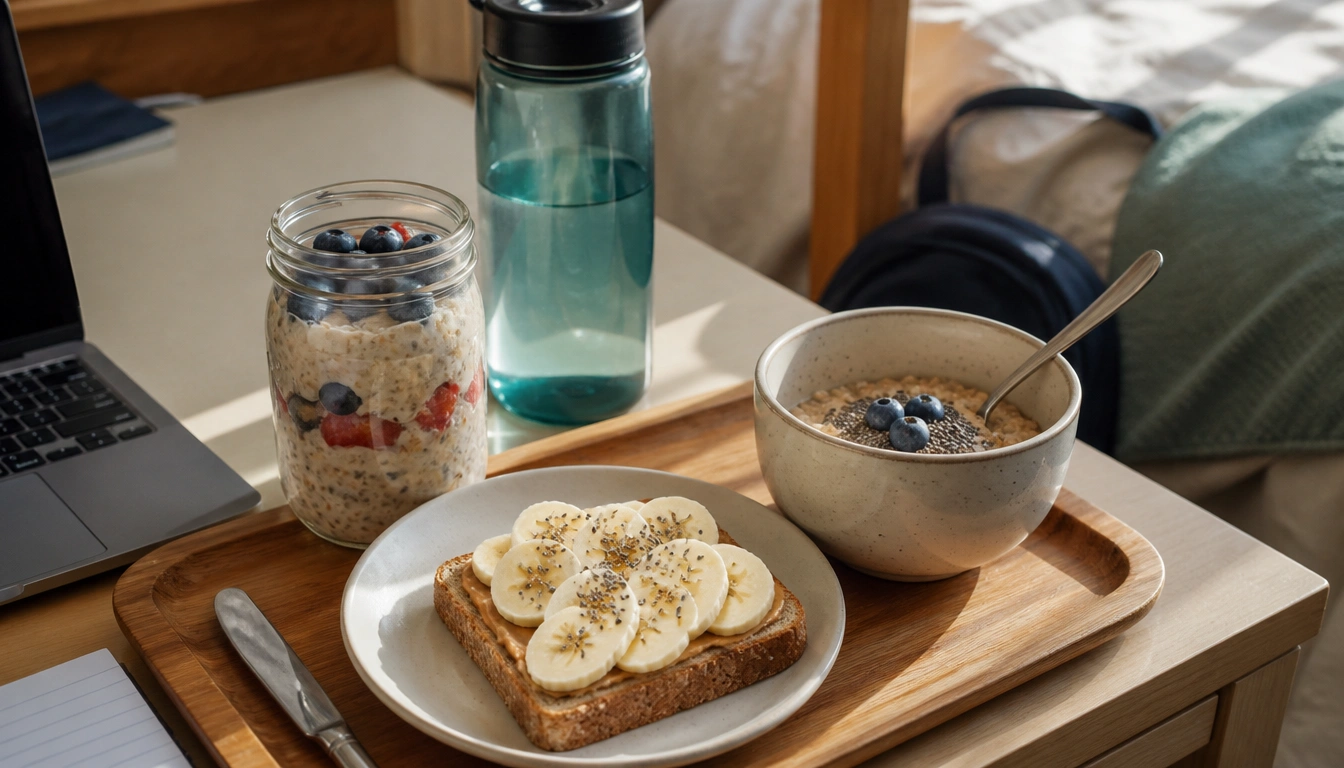
The easiest high-fiber breakfasts for college students are simple combinations of oats, chia, whole-grain bread, beans, nut butter, fruit, and seeds. Aiming for roughly 8–10+ grams of fiber at breakfast can meaningfully support fullness and regularity without making mornings complicated. The best choices are dorm-friendly, budget-aware, and easy to scale up gradually if your current diet is low in fiber.
Key Takeaways
- A breakfast with about 8–10+ grams of fiber can help anchor the day and make it easier to reach daily fiber goals.
- If you are not used to eating much fiber, increase slowly to reduce bloating, gas, and cramping.
- Dorm-friendly high-fiber breakfasts can be made with oats, chia, beans, whole-grain bread, fruit, and nut butter.
- Fiber works best when you also drink enough fluid, especially if your meal includes more insoluble fiber.
- Persistent or severe digestive symptoms should be checked by a healthcare professional instead of being treated with diet changes alone.
Why high-fiber breakfast ideas for college students matter
A college morning can be long: early classes, commuting, labs, club meetings, and stretches of sitting still. A breakfast built around fiber is useful because it tends to be more filling than a refined-carb breakfast and can help you stay satisfied until your next meal. That matters when your schedule makes grazing on vending machine snacks seem easier than stopping for lunch.
Fiber also supports regular bowel habits, which is one reason it is so often recommended for general digestive health. Public health guidance from sources such as the U.S. Dietary Guidelines and the NHS consistently encourages adults to eat more fiber overall. For students, breakfast is one of the simplest places to start, because adding oats, fruit, whole-grain bread, or beans does not require a full meal prep routine.
A realistic breakfast goal is not “maximum fiber at all costs.” It is a meal that meaningfully contributes to your daily intake while still being easy to eat, affordable, and repeatable on busy weekdays. For many students, that means building a breakfast that lands in the 8–10+ gram range and then using lunch and dinner to fill in the rest.
Fiber basics in plain language
There are two broad types of fiber, and both can fit into college breakfasts. Soluble fiber dissolves in water and forms a gel-like texture. Foods such as oats, beans, chia seeds, and some fruits contain a lot of it. Insoluble fiber does not dissolve the same way; it helps add bulk and move material through the gut. You find it in whole grains, wheat bran, nuts, seeds, and fruit or vegetable skins.
For breakfast planning, the difference is practical rather than academic. Oatmeal, overnight oats, and fruit-heavy bowls lean more toward soluble fiber. Whole-grain toast, bran, and seeds add more insoluble fiber. A mixed meal often works best because it is more filling and gives you a broader range of plant foods without needing a complicated recipe.
If your stomach is sensitive, start with moderate portions and see how you feel. Even a good food can feel like too much if you are used to a low-fiber diet and suddenly double or triple your intake.
A simple dorm-friendly breakfast formula
The easiest way to build a high-fiber breakfast is to use three parts: a fiber base, a protein or fat add-on, and a fruit or seed booster. This keeps the meal balanced and easier to assemble with limited equipment.
Fiber base: oats, whole-grain bread, whole-grain cereal, bran, or beans in a savory toast topping.
Protein or fat add-on: peanut butter, almond butter, yogurt if you tolerate it, milk, soy milk, or avocado.
Booster: berries, banana, apple slices, raisins, chia seeds, flaxseed, pumpkin seeds, or canned fruit packed in juice.
This formula works because the fiber base does the heavy lifting, while the add-on helps the meal feel more complete and satisfying. It also gives you room to improvise with what you already have in a mini-fridge or cabinet. If you only have one ingredient from each category, you can still make a real breakfast instead of waiting for a perfect shopping trip.
No-cook and microwave breakfast ideas that actually fit dorm life
Overnight oats are one of the most practical no-cook options. Mix rolled oats with milk or a fortified plant milk, add chia seeds, and top with berries or sliced banana. Let it sit in a jar or lidded container in the fridge overnight. By morning, it is soft, spoonable, and ready to eat. If you want more flavor, add cinnamon, cocoa powder, or a spoonful of nut butter.
Microwave oatmeal is the warm-breakfast version. Cook rolled oats with water or milk in a microwave-safe bowl, then stir in ground flaxseed, peanut butter, chopped nuts, or sliced fruit after cooking. If you want a little more staying power, add chia seeds after the oats are hot so they thicken without clumping.
Quick porridge upgrades are useful when plain oatmeal feels boring. A banana sliced into hot oats adds sweetness and texture. Frozen berries work well because they thaw quickly in the bowl. A spoonful of sunflower seed butter or peanut butter makes the bowl richer without a lot of extra effort.
If you have only a mug, a bowl, and a microwave, you still have a lot of options. The main idea is to combine a fiber-rich grain with a simple topping rather than relying on sugary instant packets alone.
Whole-grain toast breakfasts with avocado, beans, nut butter, and fruit
Toast is one of the easiest dorm breakfasts because it needs almost no planning. The first choice is the bread: look for dense 100% whole-grain, whole-wheat, or seeded bread when possible. That gives you a stronger fiber base than standard white bread.
For a savory option, mash avocado on toast and top it with rinsed canned chickpeas or white beans. A little salt, pepper, and lemon juice can make it taste more finished. If you want more protein and crunch, add pumpkin seeds or sesame seeds.
For a sweet option, spread nut butter on toast and top with sliced apple, banana, or berries. Chia seeds or ground flaxseed are easy boosters. If your campus dining hall has fruit but your room does not, this is an easy way to turn a basic slice of toast into a more filling meal.
Toast breakfasts are especially useful for students who do not want a bowl of oatmeal every morning. They also travel well if you need to eat on the way to class. A second slice of bread can make the meal more substantial without much extra cost.
Budget moves and shelf-stable swaps
High-fiber breakfasts do not have to be expensive. Rolled oats, peanut butter, canned beans, bananas, apples, and store-brand whole-wheat bread are usually among the most affordable options per serving. Chia and flaxseed can seem pricier up front, but you use them in small amounts, so a bag often lasts a long time.
Shelf-stable foods are especially useful in dorms because they reduce the need for frequent shopping. Dry oats, nut butter, whole-grain crackers, canned chickpeas, canned beans, and seeds can all live in a cabinet. In the fridge, keep milk, plant milk, yogurt if you use it, and any fresh fruit you know you will eat within a few days.
To cut waste, buy fruit you will actually finish and choose one or two breakfast templates you can repeat. For example, you might keep oats, bananas, and peanut butter on hand for sweet breakfasts, plus whole-grain bread and canned beans for savory mornings. That is often easier than trying to stock a full pantry of specialty health foods.
How to increase fiber without stomach discomfort
If your usual breakfast is low in fiber, do not jump straight to the most loaded version you can find. A sudden increase can cause bloating, gas, cramping, or a feeling of heaviness. A better approach is to add one higher-fiber food at a time. For example, start with oats and fruit, then add chia seeds later, or switch from white toast to whole-grain toast before adding beans or seeds.
Hydration matters just as much as the fiber itself. Higher-fiber meals work best when you are also drinking enough fluid, especially if the meal contains more insoluble fiber from whole grains, seeds, or bran. If you raise fiber without drinking enough, constipation can feel worse instead of better.
Some mild change in bowel habits can happen while your body adjusts, but severe pain, repeated vomiting, a swollen abdomen, or symptoms that keep getting worse are not normal adjustment symptoms. Those problems need medical attention.
When high-fiber breakfasts are not the right choice
High-fiber advice is useful for many students, but not for every digestive situation. People with active inflammatory bowel disease flare-ups, strictures, or certain recovery periods after surgery may be told to follow a low-fiber or low-residue pattern instead. Some people with IBS also do better with a more individualized plan rather than a blanket “eat more fiber” approach.
If a high-fiber breakfast consistently makes you feel worse, stop treating that as a willpower issue. Food can be a trigger, but it can also reveal an underlying condition that needs proper care. A student health clinician, registered dietitian, or physician can help sort out whether the problem is the type of fiber, the amount, or something else entirely.
Get checked promptly if you have blood in the stool, unexplained weight loss, persistent diarrhea, severe abdominal pain, fever, or a major change in bowel habits that does not settle. Those are not situations to manage with a new oatmeal recipe.
Frequently Asked Questions
How much fiber should a college student aim for at breakfast?
A practical breakfast target is about 8–10+ grams of fiber, which can help you move toward the daily amount recommended by major health authorities. You do not need to hit a perfect number every morning, but breakfast is a useful place to make a meaningful contribution.
What are the best dorm-friendly high-fiber breakfast foods with only a microwave or mini-fridge?
Rolled oats, overnight oats, chia seeds, whole-grain bread, peanut butter, canned beans, bananas, apples, and berries are all strong options. They store well, need little equipment, and can be combined in different ways so breakfast does not get repetitive.
How can I increase fiber without causing bloating or stomach discomfort?
Increase fiber gradually instead of making a big jump all at once. Add one higher-fiber food at a time, and make sure you are drinking enough fluids. If discomfort becomes severe or keeps happening, it is worth getting medical advice rather than pushing through it.
What high-fiber breakfast options work for students on a budget?
Oatmeal, peanut butter toast on whole-grain bread, bananas, canned beans on toast, and overnight oats made with store-brand oats are usually budget-friendly. Choosing a few repeatable basics is often cheaper and easier than buying specialty breakfast products.
What should I do if I have a digestive condition and a high-fiber breakfast bothers me?
Do not force high-fiber meals if they make symptoms worse. Some digestive conditions need a lower-fiber approach, at least for a time. A clinician or dietitian can help you figure out what type and amount of fiber is appropriate for your situation.
The Bottom Line
For college students, the most realistic high-fiber breakfast is one you can make fast, affordably, and repeatedly. Oats, whole-grain toast, beans, fruit, chia, and nut butter cover most dorm setups without requiring a full kitchen.
Start with one strong breakfast habit rather than trying to overhaul everything at once. Build fiber gradually, drink enough fluids, and pay attention to how your body responds. If symptoms are severe, persistent, or tied to a known digestive condition, get professional guidance instead of experimenting on your own.
Medical disclaimer
Medical disclaimer: This content is for educational and informational purposes only and is not a substitute for professional medical advice, diagnosis, or treatment. Dietary needs and supplement suitability vary by individual.
Sources
- U.S. Government / Health Authority — dietaryguidelines.gov. Accessed October 2026.
- National Health Service (NHS) — worcsacute.nhs.uk. Accessed October 2026.
- National Health Service (NHS) — www.nhs.uk. Accessed October 2026.
- Academic Research Institution — harvard.edu. Accessed October 2026.
- Mayo Clinic — mayoclinic.org. Accessed October 2026.
