
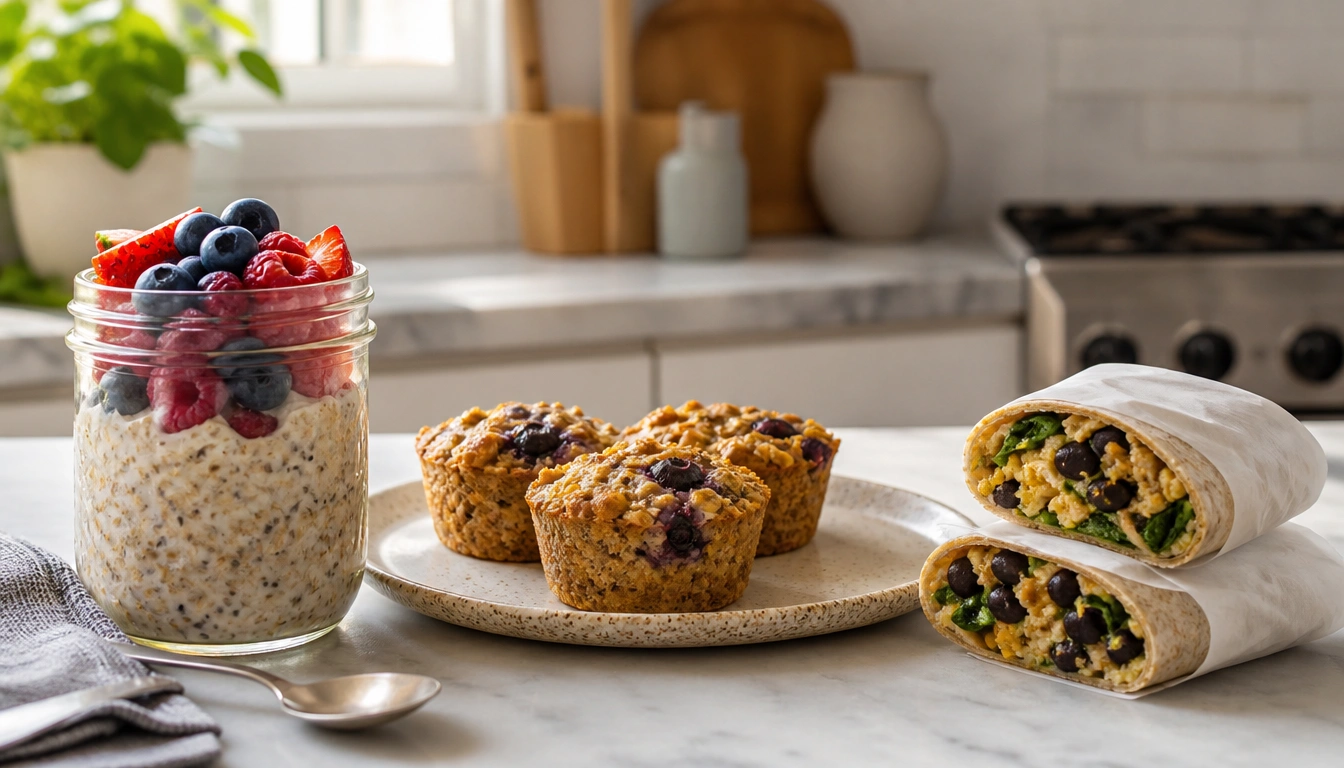
The easiest high-fiber breakfast ideas for meal-prep beginners are simple combos built from oats, chia or flax, beans, whole-grain wraps, fruit, and a fluid. Overnight oats, baked oat cups, and freezer breakfast burritos are especially practical because they can be made ahead, stored safely, and portioned to give you a meaningful fiber boost without demanding advanced cooking skills.
Key Takeaways
- A prep-ahead breakfast can realistically provide about 10 to 15 grams of fiber, which is a useful chunk of your daily goal.
- Beginners usually do best by increasing fiber gradually over 1 to 2 weeks so the gut can adapt.
- Fiber works best when you also drink enough fluid; otherwise constipation can get worse instead of better.
- Look for breakfast staples with at least 3 to 5 grams of fiber per serving when buying breads, wraps, or cereals.
- The simplest high-fiber building blocks are oats, chia, flax, beans, whole grains, berries, apples, pears, spinach, and frozen fruit.
Build a simple high-fiber breakfast framework
A beginner-friendly high-fiber breakfast does not need a complicated recipe. A useful way to think about it is: choose one fiber-rich base, add one extra fiber boost, include one fruit or vegetable, and pair the meal with a drink. That structure works for both sweet and savory breakfasts, and it keeps planning simple when you are short on time.
For example, the base might be oats, a whole-grain wrap, or a high-fiber cereal. The add-in could be chia seeds, flaxseed, beans, or nuts. Fruit or vegetables add more fiber, volume, and texture, while water, milk, or an unsweetened fortified plant milk helps the meal sit well and supports digestion. This is less about perfect nutrition and more about building a repeatable breakfast you can actually eat on busy mornings.
If you are trying to fix an inconsistent breakfast habit, start with one repeatable formula and use it several times a week. Consistency matters more than variety at first. Once the routine feels easy, you can swap ingredients to avoid boredom.
Fiber types, fullness, and a realistic breakfast target
Fiber comes in two broad types. Soluble fiber dissolves in water and forms a gel-like texture during digestion. It is found in foods such as oats, chia, beans, and some fruits. Insoluble fiber adds bulk to stool and helps food move through the digestive tract. It is common in whole-grain brans, seeds, nuts, and the skins of fruits and vegetables.
Both types matter at breakfast. Soluble fiber can help slow digestion, which supports steadier energy and a more comfortable feeling of fullness. Insoluble fiber supports regular bowel movements. Together, they can make a morning meal feel more satisfying than a refined-carb breakfast that leaves you hungry again soon after.
A practical breakfast goal for many people is about 10 to 15 grams of fiber. That amount can cover roughly one-third to one-half of an adult day’s target, depending on the guideline you follow. You do not need to hit your full daily target at breakfast; you just need a meal that meaningfully moves you toward it. A prep-ahead breakfast can do that without requiring perfection at every meal.
From a routine standpoint, this is useful because breakfast is one of the easiest meals to standardize. If you build one dependable option that consistently gives you a strong fiber start, the rest of the day becomes easier to plan.
Keep a few beginner-friendly ingredients on hand
The simplest meal-prep ingredients are the ones that work in both sweet and savory meals and keep well in the fridge or freezer. Start with rolled oats, chia seeds, flaxseed, canned or cooked beans, whole-grain wraps, berries, apples, pears, spinach, and frozen fruit. Those foods are flexible, widely available, and easy to combine without much technique.
Oats are a natural starting point because they soften well and make a filling base for overnight oats or baked cups. Chia and flax are easy add-ins that can increase fiber without changing the whole recipe. Beans are especially useful in savory breakfasts because they add fiber and protein at the same time. Fruits with skins, such as apples and pears, add extra texture and insoluble fiber. Frozen fruit is useful when fresh fruit is too expensive or spoils too fast.
Overnight oats: Mix oats with milk or a fortified plant milk, chia or flax, and fruit in a jar or container. Refrigerate overnight or for a few days. This is one of the easiest make-ahead breakfasts for beginners because it needs no cooking and can be customized with berries, chopped apple, or frozen fruit that thaws by morning.
Baked oat cups: Stir oats, mashed banana or applesauce, eggs or a binder if desired, cinnamon, seeds, and fruit into a muffin pan and bake. Once cooled, store them in the fridge for a few days or freeze them for longer storage. They are a good option if you prefer something hand-held.
Freezer breakfast burritos: Fill whole-grain wraps with scrambled eggs, black beans or pinto beans, spinach, and optional salsa or cheese. Wrap tightly, freeze, and reheat later. This format works especially well for savory eaters who want a filling breakfast that can be eaten quickly.
Increase fiber gradually and keep digestion comfortable
If you are not used to high-fiber meals, increase fiber slowly over 1 to 2 weeks instead of jumping straight to a large serving every day. A sudden increase can cause bloating, gas, cramps, or loose stools. That reaction is common when the gut has not had time to adapt, and it is usually a sign to ease into the change rather than give up on fiber altogether.
A practical approach is to start with one higher-fiber breakfast two or three times a week, then build toward daily use if you feel well. You can also begin with smaller amounts of chia, flax, beans, or fruit and increase them gradually. If your current intake is low, even a modest boost can make a difference.
Fiber also works best when paired with enough fluid. Water helps fiber move through the digestive tract and supports softer, easier-to-pass stools. Without enough fluid, higher fiber can feel uncomfortable and may even worsen constipation. A glass of water with breakfast is a simple habit that makes the meal work better.
Some adjustment symptoms can be normal at first, especially if you are changing your diet quickly. Ongoing constipation, severe pain, blood in the stool, vomiting, or a major change in bowel habits is not something to push through on your own. That kind of pattern deserves medical attention.
Choose breads, wraps, cereals, and milk alternatives with better fiber numbers
Shopping for high-fiber breakfast ingredients gets easier once you know what to check on the label. For breads, wraps, and cereals, look for products with at least 3 to 5 grams of fiber per serving. That range is not a rule for every food, but it is a practical filter that helps you choose options with meaningful fiber instead of products that only sound healthy on the front of the package.
On cereals, compare serving sizes carefully so you are not misled by small portions. A cereal that looks high in fiber may not be as useful if the serving is tiny or if it is very high in added sugar. For wraps and breads, look for whole grains near the top of the ingredient list and avoid relying only on the package claim. “Whole grain” and “high fiber” can both be useful, but the Nutrition Facts panel is where the real number lives.
Milk alternatives can also help if you use them in oats or smoothies. Fortified soy milk often works well for breakfast because it offers protein along with liquid. Unsweetened options may be easier to fit into a routine because they do not make the meal overly sweet.
The goal is not to memorize every label. It is to build a short list of dependable products you can buy repeatedly without overthinking each trip to the store.
Store, freeze, and reheat breakfast prep without losing quality
Meal-prep breakfast food stays practical only if it still tastes good on day three or day five. Overnight oats usually hold well in the fridge for several days, which makes them one of the easiest make-ahead options for beginners. Keep them in sealed containers and add delicate toppings, such as extra fruit or nuts, just before eating if you want better texture.
Baked oat cups are useful when you want something that can be refrigerated or frozen. After cooling, store them in an airtight container. They reheat quickly in the microwave and are easy to pack for work or school. If they seem dry after reheating, a spoonful of yogurt, milk, or fruit on the side can improve texture.
Breakfast burritos are the most freezer-friendly of the three options. Let them cool, wrap them tightly, and freeze them in portions. Reheat them thoroughly before eating, and remove any foil before microwaving. If you are meal prepping for several days, labeling the containers with the date helps you stay organized and use the food while it still tastes fresh.
For busy mornings, microwave convenience matters as much as nutrition. A breakfast you can reheat quickly is more likely to become part of your routine than a recipe that requires extra steps before you leave the house.
| Prep method | Typical prep time | Best storage method | Why it works |
|---|---|---|---|
| Overnight oats | About 10 minutes | Fridge, several days | Easy, no-cook, flexible with fruit and seeds |
| Baked oat cups | About 20 to 30 minutes | Fridge or freezer | Portable and easy to reheat |
| Breakfast burritos | About 30 minutes | Freezer | Best for a hearty savory breakfast |
Know when high-fiber eating should be modified
High-fiber breakfasts are helpful for many people, but they are not the right default for everyone. Some digestive conditions, flare-ups, bowel strictures, or low-residue medical plans may call for a different approach. In those situations, a standard high-fiber breakfast can be uncomfortable or medically inappropriate, so individualized advice matters more than a generic recipe.
You should also talk with a healthcare professional if you have persistent abdominal pain, ongoing changes in bowel habits, unexplained weight loss, or blood in the stool. Those symptoms need evaluation rather than a food-only fix.
If you are managing a medical condition, the safest plan is to ask how much fiber is appropriate for you and whether your fiber should come mostly from oats, fruit, beans, or a different food pattern. That keeps breakfast practical without ignoring your health situation.
Frequently Asked Questions
How much fiber should an adult aim for per day?
Common public-health targets are around 22 to 34 grams per day in the United States, depending on age, sex, and calorie needs. The UK guideline is 30 grams per day for adults. Breakfast does not need to cover all of it, but a high-fiber meal can make the daily goal much easier to reach.
What are the easiest high-fiber breakfast ingredients for beginners to buy and use?
Start with rolled oats, chia seeds, flaxseed, beans, whole-grain wraps, berries, apples, pears, spinach, and frozen fruit. These foods are easy to mix, store well, and work in both sweet and savory breakfasts without much cooking skill.
How can I increase fiber without causing bloating or digestive discomfort?
Increase fiber gradually over 1 to 2 weeks instead of all at once. Begin with smaller portions, repeat the same breakfast a few times a week, and watch how your body responds. If you feel very bloated or develop cramping or loose stools, scale back and increase more slowly.
How much water should I drink when I start eating more fiber?
There is no single perfect amount for everyone, but the key idea is to increase fluids along with fiber. A glass of water with breakfast is a good start, and more fluid may be helpful if your meals include beans, seeds, or dry whole grains. Fiber works best when you are well hydrated.
Can high-fiber breakfasts be frozen and reheated safely?
Yes. Breakfast burritos and baked oat cups freeze well if they are cooled, wrapped or sealed properly, and reheated thoroughly. Overnight oats are better stored in the fridge than frozen. Safe storage and full reheating help preserve both food quality and food safety.
The Bottom Line
A beginner-friendly high-fiber breakfast does not need to be elaborate. Overnight oats, baked oat cups, and freezer breakfast burritos are practical starting points because they use familiar ingredients and can fit a busy schedule.
If you keep the focus on oats, chia, flax, beans, whole grains, and fruit, you can build breakfasts that are satisfying and realistic. Add fiber gradually, drink enough water, and choose store-bought items with meaningful fiber on the label so the routine is easy to maintain.
If you have a digestive condition or you have been told to follow a low-residue diet, get individualized medical guidance before making a major fiber change.
Medical disclaimer
Medical disclaimer: This content is for educational and informational purposes only and is not a substitute for professional medical advice, diagnosis, or treatment. Dietary needs and supplement suitability vary by individual.
Sources
- National Institutes of Health (NIH) — nih.gov. Accessed October 2026.
- Centers for Disease Control and Prevention (CDC) — cdc.gov. Accessed October 2026.
- National Health Service (NHS) — www.nhs.uk. Accessed October 2026.
- Mayo Clinic — mayoclinic.org. Accessed October 2026.
