
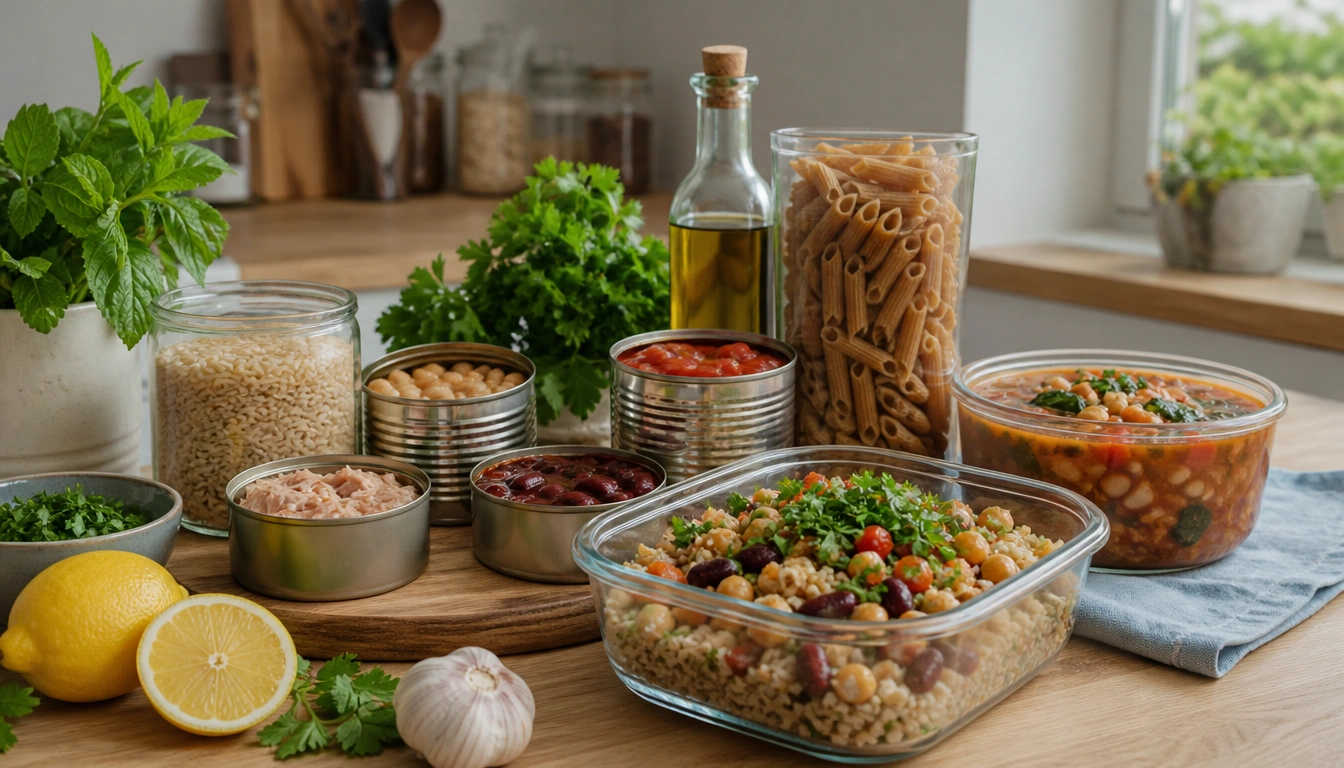
Healthy pantry meal ideas for meal-prep beginners usually work best when you keep them simple: a whole grain, a protein like beans or canned fish, vegetables, and a flavorful sauce or oil. Canned, dried, and pouched staples can absolutely support healthy meals, especially when you choose low-sodium or no-salt-added options. The most useful prep style is modular—cook a few basics once, then mix them into bowls, soups, and salads through the week.
Key Takeaways
- Start with shelf-stable building blocks: beans, lentils, whole grains, canned vegetables, and canned fish are beginner-friendly and versatile.
- Look for low-sodium, no-salt-added, and water-packed labels to keep pantry meals healthier without making them bland.
- Increase beans and whole grains gradually if you are not used to them, so your gut has time to adjust.
- Batch-cooked pantry meals should be cooled within two hours and refrigerated for 3 to 4 days, or frozen for longer storage.
- Pantry meal prep is not one-size-fits-all; people with CKD, diabetes, GI conditions, or food allergies may need individual guidance.
Pantry-first meal prep for beginners
If you are new to meal prep, pantry cooking is often easier than shopping for fresh ingredients every few days. Shelf-stable foods reduce decision fatigue because you can keep the same core items on hand and rotate them into different meals. That means less waste, fewer last-minute takeout orders, and fewer excuses to skip the plan.
A balanced pantry meal is usually built from five parts: a whole grain, a protein, produce, a healthy fat, and a flavor booster. For example, brown rice or whole-wheat pasta can anchor the meal, beans or canned tuna can supply protein, canned or frozen vegetables can fill in color and fiber, olive oil can add richness, and herbs or vinegar can tie everything together. This same structure can work for bowls, soups, and pasta salads.
Good pantry staples to keep around include beans, lentils, whole grains like brown rice, quinoa, oats, or whole-wheat pasta, canned vegetables, canned fish, olive oil, vinegars, and dried herbs or spice blends. The Centers for Disease Control and Prevention and the Dietary Guidelines for Americans both support patterns that emphasize minimally processed foods, fiber-rich grains, and a variety of protein sources.
How to choose healthier packaged foods
Packaged pantry foods are not automatically less healthy than fresh ones. USDA and American Heart Association guidance both support canned, dried, and pouched staples when they are chosen carefully. The label matters more than the package type.
For beans, vegetables, broth, and canned fish, look for no salt added or low sodium when possible. For fruit, choose options packed in water or their own juice instead of syrup. For fish, water-packed versions are often the easiest starting point. These swaps help you control sodium and added sugar without giving up convenience.
You do not need to avoid all packaged foods to eat well. A can of beans, a bag of brown rice, and a jar of salsa can become a filling meal faster than many fresh-cooking projects. The goal is not perfection; it is choosing shelf-stable foods that still contribute protein, fiber, and micronutrients.
If a product has a little sodium, that does not automatically make it a poor choice. What matters is the overall pattern of your diet and how often you rely on highly salty convenience foods. Rinsing canned beans and vegetables can also reduce surface sodium and improve flavor control.
Three beginner-friendly pantry meal formulas
When you do not want to think hard at dinnertime, use a formula instead of a recipe. Formulas are helpful because they let you swap ingredients based on what you already have.
- Grain bowl: cooked grain + beans or fish + vegetables + simple dressing.
- Soup: broth or tomatoes + beans or lentils + vegetables + seasoning.
- Pasta salad or skillet: whole-grain pasta + protein + vegetables + oil or vinaigrette.
These templates are beginner-friendly because they work with canned, dried, and frozen pantry foods. They also scale well for batch cooking, so you can make enough for several meals without needing advanced skills.
For a grain bowl, think quinoa or brown rice topped with chickpeas, chopped canned vegetables, and a lemon-olive oil dressing. For soup, simmer beans with tomatoes, broth, and greens. For pasta salad, toss whole-grain pasta with tuna, vegetables, and a tangy dressing. If one formula gets boring, change the seasoning profile instead of rebuilding the meal from scratch.
Three pantry meal ideas you can repeat
Mediterranean chickpea grain bowl: Start with quinoa or brown rice, add rinsed chickpeas, canned artichoke hearts or roasted peppers, and a drizzle of olive oil with lemon, oregano, and black pepper. This is a good beginner meal because it tastes different with tiny changes: add cucumbers if you have them, swap in white beans, or use parsley and vinegar instead of lemon.
Tuscan white bean and tomato soup: Simmer low-sodium broth with canned diced tomatoes, rinsed cannellini beans, and frozen spinach or kale. Finish with olive oil and Italian seasoning. This soup stores well and reheats easily, which makes it useful for lunch prep. You can also mash a portion of the beans to thicken the broth without adding cream.
Tuna and whole-grain pasta salad: Mix cooked whole-wheat pasta with water-packed tuna, canned green beans or corn, and a simple dressing made from olive oil, vinegar, mustard, and pepper. If you want extra texture, add pumpkin seeds or chopped olives. The salad works cold or at room temperature, which makes it convenient for work lunches.
These meals are meant to be repeated, not treated like one-time projects. Repetition is useful when you are trying to make healthy eating feel easier instead of more complicated.
How to keep pantry meals tasty without extra sodium
Low-sodium eating does not have to mean bland food. Flavor comes from acid, herbs, spices, texture, and the way you layer ingredients. A little planning here makes pantry meals more worth eating on day three than a plain bowl of rice and beans ever will.
Try using lemon juice, vinegar, garlic, onion powder, smoked paprika, cumin, chili flakes, black pepper, oregano, basil, or curry powder. Salt-free spice blends are especially useful because they make simple combinations taste more complete. If you like creamy sauces, whisk olive oil with lemon or vinegar and a spoonful of mustard for a fast dressing.
Texture matters too. Add something soft, something crisp, and something with a little chew when you can. That might mean beans plus corn plus seeds, or pasta plus tomatoes plus greens. Even canned foods can feel fresh when you combine them thoughtfully.
One helpful habit is to season in layers: season the grain while it cooks, season the beans or vegetables while warming them, and finish with a bright topping at the end. That gives you more flavor without leaning on salt alone.
Fiber and digestion: ramp up gradually
Beans, lentils, and whole grains are excellent pantry staples, but a sudden jump in fiber can cause gas, bloating, or discomfort. That is common, especially if your usual diet has been lower in fiber. The fix is usually gradual change, not avoidance.
Begin with smaller servings of beans or lentils and build up over time. You might start by adding a few spoonfuls to a grain bowl or soup, then move toward a full serving as your body adjusts. The same idea applies to whole grains: replace part of refined grains first, then increase the whole-grain share later.
Drink enough fluids and give your digestive system time to adapt. Rinsing canned beans well can also help some people tolerate them better. If you have a history of digestive trouble, a more measured pace is often more comfortable than trying to overhaul every meal at once.
If a food reliably bothers you, it may still be worth keeping in the pantry for later rather than forcing it now. Tolerance improves for many people, but comfort matters too.
Food safety basics for batch-prepped pantry meals
Pantry food still needs safe handling once it is cooked. Inspect cans before opening and discard any that are bulging, leaking, severely dented, or rusted. Those are warning signs that the food may not be safe. After opening, transfer leftovers to a clean container rather than storing them in the opened can.
Cooked grains, soups, and pasta dishes should be cooled promptly and placed in the refrigerator within two hours. According to food-safety guidance from public health authorities, refrigerated leftovers are generally best used within 3 to 4 days. If you want to keep them longer, freeze portions as soon as they are cooled.
Use shallow containers if you want food to cool faster, and label anything you freeze so you know what it is later. Reheat leftovers until they are steaming hot throughout. If a meal has been left out too long or smells off, it is safer to throw it away.
These steps matter because batch cooking only saves time when the food stays safe and usable. A good prep session should make the week easier, not create guesswork later.
When pantry meal prep needs personalization
Pantry meals can be a strong fit for many people, but they are not automatically ideal for everyone. If you have chronic kidney disease, sodium may not be the only issue; potassium and phosphorus also matter, and some beans, grains, and nuts may need to be limited or planned carefully. That is a case for individualized guidance, not a one-size-fits-all pantry list.
People managing hypertension often benefit from low-sodium pantry choices, but they may still need help balancing other parts of the meal pattern. If you have diabetes and need tighter glucose management, portion size, carbohydrate choices, and timing may matter more than a standard meal-prep formula. A registered dietitian can help adapt pantry meals to your goals.
Food allergies also change the plan. Nuts, seeds, gluten-containing grains, soy, and fish are all common ingredients in pantry meals, but they are not universal choices. If your household has food allergies, build the pantry around safe alternatives first.
If you have inflammatory bowel disease, frequent GI flares, or another condition that affects tolerance, a more tailored approach may be needed before increasing fiber. That does not mean pantry meal prep is off-limits. It means the smartest version of it fits your medical and dietary needs.
Frequently Asked Questions
What are the healthiest pantry staples to keep on hand for meal prep?
The most useful staples are beans, lentils, whole grains like brown rice or quinoa, canned vegetables, canned fish packed in water, olive oil, vinegar, and dried herbs or spice blends. These foods give you protein, fiber, and flavor without requiring much cooking.
How do I build a balanced pantry meal with protein, fiber, and vegetables?
Start with a whole grain, add a protein such as beans or tuna, then include vegetables and a healthy fat or dressing. A bowl, soup, or pasta dish can all follow this pattern. The structure matters more than the exact ingredients.
Are canned beans, vegetables, and fish healthy enough for regular meal prep?
Yes, they can be. Public health and nutrition guidance supports canned and pouched foods when you choose low-sodium or no-salt-added versions and use them as part of an overall balanced diet. Rinsing beans and vegetables can help too.
How can beginners keep pantry meal prep low-sodium and not bland?
Use acid and herbs to build flavor: lemon, vinegar, garlic, onion powder, pepper, cumin, oregano, or paprika. Choose low-sodium products when possible, then add texture with seeds, vegetables, or a crisp topping.
How do I store cooked pantry meal prep safely in the fridge or freezer?
Cool cooked food within two hours, refrigerate it in shallow containers, and use it within 3 to 4 days. If you want to keep it longer, freeze portions after cooling. Reheat leftovers until steaming hot.
The Bottom Line
Healthy pantry meal ideas do not need to be fancy to work. If you keep a few shelf-stable basics on hand, you can build filling meals from grains, beans, vegetables, and canned fish without relying on takeout or complicated recipes.
The most beginner-friendly approach is modular: cook once, then mix and match. Choose low-sodium or no-salt-added products when you can, season with herbs and acid, and increase fiber slowly if beans and whole grains are new to you.
If you have CKD, diabetes, GI conditions, or food allergies, pantry meal prep may need adjustments. For most people, though, a well-stocked pantry makes healthy eating simpler, cheaper, and easier to repeat through a busy week.
Medical disclaimer
Medical disclaimer: This content is for educational and informational purposes only and is not a substitute for professional medical advice, diagnosis, or treatment. Dietary needs and supplement suitability vary by individual.
Sources
- Centers for Disease Control and Prevention (CDC) — cdc.gov. Accessed November 2026.
- Academic / Medical Research Institution — heart.org. Accessed November 2026.
- Academic Research Institution — harvard.edu. Accessed November 2026.
