
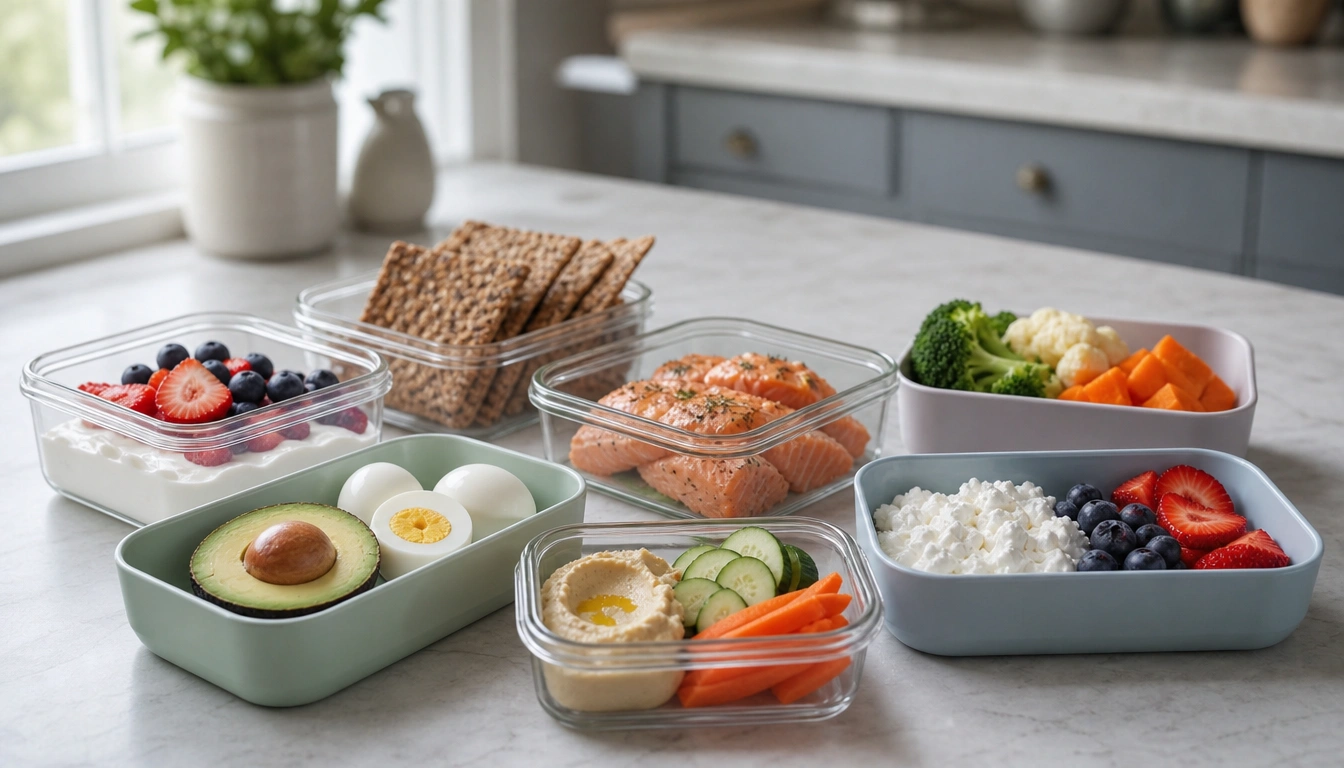
A healthy snack box for adults over 50 should include a source of protein, a fiber-rich fruit or vegetable, and a small amount of healthy fat or whole grain so it feels filling without being bulky. Good options are Greek yogurt, cottage cheese, eggs, soft fish, hummus, berries, tender vegetables, nut butter, and whole-grain crackers. For many older adults, a useful snack portion provides about 5 to 15 grams of protein and is easy to chew and store.
Key Takeaways
- Older adults often benefit from protein at snack time, not just at dinner, because evenly spaced protein can better support muscle maintenance.
- Small appetites make nutrient-dense snack boxes useful: they deliver more protein, fiber, and key micronutrients in a compact format.
- Soft-texture swaps matter. Cottage cheese, yogurt, hummus, avocado, soft fruit, tender vegetables, and fish can replace harder foods.
- For blood pressure, choose lower-sodium ingredients and check labels on cheese, crackers, olives, canned fish, and deli meats.
- For blood sugar, pair carbohydrate foods with protein or healthy fat so the snack is more satisfying and less likely to cause a sharp rise.
- Batch-prepping three or four snack boxes at once can reduce decision fatigue and make healthy eating easier to follow all week.
Why snack boxes make sense after 50
Healthy snack box ideas for adults over 50 work well because eating needs often change with age. Appetite can be lower, meals may feel less appealing, and a full plate may be harder to finish. At the same time, adults over 50 are more likely to need foods that support muscle, bone, and heart health in smaller portions.
Protein deserves special attention. Research and guidance from groups such as the National Council on Aging and Harvard-affiliated sources point to a higher protein target for many older adults, often around 1.0 to 1.2 grams per kilogram of body weight daily. That does not mean every snack must be protein-heavy, but it does mean snack time can help meet the day’s total more easily.
Spreading protein across the day may be more useful than saving most of it for dinner. A midmorning or afternoon snack with protein can help support muscle protein synthesis and may also make it easier to avoid long gaps without food. For many people, that is where a snack box fits best: compact, portable, and more nourishing than a bag of crackers or a sweet packaged bar.
Snack boxes also make it simpler to choose minimally processed foods. Instead of relying on ultra-processed packaged snacks, a box can hold a few real-food components that work together: protein for staying power, produce for fiber and micronutrients, and a smaller portion of whole grains or healthy fats for balance.
How to build a balanced snack box
A balanced snack box does not need to be complicated. The easiest formula is to choose one protein, one produce item, and one supporting food such as a whole grain or healthy fat. This keeps the box practical while still giving it enough substance to feel satisfying.
A useful starting point is a protein food that offers about 5 to 15 grams of protein per snack. That might be a small container of Greek yogurt, a few slices of turkey, a hard-boiled egg or two, cottage cheese, hummus with beans, tuna, salmon, or a spoonful of nut butter paired with fruit or crackers. The exact amount can vary based on appetite and the rest of the day’s meals.
Next, add fiber-rich produce or whole grains. Fruit and vegetables are easy wins because they add volume, color, and texture without making the box too heavy. Berries, grapes, sliced pear, cucumber, cherry tomatoes, soft roasted vegetables, whole-grain crackers, or a small portion of oats-based bites can all work well.
Finally, include a small amount of healthy fat if it helps with satiety or flavor. Avocado, walnuts, almonds, sunflower seeds, olives, nut butter, and olive-oil-based dips can make the snack feel more complete. The goal is not to create a full meal, but to build a snack that holds you over.
Simple box formula: protein + produce + one smart carb or fat. If the ingredients are easy to see and easy to eat, the box is more likely to get used.
Protein targets for older adults and what a useful snack portion looks like
For adults over 50, protein is valuable because muscle mass naturally tends to decline with age. That is one reason older adults are often encouraged to make protein a regular feature of meals and snacks, not just an add-on at dinner. The National Institute on Aging and related clinical guidance emphasize the importance of preserving muscle and functional strength as people age.
In practical terms, a snack box does not need to be protein-dense enough to replace a meal. It just needs to contribute meaningfully. A snack that offers 5 to 15 grams of protein can be a realistic target for many people. That might look like:
- Greek yogurt with berries
- Cottage cheese with sliced peaches
- Two hard-boiled eggs with cucumber slices
- Hummus with whole-grain crackers and soft vegetables
- Salmon or tuna with avocado and seed crackers
If appetite is small, even a modest amount can help. If the person is very active or trying to preserve muscle, the snack may need to be a bit larger. The best portion is the one that fits the day without feeling like a chore to finish.
Protein quality also matters. Dairy, eggs, fish, soy foods, beans, and nuts can all contribute. Mixing protein types across the day may make snack boxes more interesting and easier to keep up long term.
Texture and chewing-friendly swaps for sensitive teeth, missing teeth, or dry mouth
Chewing problems should not push someone toward packaged snacks that are easy to chew but poor in nutrients. A better approach is to keep the snack box soft, moist, and adaptable. Many foods can be swapped without losing nutrition.
For harder vegetables, try tender versions instead of raw crunch. Steamed carrot coins, soft cucumber slices, roasted zucchini, cooked green beans, or peeled bell pepper strips are often easier to manage than raw baby carrots or tough celery. For fruit, ripe banana, soft berries, melon, peeled peach, or applesauce cups may be more comfortable than firmer fruit.
For protein, cottage cheese, Greek yogurt, soft cheese, scrambled egg, egg salad, tofu, hummus, and flaky fish such as salmon or tuna are useful options. Nut butters can replace whole nuts when chewing is difficult. If dry mouth is a problem, include moist foods and avoid overly crumbly crackers, dry granola, or very salty items that can feel harsher to eat.
Texture adjustments can preserve the same basic snack structure. A crunchy box can become a soft box without losing protein or fiber. What matters is not whether the snack looks trendy, but whether it is comfortable enough to eat regularly.
Three to five snack box blueprints
These snack box ideas are meant to be simple starting points, not strict recipes. They work because each one combines protein, produce, and a satisfying supporting food.
Mediterranean protein box
Ingredients: hard-boiled eggs, cucumber or tender green beans, hummus, and a small portion of whole-grain crackers or olives.
Why it works: It brings together protein, fiber, and a savory flavor profile that many adults find satisfying. For a softer version, swap the vegetables for steamed or roasted pieces and use more hummus instead of crackers.
Yogurt and berry box
Ingredients: plain Greek yogurt, berries, and a small portion of walnuts, chia, or pumpkin seeds.
Why it works: This is easy to eat, easy to portion, and useful when appetite is lower. The yogurt offers protein, the fruit adds fiber and color, and the seeds or nuts add a little texture and healthy fat.
Cottage cheese fruit box
Ingredients: cottage cheese, sliced peaches or pears, and a few whole-grain crackers or slivered almonds if chewing is comfortable.
Why it works: Cottage cheese is compact, versatile, and helpful when someone wants a mild snack. This version is also easy to customize for a sweet or savory preference.
Salmon and avocado box
Ingredients: canned salmon or tuna, avocado, soft crackers or whole-grain toast points, and cherry tomatoes or peeled cucumber slices.
Why it works: It provides protein and healthy fats in a small package. Choose lower-sodium fish when possible and keep the cracker portion modest.
Hummus and soft veg box
Ingredients: hummus, steamed carrots or roasted vegetables, soft pita wedges, and a few berries or grapes.
Why it works: This is a good plant-forward option when someone wants something savory but not heavy. It can be made more filling by adding tofu cubes, edamame, or a hard-boiled egg.
Condition-aware adjustments for blood pressure, blood sugar, and medication questions
Snack boxes can be tailored for common health concerns without becoming restrictive. For adults with high blood pressure, the main adjustment is usually sodium. Many packaged cheeses, deli meats, olives, crackers, and canned proteins can add up quickly, so it helps to choose lower-sodium versions and check labels carefully. Fresh foods, unsalted nuts, plain yogurt, and home-prepared dips are often easier choices.
For diabetes or blood sugar concerns, pairing matters. Fruit on its own may digest faster than fruit paired with yogurt, nut butter, cheese, eggs, or fish. Whole grains and beans are also useful because they provide more fiber than refined snacks. The goal is not to avoid carbohydrates entirely; it is to combine them with protein or fat so the snack is steadier and more satisfying.
Some medical situations need extra caution. Adults with chronic kidney disease may need personalized protein guidance from a clinician or registered dietitian. People taking certain medicines should also ask about food interactions, especially if they use blood thinners, statins, or other medications affected by specific foods. If a health condition changes, or if a snack plan is meant to replace a meal pattern, it is worth checking with a healthcare professional.
Make-ahead strategy for the week
One of the best ways to make snack boxes work is to prep them in batches. Making three or four at once can save time, reduce decision fatigue, and make it more likely that the healthier option is the easiest one to grab. That habit matters on tired afternoons when convenience usually wins.
Start by choosing a few combinations that share ingredients. For example, one container of Greek yogurt can support two snack boxes, while one batch of sliced vegetables can be used in several. Prepare the most perishable foods first and keep the rest in a separate container until needed. Store snack boxes where they are visible in the refrigerator, not hidden behind leftovers.
If possible, place the boxes at eye level and keep a few shelf-stable backups nearby, such as low-sodium crackers, unsweetened applesauce, or single-serve nut butter packets. That way, there is still a plan on days when fresh prep is not realistic. Food safety matters too: keep cold items refrigerated, use clean containers, and discard anything that has been left out too long.
Simple ingredient swap guide
The best snack box is the one a person will actually eat. That means taste, budget, grocery access, and chewing comfort all matter. If one ingredient is expensive or unavailable, swap in a comparable food rather than abandoning the whole plan.
For protein: Greek yogurt can stand in for cottage cheese, eggs can replace fish, tofu can replace dairy, and hummus can replace meat-based protein in a plant-forward box. If chewing is difficult, choose softer options first.
For produce: Fresh berries can be swapped with thawed frozen berries, ripe pears, peaches, melon, or applesauce. Hard vegetables can be replaced by roasted or steamed ones without losing the fiber benefit.
For crunch: Whole nuts can be replaced by nut butter, seeds, seed crackers, or soft toast points. If sodium is a concern, unsalted nuts or low-sodium crackers are better options than heavily seasoned mixes.
For healthy fats: Avocado, olives, seeds, and nut butters are all useful, but they are not required in every snack box. If the protein and produce are already satisfying, a lighter version may be the right fit.
The most practical approach is to keep three or four favorite snack templates and rotate them. That keeps shopping simpler and makes the habit easier to maintain over time.
Frequently Asked Questions
How much protein should a snack box for adults over 50 contain?
A useful target for many older adults is about 5 to 15 grams of protein per snack. That amount can help support muscle maintenance without making the snack feel too large. The right portion depends on the person’s appetite, activity level, and the rest of the day’s meals.
What are good snack box ideas for people over 50 with dental problems or chewing difficulty?
Choose soft, moist foods such as Greek yogurt, cottage cheese, scrambled or hard-boiled eggs, hummus, soft fruit, ripe avocado, tofu, and flaky fish. Replace raw crunchy vegetables with steamed or roasted vegetables, and use nut butter instead of whole nuts when chewing is difficult.
How can snack boxes help older adults manage blood sugar between meals?
Snack boxes can pair carbohydrate foods with protein or healthy fat, which usually makes the snack more steady and filling than carbs alone. Fruit, whole grains, or beans work best when combined with yogurt, cheese, eggs, nut butter, fish, or hummus.
What low-sodium snack box ingredients work for adults over 50 with high blood pressure?
Good lower-sodium choices include plain yogurt, cottage cheese in moderate amounts, unsalted nuts, fresh fruit, vegetables, avocado, eggs, plain beans, and home-prepared dips. It also helps to limit salty crackers, processed meats, canned foods with added salt, and heavily seasoned snack mixes.
What snack box foods are best for adults over 50 who need more calcium or vitamin D?
Dairy foods like yogurt and cottage cheese can help with calcium. Fortified foods and fish such as salmon may also help, depending on the product and serving. If someone needs a targeted increase in calcium or vitamin D, it is best to review the overall diet with a healthcare professional.
The Bottom Line
A good snack box for adults over 50 is small, practical, and built around real food: protein, fiber-rich produce, and a little healthy fat or whole grain. It should be easy to chew, easy to store, and easy to repeat.
The most useful boxes are the ones that fit the person’s health needs and habits. Lower-sodium ingredients help with blood pressure, protein-carbohydrate pairing can help with blood sugar, and softer textures make snacks more realistic for sensitive teeth or dry mouth. Batch-prepping a few boxes at a time can make the habit stick.
Medical disclaimer
Medical disclaimer: This content is for educational and informational purposes only and is not a substitute for professional medical advice, diagnosis, or treatment. Dietary needs and supplement suitability vary by individual.
Sources
- U.S. Government / Health Authority — ltcfeds.gov. Accessed October 2026.
- National Institutes of Health (NIH) — nih.gov. Accessed October 2026.
- National Institutes of Health (NIH) — nih.gov. Accessed October 2026.
- Academic / Medical Research Institution — heart.org. Accessed October 2026.
- Academic Research Institution — harvard.edu. Accessed October 2026.
- ncoa.org — ncoa.org. Accessed October 2026.
