
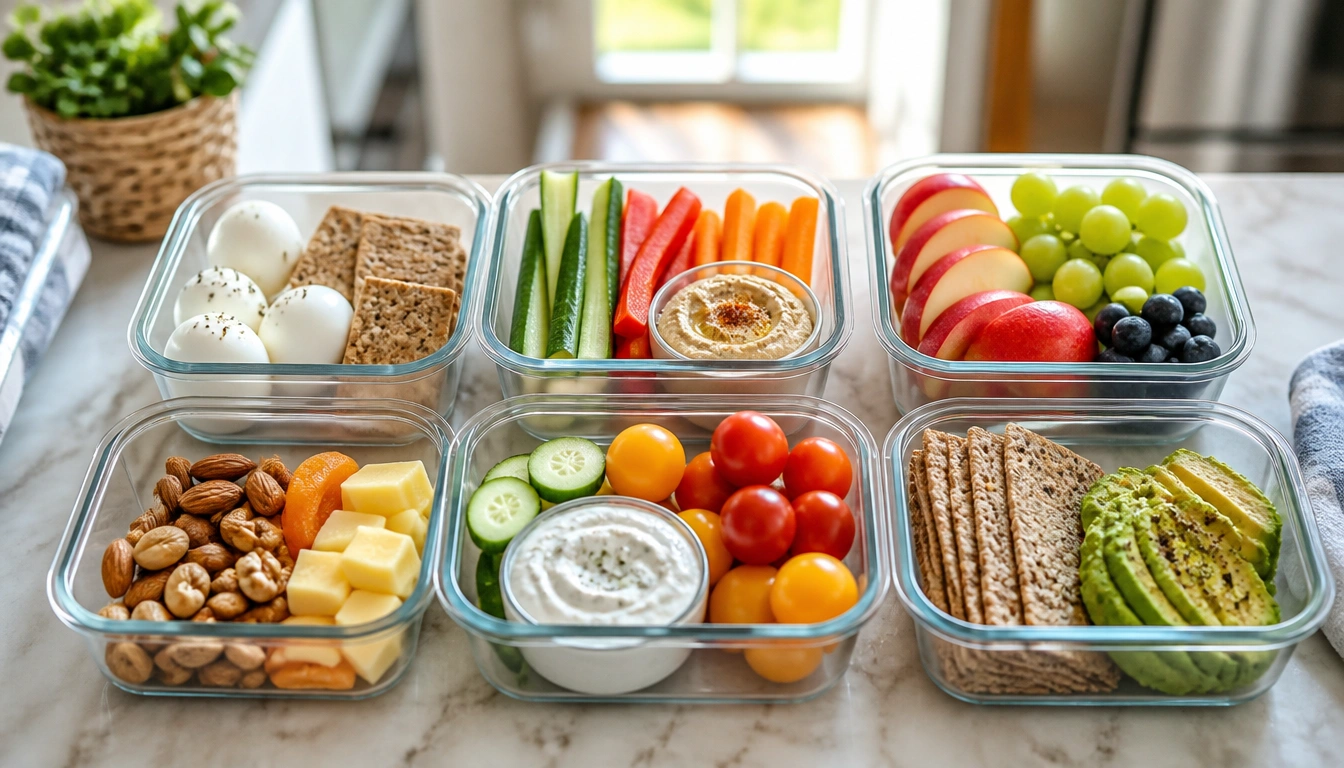
The quickest way to make a healthy snack box for busy parents is to use a simple formula: protein + fiber-rich carbohydrate + fruit or vegetables + a small flavor element. That combination is more filling than sugary grazing and easier to keep steady through a busy day. Pre-portion the ingredients, keep ready-to-grab items visible, and use food-safety rules for anything that needs refrigeration or travel time.
Key Takeaways
- Start with one protein, one fiber-rich carb, one produce item, and one flavor booster so the box feels satisfying without overthinking it.
- Pre-portioned snack boxes work better when the healthiest options are the easiest to see and reach in the fridge or pantry.
- Parents usually do better with a little more protein and fiber, while children need smaller portions and softer, lower-choking-risk foods.
- Perishable snack boxes should stay cold and follow the two-hour rule, or one hour in hotter conditions.
- A 15-minute weekly prep routine can turn snack boxes into a repeatable habit instead of another decision to make.
Balanced snack-box formula for busy parents
A healthy snack box for busy parents works best when it solves two problems at once: it is easy to grab, and it actually keeps you satisfied. A simple formula helps. Build each box with a protein food, a fiber-rich carbohydrate, a fruit or vegetable, and a small flavor element. That mix is more likely to steady energy than a box built from crackers alone or sweet snacks eaten on autopilot.
For many adults, the most useful combination is something like eggs, whole-grain crackers, cucumber slices, and hummus; or turkey, oatcakes, cherry tomatoes, and a few olives. The protein helps with fullness, the fiber-rich carbohydrate adds staying power, and the produce brings volume and freshness. A flavorful item such as dip, salsa, mustard, or a few nuts can make the box feel more appealing without turning it into a dessert tray.
The point is not perfection. It is to make the default choice a nourishing one that you can eat in the car, at a desk, or between errands without needing much thought.
Mix-and-match ingredient library
Think in categories so you can shop once and assemble many snack boxes. Shelf-stable options are helpful for work bags, school runs, and travel days. Good picks include roasted chickpeas, whole-grain crackers, plain nuts or seeds if there are no allergies, tuna or salmon packets, dried fruit in small amounts, and shelf-stable fruit cups with no added sugar. These ingredients can live in a pantry drawer or bag until needed.
Fridge items add freshness and more volume. Try hard-boiled eggs, cheese sticks, Greek yogurt, hummus, cut vegetables, berries, grapes, apple slices, and leftover chicken or turkey. Grab-and-go items are the things you can portion quickly: baby carrots, snap peas, mini cucumbers, pre-cut fruit, or small containers of dip. When possible, keep these in clear containers so you can see them quickly.
A useful rule is to choose one or two items from each category rather than trying to include everything. That keeps the box practical and keeps fridge space under control.
Quick prep workflow for busy weeks
A snack box routine gets much easier when you stop building each box from scratch. Start with a short batch-prep session after grocery shopping or on one predictable day each week. Wash produce, chop anything that needs cutting, and portion foods into small containers or reusable bags. Label containers if several family members share the fridge and use similar foods for different people.
Then create a snack box zone. Put prepped foods at eye level in the fridge or pantry so they are the first things you see. Keep the tools close too: containers, lids, napkins, and a marker for dates. When the setup is simple, packing a box takes a minute or two instead of a scavenger hunt.
If you like a repeatable routine, use the same basic template every time and just swap ingredients. That reduces decision fatigue and makes it easier to prepare several boxes at once for the next few days.
Snack box ideas for real parent moments
Different moments call for different boxes. A desk snack can be a bit more structured: turkey slices, whole-grain crackers, baby carrots, and hummus. For the school-run window, choose something one-handed and easy to eat, such as cheese cubes, grapes cut appropriately, and oatcakes. For the afternoon slump, a box with Greek yogurt, berries, nuts, and a few whole-grain crackers may feel more sustaining than a sweet snack from the cupboard.
Post-workout boxes often need a little more protein, so eggs, cottage cheese, edamame, or yogurt can fit well. On travel days, shelf-stable foods are usually safer and less stressful: roasted chickpeas, crackers, nut butter packets if allowed, dried fruit, and a fruit cup. The best snack box is the one that matches the setting rather than forcing one formula onto every situation.
If you want to avoid the trap of grazing from random packages, put the snack box somewhere visible and treat it like the planned option for that moment.
How to keep snack boxes satisfying without drifting into mindless portions
Healthy snack boxes work best when they are portioned for real hunger, not built around whatever happens to be in the bag. Pre-portioning helps you avoid eating from a large container and makes it easier to notice when the snack is enough. That is especially useful for parents who are eating while distracted or moving between tasks.
It also helps to limit ultra-processed snack items that are easy to overeat without much satisfaction. A box of only chips, crackers, or sweet snacks tends to disappear quickly and may leave you looking for something else soon after. Instead, use those items as the accent, not the base. Pair them with protein, produce, or another filling food.
Planning visible, ready-to-eat food matters too. Public health guidance emphasizes choosing whole foods and making healthier options easy to reach. If the front of the fridge or pantry holds prepped boxes, those are more likely to be eaten than the forgotten items tucked behind them.
Food safety and storage for home, office, and car use
Food safety matters more when snack boxes travel. Perishable items such as cut fruit, sliced vegetables, eggs, dairy, and meat should not sit out too long. Follow the two-hour rule for room temperature food, and the one-hour limit when the weather is hot, including inside cars. A glove compartment or parked vehicle can become unsafe very quickly.
Use an insulated bag and ice packs whenever a snack box needs to go with you. This matters for the office, a long school run, sports practice, and errands. If you do not know how long food has been warm, it is safer to replace it than guess. Keep perishable snack boxes cold until you are ready to eat them, and store leftovers promptly when you get home.
Shared households also need allergy awareness. If nuts, dairy, gluten, or other common allergens are a concern, keep separate containers and avoid cross-contact by using clean tools and designated storage spaces.
Snack boxes for kids versus adults
Adult snack boxes and kid snack boxes often need different food balance and texture. Adults usually benefit from a stronger protein-to-fiber mix because they are trying to stay full through work, caregiving, and long gaps between meals. Children, by contrast, usually need smaller portions and foods that are soft, easy to chew, and low risk for choking.
For kids, think smaller pieces and bright colors. Good options include soft fruit, thinly sliced vegetables, cheese cubes, yogurt, scrambled egg pieces, or small sandwiches cut into manageable shapes. Include fruit or vegetables so the box is not just starch and snack foods. For younger children, avoid hard, round, or slippery foods that are hard to chew safely unless they are prepared in an age-appropriate way.
If you are packing both a parent box and a child box at the same time, build them from the same shopping list but change the portion size, texture, and presentation.
Simple customizations for higher protein, lower sugar, or dairy-free needs
Customization is where snack boxes become truly useful. For higher protein, add eggs, turkey, tuna, edamame, Greek yogurt, cottage cheese, or hummus plus a protein-rich side. For lower sugar, lean on vegetables, plain dairy, nuts or seeds if appropriate, and whole-grain options instead of sweet bars or large fruit portions alone. If you want more energy stability, keep the box balanced rather than all carb-heavy.
Dairy-free boxes can still be filling. Use hummus, beans, chicken, turkey, fish packets, avocado, nuts, or seed-based spreads if tolerated. For gluten-free needs, choose fruit, vegetables, rice cakes, corn crackers, potatoes, or certified gluten-free grains as your base. The same structure still applies: protein, fiber, produce, and a little flavor.
If someone in the household has diabetes, kidney disease, or another condition that changes diet needs, snack boxes may need more individualized planning. In that case, a registered dietitian or clinician can help match the foods to the medical plan.
Frequently Asked Questions
How do I build a balanced snack box without overthinking calories?
Use the simple structure of protein, fiber-rich carbohydrate, fruit or vegetables, and a small flavor element. That approach helps you create a filling snack without counting every bite. Focus on portions that match your hunger and daily routine rather than trying to make every box identical.
What are good shelf-stable snack box ingredients for work, school runs, or travel?
Good shelf-stable choices include whole-grain crackers, roasted chickpeas, nuts or seeds if allowed, tuna or salmon packets, dried fruit in small portions, and fruit cups without added sugar. These foods are practical for bags, glove compartments, and desks when refrigeration is limited.
How can I prep snack boxes quickly for the whole week?
Wash produce, chop a few basics, portion foods into containers, and store them in one visible snack zone in the fridge or pantry. If you repeat the same template each week, packing several boxes can take just a few minutes. The goal is to make the healthy option the easiest option.
What snack box ideas work if I want more protein, fiber, or energy stability?
Choose boxes that combine protein with fiber-rich foods instead of relying on crackers or sweets alone. Good examples include eggs with vegetables and whole-grain crackers, yogurt with berries and nuts, or turkey with cucumber and hummus. That mix is usually more satisfying than a snack built around one food group.
How do I keep snack boxes safe when they need to be transported or sit out for a while?
Keep perishable foods cold with an insulated bag and ice packs, and follow the two-hour rule for room temperature food. If it is hotter than 90°F/32°C, use the one-hour limit. For car trips and long days out, shelf-stable foods are usually the safest choice.
The Bottom Line
A healthy snack box does not need to be elaborate to work. A simple mix of protein, fiber-rich carbohydrate, fruit or vegetables, and a small flavor element can make snacks more filling and less likely to turn into random grazing.
The real win is making healthy food easy to see, easy to grab, and easy to transport. With a short weekly prep routine, a visible snack zone, and basic food-safety habits, busy parents can build snack boxes that fit real life instead of fighting it.
Medical disclaimer
Medical disclaimer: This content is for educational and informational purposes only and is not a substitute for professional medical advice, diagnosis, or treatment. Dietary needs and supplement suitability vary by individual.
Sources
- Centers for Disease Control and Prevention (CDC) — cdc.gov. Accessed October 2026.
- Centers for Disease Control and Prevention (CDC) — cdc.gov. Accessed October 2026.
- Centers for Disease Control and Prevention (CDC) — cdc.gov. Accessed October 2026.
- Centers for Disease Control and Prevention (CDC) — cdc.gov. Accessed October 2026.
- National Health Service (NHS) — dchft.nhs.uk. Accessed October 2026.
- National Health Service (NHS) — cuh.nhs.uk. Accessed October 2026.
- National Health Service (NHS) — mkuh.nhs.uk. Accessed October 2026.
