
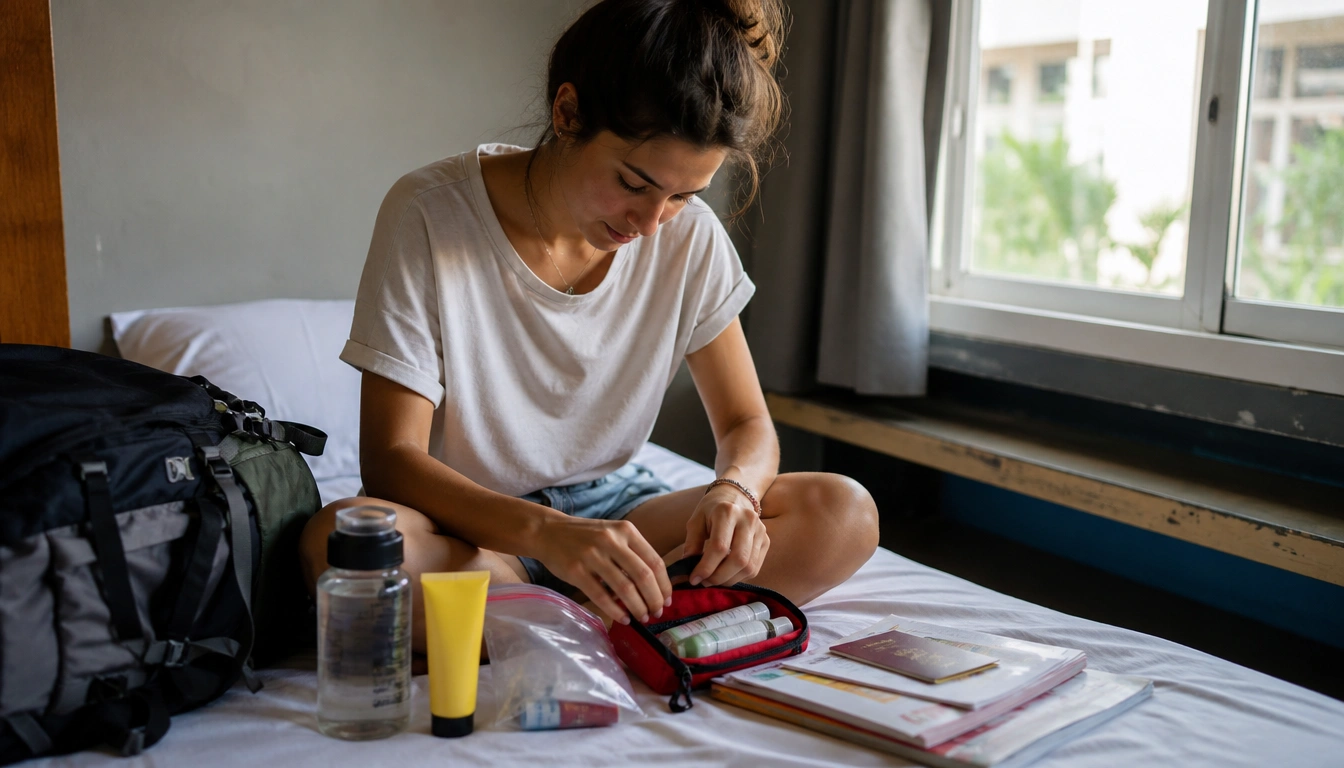
The most important low-cost habits for a healthy travel routine on a budget are to plan ahead, get the right vaccines and advice early through affordable care options, pack a small DIY health kit, and use strict food and water safety habits. Add basic sleep, hydration, movement, insect protection, and travel insurance when the trip or destination makes the risks higher. Prevention usually costs far less than treating a preventable illness.
Key Takeaways
- Budget travel health starts before departure: a low-cost consultation, key vaccines, and a quick review of destination risks can prevent expensive problems later.
- You do not need a luxury travel clinic to get useful advice; primary care, community clinics, and standard insurance-covered services may be enough.
- A DIY travel health kit can be small and affordable if it covers your medications, pain relief, diarrhea care, sunscreen, and basic barrier protection.
- Food and water safety on a budget comes down to habits: sealed or boiled water, hot food from busy vendors, peeled fruit, and avoiding risky ice.
- Long travel days can make you feel worse by disrupting sleep and digestion, so hydration, movement, and a simple sleep routine are worth the small effort.
- Insurance, evacuation coverage, or reciprocal healthcare coverage should not be treated as optional when a medical emergency abroad could become financially severe.
Budget travel health strategy: spend on prevention, save on avoidable extras
A healthy travel routine for people on a budget begins with one hard truth: the cheapest trip is not the one with the fewest planned expenses, but the one that avoids a preventable illness. A short pre-trip visit, a needed vaccine, or a basic prescription may feel expensive up front, yet treating severe travelers’ diarrhea, malaria, hepatitis A, or another avoidable problem can cost far more in money, time, and missed travel than the original prevention would have cost. The CDC and NHS both emphasize that travel health is built on planning, not luxury spending.
For most trips, the smartest savings come from cutting optional extras, not cutting preventive care. That means skipping novelty gadgets, overpriced convenience items, and last-minute panic purchases, while protecting the basics that actually reduce risk. A traveler with a thin budget can still make good decisions by separating necessary prevention from nice-to-have convenience.
If you have time before you leave, aim to organize health needs about 4 to 6 weeks ahead. That gives room for destination advice, vaccine series that need more than one dose, and time to refill prescriptions or sort out documentation. If you are leaving sooner, do not assume it is too late. A short-notice appointment can still cover urgent vaccines, malaria advice, medication refills, and practical self-care steps.
For short trips, domestic travel, or lower-risk destinations, the health plan may be simpler. For more remote travel, hostels, backpacking routes, or places with uncertain sanitation, prevention becomes even more important because the environment is less forgiving. Budget travel often means less control over food, water, and lodging conditions, so the routine has to do more of the work.
Low-cost medical access options
You do not have to assume a private travel clinic is your only option. In many cases, a primary care clinician, community clinic, student health center, or standard insurance-covered visit can provide the travel counseling you need. Some pharmacies also offer vaccines or travel-related services, depending on location and local rules. The goal is not a special experience; it is a timely, evidence-based check of what matters for your destination.
Before booking an expensive visit, ask what your current care network can provide. A regular clinician may be able to review your vaccine record, update common immunizations, prescribe necessary medicines, and point you to destination-specific guidance. Community health centers can be especially useful for travelers who are uninsured or underinsured, because they may offer lower-cost access to preventive care than a private specialty clinic.
It can also help to ask about insurance coverage before you pay out of pocket. Some preventive vaccines and routine travel-related services may be covered when they are given through an in-network provider or part of standard primary care. Even if some destination-specific vaccines are not fully covered, using a lower-cost setting can reduce the total bill.
If you have a chronic condition, take regular medicines, or are traveling to a higher-risk region, a basic travel review is especially worthwhile. The visit may be brief, but it can prevent bigger costs later by helping you decide what you really need and what you can safely leave out.
What belongs in a budget DIY travel health kit
A budget-friendly travel health kit should be small, practical, and built around what you are most likely to use. The point is not to recreate a pharmacy. It is to cover common problems without buying a pre-made kit that contains items you will never need.
A useful starter kit usually includes your regular prescription medicines in their original containers, plus copies of your prescriptions or a medication list. Add basic pain relief, an antacid if you use one, an antihistamine if allergies are a problem for you, and a way to manage diarrhea if your clinician says that is appropriate. If you are prone to motion sickness, include a remedy you already know works for you.
Other low-cost essentials often include sunscreen, condoms or other barrier protection, hand sanitizer for moments when soap and water are unavailable, and any personal items you routinely need. A small thermometer can be helpful if you are traveling somewhere where fever would change how quickly you seek care. Pack everything in your carry-on so your most important items are not lost with checked luggage.
For many budget travelers, the real savings come from resisting the urge to overbuy. If you know your trip, your destination, and your health needs, you can assemble a kit that is lighter, cheaper, and often better suited to your actual risks than a generic pre-packaged set.
Food and water safety on a budget: how to choose safer meals and drinks
Food and water safety on a budget is mostly a habit problem, not a money problem. The practical rule used in many public health guides is simple: choose food and drinks that are freshly prepared, kept hot, or sealed, and be cautious with anything that may have been handled or stored in uncertain conditions. You do not need expensive restaurants to do this well.
For water, the safest low-cost options are boiling, commercially sealed bottled water, or another method that you know is reliable for the destination. In places where tap water is uncertain, avoid relying on ice cubes unless you know they are made from safe water. A cheap drink can become an expensive illness if the water source is contaminated.
For food, look for busy stalls or vendors with high turnover, since that often means the food is being cooked fresh and not left sitting out. Choose meals that are served piping hot. When possible, peel fruit yourself rather than buying fruit that has already been cut and exposed. Be cautious with raw items, lukewarm buffets, and foods that have been sitting at room temperature.
If you are trying to save money, do not assume that the cheapest option is always the riskiest or that the most expensive option is always the safest. Instead, use simple cues: cleanliness, hot serving temperature, sealed water, and turnover. Those cues are practical, affordable, and often more useful than price alone.
Cheap ways to protect sleep, energy, and digestion on the move
Long flights, buses, overnight trains, and multiple time zones can leave you feeling drained even when nothing is technically wrong. Circadian disruption can affect sleep, digestion, alertness, and how well you recover from the strain of travel. A low-cost routine can make a real difference.
Start with hydration. Drink water regularly, especially on long transit days, and go easy on alcohol and heavy caffeine if they make you feel worse or disrupt sleep. Small, frequent sips are often easier than trying to “catch up” later. If you are crossing time zones, the goal is not perfection; it is to avoid making fatigue worse.
Movement matters too. On long plane or bus rides, stand up when it is safe, walk the aisle if possible, stretch your calves and ankles, and change positions often. If you are on a road trip, take breaks to move around instead of pushing through every hour without stopping. These are inexpensive habits that can support comfort and circulation.
For sleep, keep the routine simple: darken your sleeping space as much as you can, reduce screen use before rest when possible, and try to align naps with your arrival plan rather than sleeping randomly all day. If a short rest helps you function, that is fine. If it turns into a long daytime sleep, it may make jet lag harder.
Cheap movement also helps during your trip. Walking, taking stairs when reasonable, and using public transport or bike-share systems can save money while helping you feel less sluggish. Just pair that with normal safety basics such as seatbelts, helmets where relevant, and reasonable caution in unfamiliar traffic.
For insect protection, a budget approach still needs real protection. Use an effective repellent, wear lightweight long sleeves and long pants when biting insects are active, and plan around exposure when you can. For sun protection, use sunscreen and shade as part of the routine, not as an afterthought. Sunburn, dehydration, and insect bites can all make a low-cost trip less comfortable and more expensive later.
Insurance, evacuation coverage, and why this is not the place to cut corners
Travel insurance is not just for luxury vacations. It can matter just as much, or more, on a budget trip, because budget travelers may have less spare cash to absorb a sudden bill. A medical emergency abroad can become financially catastrophic if you need an emergency visit, hospitalization, prescription treatment, or transport to a facility that can actually treat you. In some situations, medical evacuation can be far more expensive than the trip itself.
Insurance is especially important if you are going somewhere remote, planning adventure activities, or traveling outside your home country’s usual healthcare system. It is also worth checking whether you already have reciprocal healthcare coverage or another arrangement that may reduce costs in a specific region. The details matter, because coverage can vary widely by destination and by the type of care needed.
Budget travelers should think about insurance as part of the trip’s safety budget, not as an optional add-on. If you skip it, you may save a small amount before departure and risk a much larger bill later. That is exactly the kind of tradeoff that can make a trip unaffordable.
Who needs individualized medical advice sooner
Some travelers should not rely on general advice alone. Pregnant travelers, older adults, people with chronic conditions such as diabetes or heart disease, and people with weakened immune systems need a more individualized review before travel. So do travelers who are going to higher-risk destinations where malaria, rabies, or severe food and water risks are more likely.
If this applies to you, try to plan earlier than the standard 4 to 6 week window when possible. You may need more time for vaccine planning, medication adjustments, destination-specific precautions, or decisions about whether a trip should be modified. The same trip can be routine for one person and genuinely risky for another.
Individualized advice is also important if you are managing medications that need careful timing, refrigeration, or backup planning. A budget trip can still be safe, but the plan should match the person, not just the destination.
When to seek urgent care during or after travel
Some symptoms should not be managed by waiting it out, especially if they appear during or after travel to a region with higher infectious risk. Seek urgent medical care for a persistent high fever, severe dehydration, bloody diarrhea, severe or prolonged vomiting, or a rapidly worsening illness. If you traveled in a malaria-risk area and develop fever, prompt medical evaluation is important.
Get urgent help after any animal bite, scratch, or saliva exposure to the eyes, mouth, or broken skin in a place where rabies is a concern. Do not assume a small bite is harmless. The same is true if you develop symptoms that are unusual for you and get worse instead of better.
After you return home, tell a clinician where you traveled, what you ate or drank, and whether you had mosquito exposure, animal contact, or freshwater exposure. That information can help narrow the cause of symptoms and speed the right evaluation.
For a budget traveler, knowing when to stop self-care is part of the plan. The point of low-cost habits is to avoid unnecessary spending, not to delay needed medical attention.
Frequently Asked Questions
How far in advance should I plan travel vaccines and a travel health check if I’m trying to save money?
Aim for 4 to 6 weeks before departure if you can, because that gives time for advice, vaccine scheduling, and any follow-up doses. If your trip is sooner, still seek a quick consultation. Even a short visit can help you prioritize the most important protections instead of guessing.
What can I put in a cheap DIY travel health kit instead of buying an expensive pre-made kit?
Include your regular medicines, a copy of prescriptions, basic pain relief, an antacid if you use one, an antihistamine if needed, and a diarrhea remedy if your clinician says it is appropriate. Add sunscreen, condoms or other barrier protection, and any personal items you always need. Keep it compact and carry it with you.
How do I eat and drink safely on a budget when I’m traveling in places with uncertain food or water hygiene?
Choose sealed or boiled water, avoid risky ice, and eat food that is freshly cooked and served hot. Busy vendors often mean faster turnover, which can be a good sign. Peel fruit yourself when possible and be cautious with food that has sat out at room temperature.
What low-cost ways can I reduce travel fatigue, jet lag, and the risk of getting sick on long trips?
Stay hydrated, limit alcohol and excess caffeine, and move regularly during flights, buses, or long drives. Try to sleep in a way that fits your arrival time instead of sleeping at random. A simple routine of water, movement, and timed rest can make long travel feel much easier.
Do I really need travel insurance or medical evacuation coverage if I’m trying to keep costs down?
Often, yes. A serious illness, hospital stay, or evacuation can cost far more than the policy. If you are going remote, crossing borders, or doing activities with higher injury risk, insurance is a sensible budget protection rather than a luxury.
The Bottom Line
A healthy travel routine on a budget is built from a few high-value habits: plan early, use affordable medical access, pack only what you need, and treat food, water, sleep, and movement as part of your health plan. Those basics prevent many of the problems that become expensive later.
If your destination, medical history, or timing makes the trip higher risk, do not cut the preventive steps that matter most. Insurance, vaccines, and individualized advice can save far more than they cost when something goes wrong. Budget travel works best when the savings are aimed at extras, not at safety.
Medical disclaimer
Medical disclaimer: This content is for educational and informational purposes only and is not a substitute for professional medical advice, diagnosis, or treatment. Dietary needs and supplement suitability vary by individual.
Sources
- Centers for Disease Control and Prevention (CDC) — cdc.gov. Accessed October 2026.
- National Health Service (NHS) — stphilipsmedicalcentre.nhs.uk. Accessed October 2026.
- National Institutes of Health (NIH) — nih.gov. Accessed October 2026.
- National Health Service (NHS) — www.nhs.uk. Accessed October 2026.
- Centers for Disease Control and Prevention (CDC) — cdc.gov. Accessed October 2026.
