
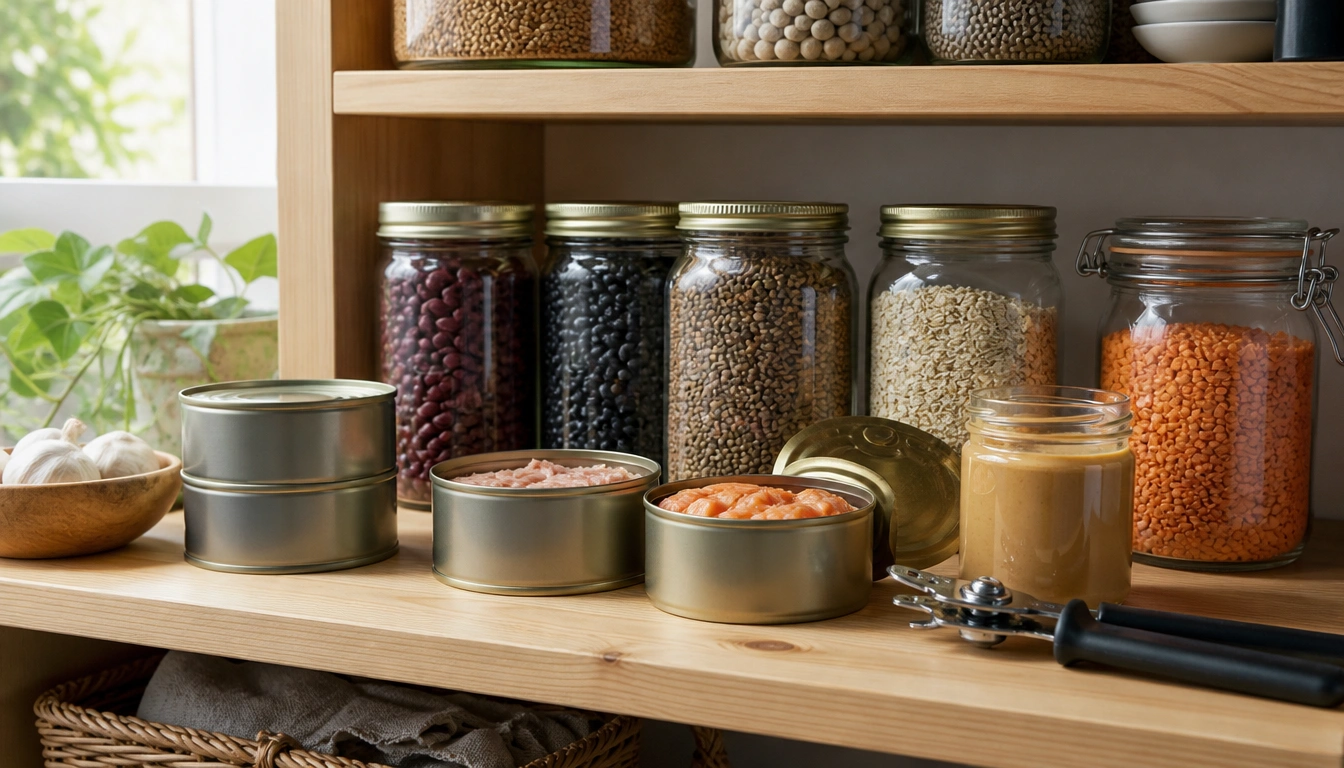
Cheap pantry foods can absolutely help you meet protein needs. Beans, lentils, split peas, oats, canned tuna or salmon, peanut butter, and other shelf-stable staples can provide meaningful protein at a lower cost than fresh meat or supplements. The best results come from mixing protein sources across the day, paying attention to sodium, and choosing foods you can actually store, cook, and eat consistently.
Key Takeaways
- Beans, lentils, split peas, oats, canned fish, and nut butters are among the most practical budget protein foods to keep on hand.
- Plant proteins do not need to be complete in every single food; variety across the day usually covers essential amino acids.
- For many adults, protein needs are modest, but older adults and active people may need more and may benefit from resistance activity.
- Canned beans and fish can be high in sodium, so low-sodium or no-salt-added versions and rinsing matter.
- Shelf-stable proteins can save money by lowering waste, stretching meals, and reducing the need for frequent grocery trips.
Why pantry proteins are a budget advantage
Protein-rich pantry staples help budget shoppers in three ways: they last longer, waste less, and often cost less per meal than fresh protein foods. A bag of dried beans or lentils, a can of tuna, a jar of peanut butter, or a box of oats can sit in the pantry for weeks or months and still be usable when the fridge is nearly empty. That makes shelf-stable protein especially useful for food-insecure households, busy families, and anyone trying to cut down on grocery trips.
The best cheap protein foods to keep in the pantry are not just the ones with the highest protein grams on the label. They are the foods that fit your cooking habits, storage space, and budget. Dried beans and lentils are usually the most cost-efficient if you are willing to cook them. Canned beans and canned fish trade a bit of cost efficiency for convenience. Oats and grains contribute smaller amounts of protein, but they stretch meals and work well with other protein foods. Peanut butter and other nut or seed butters are compact, shelf-stable, and useful when refrigeration is limited.
From a food-waste standpoint, pantry proteins are powerful because they buy time. Fresh meat can spoil quickly, but a shelf-stable protein can wait until you are ready to use it. That flexibility matters when money, energy, or transportation is tight.
How much protein you actually need
For most sedentary adults, the Dietary Guidelines for Americans and the National Institutes of Health describe a basic protein target of about 0.8 grams per kilogram of body weight per day. That is a general reference point, not a strict goal for every person. Many people can meet it with ordinary food, including pantry staples, without needing protein powders or specialty bars.
Older adults are a special case. As people age, the body may respond less strongly to smaller protein doses, and muscle maintenance becomes more important. Research and expert guidance often point to higher total intake for older adults, especially when combined with regular resistance activity. Active people, people recovering from illness, and those trying to preserve muscle may also need more than the standard recommendation. Those higher needs are best handled with food first, and with individualized guidance when medical conditions are involved.
Plant protein does not need to be “complete” in every single meal or food. Beans, lentils, grains, nuts, and seeds can all contribute useful amino acids. What matters most for healthy adults is eating a variety of protein foods across the day. A bean and rice meal, oatmeal with peanut butter, or lentils with whole grains can all fit into a balanced pattern. Animal proteins such as canned fish and eggs are complete proteins, but they are not the only way to meet protein needs.
Food variety matters more than chasing one perfect food. If you eat several plant protein sources during the day, your body can use the amino acids they provide. That is why pantry meals work well when you mix legumes, grains, and nut or seed foods instead of depending on one item alone.
Smart label reading for budget shoppers
When you compare pantry proteins, look past the front-of-package claims and read the Nutrition Facts panel. Start with serving size. A can or bag may look like one meal, but the label may list more than one serving. Protein grams are useful, but only if you check the serving size that the number applies to.
For cost, a simple comparison is price per serving rather than price per package. A cheaper-looking item may actually be more expensive per meal if it contains fewer servings or requires waste you cannot use. Dried beans often win on cost per serving, while canned beans and canned fish usually win on convenience. Oats are inexpensive, easy to store, and useful for breakfast or baking, but they are usually better viewed as a protein-supporting staple than a main protein source.
Sodium deserves attention, especially with canned foods. Many canned beans, tuna, and salmon are salted for preservation or flavor. The FDA recommends choosing low-sodium or no-salt-added products when you are managing blood pressure or heart health. If you already bought standard canned beans, rinsing them in a colander under cold water can lower sodium further. That single step can make a real difference without changing your budget much.
A good label habit is simple: compare protein, sodium, and price per serving together. The cheapest item is not always the best value if it is heavily salted or too small to anchor a meal. The best pantry protein is the one that fits your health needs and your actual eating pattern.
Practical meal-building formulas
High-protein pantry meals do not need complicated recipes. A few repeatable formulas can carry a week’s worth of lunches or dinners. Bean-based bowls are one of the easiest options: combine canned or cooked beans with grains, vegetables, and a sauce or seasoning. Beans and lentils bring protein and fiber, which helps with fullness and can support steadier blood sugar after a meal.
For a quick tuna or salmon meal, mix canned fish with mustard, yogurt, or a little olive oil, then serve it with whole-grain crackers, toast, or rice. Add a fruit or a vegetable if you have one, but do not wait for a perfect meal to use the protein you already have. Eggs can also be used when refrigeration is available, though they are not usually as pantry-stable as canned or dried foods.
Breakfast can be more protein-rich than many shoppers expect. Oatmeal topped with peanut butter, seeds, or milk is an inexpensive way to add protein to a routine meal. If you want a no-cook option, try peanut butter on whole-grain toast, or a sandwich with canned fish, beans mashed with seasoning, or nut butter plus fruit. These are not gourmet meals, but they are practical, filling, and easy to repeat.
The goal is not to build every meal around a single “protein food.” The goal is to combine shelf-stable ingredients so they work together: protein for satiety, fiber for fullness, and carbohydrates for energy. That pattern is often more affordable than buying meat for every meal.
Digestive tolerance and gradual ramp-up for beans and lentils
Beans, lentils, and split peas are excellent budget proteins, but they can be hard on digestion if you increase them too quickly. Gas, bloating, and discomfort are common when a high-fiber food is new to your routine. That does not mean the food is a bad choice. It usually means your gut needs time to adjust.
A gradual approach works best. Start with smaller portions, especially if you are not used to a lot of fiber. Combine legumes with familiar foods such as rice, toast, soup, or pasta rather than making them the only thing on the plate. Drink enough fluid through the day, since fiber works best with adequate hydration.
If dried beans are part of your plan, batch cooking can help because it lets you prepare a large amount once and then use small portions later. Lentils are often easier for beginners because they cook faster and tend to be easier to digest than some larger beans. Split peas are another useful option for soups and purees when you want a softer texture.
If a food reliably causes severe symptoms, or if you have a digestive disorder, treat that as an individual issue rather than a reason to force the food. Budget-friendly does not have to mean uncomfortable.
Sodium-smart pantry strategies for hypertension-conscious readers
For people watching blood pressure, the biggest issue with pantry protein is often sodium, not protein. Canned beans, canned fish, and some packaged convenience foods can contain a lot of salt. The good news is that there are practical ways to reduce that burden without giving up shelf-stable foods.
Choose low-sodium or no-salt-added versions when they are available. If those options cost a little more, compare the price per serving and remember that you may save money by avoiding waste and by using the food more often. Rinsing canned beans under cold water is a low-effort step that can reduce sodium. Draining canned fish may also help, although fish still varies by brand and packing liquid.
Pairing salty pantry proteins with unsalted or lightly seasoned foods can also help. Use no-salt-added tomatoes, plain grains, frozen vegetables, fresh citrus, vinegar, herbs, or spices to add flavor without piling on more sodium. That way, the meal stays practical and heart-conscious at the same time.
If you are trying to reduce sodium for medical reasons, it helps to build a short list of “safe” pantry items you can buy repeatedly. Consistency matters more than perfection. A lower-sodium pantry is easier to maintain when you know which brands and flavors work for you.
Meal prep and storage tactics
Meal prep with pantry proteins should make life easier, not more complicated. Batch cooking is the simplest place to start. A pot of dried beans or lentils can become several meals: soup one night, a grain bowl the next day, and a wrap or salad topping later in the week. Freezing portions in small containers can reduce waste and save time when cooking energy is low.
Rotating shelf-stable staples also helps. Keep a mix of long-lasting proteins so you are not dependent on one item. For example, dried lentils can cover low-cost meals, canned fish can cover emergency meals, and peanut butter can cover snacks or fast breakfasts. Whole grains and oats can round out the pantry so you always have something that works with the protein on hand.
Store foods where you will actually use them. If a food is hidden in the back of a cabinet, it is less likely to become dinner. Keep the most useful items visible and easy to reach. When possible, date containers and use older food first. That simple rotation protects both your budget and your food supply.
There is no need to prep every meal from scratch. The most useful strategy is to prepare a few building blocks ahead of time, then assemble meals fast during the week. That is often the best balance of cost, nutrition, and effort.
When pantry protein is not enough
Pantry protein works well for many people, but some situations call for individualized medical guidance. Chronic kidney disease is the clearest example, because protein, sodium, potassium, and phosphorus needs may need to be adjusted. In those cases, standard high-protein advice may not be appropriate.
People recovering from major illness, significant weight loss, surgery, or eating problems may also need personal guidance. The same is true if you are an older adult with low appetite, unexplained muscle loss, or trouble chewing and swallowing. Food choices should match both health status and real-world access, and that often requires professional input from a clinician or registered dietitian.
If you are trying to increase protein but feel unsure how much you need, start with food tracking for a few days and note which pantry staples you already use. That information is often enough for a clinician to help you adjust your plan without overcomplicating it. The most useful protein plan is the one you can follow safely over time.
Frequently Asked Questions
How much protein do common pantry staples like beans, lentils, oats, tuna, and peanut butter actually provide?
Amounts vary by brand and serving size, but beans and lentils can provide a meaningful amount per cooked cup, canned tuna and salmon are usually higher per serving, oats contribute a smaller amount, and peanut butter adds moderate protein plus fat. Always check the label because the serving size changes the number.
Are plant-based pantry proteins enough by themselves, or do I need to combine foods for complete protein?
For most healthy adults, a variety of plant proteins across the day is enough. Beans, lentils, grains, nuts, and seeds all contribute essential amino acids. You do not need every single food to be complete, but variety matters over the course of the day.
What are the best low-cost pantry proteins for meal prep when I do not want to cook every day?
Dried lentils and beans are usually the best low-cost options if you can batch-cook them. Canned beans, canned tuna or salmon, and peanut butter are especially convenient when you want minimal cooking. Oats are useful for breakfast and snacks, even though they are not the highest-protein choice.
How can I lower sodium when using canned beans, tuna, or salmon?
Choose low-sodium or no-salt-added products when possible. For canned beans, rinse and drain them under cold water. Balance salty items with unsalted grains, vegetables, fruit, herbs, spices, lemon juice, or vinegar so the whole meal has less sodium overall.
How much protein do older adults or active people need compared with the standard daily recommendation?
The standard adult reference is about 0.8 grams per kilogram of body weight per day, but older adults and active people often need more. Many experts and research findings point to higher intakes for muscle maintenance, especially when paired with resistance exercise. Individual needs vary, particularly with medical conditions.
The Bottom Line
Cheap pantry foods can absolutely support a high-protein diet. Beans, lentils, split peas, oats, canned fish, eggs, and peanut butter are all practical options, and the best value often comes from shelf-stable foods that reduce waste and fit your budget.
For many households, the smartest approach is to combine proteins across the day rather than chase one perfect food. Look for affordable staples you will actually use, pay attention to sodium, and build meals from simple repeatable formulas.
If you have kidney disease, major weight loss, swallowing problems, or another medical condition that affects nutrition, ask a clinician or registered dietitian for individualized guidance before making a high-protein plan your default.
Medical disclaimer
Medical disclaimer: This content is for educational and informational purposes only and is not a substitute for professional medical advice, diagnosis, or treatment. Dietary needs and supplement suitability vary by individual.
Sources
- U.S. Government / Health Authority — usda.gov. Accessed October 2026.
- National Institutes of Health (NIH) — nih.gov. Accessed October 2026.
- U.S. Government / Health Authority — dietaryguidelines.gov. Accessed October 2026.
