
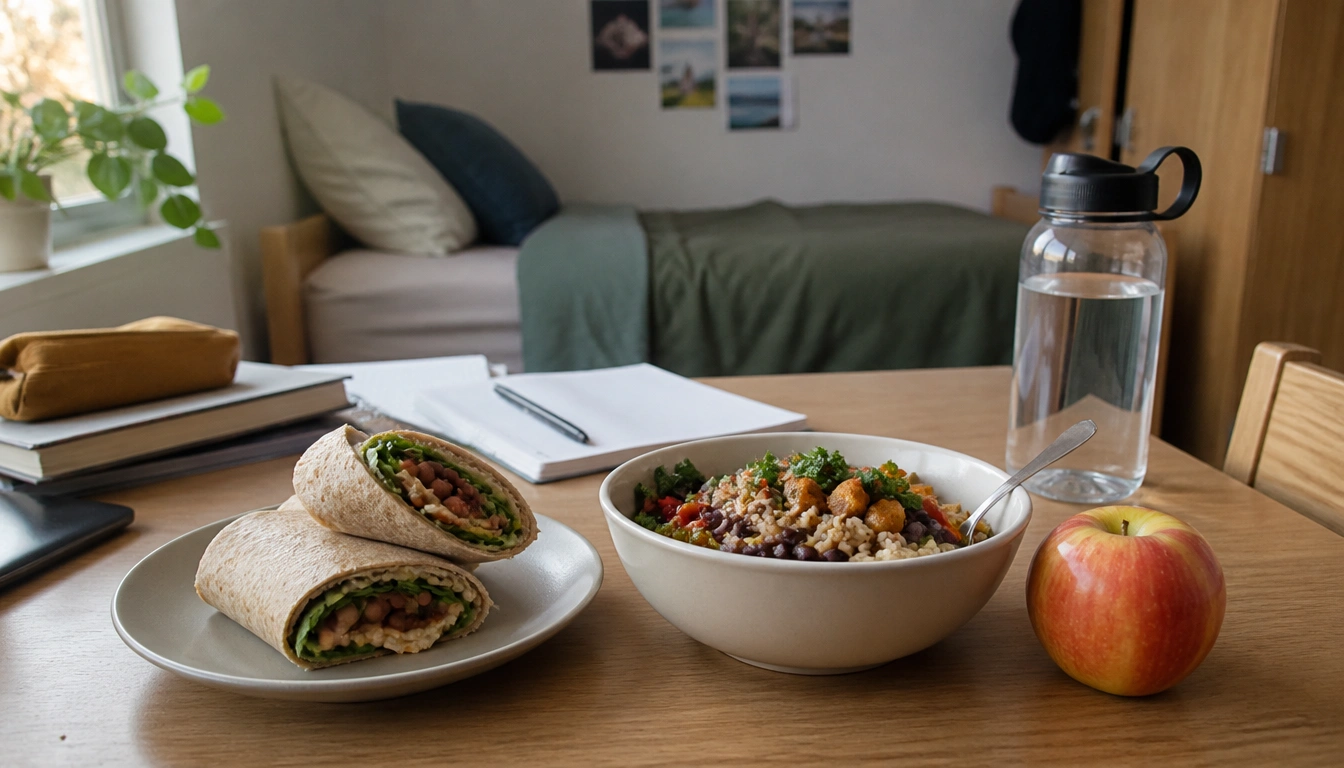
The easiest high-fiber lunch ideas for college students are simple combinations built from beans, whole grains, vegetables, fruit, nuts, and seeds. Aim for about 8 to 10 grams of fiber at lunch so you make real progress toward daily needs without having to track every gram. Dorm-friendly options like bean wraps, grain bowls, avocado toast with beans, and microwaved stuffed sweet potatoes can be fast, filling, and budget-conscious.
Key Takeaways
- Aim for roughly 8 to 10 grams of fiber at lunch to support fullness and steady energy without overcomplicating meal planning.
- Beans, lentils, whole-grain bread or wraps, oats, fruit, vegetables, nuts, and seeds are the most useful dorm-friendly fiber staples.
- Canned beans, frozen vegetables, microwave grains, and ready-to-eat produce can keep costs down and still make meals high fiber.
- Increase fiber gradually and drink enough water, or bloating, gas, and cramping are more likely.
- If fiber makes IBS, bowel changes, or abdominal pain worse, pause the self-directed approach and get individualized medical advice.
Why fiber matters on busy college days
College lunches have to do a lot: keep you full, keep you focused, and fit between classes. A high-fiber lunch helps because fiber slows digestion and can make meals more satisfying than a refined-carb lunch that leaves you hungry again an hour later. That slower digestion can also help smooth out the blood sugar rise and drop that often shows up as an afternoon slump.
Fiber also supports gut health over time. According to the Dietary Guidelines for Americans, adults should aim for about 14 grams of fiber per 1,000 calories. That matters on campus because many students eat plenty of convenience food, but not enough fiber-rich plants. You do not need a perfect diet to benefit. A few repeatable lunch patterns can make a real difference.
The most practical approach is not to build a “perfect” lunch every day. It is to keep a few fiber-rich ingredients around so you can assemble something filling in minutes, even when you are tired or between labs.
A realistic lunch fiber target
For most college students, lunch does not need to carry your entire daily fiber goal. Aiming for about 8 to 10 grams at lunch is a useful middle ground. It is enough to contribute meaningfully to the day without forcing you to count every gram or overthink every ingredient.
This target fits the broader daily recommendations for young adults, which are higher than many students realize. If lunch gives you around a third of your day’s fiber, breakfast, snacks, and dinner can do the rest. That is much easier than trying to make one meal do everything.
If you are currently eating very little fiber, even smaller steps help. A sandwich on whole-grain bread, a piece of fruit, or a side of beans can move your lunch in the right direction. Over time, those choices add up more reliably than dramatic overhauls.
High-fiber ingredients that actually work in a dorm
The best dorm-friendly fiber foods are the ones you can store, prep, and combine with almost no effort. Beans and lentils are especially useful because they are cheap, versatile, and easy to keep on hand in canned or shelf-stable form. Whole-grain bread, tortillas, and wraps add fiber fast. Oats work well for both sweet and savory lunches. Vegetables, fruit, nuts, seeds, and microwaveable grains round out the list.
A few items deserve a permanent place in a student pantry or mini-fridge:
- Canned beans or lentils: black beans, chickpeas, white beans, and lentils are the backbone of quick lunches.
- Whole-grain bread, wraps, or pita: these can turn simple fillings into a more complete meal.
- Microwave brown rice, quinoa, or other whole grains: useful for bowls with almost no prep.
- Frozen vegetables: peas, broccoli, spinach, and mixed vegetables heat quickly and are usually budget-friendly.
- Fruit: apples, pears, berries, oranges, and bananas are easy add-ons.
- Nuts and seeds: pumpkin seeds, chia, flax, peanut butter, or sunflower seeds add fiber plus staying power.
Instead of memorizing recipes, think in formulas. Try wrap + bean spread + vegetables; grain bowl + legumes + salsa; toast + avocado + beans; or stuffed sweet potato + beans + toppings. These combinations are easy to vary based on what is on sale.
Budget-friendly lunch formulas that keep costs low
High-fiber lunches do not have to be expensive. In fact, some of the cheapest options are also the most fiber rich. Canned beans, dry oats, bulk rice, frozen vegetables, and seasonal produce tend to deliver a lot of nutrition for the money. Ready-to-eat items can still be worth it if they keep you from skipping lunch or buying a pricier takeout meal.
A few smart budget moves make a difference. Rinse canned beans and use them across several meals. Buy store-brand whole-grain bread or tortillas. Choose frozen vegetables when fresh produce is too pricey or spoils before you can finish it. Use salsa, mustard, hummus, or plain yogurt as flavor boosters so simple ingredients taste better without requiring a long ingredient list.
Examples of low-cost lunch builds include a black bean and corn wrap, a chickpea salad sandwich, peanut butter toast with a banana, or brown rice with lentils and frozen broccoli. These meals are affordable because the ingredients are shelf-stable, filling, and easy to stretch across multiple lunches.
| Lunch idea | Prep time | Why it works | Typical setup |
|---|---|---|---|
| Bean and hummus wrap | 5 minutes | Fast, portable, and easy to pack with veggies | No-cook or mini-fridge |
| Microwave grain bowl with beans | 7 minutes | Uses pantry staples and reheats well | Microwave |
| Avocado toast with white beans | 5 minutes | Simple, filling, and flexible | Toaster or no-cook if bread is ready |
| Stuffed sweet potato with beans | 10 minutes | Warm, satisfying, and easy to customize | Microwave |
If money is tight, buy fiber foods that can do more than one job. A can of chickpeas can become a salad topping, sandwich filling, or wrap ingredient. One bag of frozen spinach can go into a bowl, omelet, or pasta lunch. That kind of overlap reduces waste and keeps your lunch routine manageable.
Dorm-friendly assembly with minimal equipment
College lunches work best when they match the equipment you actually have. If you have only a microwave, focus on bowls, stuffed potatoes, and reheated grain-and-bean combinations. If you have a mini-fridge, you can store hummus, chopped vegetables, yogurt, fruit, and leftovers. If you have no reliable cooking gear, you can still build a complete lunch from shelf-stable ingredients.
Microwave-only lunches can include a sweet potato topped with beans and salsa, a microwave rice cup with black beans and frozen vegetables, or oatmeal made savory with spinach and an egg if your setup allows it. Mini-fridge lunches can include wraps, bean salads, yogurt with fruit and seeds, or prepped grain bowls. No-cook lunches can be as simple as whole-grain crackers with hummus, canned chickpeas mixed with olive oil and lemon, or toast with nut butter and sliced fruit.
Food safety still matters. Keep perishable foods cold, do not leave dairy or cooked grains sitting out for long periods, and use sealed containers that fit your bag. If you prep a lunch the night before, pack it in a way that makes it easy to grab on your way to class.
How to increase fiber without feeling worse
More fiber is not always better all at once. If you jump from a low-fiber diet to beans, bran, and raw vegetables every meal, bloating, gas, or cramping can show up fast. That does not mean fiber is a bad idea. It usually means your gut needs time to adapt.
The easiest way to ramp up is to make one or two lunches per week more fiber rich, then build from there. Swap refined bread for whole grain. Add half a cup of beans to a bowl. Choose fruit over chips. If a new food causes discomfort, reduce the amount and try again later in a smaller serving.
Water matters too. Fiber works best when you are drinking enough fluids, especially if you are adding dry foods like oats, beans, whole grains, or seeds. Without enough fluid, higher fiber intake can feel more constipating rather than helpful. Keeping a water bottle with you is one of the simplest ways to make the transition easier.
Some students do best by spreading fiber across the day instead of loading it all into one meal. That can make lunch easier to digest while still improving overall intake.
When to pause and get individualized advice
High-fiber eating is a useful general strategy, but it is not the right answer for every student in every situation. If you have IBS, inflammatory bowel disease, a history of bowel narrowing or obstruction, or other digestive conditions, fiber needs may be different. Some people tolerate certain fibers well and others poorly. The best plan may depend on the type of fiber, portion size, and your current symptoms.
Campus health services or a healthcare professional should be contacted if you have persistent abdominal pain, blood in the stool, unexplained weight loss, ongoing diarrhea or constipation, or symptoms that keep getting worse instead of settling down. Those are not normal “adjusting to fiber” symptoms.
If you are not sure whether a certain lunch is helping or hurting, keep notes on what you ate and how you felt. That can make it easier to spot patterns and discuss them with a clinician or registered dietitian. Personalized guidance matters more than general advice when symptoms are ongoing.
For most students, though, the path is straightforward: start with simple fiber-rich foods, keep portions realistic, drink enough water, and build a few reliable lunch combinations you can repeat during the semester.
Frequently Asked Questions
How much fiber should a college student aim for at lunch?
A practical target is about 8 to 10 grams of fiber at lunch. That gives you a meaningful share of your daily needs without requiring strict tracking. You can reach it with simple combinations like beans plus whole grains, or fruit plus nuts and a whole-grain wrap.
Which high-fiber lunch ingredients are cheapest and easiest to keep in a dorm or small kitchen?
Canned beans, lentils, oats, whole-grain bread or wraps, peanut butter, frozen vegetables, microwave brown rice or quinoa, and basic fruit are usually the easiest dorm staples. They are affordable, flexible, and do not require a full kitchen to use well.
How can I increase fiber without causing bloating or stomach discomfort?
Increase fiber gradually rather than all at once. Start by adding one fiber-rich food to a meal, then build up over time. If a food causes discomfort, reduce the portion and drink more water. Some students also do better when fiber is spread across the day.
Do I need to drink more water when I eat more fiber?
Yes, usually. Fiber works best with adequate fluid intake, and adding fiber without enough water can make constipation or cramping more likely. You do not need to force extreme amounts, but regular hydration matters when you increase beans, grains, seeds, or vegetables.
What should I do if high-fiber foods worsen my IBS or other digestive symptoms?
If fiber consistently worsens IBS symptoms or triggers pain, diarrhea, constipation, or bloating that does not settle, pause the self-directed approach and get individualized medical advice. Campus health services or a dietitian can help you find the fiber types and portions that fit your condition better.
The Bottom Line
High-fiber lunches do not need to be expensive, complicated, or cooked from scratch. For most college students, the best approach is a repeatable 8 to 10 gram fiber target built from familiar staples like beans, whole grains, vegetables, fruit, nuts, and seeds.
If you use canned, frozen, microwaveable, and no-cook foods strategically, you can make lunch more filling and more steady for afternoon classes without spending much time. Start small, increase gradually, and drink enough water so your gut has time to adapt.
If you have ongoing digestive symptoms or a condition like IBS, get individualized guidance instead of pushing fiber higher on your own. A simple lunch routine should support your schedule, not make your symptoms worse.
Medical disclaimer
Medical disclaimer: This content is for educational and informational purposes only and is not a substitute for professional medical advice, diagnosis, or treatment. Dietary needs and supplement suitability vary by individual.
Sources
- National Institutes of Health (NIH) — nih.gov. Accessed October 2026.
- U.S. Government / Health Authority — dietaryguidelines.gov. Accessed October 2026.
- U.S. Government / Health Authority — dietaryguidelines.gov. Accessed October 2026.
