
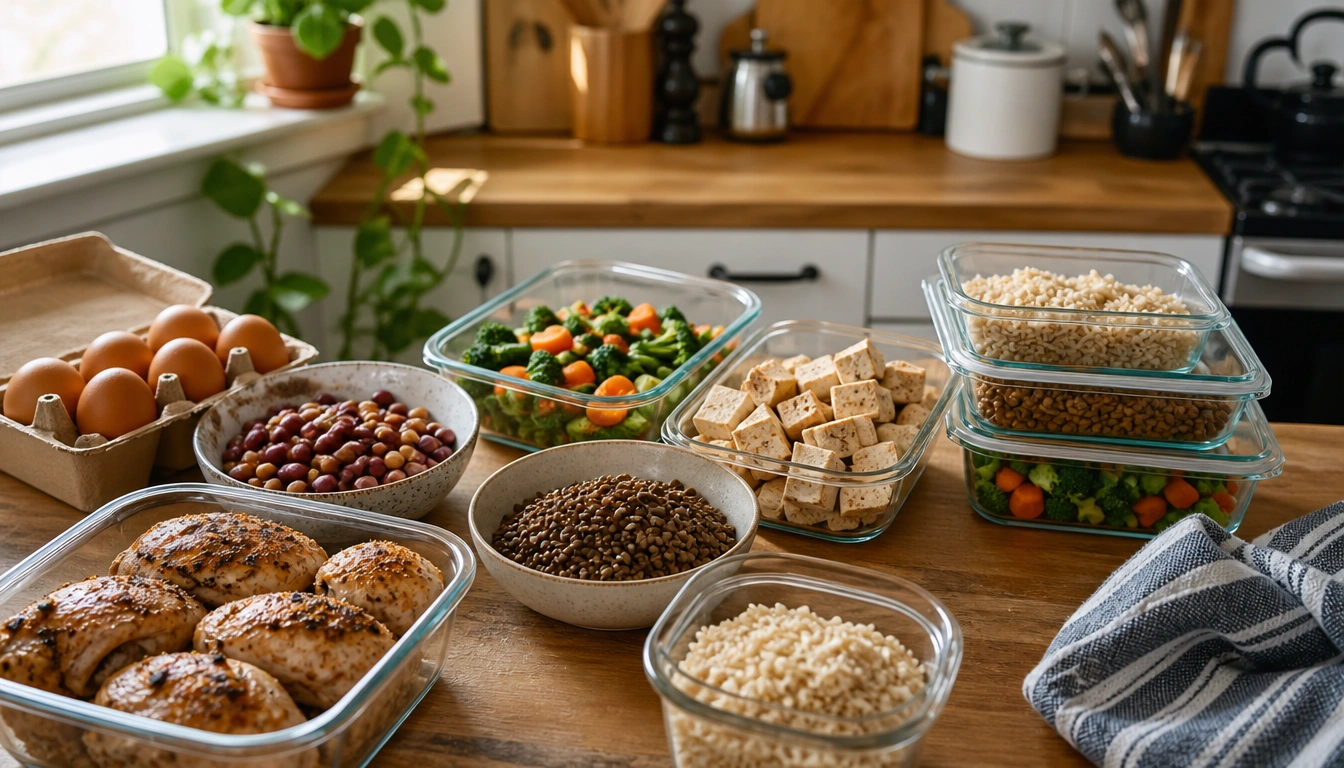
High-protein meal prep on a budget is very doable without specialty foods or supplements. Build meals from low-cost protein staples such as eggs, beans, lentils, chicken thighs, canned fish, and soy foods, then stretch them with fiber-rich grains and vegetables. Batch-cook once, store portions safely, and choose freezer-friendly meals when you will not eat them within a few days.
Key Takeaways
- Whole, minimally processed foods can anchor affordable high-protein meal prep just as well as pricey packaged fitness meals.
- The cheapest protein options often come from both animal and plant foods, especially eggs, beans, lentils, chicken thighs, canned fish, and tofu.
- Pairing protein with grains and vegetables helps meals feel more filling and can make it easier to avoid impulse snacking.
- Cooked proteins usually keep in the refrigerator for only 3 to 4 days; freezing extras is often the safer budget move.
- Protein needs are individual and may differ for teens, older adults, highly active adults, and people with kidney disease.
Budget-first high-protein meal prep starts with real food
A strong high-protein meal prep plan does not depend on expensive snack packs, shakes, or specialty bars. The USDA and Dietary Guidelines for Americans emphasize building meals around nutrient-dense foods: protein foods, vegetables, fruits, whole grains, and low-fat or unsweetened dairy. That framework works well for budget shoppers because it centers foods that can be bought in bulk, cooked at home, and reused in different meals.
The easiest way to think about budget meal prep is as a formula: protein + fiber-rich carbohydrate + vegetables. Protein helps meals satisfy hunger. Whole grains, beans, and vegetables add fiber and volume, which can help you feel full for longer. That matters when you are trying to make groceries last and keep snack spending down.
Instead of aiming for perfect macros, build repeatable meals you will actually eat. A container with roasted chicken thighs, brown rice, and frozen broccoli can be just as useful as a prepackaged “fitness” meal, often at a lower cost and with more flexibility.
Cheapest protein staples to rotate through the week
Affordable protein usually comes from foods that are versatile, shelf-stable, or sold in family-sized packs. The best choices are the ones you can use in several recipes, not just one.
Animal-based options
Eggs are one of the most flexible budget proteins. They work for breakfast bowls, fried rice, wraps, and snack boxes. Chicken thighs are often cheaper than breasts and stay juicy after reheating. Canned fish such as tuna or salmon can be folded into pasta, rice bowls, salads, or sandwiches with very little prep. Ground turkey, family-pack chicken, and store-brand dairy foods can also fit when prices are right.
Plant-based options
Beans, lentils, chickpeas, split peas, and soy foods are budget staples that deliver both protein and fiber. Dry beans and lentils are especially economical if you have time to cook them in batches, while canned versions save time. Tofu and edamame are useful soy options for stir-fries, bowls, and soups. These foods are not “backup” proteins; they are practical main ingredients that can carry a meal.
For the lowest cost, rotate between a few staples instead of buying many one-off items. That keeps shopping simpler and reduces waste from half-used ingredients sitting in the fridge.
A grocery plan that prevents duplicate buys and impulse spending
Budget meal prep begins before you enter the store. First, check your pantry, fridge, and freezer so you know what you already have. People often overspend because they buy a new bag of rice, another jar of sauce, or an extra package of chicken when a partial supply is already at home.
Next, choose a few meals for the week and write the ingredients needed for those meals only. This is where budget shoppers save the most: a tight list lowers the chance of impulse purchases, especially in the convenience-food aisle.
It also helps to shop with a “base ingredient” mindset. One bag of rice, one bag of frozen vegetables, one carton of eggs, and one or two protein staples can become many different meals if you change the seasonings or sauces. Frozen vegetables and canned items can be smart buys because they reduce spoilage and are often cheaper than out-of-season fresh produce. According to the CDC, rinsing canned beans and vegetables when appropriate can help reduce excess sodium.
One prep session can cover several meals
A single cooking block can supply multiple lunches or dinners if you build in simple components. Think in parts rather than full recipes. Cook one protein, one grain, and one or two vegetables, then combine them in different ways during the week.
A practical prep session might include baked chicken thighs, a pot of lentils, brown rice, roasted carrots, and steamed frozen broccoli. Another week, it might be hard-boiled eggs, black beans, quinoa, and sautéed peppers and onions. Those ingredients can be turned into bowls, wraps, salads, soups, or skillet meals without starting from scratch each day.
To keep prep efficient, use the oven, stove, and freezer strategically. Roast vegetables while the protein cooks. Boil eggs while rice simmers. Portion leftovers right away so you are not repeatedly opening and closing large containers. This approach saves time, reduces cleanup, and makes it easier to see how many meals you actually have.
How to stretch protein with grains and vegetables
Stretching protein is not about eating less food; it is about making each portion work harder. Fiber-rich grains and vegetables increase the size and volume of a meal, which can improve satiety without driving up cost the way a larger portion of meat might.
Beans are especially useful because they contribute both protein and fiber. Mixing beans with rice, lentils with barley, or chickpeas with roasted vegetables creates a hearty meal that feels complete. A smaller amount of chicken or fish can go further when it is placed over grains and surrounded by vegetables instead of being the only item on the plate.
Some practical combinations include eggs with oats and fruit, tuna with whole-grain pasta and peas, tofu with rice and broccoli, or lentil chili with a baked potato. These meals are affordable, filling, and easier to portion consistently than protein-heavy plates alone. For many people, that balance makes it less tempting to raid the snack shelf later in the day.
Food safety matters when you cook once and eat later
Batch cooking saves money only if the food stays safe to eat. Cooked proteins should generally be used within 3 to 4 days in the refrigerator. If you are prepping for a full week, freezing some portions is often the better choice for both safety and waste reduction.
Freeze meals in single portions so you can thaw only what you need. Move frozen food to the refrigerator to thaw rather than leaving it on the counter. When reheating, warm leftovers until they are steaming hot throughout. If a food smells off, has changed texture in a concerning way, or has been left out too long, it is safer to discard it.
Use the freezer as a planning tool, not a last resort. Extra soup, cooked beans, taco meat, shredded chicken, and grain bowls often freeze well. This lets you buy in bulk when prices are lower without feeling pressured to eat the same meal several days in a row.
Protein needs can change across life stages and medical conditions
Protein needs are not the same for everyone. The Dietary Guidelines for Americans and public health agencies emphasize individual variation based on age, body size, activity level, and health status. A budget meal prep plan should support your real life, not copy someone else’s eating pattern.
Adolescents may need more food overall because they are growing. Highly active adults may need more protein than sedentary adults because of training and recovery demands. Older adults may need protein-focused meals to help preserve muscle as they age. At the same time, people with kidney disease may need a different protein approach and should get medical guidance before increasing intake.
If you have a medical condition, are losing or gaining weight without trying, or have ongoing digestive problems, talk with a healthcare professional or registered dietitian before making major changes. A good plan is affordable, but it also has to fit your health needs.
Keep meals interesting without spending more
Meal-prep burnout often happens when every container tastes the same. The fix is usually not more ingredients; it is better rotation. Change the flavor profile while keeping the same core foods.
For example, the same chicken thighs can become taco bowls one week, garlic-herb rice bowls the next, and a curry-style lunch after that. Beans can be turned into chili, soups, burrito filling, or salad toppers. Tofu can be baked, stir-fried, or simmered in sauce. Small changes in seasoning, acid, and texture create variety without a large cost increase.
Keep a few low-cost flavor tools on hand: onions, garlic, vinegar, mustard, salsa, soy sauce, dried herbs, and spice blends. These do not have to be fancy. They just need to help you enjoy the food enough to keep using the plan.
It also helps to repeat only some parts of the menu. You might keep the same breakfast and lunch base while changing dinner, or keep one protein constant and rotate the grains and vegetables. That structure lowers decision fatigue while preventing boredom.
Frequently Asked Questions
What are the cheapest high-protein foods to buy for meal prep?
The most budget-friendly choices are usually eggs, dry or canned beans, lentils, chickpeas, tofu, chicken thighs, and canned fish like tuna or salmon. Store-brand versions, family packs, and bulk bins can lower costs further. The cheapest option depends on local sales, so compare price per serving, not just shelf price.
How much protein do I actually need in a day?
Protein needs vary by age, body size, activity level, and health status. Public guidance does not use one number for everyone. If you are trying to plan meals, it can help to use your doctor’s or dietitian’s advice, especially if you are very active, still growing, older, or managing a medical condition.
Can plant-based proteins be as useful as meat for affordable meal prep?
Yes. Beans, lentils, chickpeas, tofu, tempeh, and edamame can be practical main proteins for budget meal prep. They also bring fiber, which can improve fullness. Mixing plant proteins with grains can make meals more balanced and affordable without relying on meat every day.
How long can cooked protein safely stay in the fridge or freezer?
Cooked protein generally keeps in the refrigerator for about 3 to 4 days. If you will not eat it within that window, freezing portions is safer and usually reduces waste. Thaw frozen food in the refrigerator and reheat it thoroughly before eating.
How do I keep budget meal prep from getting boring over the week?
Use the same base foods in different ways. Change the seasoning, sauce, or cuisine style rather than buying a whole new set of ingredients. A batch of rice, beans, chicken, or tofu can taste very different with salsa, curry, garlic-herb seasoning, or soy-ginger flavors.
The Bottom Line
Affordable high-protein meal prep works best when it is built from everyday foods, not specialty products. Eggs, beans, lentils, chicken thighs, canned fish, tofu, grains, and vegetables can all fit into a low-cost routine if you shop with a plan and cook in batches.
The most useful habits are simple: check what you already own, choose a few flexible ingredients, portion food safely, and freeze extras you will not finish in 3 to 4 days. That keeps meals safe, lowers waste, and makes it easier to stay consistent.
If your protein needs are changing because of growth, training, aging, or kidney disease, get individualized medical guidance. For most budget shoppers, though, the win is not perfection—it is a repeatable system that saves money and still feels satisfying.
Medical disclaimer
Medical disclaimer: This content is for educational and informational purposes only and is not a substitute for professional medical advice, diagnosis, or treatment. Dietary needs and supplement suitability vary by individual.
Sources
- U.S. Government / Health Authority — realfood.gov. Accessed November 2026.
- U.S. Government / Health Authority — medlineplus.gov. Accessed November 2026.
- U.S. Government / Health Authority — dietaryguidelines.gov. Accessed November 2026.
- Centers for Disease Control and Prevention (CDC) — cdc.gov. Accessed November 2026.
- Academic / Medical Research Institution — heart.org. Accessed November 2026.
