
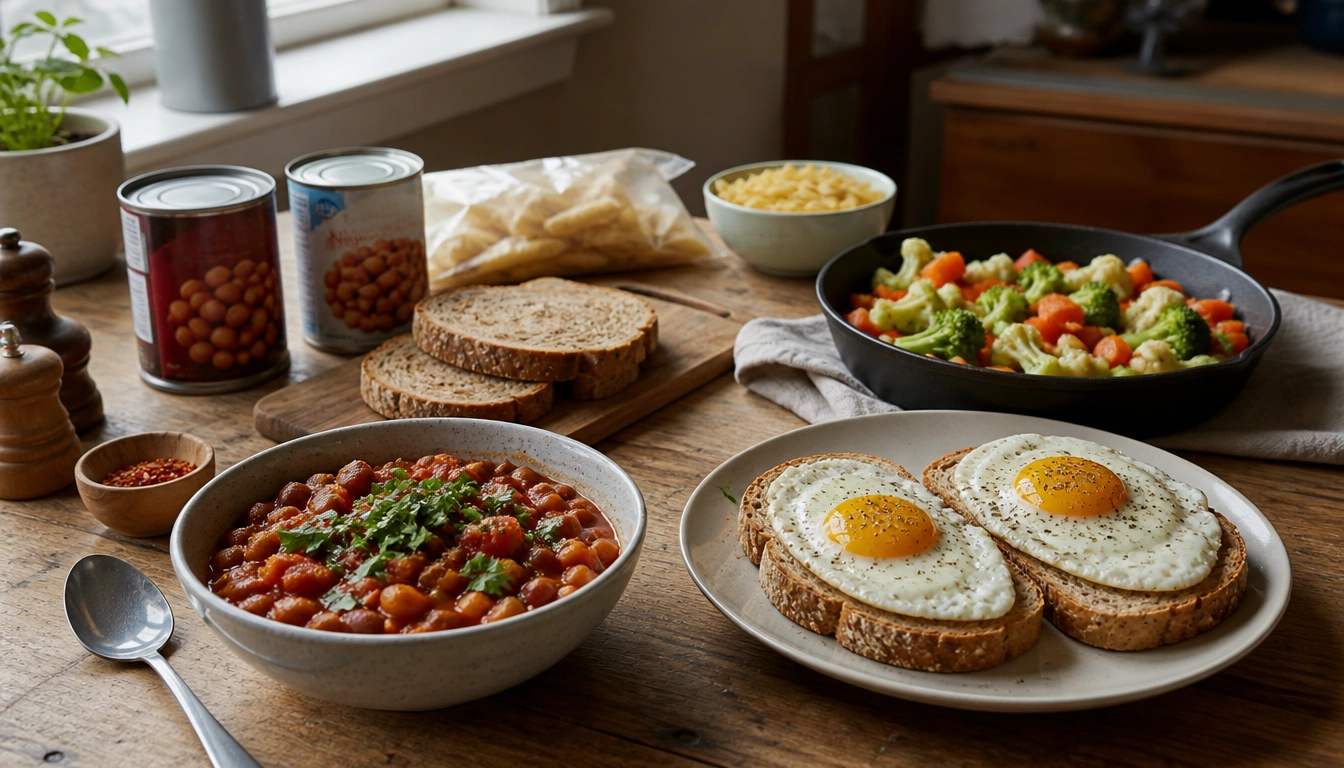
You can make a quick, cheap, nutritious dinner by building around pantry staples like beans, lentils, eggs, rice, pasta, canned tomatoes, and frozen vegetables. The easiest formulas are simple: combine a protein, a vegetable, and a filling carbohydrate, then season with what you already have. Frozen and canned foods are often just as practical as fresh for budget cooking, and they can cut waste, prep time, and grocery stress.
Key Takeaways
- Keep a small pantry-first base of beans, lentils, eggs, rice, pasta, oats, canned tomatoes, and frozen vegetables so dinner is easier to assemble.
- Frozen and canned produce can be nutritious, affordable, and less wasteful than fresh items that spoil before you use them.
- A budget dinner is easiest to balance when you follow a simple plate pattern: vegetables, a filling starch or whole grain, and a protein food.
- Rinsing canned beans and vegetables can help lower sodium, while no-salt-added versions are useful when you want more control.
- Older adults may especially benefit from affordable protein-dense foods like eggs, dairy, and tinned fish; people with diabetes or hypertension should pay closer attention to labels.
Start with a pantry-first dinner framework
A low-prep dinner becomes much easier when you treat the pantry, freezer, and refrigerator as a small system instead of separate shopping zones. Public-health guidance from the USDA’s MyPlate and the NHS Eatwell Guide both support a balanced approach: build meals from vegetables, protein foods, and high-fiber starches or whole grains. For budget shoppers, that usually means a few shelf-stable basics that can become many different dinners.
A practical pantry-first base includes dried or canned beans, lentils, rice, pasta, oats, canned tomatoes, broth, onion, garlic, and a few seasonings. In the freezer, keep vegetables that you will actually use, such as mixed vegetables, spinach, peas, broccoli, or cauliflower. In the fridge, eggs, yogurt, milk, and cheese can turn simple ingredients into a more filling meal. When possible, keep one or two sauces or flavor builders on hand, such as salsa, curry paste, mustard, or soy sauce, so plain ingredients do not feel repetitive.
This approach matters because it reduces last-minute shopping and lowers the chance of waste. A bag of frozen vegetables will not wilt in the crisper drawer, and a can of beans is ready when you are too tired to start from scratch. The goal is not a large pantry. It is a short list of foods that can be combined quickly into dinner with almost no planning.
Use budget-friendly protein shortcuts and smart produce choices
For affordable protein, beans, lentils, eggs, canned fish, tofu, and economical poultry are often the most useful options. Dry beans and lentils are especially budget-friendly because they stretch across multiple servings and bring fiber along with protein. Eggs are another flexible choice: they cook quickly, work in bowls, toast, rice, and pasta, and can help a meal feel complete without much effort.
Canned fish such as tuna, sardines, salmon, or mackerel can be a strong option when you want something fast and protein-rich. For households that eat poultry, chicken thighs are often less expensive than many lean cuts and can be used in sheet-pan dinners or stirred into rice and noodle dishes. The best choice is usually the one you can buy reliably and use before it spoils.
Frozen and canned vegetables deserve a regular place in budget cooking. They are not second-best just because they are not fresh. Frozen vegetables are typically picked and frozen near peak ripeness, which helps preserve quality and reduces spoilage. Canned vegetables and tomatoes are also useful when time is short. To keep sodium in check, choose no-salt-added versions when possible, and rinse canned beans and vegetables under water when that makes sense for the recipe. The USDA and NHS both support this kind of label-aware shopping as a simple way to make low-cost meals fit a healthier pattern.
If you are cooking for someone who needs more protein, such as an older adult, these foods become even more helpful. Eggs, yogurt, cottage cheese, milk, sardines, tuna, and beans can all raise the protein content of a meal without requiring expensive ingredients or elaborate cooking.
Three dinner formulas that are hard to mess up
Some of the best cheap dinners follow the same structure every time. That makes them easier to remember, easier to shop for, and easier to repeat without getting bored.
One-pot bean, chili, or curry style meals
These are some of the fastest dinners for a small budget because the pot does most of the work. Start with onion and garlic if you have them, then add canned tomatoes, rinsed beans or lentils, and a handful of frozen vegetables. Season with chili powder, cumin, curry paste, Italian herbs, or paprika. Simmer until everything is hot and the flavors blend. Serve with rice, bread, or a baked potato if you want more staying power.
This format is especially useful because it adapts to what is already in the house. Black beans, chickpeas, kidney beans, split peas, or lentils can all work. If you have cooked grains left over, stir them in near the end. If not, serve the pot over toast, rice, or pasta.
Sheet-pan dinners
Sheet-pan meals work well when you want to limit cleanup. Toss a protein and vegetables with a small amount of oil and seasoning, spread everything on a pan, and roast until cooked through. Frozen vegetables, sliced onions, carrots, potatoes, broccoli, and chicken thighs all fit this pattern. If you are using potatoes, leaving the skins on saves time and adds fiber.
The strength of sheet-pan cooking is that it turns ordinary ingredients into dinner with almost no active time. It also helps use up vegetables before they go soft. If you need a bigger meal, add whole-grain bread or serve the roasted mixture over rice.
Toast and bowl-style dinners
Toast and bowls are useful when you have only a few ingredients and want dinner on the table quickly. Think beans on toast with a fried egg, tuna mixed with yogurt and spooned over toast, rice topped with vegetables and an egg, or a grain bowl built from leftovers. These meals are especially practical for students or anyone cooking in a small kitchen with limited equipment.
To keep them balanced, pair the base with a protein and some produce. For example, whole-grain toast can carry beans, cottage cheese, sardines, or eggs, while a rice bowl can hold frozen vegetables, tofu, or chicken. A little sauce or seasoning helps the meal feel finished without adding much cost.
How to keep dinner under 20 minutes
Speed is mostly about reducing steps before you start cooking. Pre-washed greens, pre-cut vegetables, frozen vegetables, canned beans, and leftover cooked grains all cut down the work. If you are shopping with time in mind, it is often worth paying a little more for a form that saves prep time, especially when it prevents a takeout order later.
Another useful habit is to build meals around ingredients that do not need perfect timing. Eggs, canned fish, beans, lentils, and frozen vegetables are forgiving. So are bowls, wraps, and skillet meals. You do not need a recipe with many moving parts to eat well. You need a reliable sequence: heat, combine, season, serve.
Cleanup can be minimized by choosing one-pot, one-pan, or one-bowl meals and by lining a sheet pan if that helps your routine. If you are cooking rice or pasta, make extra for another meal later in the week. That way, tomorrow’s dinner starts halfway finished. This is one reason budget cooking and time-saving cooking often overlap: the same habits reduce both spending and effort.
Smart swaps for pasta, rice bowls, tacos, and toast
Most budget dinners can be made healthier without becoming more complicated. The trick is to keep the meal format you already like and swap in more filling, higher-fiber, or lower-cost ingredients where possible.
Pasta: Use whole-wheat pasta if you like it, or mix regular pasta with beans, lentils, or chopped vegetables to stretch the meal. A quick tomato sauce with canned tomatoes, garlic, and frozen spinach can be enough for dinner when you add a protein on the side.
Rice bowls: Start with rice or another grain, then add beans, eggs, tofu, tuna, chicken, or leftover vegetables. A sauce, salsa, or yogurt-based topping can keep the bowl from feeling dry. Brown rice or a mix of brown and white rice can increase fiber if that suits your household.
Tacos: Fill tortillas with beans, scrambled eggs, canned fish, or a little shredded chicken, then add cabbage, lettuce, salsa, or frozen peppers and onions. Tacos are one of the easiest ways to use small leftover amounts of food without making dinner feel random.
Toast: Use whole-grain bread for a stronger base. Top with beans, avocado if you have it, egg, cottage cheese, or tinned fish. Add tomatoes, greens, or a quick side of frozen peas or fruit if you want more produce.
These swaps are useful because they preserve the meal you already know while improving satiety and nutrient balance. They also let you respond to what is cheapest that week instead of shopping for a fixed recipe list.
Build a small weekly shopping list that flexes
A useful budget list is short, repeatable, and built around overlap. If one ingredient can appear in three or four meals, it is probably worth buying. For a week of low-prep dinners, many households can start with a combination like this: dried or canned beans, lentils, eggs, canned tomatoes, one or two frozen vegetables, rice or pasta, bread or tortillas, onions, and one protein option such as canned fish or chicken thighs.
From there, add a few flavor helpers. Salsa, soy sauce, mustard, herbs, garlic, curry paste, or chili seasoning can change the direction of a meal without requiring a long ingredient list. If your budget allows, include yogurt, milk, or cheese for meals that need extra protein or a creamy finish. If produce is affordable, choose one fresh item that will be used quickly, such as bananas, apples, lettuce, carrots, or cabbage.
The most useful shopping list is the one that works in real life. If your family dislikes brown rice, buy the grain they will eat. If you do not have a freezer full of space, choose smaller amounts of frozen produce and more shelf-stable beans and tomatoes. Public-health eating patterns are flexible enough to fit different budgets and preferences.
Adjust for children, older adults, pregnancy, diabetes, and hypertension
Low-prep budget meals can work for many households, but needs are not identical across age and health conditions. Children often do better with familiar foods in simple forms, so a bean and cheese quesadilla, egg toast, or mild pasta with vegetables may be more realistic than a heavily spiced curry. Pregnant people generally need enough food quality and variety, and they should be especially careful with food safety and with foods that are unpasteurized or undercooked.
Older adults may benefit from meals that are more protein-dense relative to total calories. That makes eggs, yogurt, milk, cottage cheese, beans, and tinned fish especially useful. If chewing is an issue, softer textures such as soups, stews, mashed beans, or scrambled eggs can help make protein easier to eat.
For diabetes, the main budget concern is not that affordable food is inherently a problem; it is that some cheap meals rely too heavily on refined starches and sugary sauces. Choosing beans, vegetables, whole grains, and protein helps make the meal more balanced. For hypertension, label awareness matters more. Look for lower-sodium canned goods when possible, and use rinsing, herbs, vinegar, citrus, or spice to add flavor without leaning on salt. If someone has kidney disease, severe food allergies, swallowing problems, or another condition that changes what they can eat, individual medical advice matters more than any general budget guide.
Keep leftovers and canned goods safe
Food safety is part of budget cooking because spoiled food wastes money and can make people sick. Refrigerate cooked perishable food promptly, and do not leave it sitting out for long periods. If you batch cook, divide leftovers into shallow containers so they cool faster. Use refrigerated leftovers within a few days or freeze them if you will not eat them soon. The NHS and USDA both stress these basics because they help protect both health and groceries.
For canned foods, check the can before using it. Do not use cans that are swollen, badly dented at the seam, leaking, or damaged. Once opened, move leftovers to a clean container and refrigerate them rather than leaving food in the can. Rinsing beans and vegetables is helpful for sodium control, but it is not a substitute for safe storage.
If you rely on batch cooking to save time, keep the system simple: make one grain, one protein, and one vegetable component that can be recombined in different ways. That gives you several dinners from one cooking session without asking you to cook a different full meal every night.
Frequently Asked Questions
What are the cheapest healthy dinner ingredients to keep on hand?
The most useful low-cost staples are beans, lentils, eggs, rice, pasta, oats, canned tomatoes, frozen vegetables, onions, garlic, and a few flavorings such as salsa or curry paste. These ingredients are flexible, filling, and easy to combine into balanced meals.
How can I make a filling dinner in under 20 minutes on a budget?
Use a short formula: one protein, one vegetable, and one starch or grain. Canned beans with frozen vegetables over rice, eggs on toast with a side salad, or tuna mixed into pasta are all fast examples. Pre-cut or frozen ingredients help most.
What budget meals work well with canned, frozen, or pantry staples?
Bean chili, lentil soup, curry-style skillet meals, sheet-pan chicken with frozen vegetables, pasta with canned tomatoes and spinach, and toast or bowls with eggs or canned fish all work well. These meals are practical because the ingredients are shelf-stable or freezer-friendly.
How do I keep low-cost dinners balanced and not too high in sodium?
Aim for vegetables, protein, and a whole grain or other high-fiber starch. Choose no-salt-added canned goods when you can, and rinse canned beans and vegetables if the recipe allows it. Flavor with herbs, garlic, citrus, vinegar, and spices instead of relying only on salt.
What are good budget dinner ideas for people who need higher protein or more fiber?
Eggs, Greek yogurt, cottage cheese, beans, lentils, tofu, and canned fish are strong budget options for protein. For more fiber, add vegetables, whole grains, beans, and potatoes with the skin on. Older adults often benefit from the combination of protein and easy-to-eat textures.
The Bottom Line
Cheap dinners do not have to be bland, complicated, or nutritionally thin. The easiest approach is to keep a small set of pantry, freezer, and fridge staples that can be mixed into bowls, pasta, sheet-pan meals, and one-pot dishes.
Frozen vegetables, canned beans, eggs, lentils, and tinned fish are especially useful because they save time, reduce waste, and still fit a balanced plate. If you keep sodium in mind and build around protein plus produce, budget cooking becomes much more workable.
For people with special needs such as diabetes, hypertension, pregnancy, or older age, the same basic meals can still work with small adjustments. The main difference is choosing the right portion, texture, and label-aware ingredients for the household.
Medical disclaimer
Medical disclaimer: This content is for educational and informational purposes only and is not a substitute for professional medical advice, diagnosis, or treatment. Dietary needs and supplement suitability vary by individual.
Sources
- National Health Service (NHS) — ruh.nhs.uk. Accessed October 2026.
- National Health Service (NHS) — www.nhs.uk. Accessed October 2026.
- U.S. Government / Health Authority — dietaryguidelines.gov. Accessed October 2026.
