
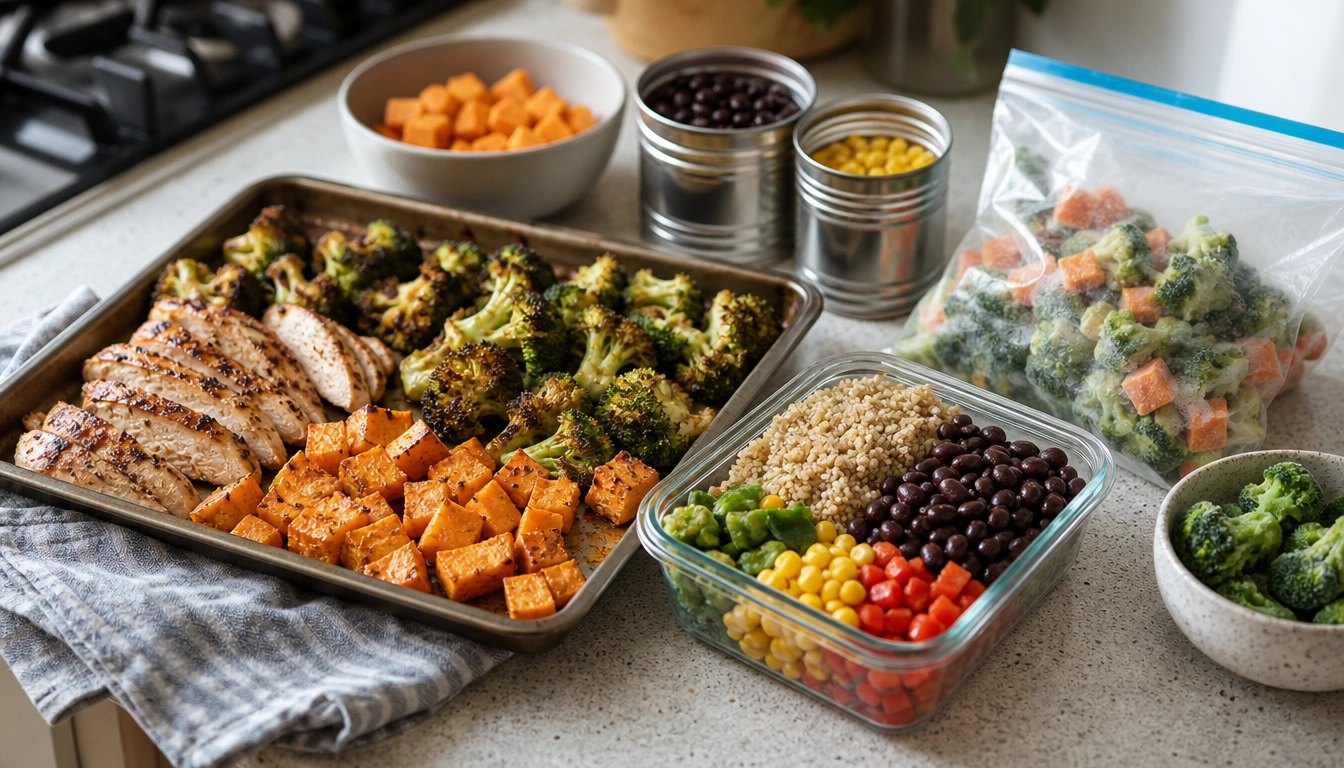
For a healthy, beginner-friendly dinner that is fast to prep for the week, start with a simple formula: half vegetables, a quarter lean protein, and a quarter high-fiber carbohydrates. Use shortcuts such as frozen vegetables, canned beans, microwaveable grains, and rotisserie chicken so the meal stays low-effort. Begin with just two or three dinners a week, not a full week at once.
Key Takeaways
- Low-prep meal prep works best when the plan is repeatable, not elaborate.
- Frozen vegetables, canned beans, pre-washed greens, and microwaveable grains can still support a healthy pattern.
- A balanced plate is the easiest starter framework: ½ vegetables, ¼ lean protein, ¼ high-fiber carbs.
- Sheet-pan meals, dump-and-bake bowls, and one-pot soups are especially beginner-friendly.
- Cooked dinners usually keep safely in the refrigerator for 3 to 4 days if cooled and stored properly.
- Portions are flexible: age, body size, activity level, and medical conditions can change what a healthy dinner looks like.
Why low-prep dinner ideas for meal-prep beginners work
Healthy meal prep does not depend on complicated cooking skills. For beginners, the biggest win is consistency. A dinner plan that feels easy enough to repeat is more useful than a plan that looks impressive but never happens.
That is why low-prep dinner ideas for meal-prep beginners focus on fewer decisions, fewer dishes, and fewer steps. Instead of trying to cook every meal for the week, you build a simple routine that fits real life. Public health guidance from organizations such as the CDC and NHS supports home cooking as a practical way to reduce reliance on convenience foods that are often higher in sodium, saturated fat, and added sugar.
The goal is not perfection. It is to make it easier to eat a balanced dinner at home on busy nights. If a meal can be assembled from a few reliable ingredients, it is much more likely to become a habit.
Low-prep cooking also helps with confidence. When you know the format, you do not need to invent a new dinner every time. That alone can make weeknight food feel much less stressful.
The simplest healthy dinner formula for beginners
The easiest place to start is a plate-building template rather than a recipe. A balanced dinner can be built around half vegetables, one quarter lean protein, and one quarter high-fiber carbohydrates. This pattern reflects public guidance from sources such as the Dietary Guidelines for Americans, MyPlate, and the Harvard Healthy Eating Plate.
The vegetable portion can be non-starchy vegetables like broccoli, green beans, peppers, spinach, zucchini, cabbage, or a mixed salad. The protein portion can be chicken, fish, eggs, tofu, beans, lentils, or other lean choices. The carbohydrate portion can be brown rice, quinoa, whole-wheat pasta, potatoes, sweet potatoes, or another whole-grain or fiber-rich starch.
This template is helpful because it removes the need to track complex macros. You are simply arranging a meal that has produce, protein, and staying power. Fiber-rich foods also tend to support fullness, which can make it easier to avoid late-night snacking or constant grazing after dinner.
If you are new to meal prep, keep the template flexible. The exact amount of each food can change based on appetite, age, activity level, and health needs. The structure stays the same even when the portion sizes do not.
Smart shortcuts and beginner-proof dinner blueprints
A low-effort healthy dinner often starts with supermarket shortcuts. Frozen vegetables, canned beans, pre-washed greens, microwaveable grains, and pre-cooked proteins are all useful tools. They cut chopping time and cleanup without meaningfully getting in the way of a nutritious pattern.
Here are three dinner blueprints that work especially well for beginners:
- Sheet-pan meals: Roast protein and vegetables together on one pan. Think chicken and broccoli, tofu and peppers, or salmon with green beans and sweet potato.
- Dump-and-bake grain bowls or casserole-style dinners: Combine microwaveable grains, canned beans, vegetables, and a protein in one dish or bowl, then season and heat.
- One-pot soups or stews: Simmer broth, canned tomatoes, beans or lentils, and frozen vegetables for a filling meal with very little active work.
These formats are forgiving. They do not require advanced knife skills, and they still give you a balanced dinner if you choose ingredients thoughtfully. They are also easy to scale up if you want leftovers for another night.
For many beginners, the best shortcut is not a special recipe. It is choosing a format that keeps the process simple enough to repeat on a weekday evening.
How to make each dinner blueprint work in real life
To keep prep manageable, start with ingredients that need little handling. For a sheet-pan meal, buy pre-cut vegetables when they are affordable, or choose sturdy produce that only needs a quick rinse and rough chop, such as broccoli, onions, peppers, or baby potatoes. For protein, boneless chicken, tofu, turkey sausage, or salmon fillets are all straightforward options.
Seasoning can stay simple. Olive oil, garlic powder, onion powder, black pepper, paprika, cumin, Italian seasoning, lemon juice, or a low-sodium spice blend can give a meal enough flavor without extra work. A sheet pan can hold one seasoning style for the whole dinner, which keeps it beginner-friendly.
For a dump-and-bake grain bowl or casserole-style dinner, use a microwavable grain pouch, a can of beans rinsed under water, a bag of frozen vegetables, and a pre-cooked protein such as rotisserie chicken. Add salsa, pesto, or a light vinaigrette after heating if you want more flavor.
For soup or stew, build from broth, canned tomatoes, lentils, beans, or frozen vegetables. Let the pot do the work. These meals are useful when you want dinner that feels complete but does not demand constant attention.
If you are buying for the week, keep the shopping list narrow: one protein, two vegetables, one high-fiber starch, and one seasoning style. Simpler shopping usually leads to less waste and fewer half-used ingredients in the fridge.
How to portion and scale without burning out
Beginner meal prep becomes overwhelming when the plan is too ambitious. A better approach is to prep dinner for just two or three nights at first. That gives you practice without making the routine feel like a second job.
Starting small also helps you notice what is realistic. Maybe you enjoy cooking one larger dinner and eating leftovers twice. Or maybe you prefer making two separate recipes in a week. The best plan is the one you can maintain.
If the first round goes well, add only one small change at a time. You might prep an extra vegetable, make a larger batch of soup, or cook enough grain for one more dinner. There is no need to jump straight to a full week of meals.
This gradual approach matters because portion needs vary. A very active adult, a student, an older adult, and a person with a medical condition may all need different amounts of food. The template is a starting point, not a fixed prescription. Scale it up or down based on hunger, energy needs, and practical comfort.
For beginners, success often looks boring: one easy dinner repeated a few times, with enough variety to stay interesting but not so much variety that the system falls apart.
Budget-friendly choices that also reduce waste
Meal prep can save money when it prevents food from spoiling before you use it. That is one reason frozen and shelf-stable staples are so helpful. Frozen vegetables last longer than fresh ones, canned beans are inexpensive and ready to use, and microwaveable grains can bridge the gap between convenience and nutrition.
Pre-washed greens and rotisserie chicken can also be practical budget tools if they help you avoid takeout or unused groceries. The cheapest ingredient is not always the one with the lowest shelf price; it is the one you actually cook and eat.
To reduce waste, plan around ingredients that overlap across meals. For example, one bag of broccoli can be used in a sheet-pan dinner and again in a soup. One rotisserie chicken can be turned into a grain bowl one night and a salad the next. One can of beans can stretch a meal and add fiber without extra chopping.
Buying fewer items also helps. Beginners often waste food because they buy too many specialty ingredients for a recipe they only make once. A short list of repeatable staples is usually a better fit for both the budget and the schedule.
If fresh produce tends to spoil before you use it, choose a mix of frozen, canned, and fresh foods so the whole dinner plan does not depend on one trip to the store.
Storage and food safety basics for leftovers
Food safety matters as much as recipe choice. Cooked meals should be cooled promptly, portioned into containers, and refrigerated within a safe time window. A practical rule used in public guidance is to eat most refrigerated leftovers within 3 to 4 days.
For best results, do not leave a large pot or pan on the counter for hours. Divide the food into smaller containers so it cools faster. Shallow containers help leftovers chill more quickly than a deep, crowded dish.
If you know you will not eat the leftovers within 3 to 4 days, freeze them as soon as they are cooled. That is especially useful for soups, stews, casseroles, cooked grains, and cooked chicken. Labeling containers with the date can make it easier to keep track.
When reheating, warm leftovers until they are steaming hot throughout. If food smells off, looks unusual, or has been left in unsafe conditions, it is better to discard it. Good food safety habits protect the health gains you are trying to build with meal prep in the first place.
Also keep raw and cooked foods separate while cooking and storing. Clean hands, clean utensils, and a clear fridge setup can prevent avoidable mistakes, especially when you are still learning the routine.
Who needs a personalized meal-prep plan
The balanced plate approach is useful, but it is not one-size-fits-all. Age, body size, activity level, and health conditions can change how much carbohydrate, protein, sodium, potassium, phosphorus, or fluid a person should have at dinner.
People living with diabetes may need more careful carbohydrate planning. People with kidney disease may need individualized guidance around protein and certain minerals. Older adults, highly active people, pregnant people, and children can all have different needs as well.
That does not mean low-prep cooking is off limits. It means the framework should be adapted. A dietitian or clinician can help tailor meals if you have a medical condition that affects what you should eat, or if you are managing a very specific nutrition plan.
If food choices feel confusing because of a diagnosis, or if you feel anxious about eating, ask for professional guidance rather than trying to force a generic meal-prep plan to fit a special situation. The most useful version of meal prep is the one that supports your actual needs, not just a trend online.
For most beginners, though, the basic pattern remains the same: make dinner easier, keep it balanced, and choose foods you can repeat without dreading the process.
Frequently Asked Questions
How do I start meal prep if I have never done it before?
Start with one or two simple dinners and repeat them during the week. Pick a basic format like a sheet-pan meal, one-pot soup, or grain bowl, then shop for only a few ingredients. The goal is to make the habit easy enough to repeat before adding more variety.
What are the easiest healthy dinner formulas for beginners?
The simplest formula is half vegetables, a quarter lean protein, and a quarter high-fiber carbohydrates. That structure works with many foods, including chicken and broccoli, beans and rice, tofu and vegetables, or salmon with potatoes and greens.
Can I use frozen or canned foods and still eat healthy?
Yes. Frozen vegetables, canned beans, and other convenience items can fit a healthy pattern, especially when you choose low-sodium or no-added-sugar versions where possible. They save time, reduce waste, and can be just as useful as fresh foods in beginner meal prep.
How many meals should a beginner prep at first?
A good starting point is two or three dinners, not a full week. That keeps the workload manageable and helps you learn what you actually like eating. If it feels sustainable, you can gradually build from there.
How long do meal-prepped dinners stay safe in the fridge?
In general, cooked leftovers are best eaten within 3 to 4 days if they are cooled promptly and stored properly in the refrigerator. If you will not finish them in that time, freeze the extras as soon as they are cool enough to store safely.
The Bottom Line
Healthy meal prep does not need to be complicated to be useful. For beginners, the best starting point is a few repeatable dinners built from a simple plate formula and a short list of convenient ingredients.
Frozen vegetables, canned beans, pre-washed greens, microwaveable grains, and rotisserie chicken can all help you cook faster without giving up a balanced meal. Sheet-pan dinners, grain bowls, and soups are easy formats to learn first.
Start small, store leftovers safely, and adjust portions for your own needs. If you have a medical condition that changes what you should eat, personalized advice from a clinician or dietitian is the safest way to adapt the plan.
Medical disclaimer
Medical disclaimer: This content is for educational and informational purposes only and is not a substitute for professional medical advice, diagnosis, or treatment. Dietary needs and supplement suitability vary by individual.
Sources
- Centers for Disease Control and Prevention (CDC) — cdc.gov. Accessed October 2026.
- Centers for Disease Control and Prevention (CDC) — cdc.gov. Accessed October 2026.
- U.S. Government / Health Authority — ne.gov. Accessed October 2026.
- National Health Service (NHS) — scot.nhs.uk. Accessed October 2026.
- Academic Research Institution — harvard.edu. Accessed October 2026.
