
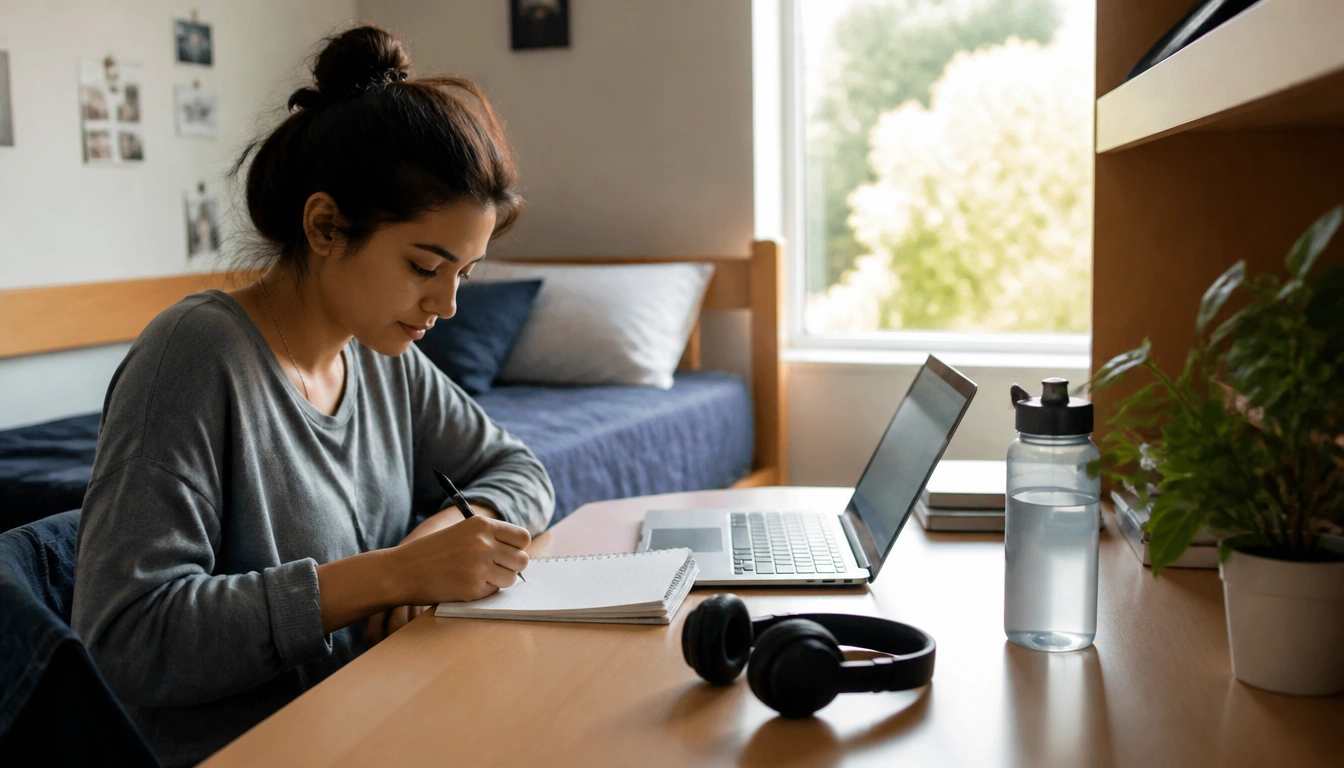
A low-pressure self-care routine for college students should be small, flexible, and easy to repeat. Instead of trying to build a perfect wellness plan, focus on a few anchors: a consistent wake window, short movement breaks, a brief reset for stress, regular meals, and a way to unwind before sleep. If your routine starts feeling like another assignment, it needs to get simpler—not stricter.
Key Takeaways
- Use anchors, not a rigid schedule: keep a consistent wake window, meals, and a short wind-down rather than trying to control every hour.
- During midterms and finals, shrink self-care to the essentials—sleep, food, hydration, basic hygiene, and a few minutes of recovery.
- For ADHD or executive dysfunction, low-friction tools like visual cues, body-doubling, and a 5-minute brain dump are often more realistic than planner-heavy systems.
- Introverted students may need more solitude than socializing to recharge; self-care should fit your energy pattern, not an idealized college lifestyle.
- If stress is causing ongoing sleep problems, hopelessness, loss of interest, or major changes in appetite or concentration, it is time to seek counseling or urgent help.
Why low-pressure self-care matters in college
College life can stack stress from every direction: exams, deadlines, money pressure, noisy living spaces, social expectations, and irregular sleep. A routine that looks impressive on paper can become one more demand on a tired brain. That is why low-pressure self-care for college students works better than an all-or-nothing approach.
Public health and college mental health organizations such as the Jed Foundation and academic health programs consistently emphasize practical, repeatable habits over dramatic lifestyle makeovers. The goal is not to “optimize” your life. It is to give your nervous system enough predictability to recover between classes, work shifts, and study sessions.
Self-care also matters because stress is not only emotional. It can affect focus, sleep, appetite, energy, and motivation. When those pieces start sliding, students often respond by trying harder and sleeping less, which can make the cycle worse. A low-pressure routine interrupts that pattern early, before burnout becomes the default.
The stress-burnout cycle in student life
Stress in college often follows a familiar loop. A student gets overwhelmed, skips meals, stays up late, scrolls to decompress, wakes up tired, and then needs even more caffeine and effort to get through the next day. That cycle can make ordinary tasks feel heavier and can reduce the mental flexibility needed for studying.
Research summarized by academic health institutions notes that routines help because they lower decision fatigue. When the brain knows what to expect, it spends less energy figuring out the next move. That does not mean every day should look the same. It means having a few reliable cues that keep your system grounded when the week gets chaotic.
This is also why perfection can backfire. If your self-care plan only works on calm weeks, it is not a supportive system. It is a fragile one. A useful routine should survive a rough class schedule, an exam week, or a night when you simply do not have the bandwidth to do everything “right.”
Build a routine around anchors, not perfection
An anchor is a stable point you can return to even when the rest of your day shifts. For students, anchors are more useful than long to-do lists. A routine built on anchors asks a simple question: what are the few habits that help my mind and body feel less scrambled?
Three anchors matter most for many students: sleep timing, movement, and brief mental resets. You do not need an elaborate morning routine or a full wellness schedule. You need repeatable cues that tell your brain when to wake up, when to move, and when to step back from overload.
A practical anchor-based routine might look like this: wake around roughly the same time each day, get daylight soon after waking, eat at fairly regular times, walk between classes when possible, and create a short screen-free wind-down at night. That is enough to make a difference for many students without turning self-care into a second major.
Sleep, movement, and mindfulness anchors that fit real student life
Sleep anchor: You do not need a perfect bedtime to support sleep. A steadier wake window is often more realistic for students with classes, work, or late study sessions. Morning light, regular meals, and a digital sunset before bed can help set your body clock. If your schedule shifts, protect the wake window first and let the bedtime adjust as needed.
Movement anchor: Aim for the smallest amount of movement you can repeat. A 10-minute walk, a lap across campus, stretching between lectures, or taking the stairs all count. According to academic and public health guidance, brief movement can support mood and stress relief, especially when it is easier to keep doing it than to abandon it after one missed workout.
Mindfulness anchor: Mindfulness does not need to mean a long meditation session. A short breathing reset before an exam, a two-minute screen break, or a five-minute brain dump can lower the sense of mental clutter. If sitting quietly feels frustrating, try walking slowly, noticing your surroundings, or pairing breathing with a simple routine like filling a water bottle.
If you want a rule of thumb, keep it small enough that you are likely to do it on an average Tuesday, not just on a highly motivated day. Consistency matters more than intensity.
How to scale self-care for midterms, finals, ADHD, and low social battery
During midterms or finals week, self-care should shrink to bare essentials. That means fewer “shoulds,” not more. Focus on what keeps you functional: sleep when possible, eat something regular, drink water, keep basic hygiene, and build in a few short recovery moments. The purpose is to protect your energy, not to maintain a full routine.
Students with ADHD or executive dysfunction often need systems that reduce friction. Planner-heavy routines can feel like another task to manage. Lower-pressure alternatives include visual reminders, setting clothes or supplies out the night before, using a timer to start tasks, body-doubling with a friend or study group, and using self-compassion when the plan goes off track. If a habit depends on perfect organization, it may be too complicated for a stressful week.
Introverted and extroverted students may also need different kinds of recovery. Extroverts may feel better after supportive connection, conversation, or a study group. Introverts may need quiet, solitude, or time away from stimulation to feel restored. Socializing is not automatically restorative, and solitude is not automatically isolating. The useful question is: does this leave me more regulated, or more depleted?
For students with low social battery, self-care may mean saying no to an extra outing, taking a solo walk, or choosing a quiet meal instead of a crowded one. That is not withdrawal from life. It is energy management.
Low-cost, low-time self-care ideas students can actually keep
Affordable self-care is usually about reducing strain, not buying products. A water bottle at your desk, a snack you can keep in your bag, a short stretch between classes, and a five-minute reset before bed often help more than expensive routines you cannot maintain.
Here are a few ideas that fit into student life without much planning:
- Keep one reusable water bottle visible where you study.
- Use a five-minute brain dump at night to unload tomorrow’s tasks.
- Take a short walk after class instead of scrolling immediately.
- Set a “digital sunset” by dimming screens or stepping away from social media before sleep.
- Use body-doubling for chores, reading, or starting an assignment.
- Choose regular, simple meals when possible rather than trying to cook perfectly.
These habits work best because they lower effort. They do not require special equipment, a gym membership, or a lot of free time. They also fit the reality that many students are already making constant decisions. The fewer decisions a habit requires, the more likely it is to survive a busy week.
Common mistakes that make self-care feel stressful
One common mistake is treating self-care like a performance. If your routine is full of rules, you may start judging yourself for missing one piece, which defeats the purpose. A better approach is to think in ranges: some care is better than none, and a smaller version still counts.
Another mistake is assuming that more effort always means better self-care. A long workout, a full cleaning session, or a complicated morning routine can be useful sometimes, but they are not required. When stress is high, the routine should get simpler, not more demanding.
Students also get stuck when they copy someone else’s routine without checking whether it fits their schedule, personality, or energy. A friend’s 6 a.m. gym habit may be motivating for them and draining for you. Your routine should reflect your actual life, including your classes, commute, budget, and sleep pattern.
Finally, many students feel guilty for resting. But rest is not laziness when your brain is overloaded. It is one of the things that helps learning, attention, and emotional steadiness return. If resting makes you feel guilty, start with very small breaks that feel easier to accept, then build from there.
When self-care is not enough and you should seek help
Self-care can support stress management, but it is not a replacement for counseling or medical care. If stress is lasting, getting worse, or interfering with daily functioning, outside support is appropriate. That includes counseling through a campus health center, a community clinician, or a telehealth service.
Look for signs that go beyond normal academic pressure: persistent hopelessness, loss of interest in things you usually enjoy, major sleep or appetite changes, constant irritability, trouble concentrating that does not improve with rest, or physical symptoms that keep returning. If these symptoms last for two weeks or more, or if they are disrupting school and relationships, it is time to reach out.
Get urgent help right away if you are thinking about self-harm, suicide, or feeling unsafe. Emergency services, campus crisis support, or a 24/7 crisis line can help you get immediate support. Reaching out early is not overreacting. It is a reasonable response when stress has moved past what self-care can manage alone.
Frequently Asked Questions
What does a realistic self-care routine look like during midterms or finals week?
It should get smaller, not more ambitious. Focus on a few basics: sleep as best you can, regular meals, hydration, brief movement, and a short reset for stress. During exam weeks, self-care is about maintaining function and preventing burnout, not following a perfect routine.
How can I build self-care habits when I have very little time, energy, or money?
Choose habits that are nearly frictionless: keep water nearby, take a 10-minute walk, do a five-minute brain dump, stretch between study sessions, and use a short digital wind-down before bed. Low-cost self-care works best when it is easy enough to repeat on your busiest days.
What are the best low-effort self-care habits for college students with ADHD or executive dysfunction?
Visual cues, body-doubling, timers, and keeping steps very small usually work better than complex planner systems. Try putting essentials where you can see them, starting with a two-minute task, and using self-compassion if the plan changes. The goal is consistency, not perfection.
How do I know when stress is more than burnout and I should seek counseling?
If you have ongoing hopelessness, loss of interest, major changes in sleep or appetite, serious trouble concentrating, or symptoms that last for two weeks or more, it is a good time to seek counseling. If you have thoughts of self-harm or suicide, get urgent help immediately.
How can introverted students create a routine that restores energy without forcing socializing?
Build in solitude on purpose. A quiet walk, reading alone, headphones, a low-stimulation meal, or time away from group chats may be more restorative than a social plan. Introversion is not a problem to fix; it is a cue to choose recovery that matches your energy needs.
The Bottom Line
A good college self-care routine should feel lighter than the stress it is meant to support. The most useful habits are usually small: steady wake times, daylight, movement, brief breathing or journaling breaks, regular meals, and a low-stimulation wind-down before sleep.
When pressure rises, simplify your routine instead of abandoning it. If you have ADHD, low energy, or a packed week, use visual cues, body-doubling, and bare-minimum habits that are easier to repeat. If stress becomes persistent or starts affecting sleep, mood, or safety, get counseling or urgent help.
You do not need a perfect wellness plan to protect your mental health in college. You need a routine that is realistic enough to keep using when life gets messy.
Medical disclaimer
Medical disclaimer: This content is for educational and informational purposes only and is not a substitute for professional medical advice, diagnosis, or treatment. Dietary needs and supplement suitability vary by individual.
Sources
- Academic Research Institution — purdueglobal.edu. Accessed November 2026.
- Academic Research Institution — uams.edu. Accessed November 2026.
- jedfoundation.org — jedfoundation.org. Accessed November 2026.
