
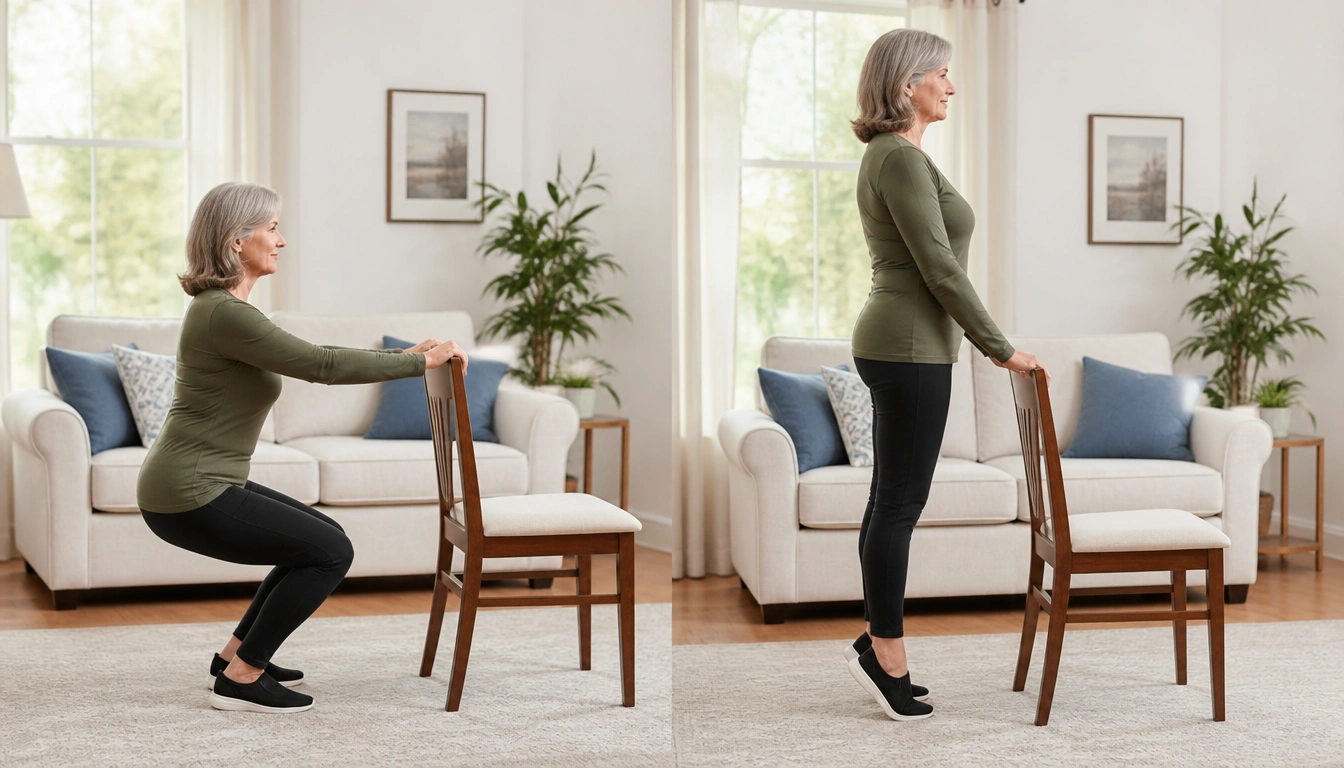
The best no-equipment leg workout for adults over 50 usually includes chair squats, side-leg raises, heel raises, and hamstring curls. Done with good form, these movements can help maintain strength, balance, and everyday function at home. Start with a stable chair or counter for support, keep the effort moderate, and build up gradually rather than forcing depth or speed.
Key Takeaways
- Lower-body training after 50 supports chair rises, stairs, balance, and fall recovery—not just muscle size.
- A practical starting point is at least 2 non-consecutive days per week, using 1 to 3 sets of 10 to 15 reps.
- Make exercises easier with a higher chair, lighter fingertip support, slower tempo, or a smaller range of motion.
- If you have knee or hip osteoarthritis, joint-friendly adjustments are often appropriate as long as the movement stays pain-free.
- Protein, hydration, and attaching the workout to an existing habit can improve recovery and make the routine easier to repeat.
Why lower-body strength matters after 50
After 50, the body naturally becomes less efficient at maintaining muscle mass and strength. That matters because the legs do a lot of daily work: standing up from a chair, climbing stairs, carrying groceries, stepping over curbs, and catching yourself if you trip. A no-equipment leg workout is useful because it gives the quadriceps, hamstrings, glutes, and calves a regular reason to stay active.
Lower-body training is not only about strength. It also supports power, which is the ability to produce force quickly. Power is what helps you rise from a low seat without “rocking” several times, move up stairs with control, and react more quickly if you lose balance. The CDC and the American College of Sports Medicine both support strength work as part of healthy aging, along with balance and other movement habits.
Set up your space before you start. Use a sturdy, non-sliding chair, counter, or wall. Clear the floor of rugs, cords, pet toys, and clutter. Wear shoes if that helps you feel steadier, and make sure you have enough room to move without reaching around furniture. The goal is a safe area you can return to regularly, not a perfect gym setup.
The core routine: chair squats, side-leg raises, heel raises, and hamstring curls
These four moves cover the main jobs your lower body needs for daily life. They are simple, but when done consistently they train strength, balance, and control. Move slowly enough to stay organized, and stop each rep before your form gets sloppy.
Chair squats
Sit near the front of a sturdy chair with your feet about hip-width apart. Lean your torso slightly forward, press through your feet, and stand up. Then lower yourself back down with control until you lightly touch the chair seat. If needed, use your hands on your thighs to help just a little. This movement is one of the most useful home exercises for getting in and out of chairs with less effort.
Side-leg raises
Stand tall behind a counter or chair and hold on lightly. Keep your toes pointing forward and lift one leg out to the side without leaning your trunk. This works the muscles that help stabilize your pelvis when you walk. If the movement feels awkward, reduce the height of the lift and focus on smooth control.
Heel raises
Stand facing a counter or wall and rise onto the balls of your feet, then lower slowly. Calf strength helps with walking, pushing off, and climbing stairs. If you feel steady, you can later try one leg at a time, but two-leg heel raises are a smart starting point for most people.
Hamstring curls
Hold a chair or counter lightly, shift weight onto one leg, and bend the other knee so the heel moves back toward your glutes. Keep your knees close together and your torso upright. This targets the back of the thigh, which supports walking mechanics and helps balance the front-of-thigh work from squats.
How to choose the right difficulty level
A good home leg workout should feel challenging but controlled. You should finish a set feeling like you could do a few more reps with good technique. If you are straining, holding your breath, or losing alignment, the exercise is probably too hard for your current level.
There are four easy ways to adjust difficulty without equipment. First, change the range of motion: squat to a higher chair, lift the leg a little less, or heel raise only as high as comfortable. Second, adjust the tempo: lower more slowly for more control, or move a little faster only if the motion stays smooth. Third, change the support: use two hands, one hand, a fingertip touch, or no support as your balance improves. Fourth, modify rest: take longer breaks if you need them.
If you are new to exercise, it is better to start easier and succeed than to start too hard and avoid the routine later. A steady, repeatable workout usually beats a perfect one that you dread doing.
How to program the workout
The CDC and ACSM recommend muscle-strengthening activity on at least 2 non-consecutive days per week. For older beginners, a practical starting point is 1 to 3 sets of 10 to 15 repetitions for each exercise. That gives you enough practice to build strength without needing elaborate equipment or a long workout.
A simple session might include chair squats, side-leg raises, heel raises, and hamstring curls. You can do one set of each exercise at first, then add a second set when the first feels manageable. Later, add a third set or make the motion slightly harder by lowering the chair height, slowing the lowering phase, or using less support.
Progress should be gradual. You do not need to chase fatigue every workout. Instead, look for small signs of improvement: easier chair stands, steadier single-leg balance, less reliance on your hands, or better control on stairs. Those are all signs that your routine is doing useful work.
If your schedule is inconsistent, attach the workout to an existing routine. For example, do the exercises after your morning coffee, after walking the dog, or before your evening shower. Habit cues often matter more than motivation.
Joint-friendly modifications for knee, hip, or balance limitations
Many adults with knee or hip osteoarthritis can still benefit from lower-body strengthening. In fact, stronger supporting muscles may reduce how hard the joints have to work during daily movement. The key is to keep the range and effort within what feels safe and pain-free.
If knees bother you, use a higher chair for squats so you do not sink too low. Keep your shins more upright and let your hips move back slightly. If hips feel sensitive, reduce the depth of the squat or do a smaller side-leg raise. If balance is limited, stand near a wall, counter, or sturdy chair and keep your fingertips close for support.
For some people, slower movement helps more than fewer exercises. A controlled chair stand or a smaller heel raise can be a better choice than a larger motion that causes discomfort. The goal is not to “push through” joint pain. The goal is to move often enough that the legs stay useful, without aggravating the joint.
If pain is sharp, worsening, or feels unstable, stop and reassess. Pain-free modification is different from forcing through symptoms.
Use the routine for power and daily movement
Strength is useful, but power is what makes everyday movement feel easier. That is why the way you perform the exercises matters. When you stand from a chair, for example, you are not just building muscle size; you are training the ability to produce force quickly enough to rise smoothly and confidently.
You can emphasize power safely by using a controlled but purposeful standing phase and a slower lowering phase. For a chair squat, stand up with intention, then sit back down under control. For heel raises, rise smoothly and lower with control. This helps train the muscles and the nervous system together, which is important for balance and quick reactions.
Functional movement also means practicing positions that resemble daily life. Chair squats mimic standing from furniture. Heel raises help with push-off during walking. Side-leg raises support side-to-side stability. Hamstring curls help the back of the legs do their share of the work. Together, they build a more capable lower body without equipment.
If your goal is independence, focus on how the exercise carries over to your life. Can you get up from a chair with less effort? Do stairs feel smoother? Are you more confident walking outdoors? Those are meaningful signs of progress.
Food-first and habit-first strategies to support recovery
Exercise works best when the rest of your day supports it. A food-first approach does not mean a special diet. It means giving your muscles the raw materials they need to recover and adapt. Protein is especially important, and spreading protein across meals can be more practical than trying to “catch up” later in the day.
Hydration also matters. Being well hydrated can help you feel less sluggish during exercise and may make movement feel smoother. Water is a simple place to start, especially if you train at home and tend to forget to drink between meals.
For adherence, make the workout easy to start. Keep your chair in place, leave enough floor space open, and tie the routine to a reliable cue. That might be after breakfast, before lunch, or during a regular TV break. The more automatic the setup becomes, the less willpower you need.
Try to make the routine feel repeatable, not punitive. If the workout is too long or too complicated, shorten it. Consistency over weeks matters far more than a single hard session.
Warning signs, contraindications, and when to stop
Some people should get medical guidance before starting a new strength routine, especially if they have known heart disease, severe osteoporosis, uncontrolled high blood pressure, recent surgery, or an unstable joint condition. A physical therapist can also help if you are recovering from injury or are unsure how to modify safely.
Stop exercising right away and seek medical help if you have chest pain, severe shortness of breath, dizziness, lightheadedness, faintness, or a sudden change in how you feel. Also stop if you get sharp, localized pain in a joint or bone, or if pain continues to climb instead of settling after you modify the movement.
It is normal to feel mild muscle effort or a little fatigue. It is not normal to feel unstable, faint, or sharply painful. If you are unsure whether a symptom is safe, pause the workout and ask a healthcare professional. Safe training should help you function better, not leave you wondering whether you have crossed a line.
Frequently Asked Questions
How many days per week should adults over 50 do leg strength exercises?
A practical target is at least 2 non-consecutive days per week. That gives the muscles time to recover while still providing regular stimulus for strength, balance, and mobility. You can do more if you tolerate it well, but starting with two days is a solid baseline.
How many sets and reps are appropriate for older beginners?
A common starting point is 1 to 3 sets of 10 to 15 repetitions per exercise. That range is widely used for older adults beginning or maintaining a routine. If you are not ready for that yet, begin with fewer reps and build up gradually.
How can I make bodyweight leg exercises easier if I have knee or hip pain?
Use a higher chair, reduce how far you squat, hold a counter for more support, and slow the motion down. If the movement is still painful, shorten the range further or choose a smaller, pain-free version. The exercise should feel manageable, not forced.
What kind of chair or support is safest for balance during leg exercises?
Use a sturdy, non-sliding chair, counter, or wall that will not tip or roll. Avoid furniture with wheels, soft cushions, or anything lightweight that could move when you press on it. If you are unsure, test the support before starting and keep one hand close.
When should I stop exercising and get medical advice?
Stop right away if you have chest pain, severe shortness of breath, dizziness, faintness, or sharp joint or bone pain. Also get advice if a movement consistently worsens pain, makes you feel unstable, or causes symptoms that do not settle after you stop.
The Bottom Line
A no-equipment leg workout after 50 can be simple and effective. Chair squats, side-leg raises, heel raises, and hamstring curls cover strength, balance, and the kind of power you need for stairs, standing up, and steady walking.
Start with safe support, a comfortable range of motion, and a moderate effort level. Build slowly, track small improvements, and use joint-friendly modifications when needed. If symptoms are sharp, severe, or unusual, stop and get medical guidance.
Medical disclaimer
Medical disclaimer: This content is for educational and informational purposes only and is not a substitute for professional medical advice, diagnosis, or treatment. Dietary needs and supplement suitability vary by individual.
Sources
- Centers for Disease Control and Prevention (CDC) — cdc.gov. Accessed October 2026.
- Centers for Disease Control and Prevention (CDC) — cdc.gov. Accessed October 2026.
- National Institutes of Health (NIH) — nih.gov. Accessed October 2026.
- American College of Sports Medicine (ACSM) — acsm.org. Accessed October 2026.
- American College of Sports Medicine (ACSM) — acsm.org. Accessed October 2026.
