
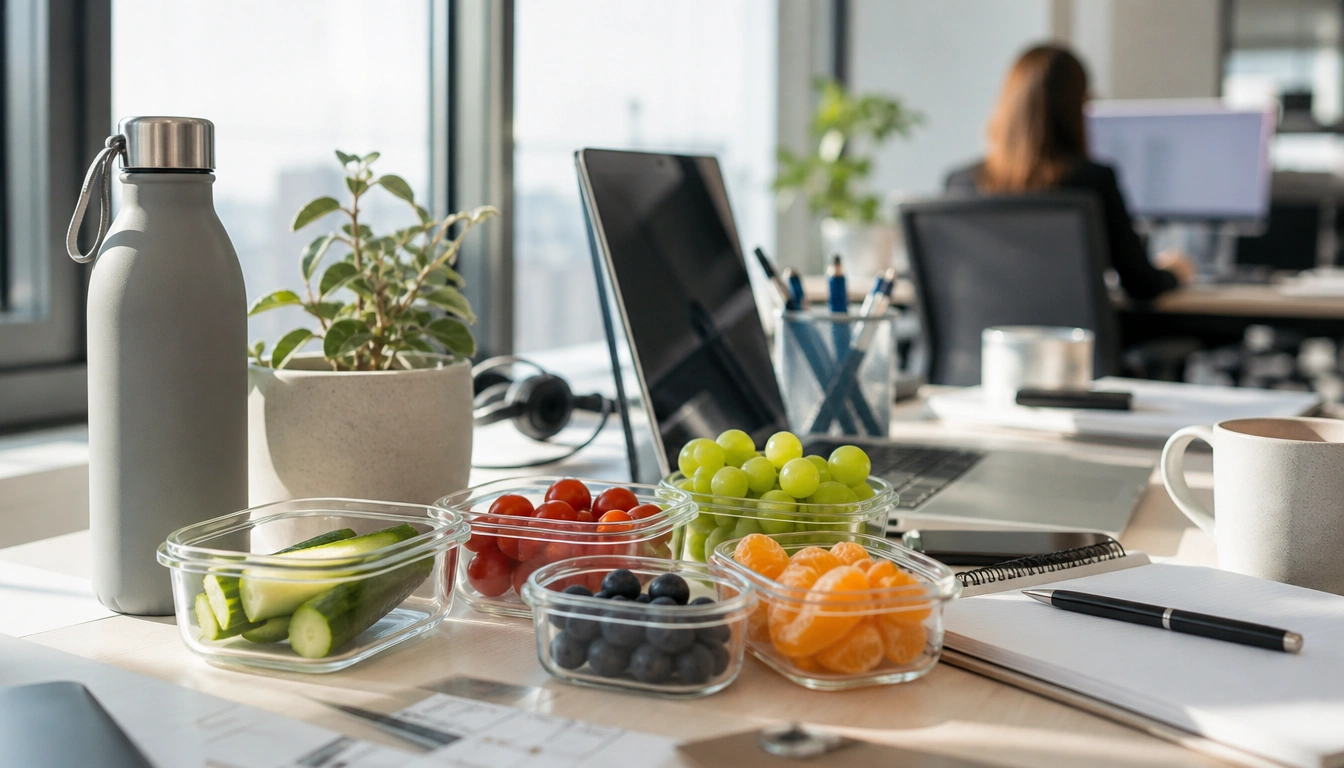
The easiest desk-friendly hydration foods are water-rich fruits and vegetables such as cucumbers, cherry tomatoes, bell pepper strips, grapes, berries, oranges, and melon. They can help support fluid intake during the workday, but they are a supplement to drinking water, not a full replacement. Food typically contributes about one-fifth of daily water intake, so the best approach is to combine hydration foods with regular sips of plain water.
Key Takeaways
- Water-rich foods can add meaningful fluid during long meetings, but they do not replace drinking water entirely.
- Cucumbers, cherry tomatoes, bell pepper strips, grapes, berries, oranges, and melon are practical office-friendly choices.
- Use hydration foods in real work moments: pre-meeting snacks, lunch add-ons, afternoon pick-me-ups, and broth-based lunches.
- If you suddenly increase raw fruits and vegetables, expect possible bloating or gas at first; build portions gradually.
- People with kidney disease, heart failure, or prescribed fluid limits should get individualized guidance instead of using generic hydration advice.
Why busy professionals miss hydration during the workday
Hydration often slips because workdays are built around attention, not body signals. Back-to-back meetings, long screen sessions, and a packed calendar can make it easy to forget to drink until you already feel thirsty, headachy, or mentally sluggish. Many professionals also avoid drinking too much because they do not want frequent bathroom breaks during meetings or commutes.
That pattern matters because even mild dehydration can affect focus, mood, and energy. Public health guidance and clinical nutrition sources describe water as essential for circulation, temperature regulation, nutrient transport, and normal brain function. In practice, the problem is rarely one big lapse. It is a series of small misses: skipping breakfast, relying on dry snacks, working through lunch, and realizing late in the afternoon that the only fluid all day was coffee.
That is where hydration foods can help. They are not a replacement for water, but they are a practical way to add fluid when drinking more feels inconvenient.
How food contributes to hydration and why it matters
Food is a real part of daily hydration. Public health guidance recognizes that about 20% of total water intake usually comes from meals and snacks. For busy adults, that means the right foods can support hydration even when a bottle of water is not always in hand.
Water-rich foods are especially useful because they deliver moisture in a form the body can absorb gradually, often alongside fiber, potassium, vitamin C, and other nutrients. That combination can make them more satisfying than plain drinks alone. A bowl of fruit or a plate of vegetables may help you feel fuller, which can reduce the urge to reach for salty, dry convenience snacks that are easy to eat but do little for fluid intake.
This does not mean food should carry the whole hydration load. Drinking plain water still does the heavy lifting for most adults. The practical advantage of hydration foods is that they make it easier to close the gap during a normal workday, especially when your schedule does not leave room for repeated trips to the kitchen or break room.
Best simple hydration foods for a desk or office environment
For office use, the best hydration foods are low mess, low odor, easy to portion, and safe to keep in a lunch bag or shared fridge. The goal is not culinary creativity. The goal is convenience.
Cucumbers are one of the simplest choices. They are crisp, mild, and easy to slice ahead of time. Cherry tomatoes are equally practical because they are bite-sized and require no peeling or cooking. Bell pepper strips are another strong option: colorful, crunchy, and easy to pair with a dip if you want a more filling snack.
Grapes, berries, oranges, and melon are useful when you want something slightly sweeter. Grapes and berries are especially easy to portion into small containers. Orange segments and cubed melon work well for a refreshing snack, though melon is best when stored cold. These foods are not exotic superfoods; they are simply high-water, easy-to-pack choices that fit real work routines.
If you want a quick comparison, think in terms of office practicality: cucumbers and bell peppers are the least messy; grapes and berries are the easiest to eat fast; oranges and melon feel more like a mini-break snack; and cherry tomatoes sit in the middle, with good portability and minimal prep.
| Food | Why it works at work | Best use |
|---|---|---|
| Cucumber slices | Very high water content, mild taste, minimal odor | Desk snack, meeting buffer |
| Cherry tomatoes | Portable, no peeling, easy to portion | Midmorning or afternoon snack |
| Bell pepper strips | Crisp, colorful, good with dips | Lunch add-on, pre-meeting snack |
| Grapes | Low prep, easy to eat quickly | Between calls, desk drawer snack |
| Berries | Hydrating and lightly sweet | Breakfast, yogurt bowl, snack cup |
| Oranges | Refreshing and portable when peeled ahead | Late morning or early afternoon |
| Melon | Very water-rich and satisfying | Cold lunch side or afternoon snack |
For many professionals, the best choice is the one you will actually eat two or three times a week. A modest, repeatable routine works better than an ambitious plan that feels too fussy to maintain.
How to use hydration foods during a real workday
The easiest way to use hydration foods is to attach them to moments that already exist in your schedule.
Before a meeting: keep a small container of grapes, berries, cucumber slices, or bell pepper strips nearby. These are good when you want a light snack that will not feel heavy or leave you reaching for a drink afterward. Because they are mostly water, they can be more refreshing than crackers, pretzels, or granola bars.
At lunch: build hydration into the meal instead of treating it as a separate task. Add cucumbers, tomatoes, greens, or orange segments to a sandwich, wrap, grain bowl, or salad. If you work through lunch often, a broth-based soup is an efficient option because it contributes fluid and tends to be easier to eat quickly than a dry meal.
In the morning: a smoothie can be a useful choice if you do not feel like eating solid food early. Blend water-rich fruit such as berries or melon with yogurt or milk for a quick, drinkable breakfast. That can be especially helpful on days packed with calls, when a full sit-down meal is unrealistic.
During the afternoon slump: reach for fruit or vegetables before you reach for a second round of salty snacks. A small serving of melon, grapes, or cucumber can feel cooling and refreshing, which may help you reset without adding much cleanup or prep.
These are small shifts, but they work because they fit the rhythm of the day rather than asking you to redesign it.
Food-first hydration tips that save time and reduce cleanup
Busy professionals usually need systems, not inspiration. A few simple habits make hydration foods easier to stick with.
First, prep once and use often. Wash fruit and vegetables soon after buying them, then portion them into small containers so they are grab-and-go. Second, choose foods that tolerate desk life. Grapes, cherry tomatoes, cucumber slices, and bell pepper strips are easier to manage than items that bruise quickly or need complicated peeling. Third, keep serving sizes realistic. A small container is more likely to get eaten than a large bowl that looks like homework.
Fourth, choose low-odor foods when you share a workspace. Strong-smelling leftovers can be awkward in open offices, but cucumbers, peppers, grapes, and berries are usually unobtrusive. Fifth, pair hydration foods with items that make them more satisfying, such as yogurt, hummus, cottage cheese, or a soup at lunch. That can help you feel more nourished without relying on dry snacks alone.
Finally, remember the bathroom-break issue. If you tend to avoid water because you do not want to interrupt meetings, hydration foods can help ease the pressure by adding fluid in smaller, steadier amounts. They work best as part of a broader pattern, not as a last-minute rescue.
When hydration foods help and when plain water still matters more
Hydration foods are most useful when the barrier is convenience. If you regularly forget to drink, dislike chugging large amounts of water, or need something desk-friendly between meetings, water-rich foods can make a real difference. They also help when you want fluid without relying entirely on beverages, especially during work sessions that make frequent refills annoying.
Plain water still matters more in several situations. If you are physically active, working in heat, recovering from illness, or noticeably behind on fluids, beverages usually need to do most of the work. Water is also easier to track than food if you are trying to meet a specific fluid plan.
The practical rule is simple: use hydration foods to support the baseline, not to replace a drinking habit. A lunch with cucumbers, tomatoes, and melon may help, but it does not excuse going hours without fluids. Many adults do best with both: regular sips of water and a few water-rich foods throughout the day.
Who should use extra caution with hydration advice
Not everyone should follow generic hydration suggestions. People with advanced chronic kidney disease, heart failure, or a medically prescribed fluid restriction may need carefully individualized guidance from their healthcare team. In those situations, extra water from food may still count toward total intake, but the amount and timing should be tailored to the person.
Caution also matters if you have a condition that changes salt, potassium, or fluid balance. A food-first hydration strategy is not automatically safe just because a food is healthy in general. For example, someone who needs tighter fluid limits should not use “drink more” or “eat more hydrating foods” as a blanket rule.
For most healthy adults, gradually adding more fruits and vegetables is straightforward. Even so, a sudden jump in raw produce can lead to temporary bloating or gas, especially if your usual diet is low in fiber. Increasing portions slowly gives your digestive system time to adapt and makes the routine easier to keep.
If you have persistent thirst, dizziness, confusion, a rapid heartbeat, or trouble urinating, seek medical evaluation rather than assuming a snack fix will solve the problem.
Simple weekly prep ideas that make the habit stick
The easiest hydration routine is the one that is partly done before Monday begins. A short prep session can remove most of the friction.
Wash cucumbers, grapes, berries, and peppers after shopping, then store them in visible containers at eye level in the refrigerator. Pre-cut cucumbers and peppers into snack-sized pieces, but keep them dry enough that they stay crisp. Peel oranges ahead of time if that makes them more likely to be eaten, and portion melon into single servings so you can grab one on the way to work or to your desk.
For lunch, think in repeatable combinations rather than recipes. A sandwich plus cucumber slices. A grain bowl plus cherry tomatoes. A wrap plus berries. Soup plus fruit. These combinations are easy to rotate and require little decision-making on busy mornings.
If you work remotely, create a small “hydration shelf” in the fridge with a few go-to items so you are not tempted by less hydrating snacks. If you work in an office, keep shelf-stable options like fruit that can handle a commute, then use the shared fridge for anything that needs to stay cold. The more visible and convenient the food is, the more likely it is to become part of your workday rather than an extra task.
Frequently Asked Questions
How much hydration can food realistically provide in a day?
For most adults, food contributes about one-fifth of daily water intake. That means hydration foods can make a meaningful difference, but they work best alongside regular drinks. They are a supplement to your fluid routine, not the whole plan.
Which water-rich foods are best for office snacking?
The most practical office snacks are cucumbers, cherry tomatoes, bell pepper strips, grapes, berries, oranges, and melon. They are easy to portion, usually low odor, and simple to eat between meetings without much cleanup.
What are the easiest no-prep hydration foods to keep at work?
Grapes, cherry tomatoes, baby cucumbers, berries, and peeled orange segments are among the easiest. If you have access to a fridge, pre-cut melon also works well. The best option is the one that stays fresh and gets eaten quickly.
Can hydration foods help with afternoon fatigue and brain fog?
They may help if your afternoon slump is partly related to underhydration or a long stretch without food. Water-rich snacks can be a useful reset, especially when paired with a drink of water. They will not fix every cause of fatigue, though.
Are there any people who should not rely on hydration foods alone?
Yes. People with advanced kidney disease, heart failure, or a prescribed fluid restriction should follow individualized medical guidance. They should not assume that general hydration advice applies to them, because both fluid amount and food choices may need adjustment.
The Bottom Line
Hydration foods are a practical way to support fluid intake during a busy workday, especially when meetings, screens, and shared offices make drinking water less convenient. The best choices are simple, low-mess, and easy to keep at your desk.
Cucumbers, cherry tomatoes, bell pepper strips, grapes, berries, oranges, and melon are all useful options. Use them in the moments that already exist in your day: before meetings, at lunch, and during the afternoon slump.
Keep the larger picture in mind. Food helps, but plain water still matters, and anyone with kidney disease, heart failure, or fluid restrictions should get personalized advice. Build up raw fruit and vegetable intake gradually if your usual diet is low in fiber.
Medical disclaimer
Medical disclaimer: This content is for educational and informational purposes only and is not a substitute for professional medical advice, diagnosis, or treatment. Dietary needs and supplement suitability vary by individual.
Sources
- Centers for Disease Control and Prevention (CDC) — cdc.gov. Accessed October 2026.
- National Health Service (NHS) — www.nhs.uk. Accessed October 2026.
- National Institutes of Health (NIH) — nih.gov. Accessed October 2026.
- National Health Service (NHS) — royalberkshire.nhs.uk. Accessed October 2026.
