
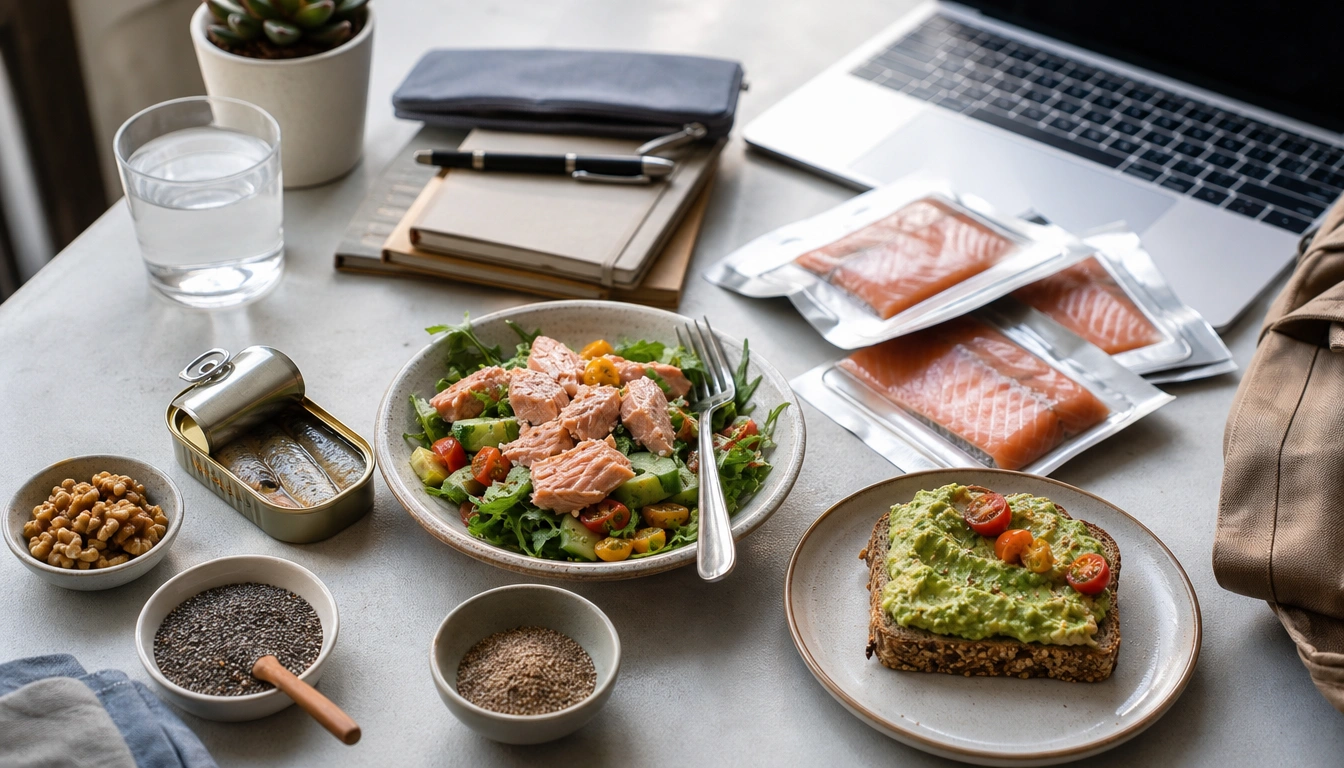
The easiest high-omega-3 foods for busy professionals are shelf-stable fish pouches or cans, frozen salmon fillets, sardines on toast, and plant options like walnuts, chia, and ground flax. If you want the biggest payoff with the least effort, build around fatty fish a couple of times a week and use plant sources as convenient add-ons. For pregnancy, lactation, or medication questions, food choices may need extra tailoring.
Key Takeaways
- Fatty fish such as salmon, sardines, mackerel, and trout give you the most direct EPA and DHA in the least volume of food.
- Shelf-stable pouches and cans are the easiest omega-3 foods for desks, carry-ons, and hotel stays because they need no cooking.
- Chia, flax, and walnuts are useful for plant-based omega-3 intake, but they do not replace marine EPA and DHA one-for-one.
- Fast meals can be as simple as sheet-pan salmon or sardine avocado toast, both of which fit into a worknight with minimal prep.
- Pregnancy and breastfeeding call for DHA-aware food choices and low-mercury fish selection, not a random jump to high-dose supplements.
Why omega-3 foods matter for busy adults
For busy professionals, omega-3 food ideas are not just about abstract nutrition points. Omega-3 fats help support heart health, are involved in normal brain and nerve function, and can be part of a food pattern that supports long-term cardiovascular health. The practical value is that these foods are compact, versatile, and often easy to keep on hand when work crowds out full meal planning.
That matters because the most common barrier is not knowledge; it is access. If lunch is whatever is available between meetings, or dinner happens in a hotel room, the best omega-3 option is the one you can realistically eat. The American Heart Association and the Dietary Guidelines for Americans both support eating fish regularly, especially fatty fish, as a practical way to bring in marine omega-3s.
For many adults, the goal is less about perfection and more about repeating a few reliable choices each week. If your routine includes two fish meals, a desk snack with walnuts, or a breakfast with chia or flax, you are already making omega-3 intake much more achievable.
EPA, DHA, and ALA explained in plain language
EPA and DHA are the omega-3 fats most closely tied to seafood. They are the forms the body uses directly, which is one reason fish and seafood are so efficient. These fats are found in salmon, sardines, mackerel, herring, trout, anchovies, and some shellfish, and they are especially useful when you want a food source that delivers meaningful omega-3s without elaborate prep.
ALA is the main plant omega-3. It appears in walnuts, chia, flax, hemp, and some plant oils. ALA is still an essential fat and belongs in the diet, but the body converts only a small amount into EPA and DHA. That is why plant foods are valuable, but not a full substitute for marine sources if your goal is to cover the whole omega-3 picture from food alone.
A practical way to think about it is this: fish gives you the ready-to-use forms, while plant foods help you build a consistent baseline. For most busy adults, that means using both rather than treating them as interchangeable.
The easiest high-omega-3 foods for packed schedules
The easiest omega-3 foods are the ones with the least friction. Start with shelf-stable seafood: salmon, sardines, mackerel, and tuna pouches or cans. These work in a desk drawer, a suitcase, or a hotel minibar and can be eaten with crackers, toast, rice cups, or a bagged salad. If you only have five minutes, they can still become a meal.
Frozen fish is the next useful option because it removes the pressure to shop daily. Pre-portioned frozen salmon fillets can go from freezer to oven with very little effort, and they often require only seasoning and a side vegetable. If you keep a bag of pre-washed greens and a microwave grain on hand, dinner becomes much easier to assemble.
For plant-based support, stock walnuts, chia seeds, and ground flaxseed. These do not need cooking and can be added to yogurt, oatmeal, smoothies, cereal, or salad. They are especially helpful when you want to increase omega-3 intake without changing your routine much.
Here is the simplest order of convenience: pouches and cans first, then frozen fish, then seeds and nuts. If you buy according to how much effort you can tolerate on your busiest day, you are more likely to actually use what you buy.
Desk drawer, office pantry, and travel-bag omega-3 staples
A practical omega-3 setup does not need a full meal-prep system. A few staples can cover most workdays. Keep single-serve fish pouches or cans in your office pantry, plus whole-grain crackers, mustard packets, olive oil packets, or plain rice cakes for a fast lunch. Add a fork, napkins, and a small container if your workplace setup is limited.
For snacks, walnuts are one of the most useful no-cook options because they travel well and do not require refrigeration. Chia packets or a small jar of ground flax can also live at your desk. Stir either into oatmeal, a smoothie, plain yogurt, or even a latte-style protein drink if that is already part of your day.
Travel works best when the foods are low mess and easy to combine. A tuna or salmon pouch, a packet of nuts, and a few single-serve seed packs can cover airport delays and hotel evenings. If you often eat in transit, choose items that do not depend on utensils or refrigeration, or bring a small cooler if your travel style allows it.
One simple rule helps here: if a food cannot survive your most chaotic day, it is not a reliable omega-3 staple for your life right now.
Under-15-minute omega-3 meals and smarter restaurant ordering
Weeknight fatigue is where omega-3 habits usually break down, so the best meals are ones that feel almost automatic. Sheet-pan salmon is a strong example: use frozen or fresh fillets, season them lightly, and bake while you open a bagged salad or microwave a vegetable and grain. That keeps the cooking window short and avoids a second round of cleanup.
Sardine avocado toast is another fast option. Mash avocado on whole-grain toast, top with sardines or anchovies, and finish with lemon or pepper. It is fast enough for a late dinner, yet it still gives you marine omega-3s, fiber, and protein. If you dislike sardines straight from the tin, try them with tomato, mustard, or a little yogurt-based sauce.
When eating out or ordering for work travel, look for grilled, baked, or broiled fish rather than fried breaded options. Salmon, trout, sardines, mackerel, and char are usually better bets than heavily processed fish dishes. If the menu is vague, ask what fish is available and how it is cooked. A fish entree with vegetables and a simple starch is often the easiest omega-3-friendly client meal.
At restaurants, the safest practical approach is not overthinking the nutrition label. Choose the fish-forward dish that is least processed, reasonably portioned, and fits the setting. That is usually enough to keep the habit alive without turning dinner into a research project.
Plant-based omega-3 strategies and the conversion limit
For people who eat little or no seafood, plant omega-3s still matter. Chia seeds, ground flaxseed, walnuts, and hemp seeds are the most practical options because they are easy to store and easy to add to foods you already eat. They work well in oatmeal, smoothies, yogurt, chia pudding, salads, cereal, and baked goods.
The limitation is that ALA from plants does not convert efficiently to EPA and DHA. That is the piece many people miss. A plant-based pattern can still include omega-3s, but the body does not turn those plant fats into marine omega-3s in a large or reliable way. So the dietary strategy is different depending on your eating pattern.
If you are vegetarian or vegan, food-first planning means making ALA-rich foods a daily habit and then deciding whether algae-derived DHA or EPA is worth discussing with a clinician or dietitian. That conversation is especially relevant during pregnancy, lactation, or if you have a specific health goal that depends on more direct DHA intake.
Among plant foods, ground flax is especially practical because it is easy to hide in meals, while walnuts are often the easiest grab-and-go snack. Chia is useful when you want something that thickens into a pudding or blends into drinks. Pick the format you are most likely to repeat.
Who needs extra caution: pregnancy, breastfeeding, mercury, and supplements
Pregnancy and breastfeeding deserve special attention because DHA is important for fetal and infant brain and eye development. The food-first idea still applies, but the fish choices matter more. The FDA and EPA advise choosing lower-mercury seafood options and avoiding high-mercury species. Lower-mercury examples commonly used in practical guidance include salmon, sardines, and canned light tuna, while shark, swordfish, king mackerel, and tilefish should be avoided.
People who are mercury-sensitive, pregnant, breastfeeding, or trying to conceive should not treat all fish as equal. The easiest approach is to lean on lower-mercury fatty fish and rotate choices instead of relying on a single species every day. This keeps omega-3 intake steady while reducing exposure to species of concern.
Supplements are a separate decision. Food is usually the safest first step because it brings omega-3s with protein, minerals, and other nutrients. High-dose fish oil is not automatically better, and the American Heart Association notes that very high supplemental intakes can create safety concerns, including bleeding risk and medication interactions. Some research also suggests high-dose marine oil may not be ideal for everyone. That means supplement choices should be individualized, especially if you take blood thinners, have a bleeding disorder, or are managing heart rhythm or triglyceride issues.
If you are unsure whether food is enough or whether a supplement is worth considering, that is a good point to ask a clinician. The decision depends on your health history, not just on a label claim.
How to build a realistic weekly omega-3 habit without tracking every gram
The easiest system is to build a repeatable weekly pattern, not a perfect daily scorecard. For many busy adults, that means aiming for two fish meals each week, then using plant sources as background support on the other days. The American Heart Association and the Dietary Guidelines for Americans support regular fish intake, and that gives you a simple framework to work from.
Use a short shopping list that matches your real schedule. Keep one or two frozen fish options in the freezer, two or three shelf-stable seafood items in the pantry, and at least one plant source such as walnuts, chia, or ground flax in daily rotation. If breakfast is rushed, seed additions can happen there. If lunch is chaotic, a fish pouch can cover it. If dinner is late, a quick fish-and-vegetable meal may be the easiest win.
It also helps to remove decision fatigue. Choose two or three default meals that you actually like, then repeat them often. That may be sardine toast, salmon with salad, or yogurt with chia and walnuts. Consistency beats novelty when the real goal is to make omega-3 intake fit a demanding life.
If your schedule changes every week, the habit should be flexible enough to move with it. The best omega-3 plan is the one you can keep while traveling, working late, and eating lunch at your desk.
Frequently Asked Questions
How much omega-3 do adults need from food each week?
A practical target from public guidance is about two servings of fish per week, especially fatty fish, which works out to roughly 8 to 12 ounces total. For plant omega-3s, the National Academy of Medicine sets adequate intake levels for ALA, but food patterns matter more than exact tracking for most busy adults.
What are the fastest no-cook omega-3 foods for the office or travel?
The fastest options are salmon, sardine, or tuna pouches and cans, plus walnuts, chia, and ground flax. These can live in a desk drawer or travel bag and be eaten with crackers, toast, yogurt, or oatmeal without a kitchen.
Which omega-3 foods are best for a plant-based diet?
The most practical plant options are chia seeds, ground flaxseed, walnuts, and hemp seeds. They supply ALA, which is useful, but the body converts only a small amount to EPA and DHA. That is why some plant-based adults also discuss algae-based DHA or EPA with a clinician.
Which fish are highest in omega-3 but lower in mercury?
Fatty fish such as salmon, sardines, trout, and herring are commonly used as higher-omega-3, lower-mercury choices. Canned light tuna is also often used in practical guidance. High-mercury species such as shark, swordfish, king mackerel, and tilefish are the ones to avoid, especially in pregnancy.
When should someone choose food over omega-3 supplements, and when is a supplement worth discussing with a clinician?
Food is the right first choice for most people because it is safer, more complete, and easier to make routine. A supplement becomes worth discussing if you are pregnant, breastfeeding, avoiding seafood entirely, taking blood thinners, have a bleeding disorder, or have a medical reason to use a prescription-strength omega-3 product.
The Bottom Line
Busy professionals do not need a complicated omega-3 plan. The easiest path is to keep a few shelf-stable seafood options, use frozen fish for fast dinners, and add walnuts, chia, or flax where they fit naturally.
If you want the most efficient food-first strategy, focus on fatty fish a couple of times per week and use plant sources as a convenient backup. That covers both marine EPA and DHA and the plant-based ALA side of the picture.
Pregnancy, breastfeeding, mercury sensitivity, and medication use can change the best choice, so those situations deserve extra care. If supplements are on the table, discuss them with a clinician instead of assuming higher doses are better.
Medical disclaimer
Medical disclaimer: This content is for educational and informational purposes only and is not a substitute for professional medical advice, diagnosis, or treatment. Dietary needs and supplement suitability vary by individual.
Sources
- Academic / Medical Research Institution — heart.org. Accessed October 2026.
- Academic Research Institution — ucdavis.edu. Accessed October 2026.
- Academic / Medical Research Institution — heart.org. Accessed October 2026.
