
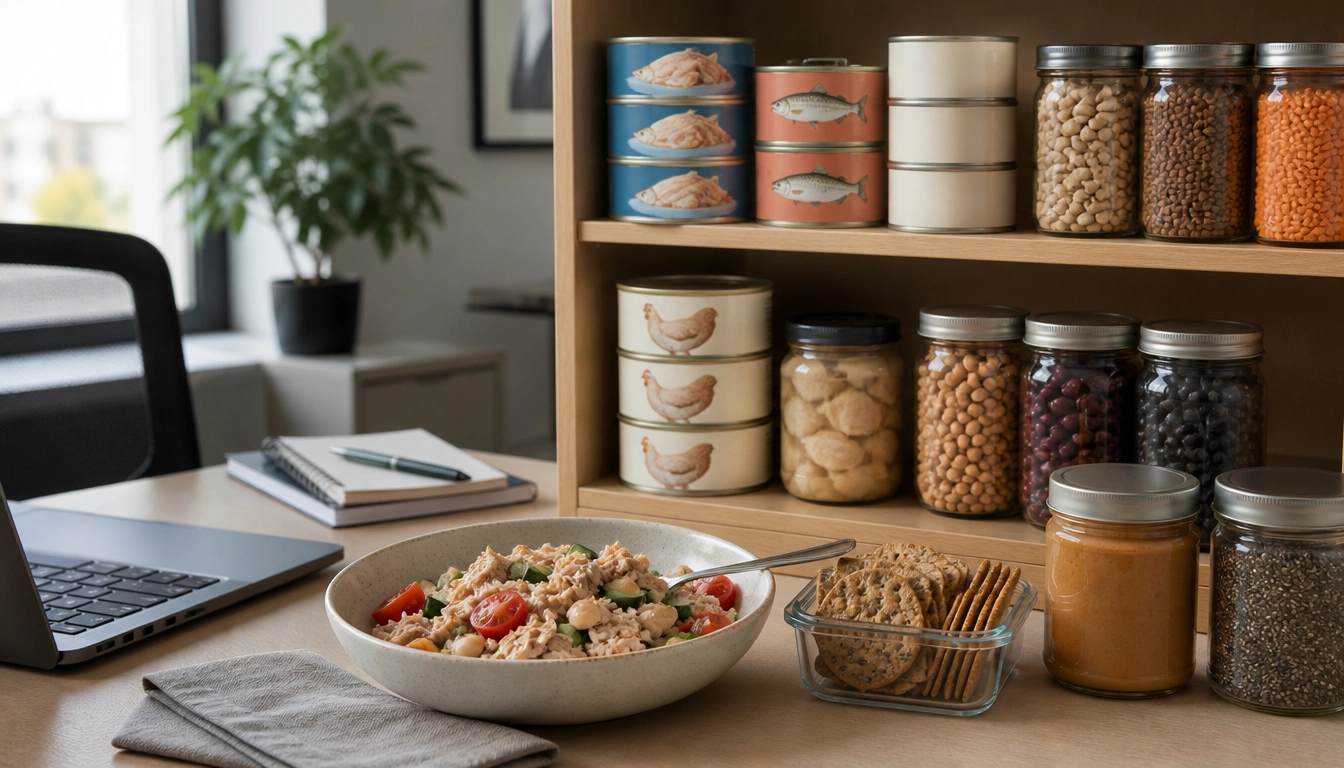
The best shelf-stable foods for fast protein are canned fish, canned beans and lentils, canned poultry, nut butters, seeds, and protein powders. These pantry staples can be turned into no-cook lunches, quick soups, wraps, and snack plates in minutes. The healthiest versions are usually low in sodium, lower in saturated fat, and high in fiber where possible.
Key Takeaways
- Busy professionals do best with pantry proteins that can become a meal fast, not just a snack.
- Plant proteins such as beans and lentils add fiber; canned fish adds protein plus omega-3 fats.
- Protein needs vary by body size, age, and activity level, with 0.8 g/kg as a baseline for healthy adults.
- Low-sodium labels, rinsing beans, and checking can integrity are simple ways to improve quality and safety.
- Opened canned foods should be refrigerated promptly and used within a few days, not left in the office drawer.
Why pantry-based protein matters for busy schedules and erratic meals
For many professionals, the problem is not knowing protein matters; it is getting enough of it when meetings, commutes, and deadlines disrupt normal meals. A pantry built around protein-rich pantry staples makes it easier to avoid skipped lunches, vending-machine substitutions, and takeout meals that are heavy on refined carbohydrates but light on staying power.
Protein tends to be more filling than a snack built mainly from crackers, sweets, or chips. That matters when the goal is to keep energy steadier through a long afternoon and reduce the chance of arriving at dinner overly hungry. Shelf-stable protein is also useful when fresh groceries are not available every few days. A few well-chosen items can cover breakfast, lunch, and emergency snacks without requiring much cooking.
The best pantry strategy is not to chase one “perfect” food. It is to keep several dependable options on hand so you can assemble a meal from what is available. That approach can help you stay consistent even when your schedule is not.
How to think about protein needs during the workweek
For healthy adults, the standard baseline protein recommendation is 0.8 grams per kilogram of body weight per day, according to U.S. dietary guidance. That is a reference point, not a one-size-fits-all target. Body size, age, and activity level all matter. Larger bodies generally need more total protein because their needs are tied to weight. Active adults and people trying to preserve lean mass during weight loss often use higher intakes, and older adults may also benefit from more protein than the minimum baseline.
Timing matters too. If all of your protein arrives in one late dinner, you may spend most of the day under-fueled. Spreading protein across meals and snacks can make it easier to feel satisfied and support muscle maintenance. That does not require a strict schedule; it just means aiming for a meaningful protein source at breakfast, lunch, and dinner, with a backup option for unusually busy days.
Research-based guidance from the USDA and dietary pattern recommendations from the Dietary Guidelines for Americans support a balanced pattern that includes a variety of protein foods, with an emphasis on nutrient-dense choices rather than ultra-processed convenience food.
Best protein-rich pantry staples by category
Canned seafood: Tuna, salmon, sardines, and similar shelf-stable fish are among the most efficient pantry proteins. They deliver a lot of protein with minimal prep, and salmon and sardines add omega-3 fats that support heart and brain health. They are especially useful when you want a meal base that can be eaten cold. Mix with mustard, olive oil, or a little yogurt if available, then serve on crackers, toast, or greens.
Legumes and pulses: Canned beans, lentils, and chickpeas are excellent for people who want protein plus fiber. That fiber helps create a more satisfying meal than protein alone. These foods are also versatile: they work in salads, soups, wraps, and grain bowls. Dried lentils are another smart pantry item because they cook quickly, but canned versions are the fastest choice when time is tight.
Canned poultry: Canned chicken or turkey gives you a fully cooked animal protein that can be opened and eaten immediately. It is practical for wraps, rice bowls, and quick soups. This category is especially helpful when you want a neutral-tasting protein that can be paired with whatever else is already in the pantry.
Nut butters and seeds: Peanut butter, almond butter, chia, hemp, and flaxseed can add protein, healthy unsaturated fats, and staying power to oats, toast, yogurt, and smoothies. They are not as protein-dense as canned fish or poultry, but they are easy to store and simple to use. Because they are calorie-dense, portion awareness matters.
Protein powders: Whey, casein, and plant-based powders can be useful when you need a concentrated option. They are not a replacement for whole foods, but they can help close a protein gap on days when meals are delayed or meetings run long. They work best as part of a broader food pattern that still includes fiber-rich and minimally processed foods.
How to choose the healthiest options
Label reading can make a big difference. For canned proteins and beans, look first at sodium, then at saturated fat, and finally at the ingredient list. Lower-sodium or no-salt-added products are usually the best place to start. If the label offers a reduced-sodium version, that is often preferable to a standard product when you rely on canned foods often.
For beans and lentils, rinsing under running water can help reduce sodium from the canning liquid. That is a simple step with a meaningful payoff when canned legumes are a regular part of your week. For canned fish and poultry, pay attention to added sauces, gravies, and flavor packets, because these can bring sodium up quickly.
From a dietary-pattern perspective, plant proteins often bring fiber and no cholesterol, while fish offers omega-3 fats. That makes a mixed pantry especially valuable. If most of your protein comes from processed meats or very salty convenience foods, the rest of the pantry should lean harder on legumes, fish, and lower-sodium options.
A useful shortcut is to ask three questions before buying: Does it provide a meaningful amount of protein? Is the sodium reasonable for an everyday food? Can it be eaten quickly without turning into a highly processed meal? If the answer is yes to all three, it is probably a good pantry candidate.
Fast ways to turn pantry staples into meals
No-cook and minimal-cook meals are the real test of a pantry. A can of tuna or salmon can become a lunch with whole-grain crackers, mustard, and a piece of fruit. Canned beans can be mixed with olive oil, pepper, and any shelf-stable vegetables you keep around, then spooned into a wrap or eaten over rice. Canned chicken can be folded into a tortilla with beans or spread on toast with a little avocado if you have it.
For desk lunches, think in templates rather than recipes. A simple high-protein office meal can include one protein source, one fiber-rich base, and one easy flavor element. For example: chickpeas plus crackers plus salsa; salmon plus whole-grain bread plus olive oil; or peanut butter plus oats plus chia seeds. The goal is not gourmet food. It is a dependable meal that is better than skipping lunch or defaulting to pastries.
Quick soups are another good option. Stir canned lentils or beans into broth, add canned chicken or fish if desired, and heat briefly. If you keep quick-cooking grains or instant oats in the pantry, they can also serve as a base for savory or sweet bowls. The benefit of this approach is flexibility: you can build a meal from pantry items in minutes, without a grocery run or a full cooking session.
For people who tend to graze at work, it can help to portion pantry proteins into ready-to-grab containers instead of leaving large packages open. That makes it easier to make a real meal out of what you have instead of endlessly snacking on lower-protein foods.
Age and health nuance for older adults and kidney disease
Older adults often need special attention to protein because muscle preservation becomes more difficult with age. Many experts encourage older adults to avoid putting all their protein into one meal. Instead, they should try to include protein across the day. That can support muscle maintenance, strength, and recovery, especially when appetite is lower or meals are smaller.
For professionals who are trying to lose weight, protein can also help with satiety and make calorie reduction feel more manageable. That said, the right amount still depends on the individual. Bigger bodies generally need more total protein, and people with higher activity levels often benefit from more than the minimum baseline.
Kidney disease changes the picture. People with chronic kidney disease or other kidney problems should not assume that “more protein is better.” Their intake may need to be individualized, sometimes substantially, based on medical status and lab values. If kidney disease is part of your history, talk with a clinician or registered dietitian before using high-protein pantry foods as a major strategy.
This is one reason pantry planning should be personalized. A shelf-stable food can be convenient and nutritious for one person while needing moderation or medical guidance for another.
Storage, safety, and food quality
Shelf stability does not mean ignore-the-label stability. Before buying or using canned food, inspect the container. Avoid cans with bulging, severe dents on seams, rust, cracking, or leaking. If a can spurts, smells off, or looks unusual when opened, discard it. These are basic food-safety checks, not optional extras.
After opening, transfer leftovers to a clean container, refrigerate promptly, and use them within a few days rather than leaving them in the office fridge indefinitely. Opened canned food should not sit at room temperature for long periods. If you keep pantry proteins at work, label the container with the date so you do not forget how long it has been there.
Portion planning helps reduce waste. Small cans and single-serve pouches are convenient for desk lunches, but larger cans may be more economical if you are cooking at home and can refrigerate leftovers safely. The best format is the one you will actually use before it spoils.
Food quality also improves when you pair protein with other nutrient-dense pantry items. Beans plus whole grains, fish plus olive oil, or nut butter plus oats will usually be more satisfying than protein alone. That combination makes the pantry more than an emergency backup; it becomes a real meal system.
Smart pantry-building strategy for professionals
A good starter pantry is simple, not huge. Aim for a short list of foods you will actually rotate. A practical core might include canned tuna or salmon, canned beans or lentils, canned chicken, peanut or almond butter, chia or hemp seeds, and one protein powder you tolerate well. Add a few complements such as whole-grain crackers, shelf-stable grains, mustard, olive oil, broth, and instant oats.
Then build a rotation system. Keep the items you use most at eye level and move older cans toward the front. Check expiration dates during a weekly reset or monthly inventory. When one category runs low, replace it before you run out. That habit prevents the pantry from drifting back toward snack foods only.
Finally, think about use cases rather than ingredients in isolation. Keep at least one option for a no-cook lunch, one for a warm meal, and one for a backup snack. If your week gets chaotic, that structure makes it much easier to keep protein intake consistent without becoming a meal-prep hobbyist.
Frequently Asked Questions
Which pantry protein staples are best for no-cook meals or desk lunches?
The easiest no-cook options are canned tuna, salmon, sardines, canned chicken, canned beans, and nut butter. These can be eaten with crackers, bread, wraps, or vegetables. Choose low-sodium versions when possible and keep single-serve portions at work if that helps you use them consistently.
How much protein do busy adults actually need each day?
The baseline recommendation for healthy adults is 0.8 grams per kilogram of body weight per day. Some people need more, including older adults, active adults, and those trying to preserve muscle during weight loss. Exact needs depend on body size, activity, and medical history.
Are plant proteins or animal proteins better for a high-protein pantry?
Both can fit well. Plant proteins such as beans, lentils, and chickpeas add fiber and are easy to mix into many meals. Animal proteins such as canned fish and poultry are convenient and often more protein-dense per serving. A mixed pantry gives you the most flexibility.
Which canned or packaged protein foods are lowest in sodium and healthiest overall?
Look for low-sodium, reduced-sodium, or no-salt-added canned beans, fish, and poultry. Rinsing canned beans can help lower sodium further. In general, the healthiest choices are those with minimal added salt, little saturated fat, and a short ingredient list.
How should older adults or people with kidney disease think differently about protein intake?
Older adults often benefit from getting protein more evenly across the day to help preserve muscle. People with kidney disease need individualized guidance because higher protein intake may not be appropriate. If you have kidney problems, ask a clinician or dietitian before changing your intake substantially.
The Bottom Line
A well-chosen pantry can make protein much easier to get on busy workdays. The most useful staples are canned fish, beans, lentils, canned poultry, nut butters, seeds, and a protein powder you actually use.
Choose foods that fit your real schedule: low-sodium when possible, easy to combine into meals, and safe to store and reopen. If a pantry item cannot become a quick lunch or dinner, it is less helpful than it looks.
The best system is a small, rotating set of dependable foods that can cover no-cook lunches, quick dinners, and backup snacks. That makes it easier to eat enough protein without relying on takeout or skipped meals.
Medical disclaimer
Medical disclaimer: This content is for educational and informational purposes only and is not a substitute for professional medical advice, diagnosis, or treatment. Dietary needs and supplement suitability vary by individual.
Sources
- U.S. Government / Health Authority — medlineplus.gov. Accessed October 2026.
- U.S. Government / Health Authority — dietaryguidelines.gov. Accessed October 2026.
- U.S. Government / Health Authority — usda.gov. Accessed October 2026.
- Academic / Medical Research Institution — heart.org. Accessed October 2026.
