
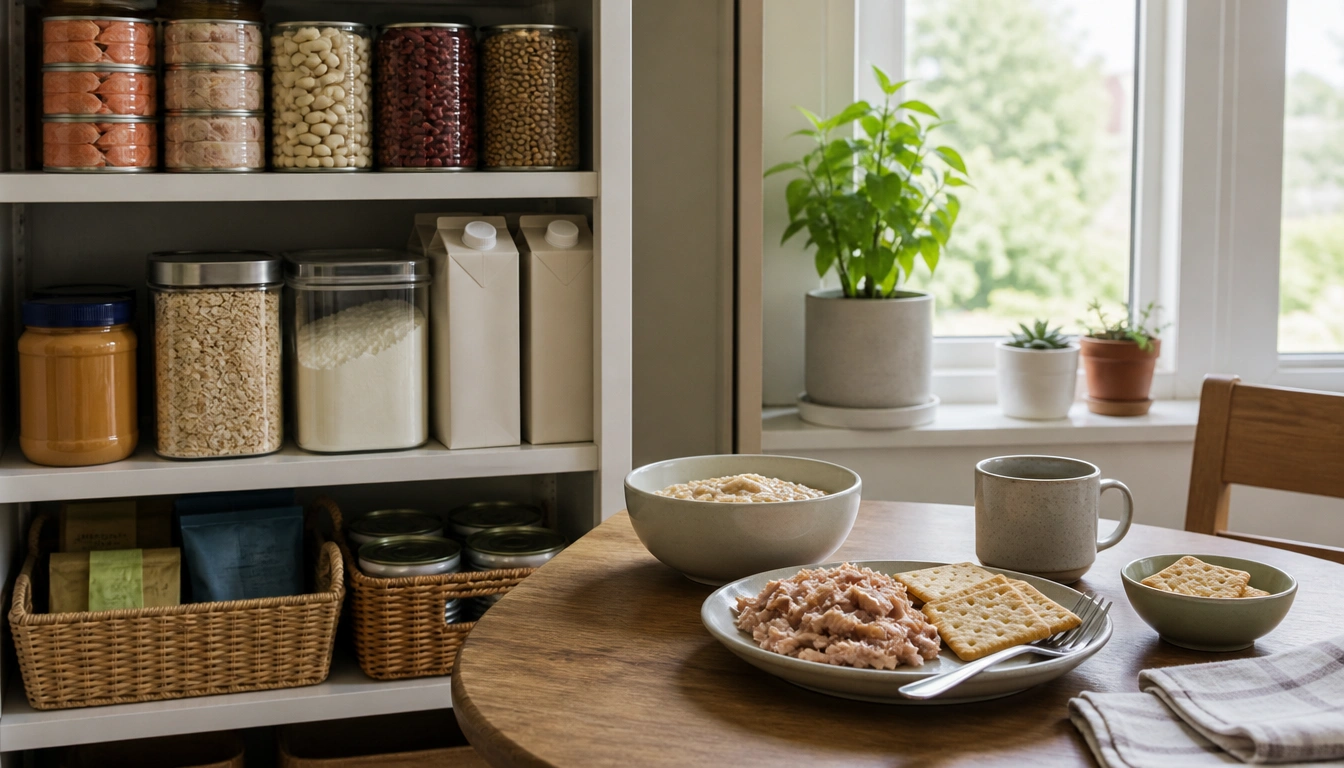
Adults over 50 can use protein-rich pantry staples such as canned seafood, beans, lentils, nut butters, nuts, seeds, oats, quinoa, shelf-stable milk, and fortified soy beverages to meet protein needs more consistently. The most practical approach is to spread protein across the day, use soft or low-prep foods, and choose shelf-stable options that fit appetite, budget, and chewing comfort.
Key Takeaways
- Older adults often need more protein per meal because aging muscles respond less efficiently to food protein, a change known as anabolic resistance.
- Shelf-stable foods help solve real barriers like spoilage, low energy for cooking, and fewer shopping trips.
- Aim to include protein at breakfast, lunch, and dinner instead of saving most of it for one large evening meal.
- Canned fish, beans, nut butters, dairy powder, oats, and fortified soy beverages can all play a role in everyday meals.
- If kidney disease is present, higher-protein advice may not apply; protein changes should be individualized.
Why protein matters more after 50, and which pantry staples help most
Adults over 50 face two common changes that make protein planning more important: muscle loss over time and anabolic resistance, which means the body does not respond to protein as strongly as it used to. The National Institute on Aging and other public health sources emphasize that preserving muscle supports strength, balance, mobility, and independence. Pantry planning helps because it removes some of the most common barriers to eating well: food spoilage, frequent shopping, and the fatigue that can make cooking feel like too much work.
For many healthy older adults, expert guidance commonly points to a higher protein intake than the basic adult RDA, often in the range of about 1.2 to 1.6 grams per kilogram of body weight per day. That does not mean every meal has to be large. It does mean that protein works better when it is spread through the day. In practice, many people do better by building each meal around a protein source rather than relying on a single high-protein dinner.
Useful pantry staples include canned fish, canned beans and lentils, nut and seed butters, nuts and seeds, oats, quinoa, powdered or shelf-stable milk, and fortified soy beverages. These foods can be stored for longer periods, used with minimal prep, and adapted to softer textures when chewing is difficult.
Canned seafood that is easy to keep and easy to use
Canned tuna, salmon, and sardines are among the most efficient protein-rich pantry foods for older adults. They are shelf-stable, ready to eat, and typically require no more than opening a can and pairing the contents with another food. That makes them useful for people who get tired of cooking or want a meal with very little cleanup.
Tuna works well in sandwiches, mixed with a little olive oil or yogurt, or served on whole-grain crackers. Salmon brings similar convenience and has the added benefit of being soft and easy to chew. Sardines are especially practical for people who need smaller portions with a strong nutrient payoff. Canned salmon with bones can also contribute calcium, which may be helpful when meals are otherwise light.
For older adults with dental issues or a sensitive jaw, these foods often work better than dry meats because they are naturally softer. If sodium is a concern, comparing labels and choosing lower-sodium versions can help. When appetite is smaller, a few bites of fish on crackers, toast, or a small salad may be easier than trying to finish a large plate.
Beans, lentils, and chickpeas for budget-friendly protein
Beans, lentils, and chickpeas are some of the most affordable pantry proteins, and they bring fiber, iron, and other nutrients along with protein. Canned versions are the easiest starting point because they are already cooked. Dried versions can be economical too, but they require more planning, soaking, and cooking.
These foods are most useful when they are folded into familiar meals. Stir beans into canned soup, mash chickpeas into a sandwich filling, or add lentils to pasta sauce, chili, or a rice bowl. If a person is not used to eating much fiber, smaller portions work best at first. Increasing beans too quickly can lead to gas, bloating, or abdominal discomfort, so gradual changes are often more successful than a sudden overhaul.
For people with smaller appetites, beans can be combined with other protein foods instead of serving as the only source. For example, a bowl of soup may include lentils plus shredded chicken or canned fish, or a bean salad may be paired with yogurt or cheese. That can improve both protein density and meal satisfaction.
Nut butters, nuts, and seeds in soft, simple meals
Nut butters are helpful because they add protein and calories in a small volume, which matters when appetite is low. Peanut butter, almond butter, and seed butters can be spread on toast, stirred into oatmeal, blended into smoothies, or spooned onto crackers. They also work well in recipes that need softness, such as warm cereal or a yogurt bowl.
Whole nuts are portable and convenient, but they may not suit everyone. People with dental problems, swallowing concerns, or jaw pain often do better with chopped nuts, nut butters, or ground seeds. Chia seeds and ground flaxseed are easy to mix into soft foods, but they are best used as part of a broader protein pattern rather than as a main protein source on their own.
Because nut and seed foods are calorie dense, they can help people who are under-eating. At the same time, they should be portioned in a way that matches appetite and digestive comfort. A spoonful added to a meal is often more useful than trying to force a large snack.
Whole grains that contribute protein and pair well with other staples
Whole grains are not usually the highest-protein foods in the pantry, but some contribute meaningfully when they are used regularly. Oats, quinoa, and farro are useful because they add texture, energy, and some protein while pairing well with other staples. They are especially practical when meals need to be soft, warm, or easy to digest.
Oatmeal made with milk or fortified soy beverage can become a more protein-rich breakfast without requiring extra cooking skill. Quinoa works well as a base for bean bowls, canned salmon bowls, or vegetable soups. Farro can be used in grain salads or warm bowls, though it is chewier and may not suit everyone with dental limitations.
The main idea is not to treat grains as the only protein source. Instead, use them to support a meal that already includes beans, fish, dairy, or soy. That approach improves nutrition while keeping meals familiar and affordable.
Shelf-stable milk and fortified plant beverages for easier protein
Powdered milk, shelf-stable milk, and fortified soy beverages can add protein without requiring a large meal. This matters for adults who struggle to eat enough at once. Liquids are often easier to consume than solid foods when appetite is low, chewing is hard, or a person feels full quickly.
Powdered milk can be stirred into oatmeal, mashed potatoes, soups, sauces, or baked dishes to increase protein density without dramatically changing taste or texture. Shelf-stable milk cartons are useful for emergency food storage or for households that do not want to run out of milk between grocery trips. Fortified soy beverages are the plant-based option that most closely matches dairy milk for protein content, making them especially useful in breakfast routines.
If a person is trying to raise protein intake without increasing meal size, beverages and powdered dairy are often more practical than adding another snack. They can also be used in combination with oats, cereal, smoothies, and soup for a quiet protein boost.
How to build a pantry protein routine around real-life barriers
The best pantry plan is the one that fits daily life. For a small appetite, aim for modest protein at each eating time instead of one large, tiring meal. Breakfast might be oatmeal made with milk and peanut butter; lunch might be soup with beans and crackers; dinner might be canned salmon with soft bread or quinoa and vegetables. This pattern supports protein spread across the day, which is often easier for older adults to manage than one heavy serving.
For chewing problems, choose softer foods first: canned fish, bean soups, smooth nut butters, yogurt if stored on hand, powdered milk mixed into foods, and well-cooked grains. For a tight budget, build around canned beans, oats, peanut butter, canned tuna, and milk powder. For low-prep days, keep a few no-cook combinations ready, such as sardines on crackers, nut butter on toast, or beans stirred into soup. These are not fancy meals, but they are repeatable.
It also helps to keep a short list of pantry meals that can be made without much thinking. Examples include tuna with whole-grain crackers, oatmeal with milk powder and seeds, chickpea salad on toast, lentil soup with extra dairy, and quinoa topped with canned salmon. Repetition is not a problem if it makes protein intake more reliable.
When to be cautious: kidneys, hydration, digestion, and warning signs
Higher protein advice does not apply equally to everyone. Adults with chronic kidney disease or other significant kidney problems should not increase protein on their own. Kidney-related nutrition needs are individualized, and a clinician or registered dietitian should guide any changes. The same is true for people with multiple medical conditions, because protein goals may need to fit diabetes care, heart disease management, or fluid restrictions.
Hydration matters as protein intake rises, especially for people who already drink too little. Digestive tolerance matters too. If beans, lentils, or seeds are added too quickly, bloating and gas may follow. A slower ramp-up, smaller portions, and steady fluid intake usually work better than making a large change all at once.
Seek medical advice if there is unexplained weight loss, ongoing weakness, repeated falls, major loss of appetite, or trouble doing everyday tasks. Those can be signs that nutrition needs are not being met or that another health issue is present. In those cases, food planning should be part of a broader evaluation, not a stand-alone fix.
Frequently Asked Questions
How much protein do adults over 50 typically need each day?
There is no single number for everyone, but many expert groups suggest that healthy older adults may need more than the basic adult RDA to help preserve muscle. A common clinical range is about 1.2 to 1.6 grams per kilogram of body weight per day, but individual needs can vary with health status, activity, and kidney function.
Which shelf-stable protein foods are easiest to keep in the pantry?
Some of the easiest options are canned tuna, salmon, or sardines; canned beans, lentils, and chickpeas; peanut or other nut butters; oats; powdered milk; and shelf-stable or fortified soy beverages. These foods store well and can be used with very little preparation.
How can older adults get enough protein if they have a small appetite or trouble chewing?
Use soft, compact foods that do not take much effort to eat, such as canned fish, bean soups, nut butters on toast or crackers, oatmeal made with milk, and powdered milk stirred into sauces or cereals. It often helps to spread protein across several smaller meals instead of relying on one large plate.
Which pantry protein staples are best for people on a budget?
Canned beans, lentils, chickpeas, oats, peanut butter, powdered milk, and canned tuna are usually among the most budget-friendly choices. They are versatile, keep for a long time, and can be turned into simple meals without much waste.
How can plant-based pantry proteins be combined for better nutrition?
Beans, lentils, chickpeas, nuts, seeds, and whole grains can work well together. Pairing grains with legumes, or adding soy milk, dairy, or another protein source to a bean-based meal, can improve overall protein quality and make meals more filling.
The Bottom Line
Adults over 50 usually do best with a pantry that makes protein easy to reach, not hard to think about. Canned seafood, beans, lentils, nut butters, oats, quinoa, and shelf-stable milk or soy beverages can all play useful roles.
The most effective strategy is practical: keep soft, affordable protein foods on hand, use them in small meals or snacks throughout the day, and match choices to chewing comfort and appetite. If kidney disease or other major medical issues are present, protein advice should be individualized.
Medical disclaimer
Medical disclaimer: This content is for educational and informational purposes only and is not a substitute for professional medical advice, diagnosis, or treatment. Dietary needs and supplement suitability vary by individual.
Sources
- National Institutes of Health (NIH) — nih.gov. Accessed October 2026.
- U.S. Government / Health Authority — acl.gov. Accessed October 2026.
- National Institutes of Health (NIH) — nih.gov. Accessed October 2026.
- Academic Research Institution — stanford.edu. Accessed October 2026.
