
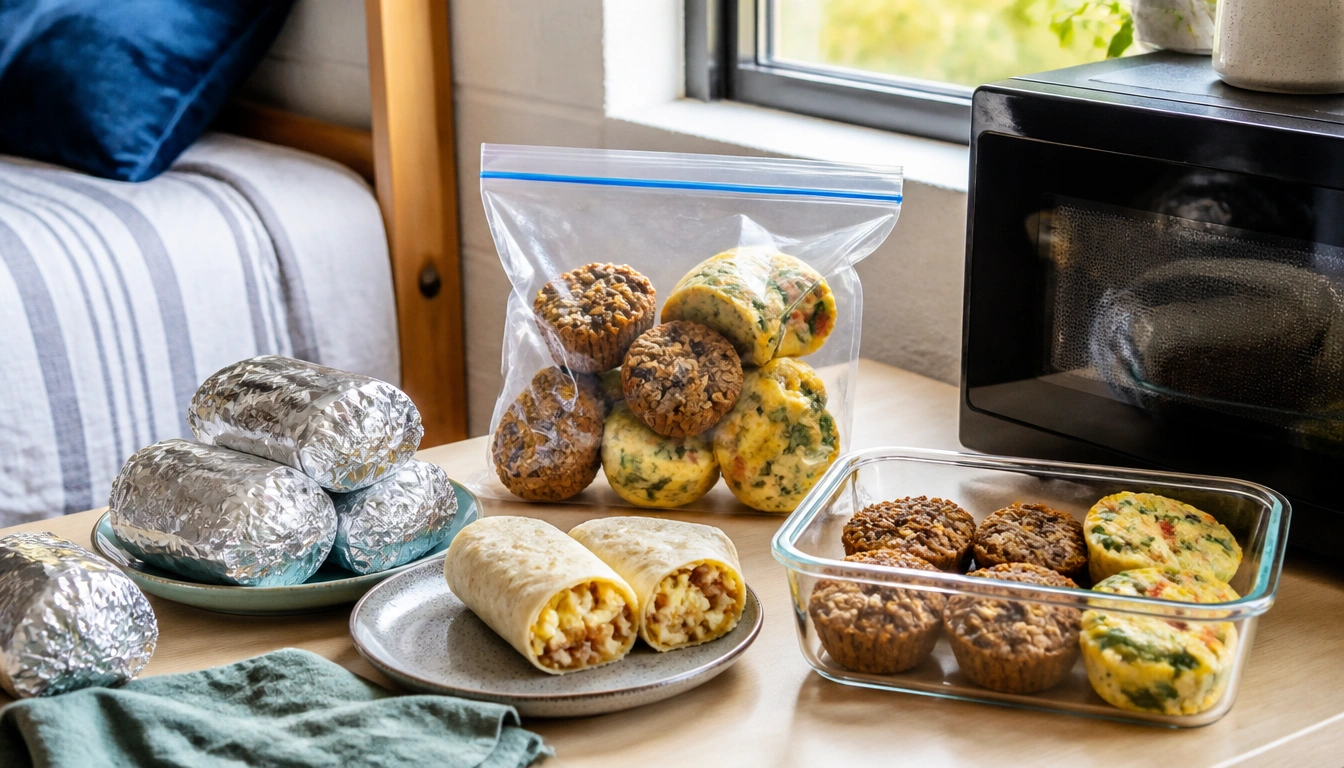
The easiest freezer-friendly breakfasts for college are breakfast burritos, baked oatmeal squares or muffins, and egg bites or mini-frittata cups. They freeze well, reheat quickly in a microwave or toaster oven, and can be built from low-cost staples like oats, eggs, beans, frozen fruit, and vegetables. For the best results, choose foods with protein plus fiber so breakfast keeps you full through class.
Key Takeaways
- Pairing protein with fiber helps breakfast feel more satisfying and can support steadier energy during long mornings.
- Frozen fruit and vegetables are budget-friendly and still nutritionally useful, so they work well in student meal prep.
- Burritos, baked oatmeal, and egg cups are the most dorm-friendly formats because they freeze and reheat without much fuss.
- Cool food fully, wrap it well, and label it before freezing to reduce freezer burn and soggy texture.
- Most homemade frozen breakfasts are best within 1 to 3 months, and reheated food should be steaming hot in the center.
What makes a freezer breakfast work for student life
A good freezer-friendly breakfast for college needs to do three jobs at once: save time, hold up in storage, and still taste decent after reheating. That rules out delicate pastries, runny eggs, and anything that turns watery in the freezer. The best choices are meals with sturdy structure, moderate moisture, and ingredients that can handle a microwave or toaster oven.
For students, the most useful formats are breakfast burritos, baked oatmeal squares or muffins, and egg bite or mini-frittata cups. Burritos are the most filling and travel well. Baked oatmeal is a good option if you want something sweet, soft, and easy to eat on the go. Egg cups are compact, protein-forward, and especially useful if your kitchen access is limited.
The other question is how quickly they can be eaten on a busy morning. A freezer breakfast should be something you can go from freezer to plate with minimal decision-making. If you need many extra steps before breakfast is ready, it probably will not survive a class-day routine for long.
Build the right balance of carbs, protein, and fat
The most satisfying freezer breakfasts usually combine complex carbohydrates, protein, and a little healthy fat. That mix matters because it digests more slowly than a pastry or sugary cereal, which can help you stay full longer and avoid the mid-morning crash that often hits after a fast, low-protein breakfast.
In practical terms, that means oats, whole-grain tortillas, beans, and fruit can provide the carb base. Eggs, Greek yogurt, cottage cheese, tofu, beans, or lean meat can cover protein. Cheese, nuts, seeds, avocado added after reheating, or a small amount of oil can add richness without making the meal heavy. The goal is not to make breakfast huge. It is to make it balanced enough that you are not hunting for snacks an hour later.
Keep texture in mind. Too much wet filling can make burritos soggy and make oatmeal gummy. Too little moisture can make oats dry or egg bites rubbery. A useful rule is to keep mix-ins modest and choose ingredients that cook or reheat cleanly. For example, drained beans, roasted vegetables, shredded cheese, and well-cooked eggs all behave better in the freezer than watery tomatoes or raw mushrooms.
Cheap flavor upgrades and budget swaps
College cooking usually works best when the same base recipe can shift with what is already in the pantry. Frozen breakfasts are a smart place to use inexpensive ingredients because they reduce waste and stretch a batch. Frozen berries, spinach, peppers, and onions are especially useful because they are picked and frozen when ripe, so they keep good quality and remove the pressure to use fresh produce before it spoils.
For burritos, beans are one of the cheapest ways to add protein and fiber. You can use black beans, pinto beans, or refried beans, then add eggs, a little cheese, and whatever vegetables are on sale. For baked oatmeal, mashed banana, applesauce, cinnamon, and frozen berries can create a satisfying flavor without a long ingredient list. For egg cups, a handful of frozen spinach or chopped peppers can make a batch more colorful and nutritious with very little extra cost.
Pantry staples also help stretch a recipe. Oats, peanut butter, flaxseed, sunflower seeds, and canned beans are all useful student ingredients. If your budget is tight, use cheese as a flavor accent instead of the main ingredient. If you want more sweetness without much extra cost, add fruit rather than extra sugar. That keeps the breakfast useful for morning energy without turning it into dessert.
How to prep a batch on Sunday without making a mess
A one-hour prep session is usually enough for a solid batch. Start by choosing one base recipe or two complementary ones, such as burritos plus baked oatmeal. Cook everything fully, then let it cool before wrapping. That cooling step matters because sealing warm food traps steam, and steam becomes ice crystals that damage texture later.
For burritos, assemble fillings that are not too wet, wrap them tightly, and then wrap again in foil or parchment. For oatmeal muffins or squares, bake them until set, then cool completely on a rack before freezing. For egg cups, use a muffin tin lined or lightly greased so they release cleanly, then cool them before storing. Once cool, pack individual portions into freezer bags or containers, press out extra air, and label each item with the name and date.
Shared freezer space is easier to manage if you freeze items flat first. Lay burritos in a single layer until firm, then stack or file them upright in a bag. Put the newest batch behind the older one so you use it first. This keeps the freezer from becoming a mystery pile of unlabeled food you forgot about.
Best ways to reheat each breakfast in a dorm
Burritos: Burritos are the most flexible option. A microwave works fastest: unwrap, wrap in a paper towel, and heat until hot in the center. If you have a toaster oven or panini press, that can improve the tortilla texture and reduce the soft, steamed feel. Burritos also do well if thawed overnight in the fridge, because that shortens reheating time in the morning.
Baked oatmeal squares or muffins: These reheat well in the microwave and can also be eaten at room temperature if needed. They are one of the easiest choices for students with very limited appliance access. They may dry out if overheated, so short bursts are usually better than one long blast. A spoonful of yogurt or nut butter after reheating can improve texture and make them more filling.
Egg bite or mini-frittata cups: These are usually best from the microwave or toaster oven. They reheat quickly and hold their shape well, especially if they are not overloaded with watery vegetables. Egg cups are a good fit for shared kitchens because they are portioned and easy to grab. If you thaw them overnight, they reheat even faster, but they are still convenient from frozen.
If your dorm microwave is inconsistent, use lower power for a little longer instead of blasting the food on high. That helps the center heat through without making the edges rubbery. No matter which format you choose, food should be steaming hot before you eat it.
How long frozen breakfasts keep and how to store them safely
For best quality, homemade frozen breakfasts are usually best within 1 to 3 months. They may still be safe after that if properly frozen, but flavor and texture gradually decline. That matters in college, where a breakfast batch can easily get pushed to the back of the freezer and forgotten.
Good storage starts with tight wrapping. Air is the enemy because it dries out food and causes freezer burn. Use foil, parchment, or freezer-safe bags, and remove as much air as possible. A second layer of protection helps if your freezer tends to frost over or if food will sit for several weeks. Label every package so you know what it is and when it was made.
When reheating, the center should be steaming hot. The National Health Service recommends heating leftovers thoroughly, and that is especially important for egg-based breakfasts and anything containing meat or dairy. If a breakfast smells off, has visible ice crystals from long storage, or develops a stale freezer taste that you do not like, it is better to toss it and make a fresh batch.
How to adapt the same recipes for different needs
These breakfast formats are easy to adjust without changing the whole system. For a vegetarian version, use eggs, beans, cheese, Greek yogurt, or cottage cheese as the main protein. For a vegan or dairy-free version, use tofu scramble, plant-based milk, dairy-free cheese if you like it, and flax or chia as binders in baked oatmeal. Frozen vegetables and fruit still work well in all of these versions.
If you need a higher-calorie athlete version, add more filling and extra energy density: a larger burrito, more beans, extra eggs, nut butter with oatmeal, or avocado after reheating. If you want a lighter version, keep portions smaller and lean more heavily on vegetables and eggs with less cheese. The recipe system stays the same; only the portions and add-ins change.
Here are the most common troubleshooting fixes. If burritos get soggy, use less wet filling and let everything cool before wrapping. If baked oatmeal dries out, add a little applesauce, banana, or yogurt after reheating. If egg bites turn rubbery, avoid overbaking and do not overload them with watery vegetables. A small amount of trial and error is normal, and one good batch usually tells you what to adjust next time.
| Breakfast format | Best use case | Reheating method | Freeze performance |
|---|---|---|---|
| Breakfast burritos | Most filling, best for long mornings | Microwave, toaster oven, or panini press | Very good if wrapped tightly and filled with not-too-wet ingredients |
| Baked oatmeal squares or muffins | Sweet, portable, easy grab-and-go option | Microwave or thaw overnight | Good, especially with fruit and oats |
| Egg bite or mini-frittata cups | Compact, protein-forward breakfast | Microwave or toaster oven | Very good if not overloaded with watery vegetables |
Frequently Asked Questions
What breakfast foods freeze well for students?
Breakfast burritos, baked oatmeal squares or muffins, and egg bite cups freeze especially well because they keep their shape and reheat quickly. Foods with oats, eggs, beans, and cooked vegetables usually hold up better than pastries, fresh fruit, or anything with a lot of sauce.
How do I keep freezer breakfast meals from getting soggy or freezer-burned?
Cool food completely before packing it, then wrap it tightly and remove as much air as possible from the storage bag or container. Use fillings that are not too wet, and avoid overstuffing. A double wrap with parchment or foil can help protect the texture.
How long do homemade frozen breakfasts stay good?
For the best taste and texture, plan to use them within 1 to 3 months. They may stay safe longer if kept frozen properly, but quality declines over time. Labeling each batch with the date helps you use the oldest food first.
What’s the best way to reheat frozen breakfast burritos or muffins in a dorm?
A microwave is the fastest option, and a toaster oven or panini press can improve texture for burritos or give egg cups a better finish. If possible, thaw them overnight in the fridge first. Always heat until the center is steaming hot.
How can I make freezer breakfasts if I’m vegetarian or dairy-free?
Use eggs, beans, tofu, or plant-based yogurt as the protein base, and choose dairy-free milk or cheese if needed. Baked oatmeal can be made with plant milk, and burritos can be filled with beans, vegetables, and tofu scramble instead of meat.
The Bottom Line
If you want the easiest freezer-friendly breakfasts for college, start with burritos, baked oatmeal, and egg cups. They use affordable ingredients, work with limited kitchen space, and reheat fast enough for a rushed morning.
The best results come from simple planning: choose sturdy ingredients, cool everything before freezing, wrap tightly, and keep the batch moving so older items get eaten first. Frozen fruit and vegetables are a smart budget tool, not a compromise.
Once you find one or two combinations you like, it becomes much easier to keep breakfast steady during busy weeks without spending extra money or relying on convenience food every morning.
Medical disclaimer
Medical disclaimer: This content is for educational and informational purposes only and is not a substitute for professional medical advice, diagnosis, or treatment. Dietary needs and supplement suitability vary by individual.
Sources
- National Health Service (NHS) — scot.nhs.uk. Accessed October 2026.
- Academic Research Institution — harvard.edu. Accessed October 2026.
