
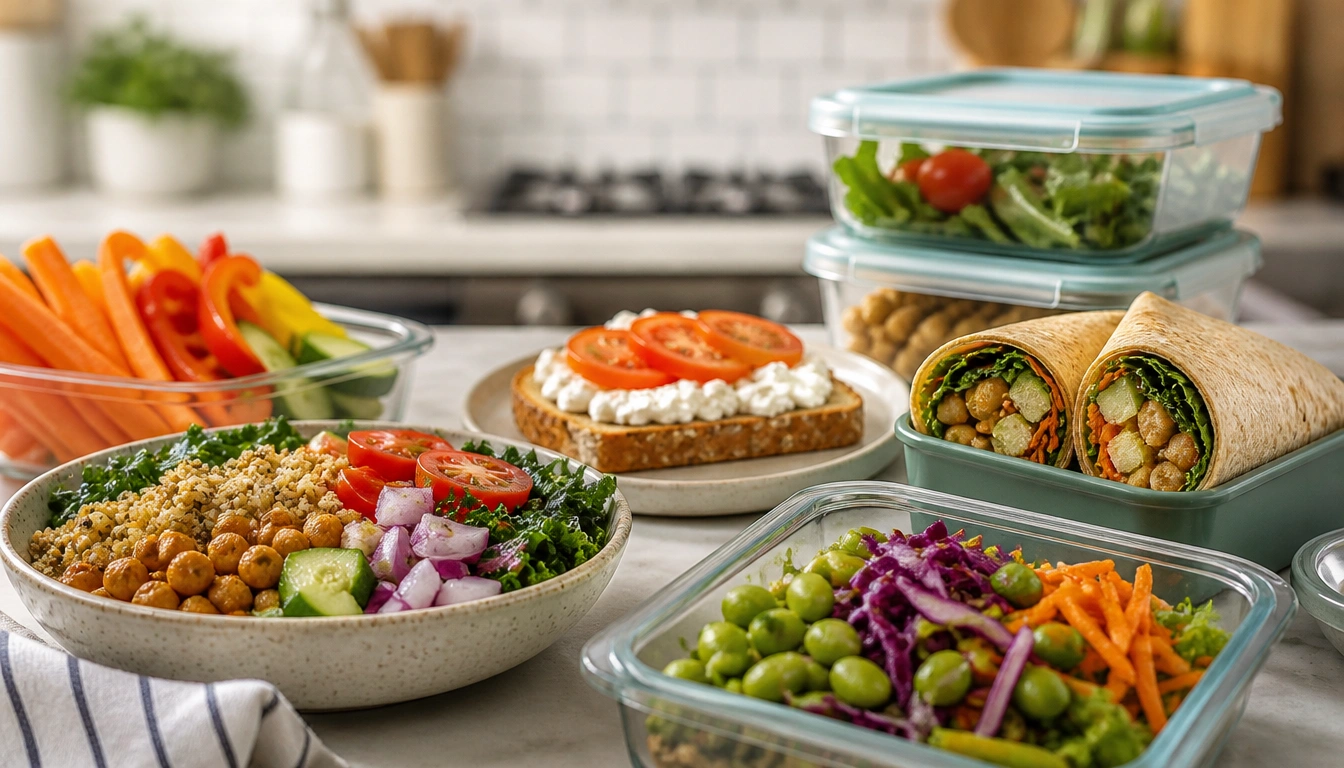
A fast vegetarian lunch can absolutely be filling if it includes enough protein, fiber, and some fat. For many adults, aiming for about 15–30 grams of protein at lunch works well for satiety and steadier afternoon energy. The easiest approach is to build from a protein base like beans, lentils, tofu, Greek yogurt, cottage cheese, eggs, or edamame, then add a high-fiber carb, a healthy fat, and crunchy vegetables.
Key Takeaways
- You do not need to combine plant proteins perfectly at every meal; variety across the day matters more.
- A lunch target of about 15–30 grams of protein is a practical sweet spot for staying full and energized.
- The fastest lunch formula is protein base + high-fiber carb + healthy fat + crunch or vegetables.
- Canned beans, lentils, edamame, Greek yogurt, cottage cheese, eggs, and tofu make quick vegetarian lunch staples.
- If you are adding more beans or lentils, increase them gradually over 1–2 weeks and drink enough water to reduce bloating.
- Vegetarian lunches should also cover iron, zinc, calcium, and vitamin B12 for vegans, with vitamin C helping iron absorption.
Why vegetarian lunches help busy parents stay full and energized
Protein-rich vegetarian lunch ideas for busy parents work because plant foods naturally bring a useful mix of protein, fiber, and slow-digesting carbs. That combination can be more satisfying than a lunch built mostly from refined grains or snack foods. Beans, lentils, chickpeas, edamame, tofu, whole grains, nuts, seeds, eggs, and dairy can help blunt the midafternoon energy dip that sends many parents looking for sweets or extra coffee.
Another advantage is flexibility. Vegetarian lunches can be built from pantry, fridge, or freezer staples, which matters when time is short and everyone is hungry now. You do not need a complicated recipe to get a balanced meal; you need a few ingredients that work well together and can be assembled quickly. Food that is easy to repeat is often the food that actually gets eaten on busy days.
For parents, lunch also has to be practical. It may need to be portable, kid-friendly, budget-aware, and simple enough to prep between work calls, school pickup, or after a morning of feeding everyone else first. The goal is not a perfect lunch. The goal is a dependable one that keeps you fuller for longer and does not require much cleanup.
The protein target that matters at lunch and the 10-minute lunch formula
A practical lunch target for many adults is roughly 15 to 30 grams of protein. That range is often enough to help with satiety and steady energy without making lunch feel heavy. It also gives you room to build a meal from familiar foods instead of trying to force a very large portion of one protein source. If you eat a little less at lunch and more at breakfast or dinner, that can still fit well in an overall day of balanced eating.
Vegetarians also do not need to perfectly combine proteins at every meal. Your body keeps an amino acid pool to draw from, so variety across the day matters more than making each plate mathematically complete. That is good news for busy families: a bean wrap at lunch and tofu stir-fry at dinner can both contribute to a well-rounded day without any special rules.
A fast formula makes lunch easier:
- Protein base: beans, lentils, edamame, tofu, tempeh, eggs, Greek yogurt, cottage cheese, or a mix.
- High-fiber carb: whole-grain bread, tortilla, quinoa, brown rice, farro, oats, or corn tortilla.
- Healthy fat: avocado, olive oil, nuts, seeds, tahini, peanut butter, or cheese.
- Crunch or vegetables: cucumber, carrots, bell pepper, cabbage, lettuce, tomatoes, snap peas, or leftover roasted vegetables.
That structure is useful because it does not depend on exact recipes. If you have chickpeas, whole-grain toast, avocado, and sliced tomatoes, you have lunch. If you have Greek yogurt, berries, oats, and nuts, you have lunch. The more you use a repeatable formula, the faster lunch becomes.
Best high-protein vegetarian pantry, fridge, and freezer staples
The easiest way to make a high-protein vegetarian lunch happen is to keep a short list of reliable staples on hand. Think in categories, not recipes. That way you can mix and match based on what is available, what your kids like, and what needs to be used up before it spoils.
Pantry staples include canned chickpeas, black beans, kidney beans, or lentils; tuna is not vegetarian, so skip it and lean on legumes instead. Also helpful are shelf-stable whole-grain wraps, crackers, quinoa, brown rice cups, nut butter, nuts, seeds, roasted edamame, and shelf-stable soups with a bean base. These items can be turned into lunch with very little prep.
Fridge staples include eggs, Greek yogurt, cottage cheese, hummus, shredded cheese, washed greens, chopped vegetables, salsa, pesto, and leftover cooked grains. Freezer staples include shelled edamame, frozen vegetables, frozen brown rice, frozen quinoa, and tofu. Frozen foods are especially useful for parents because they cut down on prep and reduce waste.
Simple structure beats elaborate planning. If you keep one or two proteins, one grain, one sauce, and one or two vegetables in rotation, lunch becomes a short assembly job instead of a cooking project. For example, canned lentils plus microwave rice plus shredded carrots plus olive oil and lemon can become a bowl in minutes.
Fast lunch ideas that actually work for family life
These lunch ideas are designed to be flexible, portable, and easy to repeat. Protein ranges are approximate, because brands and portions vary, but each option is built to land in a satisfying lunch zone.
Chickpea feta grain bowl
Start with canned chickpeas, then add microwave quinoa or another whole grain, chopped cucumber, tomatoes, feta, and olive oil with lemon. This style of bowl is bright, filling, and easy to pack. It can land around the lunch target when you include a generous scoop of chickpeas plus a little cheese and grain.
Mashed chickpea salad wrap
Mash chickpeas with Greek yogurt or mayo, mustard, celery, and a pinch of salt. Spoon into a whole-grain wrap or pita with greens. This is a strong choice when you want something that feels like a sandwich but uses pantry ingredients. It is also kid-friendly if you keep the seasoning mild.
Edamame peanut crunch salad
Use thawed shelled edamame, shredded cabbage, carrots, bell pepper, and a peanut or sesame-based dressing. Add peanuts or seeds for extra crunch. This is one of the fastest lunches for people who want a cold, crisp option that still has staying power. Edamame gives it a strong protein base without much effort.
Cottage cheese toast or crackers plate
Spread cottage cheese on whole-grain toast or serve it with whole-grain crackers, sliced tomatoes, cucumbers, avocado, and everything bagel seasoning. This is a no-cook lunch that feels substantial without requiring leftovers. If you need more protein, add a boiled egg on the side or pair it with nuts.
Egg, hummus, and veggie wrap
Layer hard-boiled eggs, hummus, lettuce, shredded carrots, and cucumber in a wrap. If your family likes breakfast-for-lunch foods, this one is especially easy. It can be prepped in batches by cooking eggs ahead of time and storing sliced vegetables in containers.
Lentil and roasted vegetable box
Combine canned or pre-cooked lentils with roasted vegetables, a grain like farro or brown rice, and a spoonful of tahini or vinaigrette. This works well for meal prep because lentils hold up nicely in the fridge. If you want more brightness and better iron absorption, add bell pepper or a squeeze of lemon.
For picky eaters, keep components separate. Parents can use the same ingredients but pack them as a bento-style lunch so kids can assemble bites the way they like. That simple adjustment often matters more than the recipe itself.
How to adapt these lunches for workdays, school pickup, and portable containers
Portable lunches work best when they travel well and do not need last-minute reheating. Mason jars, divided lunch boxes, insulated containers, and leakproof small cups make it easier to pack sauces separately and keep textures appealing. If you are eating in the car between errands, aim for foods that can be eaten with one hand or with a fork from a container.
For workdays, use ingredients that taste fine cold: bean salads, chickpea wraps, pasta salads with edamame, and grain bowls with dressing packed on the side. For school pickup days, keep a backup lunch in the fridge or freezer that can be assembled while everyone is changing shoes and finding backpacks. For days when you are truly short on time, build from one protein and one carb, then add fruit or vegetables only if you have them.
If your lunch is for a child as well as an adult, keep the flavors familiar. Mild hummus, cheese, eggs, chickpeas, pasta, cucumber, carrots, and fruit usually travel well. You can make the adult portion more filling by adding extra beans, seeds, nuts, avocado, or a larger grain base without changing the lunch for the child.
A useful habit is to keep one “emergency lunch shelf” in the fridge or pantry. Stock it with a few repeatable items such as canned beans, rice cups, yogurt, tortillas, hummus, and fruit. When the day runs off track, that shelf saves you from defaulting to snacks alone.
Digestive comfort tips when increasing beans, lentils, and edamame
If you are shifting toward more beans, lentils, and edamame, your digestion may need time to catch up. A gradual increase over one to two weeks is often easier than making a sudden jump from low-fiber lunches to very legume-heavy meals. Give your gut time to adjust instead of trying to change everything at once.
Hydration matters too. Fiber works best when you are drinking enough fluids, so pair higher-fiber lunches with water through the day. If you are packing a bean salad or lentil bowl, keep the portion moderate at first and increase it as your comfort improves. Some people find that smaller servings spread across the day are easier than a large bean-heavy meal.
Preparation can also help. Rinse canned beans and chickpeas well, choose lentils that are fully cooked, and avoid overloading a lunch with several very fibrous ingredients all at once if you are sensitive. If one ingredient tends to bother you, try a different one. Not everyone tolerates every legume the same way.
If digestive symptoms are persistent, painful, or out of proportion to the amount of fiber you are eating, that is a good reason to check in with a healthcare professional. Most people do better with a gradual approach, but ongoing discomfort should not be ignored.
Nutrient balance beyond protein
Protein matters, but it should not be the only thing you think about. Vegetarian lunches should also support iron, zinc, calcium, and, for vegans, vitamin B12. Those nutrients can be easier to overlook when the focus stays only on protein totals.
Iron is found in beans, lentils, tofu, leafy greens, seeds, and fortified foods. Plant iron is absorbed better when paired with vitamin C, so add bell peppers, citrus, strawberries, tomatoes, or a squeeze of lemon to the meal. That simple pairing can make a practical difference without extra cooking.
Zinc is present in beans, dairy, nuts, seeds, and whole grains. Calcium comes from dairy foods and fortified plant foods, and it matters for people who do not eat much milk, yogurt, or cheese. Vitamin B12 is especially important for vegans, since reliable sources generally come from fortified foods or supplements rather than unfortified plant foods. For people eating fully vegan lunches, a B12 plan belongs in the overall diet, not just at lunch.
Official guidance from groups such as the National Institutes of Health and Mayo Clinic also reminds people with special conditions, including kidney disease or certain gastrointestinal disorders, to individualize protein and fiber changes with professional support. For most busy parents, though, a balanced lunch built from everyday foods is a practical place to start.
Simple swap chart for higher-protein lunches without major cooking
Use this as a shortcut when you already know what you like to eat but want it to keep you fuller.
| Keep the same lunch style | Swap in more protein | Why it helps |
|---|---|---|
| Plain salad | Add chickpeas, lentils, eggs, tofu, or cottage cheese | Turns a light meal into something more sustaining |
| Toast with toppings | Use Greek yogurt, cottage cheese, hummus, or nut butter as the base | Adds protein without extra cooking |
| Wrap or sandwich | Layer beans, eggs, tempeh, tofu, or cheese with vegetables | Improves fullness and makes the meal more balanced |
| Grain bowl | Mix in edamame, lentils, roasted chickpeas, or eggs | Raises protein while keeping the same format |
| Snack-style lunch | Add a protein anchor like yogurt, cheese, eggs, or bean dip | Helps avoid the hungry-by-2-p.m. problem |
If you want the simplest possible rule, build around one protein source first, then add whatever grain, vegetable, and fat you have available. That keeps the lunch realistic and repeatable. A meal that is made quickly and eaten happily is usually better than a more ambitious lunch that never gets packed.
Over time, you will learn which combinations leave you comfortably full and which ones need a little more protein or fiber. That feedback is useful. It helps you build a lunch rhythm that works for your schedule, your budget, and the people you are feeding.
Frequently Asked Questions
How much protein should a vegetarian lunch have to be satisfying?
A practical target for many adults is about 15 to 30 grams of protein at lunch. That amount often supports satiety and steadier energy without making the meal feel overly heavy. The right amount still depends on your total daily intake, activity level, and appetite.
Do vegetarian lunches need to combine proteins at the same meal to be complete?
No. You do not need to combine plant proteins perfectly in one meal. Eating a variety of plant proteins across the day is usually enough to cover essential amino acids. A varied daily pattern matters more than one exact lunch combination.
What are the fastest high-protein vegetarian lunch bases I can keep on hand?
The fastest staples are canned beans, canned lentils, shelled edamame, tofu, Greek yogurt, cottage cheese, eggs, hummus, whole-grain wraps, and microwave grains. These can be mixed and matched into bowls, wraps, toast, or snack plates with very little prep.
How can I get 15–30 grams of protein at lunch without cooking from scratch?
Use a protein anchor and build around it. For example, pair chickpeas with quinoa and feta, cottage cheese with toast and avocado, or edamame with peanuts and vegetables. Using leftovers, canned foods, and ready-to-eat dairy or eggs makes this much easier.
What vegetarian lunch options are best for picky kids or family-style eating?
Keep flavors familiar and components separate. Wraps, toast, cheese, eggs, hummus, chickpeas, mild bean salads, fruit, cucumbers, carrots, and pasta-style bowls are usually easy to adapt. A bento-style lunch often works well because each person can eat the parts they like.
The Bottom Line
Fast vegetarian lunches do not have to be elaborate to be effective. If you build around a reliable protein source and add fiber, fat, and vegetables, you can make a lunch that is both quick and satisfying.
For busy parents, the most useful strategy is repetition: keep a few pantry, fridge, and freezer staples on hand, use a simple formula, and adjust for your family’s tastes and digestion. That approach is more sustainable than chasing complicated recipes every day.
Medical disclaimer
Medical disclaimer: This content is for educational and informational purposes only and is not a substitute for professional medical advice, diagnosis, or treatment. Dietary needs and supplement suitability vary by individual.
Sources
- National Institutes of Health (NIH) — nih.gov. Accessed November 2026.
- Mayo Clinic — mayoclinic.org. Accessed November 2026.
- Academic / Medical Research Institution — heart.org. Accessed November 2026.
