
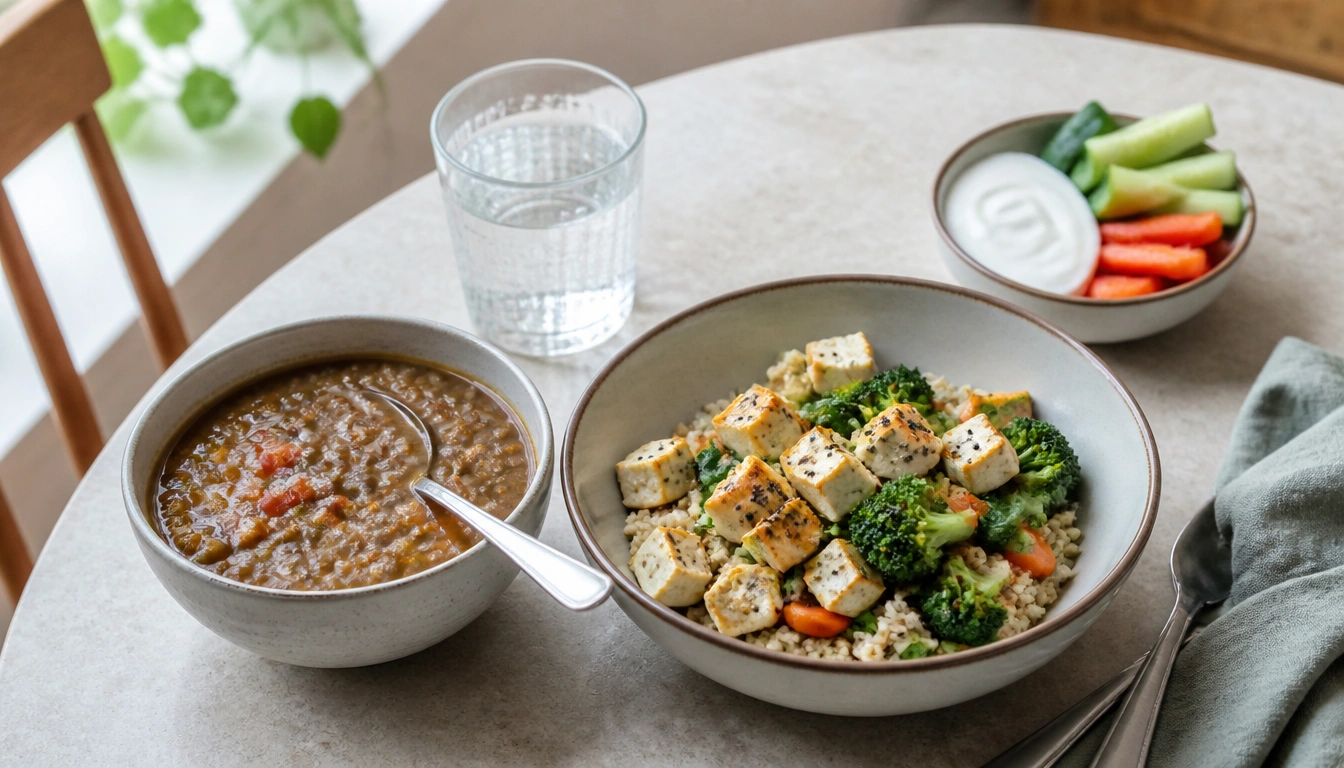
A good vegetarian lunch after 50 is usually one that gives you about 25–40 grams of protein, feels easy to chew or digest, and is simple enough to repeat. Think thick lentil soup with yogurt, a tofu grain bowl, cottage cheese or paneer with vegetables, or a bean salad wrap. You do not need perfect protein pairing in one meal, but you do need protein spread through the day.
Key Takeaways
- After 50, muscles respond less strongly to protein, so lunch matters more than simply eating most of your protein at dinner.
- Aim for roughly 25–40 grams of protein at lunch when possible, especially if you are trying to preserve muscle.
- Vegetarian meals can meet that target with foods like tofu, tempeh, lentils, beans, Greek yogurt, cottage cheese, eggs, paneer, seeds, and fortified soy foods.
- If chewing or digestion is an issue, choose soups, soft legumes, mashed bean salads, or bowls with tender textures instead of very fibrous or dry meals.
- Adults with chronic kidney disease should not automatically follow higher-protein advice and need individualized guidance.
- Older vegetarian eaters should also watch B12, vitamin D, calcium, and iron, not protein alone.
Why protein needs change after 50 and what that means for lunch
After 50, the body often becomes less responsive to protein at the muscle level, a shift sometimes called anabolic resistance. That means the same lunch that felt sufficient at 35 may not stimulate muscle protein synthesis as well later in life. The practical takeaway is not to obsess over huge portions. It is to make sure lunch contains enough protein to “register” with aging muscle, especially if breakfast is light and dinner is the biggest meal.
Clinical expert groups such as PROT-AGE and ESPEN recommend higher daily protein intake for healthy older adults than the standard adult minimum, and they also emphasize spreading protein across meals rather than loading it all at night. According to the National Institute on Aging and related clinical guidance, maintaining muscle in older age is about both protein and regular activity. Lunch is a useful anchor meal because it can protect energy, steadiness, and satiety through the afternoon.
For vegetarian eaters, this matters even more because plant proteins are often less concentrated in some essential amino acids and may be less digestible than animal proteins. That does not make them inferior; it just means the meal needs to be built with care. A lunch centered on legumes, soy foods, dairy, eggs, or fortified foods can work well without being complicated.
How much protein to aim for at midday
A practical lunch target for many adults over 50 is about 25–40 grams of protein. That range is high enough to support muscle maintenance in many older adults while still fitting real-world appetite and digestion. If your appetite is smaller, a meal on the lower end of that range may be easier to finish, and you can make up the rest at breakfast, snack time, or dinner.
There is no single ideal lunch for everyone. Body size, activity level, illness, and overall daily intake all matter. A very active person may need a more protein-dense lunch, while someone with low appetite may do better with smaller portions packed with protein. The main goal is consistency: getting a meaningful amount at midday rather than relying on one large evening serving.
If you are unsure how to judge a meal, think in components. A cup of Greek yogurt, a serving of tofu or tempeh, a generous scoop of beans or lentils, or a cottage cheese base can each help move a lunch into the useful range. Combining two moderate protein foods is often easier than trying to force one giant portion.
How to build a vegetarian lunch that supports muscle health
The easiest formula is protein anchor + produce + carbohydrate + fat + seasoning. The protein anchor does the heavy lifting for muscle support. Produce adds fiber, color, and micronutrients. Carbohydrates such as whole-grain bread, quinoa, brown rice, or potatoes make the meal more satisfying. A small amount of healthy fat improves flavor and helps the meal feel complete.
For example, a quinoa bowl becomes more useful when it includes tofu, edamame, beans, or yogurt-based dressing. A soup becomes more filling when you add lentils and a dairy or soy topper. A salad becomes a lunch rather than a side dish when it includes a dependable protein source and a substantial grain or starchy base.
You do not need to combine plant proteins perfectly at one meal. Older adults do not need to memorize pairings such as rice and beans in the same sitting to “make protein complete.” What matters is eating a varied vegetarian pattern across the day. Still, some combinations are naturally efficient, such as legumes with grains, tofu with rice, or yogurt with nuts and seeds. These are practical, not mandatory.
Texture-friendly protein sources for easier eating
For adults who struggle with chewing, dry foods, or bulky salads, texture matters as much as protein content. Soft foods often make it easier to reach a good protein target without discomfort. Well-cooked lentils, red lentil soup, silken or firm tofu, tempeh crumbled into bowls, cottage cheese, Greek yogurt, paneer, eggs, and smooth bean spreads are all useful options.
Texture-friendly foods can also reduce the “too much fiber at once” problem. If beans tend to cause bloating, start with smaller amounts and use smoother forms such as hummus, puréed bean soup, or mashed white beans mixed into a wrap filling. Tofu and dairy foods are often especially helpful when appetite is low because they provide protein without requiring large volumes of food.
Fortified soy milk, fortified plant yogurts, and fortified tofu can help if you avoid dairy. Seeds such as hemp, pumpkin, and sunflower add modest protein plus crunch, though they work best as support foods rather than the main protein source. The most useful lunch is usually one that feels comfortable enough that you will actually eat it regularly.
High-protein vegetarian lunch ideas that stay simple
Warm red lentil soup with yogurt: Red lentils cook soft and fast, which makes them easier to chew and digest than many whole beans. A thick bowl topped with Greek yogurt or a soy alternative, plus whole-grain toast, can land in the protein range many older adults need.
Tofu and grain bowl: Use quinoa, brown rice, or farro with cubed baked or pan-seared tofu, soft vegetables, and a tahini or miso dressing. This is a good option when you want a meal that feels savory and familiar without much prep.
Chickpea and white bean salad wrap: Mash chickpeas and cannellini beans with Greek yogurt or a protein-rich plant yogurt, then add herbs and a little crunch from seeds. Wrap it in a soft whole-grain tortilla or serve it on toast if chewing is easier that way.
Cottage cheese or paneer bowl: Pair cottage cheese or lightly cooked paneer with tomatoes, cucumber, olive oil, and herbs, then add fruit or whole-grain crackers if you want a lighter lunch. This is one of the easiest no-cook options for busy days.
Tempeh sandwich or wrap: Tempeh has a firmer bite than tofu but is still manageable for many people, especially when thinly sliced and warmed. Add avocado, greens, and mustard or hummus for a balanced handheld lunch.
If you need a visual guide, think in ranges rather than exact numbers. A lunch built around one major protein food plus one supporting protein item often reaches the target more easily than a plate of grains and vegetables alone. That is usually enough to make lunch function as a muscle-supporting meal.
Smart swaps for digestion, appetite, and budget
If legumes make you gassy, do not abandon them. Start with smaller portions, rinse canned beans well, use red lentils or split peas, and choose soups or purées more often than dry bean salads. Gradual exposure usually works better than a sudden jump to large high-fiber meals. Drinking enough fluid also helps older adults tolerate more protein and fiber comfortably.
If your appetite is small, choose meals with less volume and more protein density. A bowl of cottage cheese with fruit, a tofu soup, or a thick lentil stew may be easier than a big salad. If chewing is a problem, soften vegetables, cut foods smaller, and avoid very dry textures unless they are moistened with sauce or dressing.
For budget-conscious lunches, dry lentils, canned beans, tofu, eggs, and plain yogurt are usually among the most affordable protein choices. Frozen vegetables and bulk grains keep costs down and reduce prep time. A good lunch does not need specialty ingredients or protein powders; it needs reliable foods you can prepare repeatedly.
Nutrient notes beyond protein: B12, vitamin D, calcium, and iron
Protein is only part of the picture in vegetarian aging. Vitamin B12 deserves special attention because it is harder to obtain reliably from plant foods. Fortified foods and supplements are common strategies, and older adults may need them even if they eat dairy or eggs. If you rarely use fortified foods, this nutrient is worth discussing with a clinician.
Vitamin D, calcium, and iron also matter. Calcium supports bone health, vitamin D helps the body use calcium and contributes to overall musculoskeletal health, and iron supports energy and oxygen transport. Dairy foods, fortified plant milks, tofu made with calcium, leafy greens, beans, lentils, and fortified cereals can all help, but no single lunch solves everything.
Because absorption can change with age, food choices matter more than ever. Pairing iron-rich plant foods with vitamin C-rich foods such as tomatoes, peppers, citrus, or berries may help support iron absorption. If you have low energy, unexplained fatigue, or concerns about bone health, it is reasonable to ask your healthcare professional whether you need lab checks or a more specific nutrition plan.
Adults with chronic kidney disease are the major exception. Higher-protein guidance for healthy older adults does not automatically apply, and protein targets may need to be lower or otherwise individualized. If kidney disease is part of your medical history, follow a renal clinician’s guidance rather than a general high-protein rule.
A simple meal-prep framework for the week
A repeatable lunch plan makes protein easier to achieve. Pick two or three protein anchors for the week, such as tofu, lentils, cottage cheese, eggs, or beans. Then add one grain, one vegetable group, and one sauce or seasoning profile. This gives variety without forcing you to cook from scratch every day.
For example, you might batch-cook quinoa, roast vegetables, and make a pot of lentil soup on Sunday. Use one portion for a bowl on Monday, another for soup with yogurt on Tuesday, and a third as a wrap filling later in the week. If you keep a few ready-to-eat items on hand, lunch becomes assembly rather than cooking.
A useful rhythm is to alternate hot and cold lunches. Warm meals can be easier on digestion and more appealing in cooler weather, while cold bowls, wraps, and cottage cheese plates are faster on busy days. The best plan is the one you can repeat without getting bored or overwhelmed.
If you are helping a parent, spouse, or client, prioritize foods they already like and then strengthen the protein. That may mean adding yogurt to soup, beans to pasta salad, tofu to stir-fry leftovers, or eggs to a grain bowl. Familiarity improves adherence more than perfect nutrition theory ever will.
Frequently Asked Questions
How much protein do adults over 50 need at lunch?
Many older adults do well with about 25–40 grams of protein at lunch, especially if breakfast is light and dinner is not the only protein-heavy meal. The exact amount depends on body size, activity, and health status, but the main idea is to give lunch enough protein to matter.
Which vegetarian proteins are easiest to digest for older adults?
Common gentle options include tofu, silken tofu, tempeh, Greek yogurt, cottage cheese, paneer, well-cooked lentils, and smooth bean soups or purées. Texture, portion size, and preparation method matter as much as the food itself.
Do vegetarian proteins need to be combined in the same meal to be complete?
No. You do not need to combine specific plant proteins perfectly at one meal. A varied vegetarian diet across the day usually provides all essential amino acids. Pairings like beans and grains can be convenient, but they are not a strict requirement at lunch.
What are simple high-protein vegetarian lunch recipes for muscle maintenance?
Good options include lentil soup with yogurt, tofu grain bowls, chickpea and bean wraps, cottage cheese or paneer bowls, and tempeh sandwiches. These meals are practical because they combine a protein anchor with familiar textures and easy prep.
Should adults over 50 with kidney disease follow the same high-protein advice?
No. Adults with chronic kidney disease should not automatically follow higher-protein guidance. Protein needs may be different and should be set with a physician or renal dietitian who knows the person’s stage of kidney disease and other health conditions.
The Bottom Line
A protein-rich vegetarian lunch after 50 does not have to be complicated, expensive, or hard on digestion. The most useful approach is to build around one reliable protein source, add a familiar carbohydrate and vegetables, and aim for enough protein to support muscle health at midday.
For many adults, soups, bowls, wraps, and soft foods work best. Lentils, tofu, tempeh, beans, Greek yogurt, cottage cheese, paneer, eggs, and fortified soy foods are all practical options. If you have kidney disease, low appetite, swallowing problems, or unexplained weight loss, get individualized advice before changing your protein intake.
Medical disclaimer
Medical disclaimer: This content is for educational and informational purposes only and is not a substitute for professional medical advice, diagnosis, or treatment. Dietary needs and supplement suitability vary by individual.
