
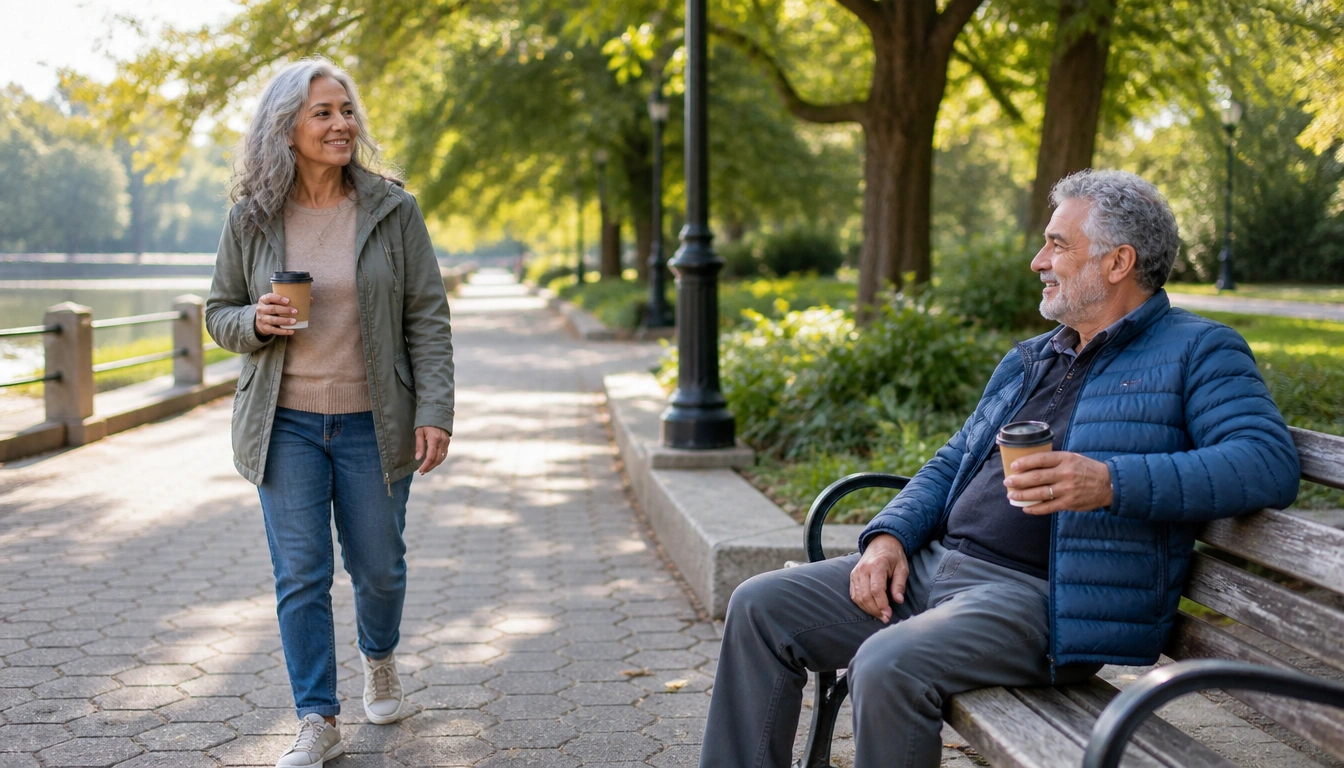
For most adults over 50, a realistic daily outdoor time habit is 15 to 30 minutes outside most days, with more time welcome if it feels good and conditions are safe. That can mean walking, sitting in daylight, gardening, or simply spending quiet time outdoors. The best routine is one you can repeat safely, with attention to heat, falls, sun exposure, and your mobility level.
Key Takeaways
- You do not need a hard workout to benefit from outdoor time; sitting in daylight, walking, or gardening can all count.
- Morning light can help set sleep-wake timing, which becomes especially useful as sleep patterns shift with age.
- Adults over 50 may need extra caution with heat, dehydration, falls, and low visibility because those risks rise with age and some health conditions.
- Paved paths, benches, neighborhood loops, and botanical gardens can make outdoor time easier for people with arthritis, low stamina, or balance concerns.
- A daily outdoor habit can also support mood and reduce isolation when it is paired with a friend, group, or regular community routine.
Why daily outdoor time matters after 50
A daily outdoor time habit for adults over 50 is less about “getting exercise” and more about giving your body and brain regular contact with daylight, fresh air, and a change of scene. Research summarized by the National Institutes of Health and academic centers suggests that time outdoors is linked with less sedentary behavior, better mood, and more opportunities for light movement. Those benefits matter because many people become less active with age, especially after retirement, illness, or joint pain.
What counts as outdoor time is broader than a walk. Sitting on a porch, reading in the yard, tending plants, standing in the sun for a few minutes, or taking coffee outside all fit the goal. If you can pair that time with safe movement, even better. But stillness outdoors is not “nothing”; daylight exposure and a change from indoor routines can support both mental and physical health.
For older adults, outdoor time can also be a low-cost habit that is easier to maintain than formal exercise. That matters when energy, motivation, or mobility are limited. The habit works best when it feels ordinary and repeatable rather than like a project you have to “start over” every week.
The biggest benefits for adults over 50
One of the clearest benefits is a gentle nudge toward more movement. People often walk a little farther, stand a little longer, or interrupt long sitting periods when they are already outside. Over time, that can support cardiovascular health, balance, and daily function. Outdoor settings can also make movement feel more pleasant, which may help people stick with it.
There is also a strong stress-reduction angle. Natural environments can be less mentally demanding than noisy, crowded, or screen-heavy spaces. Research on attention restoration suggests that looking at trees, sky, water, and other natural features can ease mental fatigue and rumination. For many adults over 50, that quiet reset can be as valuable as the physical movement.
Sleep is another major reason to build the habit. Daylight exposure, especially in the morning, helps anchor circadian rhythms. According to the National Institute on Aging and related sleep research, older adults often benefit from strong time cues that help the body distinguish day from night. A morning outdoor routine can support that signal.
Outdoor time can also reduce isolation. A short walk with a neighbor, a weekly community garden visit, or a regular stop at a local park can create repeated social contact. That social side matters because loneliness and low activity often reinforce each other. A habit that helps both can be especially useful after retirement or during life changes.
How much outdoor time to aim for
There is no official “outdoor prescription,” but a practical target for many adults over 50 is 15 to 30 minutes outside most days. That amount is often enough to create a routine, get daylight exposure, and encourage a little movement without feeling burdensome. If you enjoy more time outdoors and conditions are safe, there is no reason to stop at that range.
Think of outdoor time as separate from, but helpful for, broader activity goals. Public health guidance from the CDC and World Health Organization encourages older adults to get at least 150 minutes of moderate-intensity aerobic activity a week, plus balance and strength work. A daily outdoor habit can support those goals, but it does not have to replace them. A 20-minute walk outside may count toward activity goals; 20 minutes sitting in the sun does not, though it can still be valuable for daylight and stress.
If 15 to 30 minutes feels like too much, begin with smaller blocks. Five minutes outside after coffee, another five after lunch, and a short evening step onto the porch can still add up. The point is regular exposure, not perfection. For people with arthritis, fatigue, or breathing problems, several short sessions are often more realistic than one long outing.
Best times of day to go outside
Morning is often the most useful time for daylight exposure. Early light helps reinforce the body’s day-night clock, which can be especially important if sleep has become lighter, later, or more fragmented with age. A short morning routine can be as simple as standing outdoors with a cup of coffee, sitting by a sunny window that opens onto a patio, or taking a brief walk around the block.
Post-meal walks are another practical option. They do not need to be brisk to matter. A gentle walk after lunch or dinner can help turn a routine sitting period into a small movement break and may feel easier than planning a separate workout. Many people find this especially manageable because it fits something they already do every day.
Timing should also reflect weather and visibility. In hot climates, early morning or later evening may be safer than midday. In winter, a daytime window with better light and traction is usually preferable to icy or dim conditions. If visibility is poor, sidewalks are uneven, or shadows make obstacles hard to see, choose a safer time or indoor alternative.
How to build the habit
The easiest way to make outdoor time stick is to attach it to something you already do. Morning coffee is a strong anchor: take the mug outside before checking messages. Meals are another anchor: step outside before lunch, or walk for a few minutes after dinner. If you already run errands at a set time, add a short outdoor stop before or after.
Habit stacking works because it removes the need for a separate decision. You are not trying to become a different person; you are simply moving a familiar activity outdoors. If you enjoy reading, podcasts, or phone calls, those can happen outside too. A book on a bench or a call on the porch still counts as outdoor time.
Social plans can make the routine easier to maintain. Meet a friend for a neighborhood loop, join a garden group, or agree to a weekly walk after church, class, or a volunteer shift. The social commitment can be more reliable than motivation alone. For many people, the habit becomes less about discipline and more about a standing appointment.
Accessibility adaptations for joint pain, low stamina, and balance concerns
If your knees, hips, back, or feet hurt, outdoor time should not automatically mean hiking or fast walking. Paved paths, smooth park loops, shopping center walking routes, botanical gardens, and boardwalks can offer the same daylight and mood benefits with less strain. A bench every few minutes can turn a walk into a manageable sequence of short segments.
Stationary outdoor sitting also has value. You can sit in a courtyard, on a porch, near a garden, or in a shaded park area and still get sunlight, fresh air, and a change of environment. For some people with arthritis or low stamina, that is the safest way to start. If you are able, you can add brief standing or slow walking breaks between sitting periods.
Balance concerns deserve special attention. Uneven ground, roots, loose gravel, curbs, and low light can raise fall risk, and that risk may be greater with age, vision changes, certain medications, or past falls. Choose routes with clear surfaces, good lighting, and places to rest. If a route feels uncertain, it is reasonable to skip it and choose a safer location instead.
Safety and common risks
Heat and dehydration deserve respect because aging can reduce thirst awareness and make temperature regulation less efficient. On very hot, humid, or windy days, shorten the outing, go earlier, or move indoors. Bring water if you will be outside longer, and pay attention to warning signs such as dizziness, headache, weakness, confusion, or nausea. Those are not symptoms to push through.
Sun protection matters even on short outings. Broad-spectrum sunscreen, a hat, sunglasses, and lightweight clothing can reduce UV exposure. If you are outside for much of the day, reapply sunscreen as directed by the product label. If your skin is sensitive or you have had skin cancer, ask a clinician what protection strategy fits you best.
Ticks and insects are another concern in wooded, grassy, or brushy areas. In higher-risk regions, use an approved repellent, stay on cleared paths, and check skin and clothing after you come in. Seasonal allergies may also make some outdoor days less comfortable. On high-pollen days, you may do better with a shorter outing, a different time of day, or a less leafy location.
Choose an indoor alternative when weather is extreme, sidewalks are icy, air quality is poor, or your balance feels off. Indoor options can include standing by a sunny window, walking in a mall or community center, or sitting on a covered porch. Safety comes before the habit; the goal is consistency over time, not forcing every day outdoors.
Simple outdoor options that work in real life
The best outdoor routine is usually the one that fits your life. A neighborhood loop may be enough if you like familiar routes. A park bench can be a good destination if walking is hard. A community garden, patio, library courtyard, or church yard can also create a pleasant place to spend time outside without much planning.
If you prefer structure, use a simple tracking method. Mark an X on a calendar, set a daily reminder on your phone, or keep a note of the time you spent outside. Tracking is not about self-criticism; it is a cue that helps habits become automatic. Some people also find it useful to write down what made the outing easier, such as a cooler time of day or a better pair of shoes.
It helps to prepare weather backups in advance. If rain, heat, ice, or smoke disrupts the plan, decide ahead of time what you will do instead. Maybe it is a porch sit, a mall walk, or 10 minutes by an open window. That backup keeps the routine alive without forcing you into risky conditions.
Pairing outdoor time with another person can strengthen the habit and reduce isolation at the same time. Walking partners, neighborhood routines, and group activities add accountability and social contact. For many adults over 50, that combination is what turns a healthy idea into a routine that lasts.
Frequently Asked Questions
How much outdoor time is enough to matter for adults over 50?
A practical starting point is 15 to 30 minutes most days. That amount can support daylight exposure, a calmer mindset, and a small increase in movement. More time can be helpful if it feels good and conditions are safe, but consistency matters more than long sessions.
What are the health benefits of spending time outdoors after 50?
Outdoor time can support mood, stress relief, sleep timing, movement, and social connection. It may also help reduce long periods of sitting. If you walk or garden outside, you may gain extra physical activity; if you simply sit in daylight, you can still benefit from the routine and light exposure.
Is walking outside better than just sitting outdoors in daylight?
Walking adds movement benefits, so it is usually better for fitness and circulation. But sitting outdoors in daylight still has value, especially for people with pain, fatigue, or limited mobility. If walking feels hard, start with sitting outside and add short movement breaks only if they are comfortable.
What safety precautions should older adults take for heat, sun, ticks, and uneven ground?
Choose cooler times of day, drink water as needed, and stop if you feel dizzy or weak. Use sunscreen, a hat, and protective clothing for sun exposure. In grassy or wooded areas, use tick precautions and check yourself afterward. For fall prevention, avoid rough or poorly lit routes and choose smooth surfaces when possible.
How can someone with arthritis, low stamina, or balance issues still get outdoor time every day?
Use accessible places such as paved paths, benches, botanical gardens, porches, or flat neighborhood loops. Break the time into short sessions if needed. A few minutes outside after coffee or meals may be enough to build the habit. If your symptoms are unstable, ask a clinician or physical therapist for individualized guidance.
The Bottom Line
For adults over 50, daily outdoor time does not have to be long or strenuous to matter. A realistic goal is often 15 to 30 minutes most days, with flexibility for weather, mobility, and energy level. Walking is useful, but sitting outside in daylight still counts.
The safest habits are simple ones: use morning light when possible, choose stable surfaces, protect against sun and insects, and switch indoors when conditions are extreme. If you pair the routine with coffee, meals, errands, or a friend, it is more likely to last.
If pain, dizziness, falls, breathing problems, or another medical condition makes outdoor activity difficult, get personalized advice before increasing your routine. The best habit is the one that supports your health without creating new risk.
Medical disclaimer
Medical disclaimer: This content is for educational and informational purposes only and is not a substitute for professional medical advice, diagnosis, or treatment. Dietary needs and supplement suitability vary by individual.
Sources
- National Institutes of Health (NIH) — nih.gov. Accessed November 2026.
- Academic Research Institution — harvard.edu. Accessed November 2026.
- Academic Research Institution — psu.edu. Accessed November 2026.
