
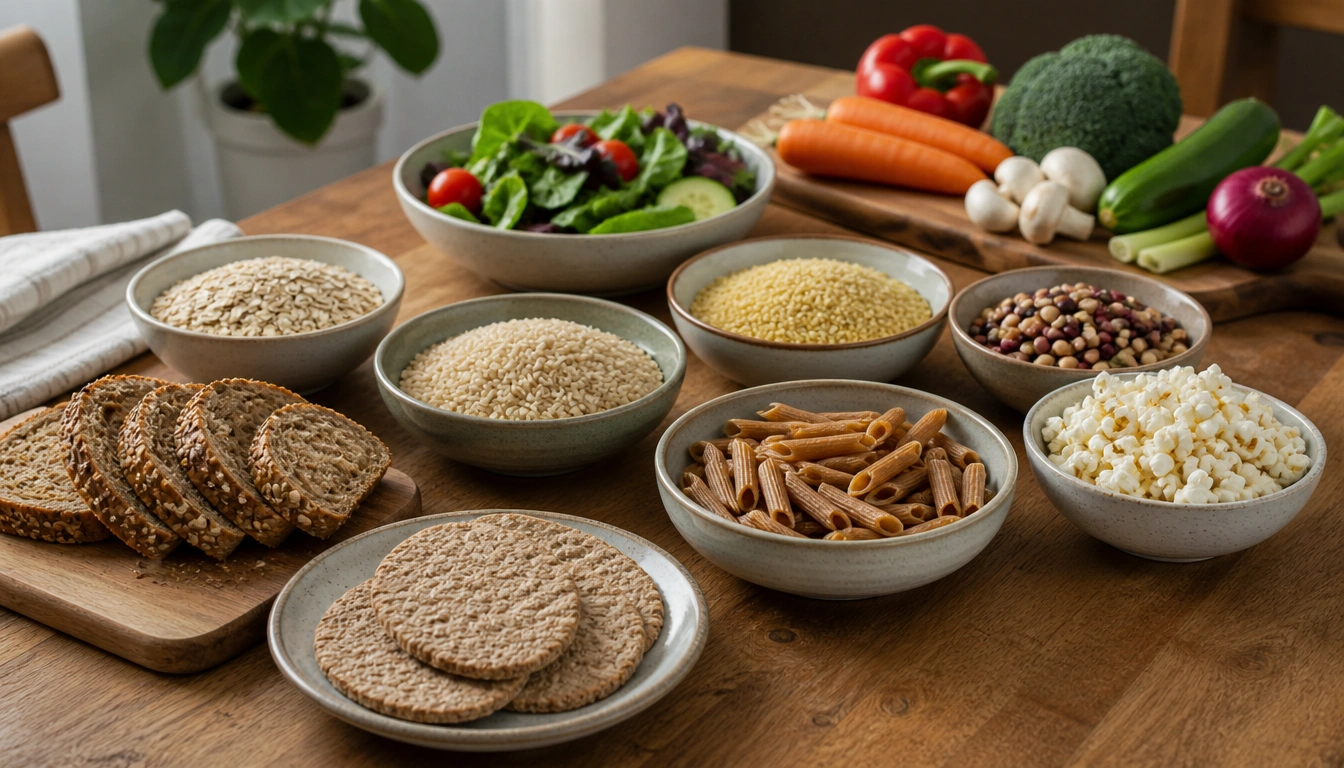
The easiest whole-grain substitutions are the ones that fit into foods you already eat: oats or wholegrain cereal at breakfast, brown rice or a half-and-half rice mix in bowls, wholewheat bread and pasta, and oatcakes or popcorn for snacks. Start gradually, drink enough fluids, and use softer textures or mixed-grain options if your stomach needs time to adjust.
Key Takeaways
- Whole grains keep the bran, germ, and endosperm, so they provide more fiber and nutrients than refined grains.
- For vegetarian beginners, the easiest swaps are usually breakfast cereals, rice, bread, pasta, and snacks.
- If you are not used to a high-fiber diet, switch slowly and increase fluids at the same time to reduce bloating and constipation.
- Whole grains can help with fullness and overall diet quality, but they are not a stand-alone health fix.
- People with celiac disease, active inflammatory bowel disease, acute diverticulitis, or iron-deficiency concerns may need individualized advice rather than a generic whole-grain plan.
Why whole grains matter for vegetarian beginners
Whole grains are useful for new vegetarians because they make meals feel more complete without requiring complicated recipes. A whole grain keeps all three natural parts of the grain: the bran, which is rich in fiber; the germ, which contains nutrients and plant compounds; and the endosperm, which supplies most of the starch. Refined grains lose some of that outer material, so they usually give you less fiber and fewer naturally occurring nutrients.
That matters in a vegetarian pattern because plant-based meals often rely on grains, beans, vegetables, nuts, and seeds to provide staying power. If your meals are built around white bread, white rice, or plain pasta, you may feel hungry sooner. Choosing whole grains is a simple way to add more texture, more chew, and more fiber without changing the whole meal structure.
According to the NHS, adults should aim for around 30 grams of fiber a day, but many people fall short. Whole grains help close that gap, especially when they are used as an everyday staple rather than as an occasional “healthy” extra.
The easiest whole grains to start with
If you are new to vegetarian eating, the easiest grains are usually the ones that feel familiar. Oats are often the gentlest starting point because they cook into a soft texture and fit easily into porridge, overnight oats, or baked breakfast dishes. Wholewheat bread is another low-friction option because you can use it the same way you already use white bread.
Brown rice can be a good next step, but many beginners prefer it more when mixed with white rice at first. Bulgur is another practical choice because it cooks relatively quickly and works well in salads, bowls, and simple side dishes. Quinoa is useful when you want a grain-like base that cooks quickly and pairs well with vegetables, beans, and sauces.
Popcorn and oatcakes are helpful snack options. Popcorn is a whole grain when it is air-popped or simply prepared, and oatcakes can replace crackers or biscuits in a way that still feels snack-like. You do not need to start with the “healthiest” grain on paper. Start with the one you are most likely to eat consistently.
If texture is a barrier, choose grains that are softer, mixed, or more closely matched to foods you already enjoy. That makes adherence much easier than forcing yourself into a dramatic pantry overhaul.
Meal-by-meal swap ideas for real life
The easiest whole-grain substitutions are usually small, repeatable changes rather than big recipe rewrites. At breakfast, try porridge oats instead of a low-fiber refined cereal, or use wholegrain toast instead of white toast. If you like a crunchy breakfast, a plain wholegrain cereal can be a simple upgrade, especially with fruit or yogurt.
For lunch and dinner, rice bowls are often the easiest place to begin. Replace part of the white rice with brown rice, or use a 50/50 blend for a few weeks while your taste buds adjust. In stir-fries, curries, and bean bowls, that half-and-half approach often feels much more manageable than an immediate full switch.
With pasta, wholewheat pasta works best when it is paired with robust sauces. Tomato-based sauces, lentil bolognese, bean sauces, and vegetable-rich ragùs help soften the stronger texture and taste. For sandwiches, choose wholemeal or granary bread and keep the filling simple: hummus, egg, cheese, avocado, tofu salad, or roasted vegetables all work well.
For snacks, look for whole-grain foods that do not feel like a sacrifice. Oatcakes with hummus, popcorn, wholegrain crackers with cheese, or fruit with a handful of nuts can be easy ways to add fiber without turning snacking into a project.
How to make the transition gentler on digestion
If you suddenly increase fiber, your digestive system may need time to adapt. Temporary bloating, gas, or a sense of fullness can happen when whole grains are added too quickly. That does not usually mean whole grains are a bad fit; it often means the change was too abrupt.
A slower transition is usually easier. Start by changing one meal a day, or by swapping only part of a refined grain for a whole grain. Mixed-grain options are especially helpful because they reduce the textural jump while still raising your fiber intake. A 50/50 rice blend, a mix of white and wholewheat pasta in the same meal, or a lower-fiber breakfast paired with one slice of wholegrain toast can all work as stepping stones.
Hydration matters too. Fiber works best when you also drink enough fluids, because water helps move food through the gut and supports softer stools. If you increase whole grains but keep fluid intake the same, constipation can become more likely. A practical approach is to raise fiber and fluids together rather than treating them as separate goals.
It also helps to chew thoroughly and give your gut a little time between major changes. Many people do better when they add one new habit every few days instead of trying to redesign every meal at once.
What whole grains can and cannot do for health
Whole grains can support fullness, more stable eating patterns, and better overall diet quality. Because they are usually digested more slowly than refined grains, they can help meals feel more satisfying for longer. That can be useful for vegetarian beginners who are trying to avoid constant snacking or the feeling that a meal was “too light.”
Research and public health guidance also associate higher whole-grain intake with better cardiometabolic outcomes, including a lower risk of type 2 diabetes and cardiovascular disease. Those benefits are part of an overall dietary pattern, though, not a promise from one food. A bowl of wholegrain cereal will not cancel out an otherwise unbalanced day.
It is also worth being clear about the limits. Whole grains are helpful, but they are not a supplement-like fix or a substitute for protein foods, vegetables, fruit, healthy fats, and enough total food. They work best as part of a balanced vegetarian plate. That way, they add texture, fiber, and staying power without carrying the entire meal on their own.
| Refined staple | Easier whole-grain swap | Why it helps beginners |
|---|---|---|
| White toast | Wholegrain bread | Minimal change in routine, more fiber at breakfast or lunch |
| White rice | Brown rice or a 50/50 mix | Gentler texture transition and better long-term adherence |
| White pasta | Wholewheat pasta | Works well with strong sauces and hearty vegetarian meals |
| Refined crackers or biscuits | Oatcakes or popcorn | Simple snack swap with more whole-grain content |
When whole-grain advice needs modification
General vegetarian advice does not fit every health situation. If you have celiac disease, wheat, barley, and rye must be avoided completely, so whole-grain choices need to be gluten-free and checked carefully. If you suspect gluten is a problem because of ongoing stomach upset, fatigue, or other symptoms, get medical assessment rather than assuming the answer is simply to cut out grain foods.
People with active inflammatory bowel disease or acute diverticulitis may also need a different fiber approach for a period of time. In those situations, “more whole grain” is not automatically the right answer, because symptoms, flare status, and tolerance can change what is appropriate. The same is true if you have significant ongoing digestive pain or unexplained bowel changes.
Iron-deficiency anemia is another situation where individualized guidance matters. Whole grains can fit into a healthy vegetarian diet, but some compounds in plant foods can affect mineral absorption. If you already have low iron, a clinician or registered dietitian can help you balance iron-rich foods, vitamin C, meal timing, and any supplements you may need.
In other words, whole grains are a strong default for many vegetarian beginners, but they are not a universal prescription.
How to build a balanced vegetarian plate around whole grains without overcomplicating meals
The easiest way to use whole grains is to treat them as the base of a meal, not the whole meal. A simple vegetarian plate often works best when a whole grain is paired with a protein food, a vegetable, and a little fat or flavor. For example, brown rice with chickpeas and roasted vegetables, wholewheat pasta with lentils and tomato sauce, or wholegrain toast with eggs, avocado, or beans are all practical starting points.
Food-first planning is more sustainable than thinking about grains like a stand-alone fix. If you build one or two reliable meals you can repeat, you are more likely to stay consistent. That can mean keeping oats on hand for breakfast, using wholemeal bread for sandwiches, and keeping one easy grain such as brown rice or bulgur in the cupboard.
If you want a gentler transition, use the foods you already buy and make the swap where the effort is lowest. The goal is not to create a perfect vegetarian menu overnight. The goal is to make your usual meals a little more filling, a little more nutrient-dense, and a lot easier to keep eating.
Frequently Asked Questions
Which whole grains are easiest to start with if I’m new to vegetarian eating?
Oats, wholegrain bread, brown rice, bulgur, quinoa, popcorn, and oatcakes are usually the easiest starters. They are familiar, widely available, and easy to use in meals you may already cook.
How can I swap whole grains into breakfast, lunch, dinner, and snacks without changing my whole routine?
Use the same meal structure you already like, but swap the starch: oats or wholegrain toast at breakfast, brown rice or bulgur in lunch bowls, wholewheat pasta at dinner, and oatcakes or popcorn for snacks.
How do I avoid bloating or stomach upset when increasing fiber from whole grains?
Increase whole grains slowly, not all at once. Start with smaller portions or mixed-grain options, and increase fluid intake at the same time. That gives your gut time to adapt.
How much fiber should an adult aim for, and how do whole grains help me get there?
The NHS advises adults to aim for about 30 grams of fiber a day. Whole grains help because they keep the bran and germ, which makes them higher in fiber than refined grains.
When should someone avoid whole-grain advice and get individualized medical guidance instead?
If you have celiac disease, active inflammatory bowel disease, acute diverticulitis, or iron-deficiency anemia, you may need personalized advice. Ongoing digestive symptoms also deserve medical review rather than self-managing with diet alone.
The Bottom Line
For vegetarian beginners, the easiest whole-grain changes are usually the ones that feel almost invisible: oats instead of refined cereal, wholegrain bread instead of white bread, brown rice or a mixed-rice blend, and wholewheat pasta with a hearty sauce. Small swaps are easier to keep than a complete diet overhaul.
If you are not used to fiber, go slowly and drink enough fluids. That helps reduce bloating and constipation while your digestion adjusts. Whole grains are most useful when they support a balanced vegetarian plate that also includes protein foods, vegetables, and healthy fats.
If you have celiac disease, active bowel disease, diverticulitis, or iron-deficiency concerns, the general advice may need to change. In those cases, individualized guidance is the safer path.
Medical disclaimer
Medical disclaimer: This content is for educational and informational purposes only and is not a substitute for professional medical advice, diagnosis, or treatment. Dietary needs and supplement suitability vary by individual.
Sources
- National Health Service (NHS) — www.nhs.uk. Accessed November 2026.
- National Health Service (NHS) — scot.nhs.uk. Accessed November 2026.
- National Health Service (NHS) — www.nhs.uk. Accessed November 2026.
- National Health Service (NHS) — royalmarsden.nhs.uk. Accessed November 2026.
