
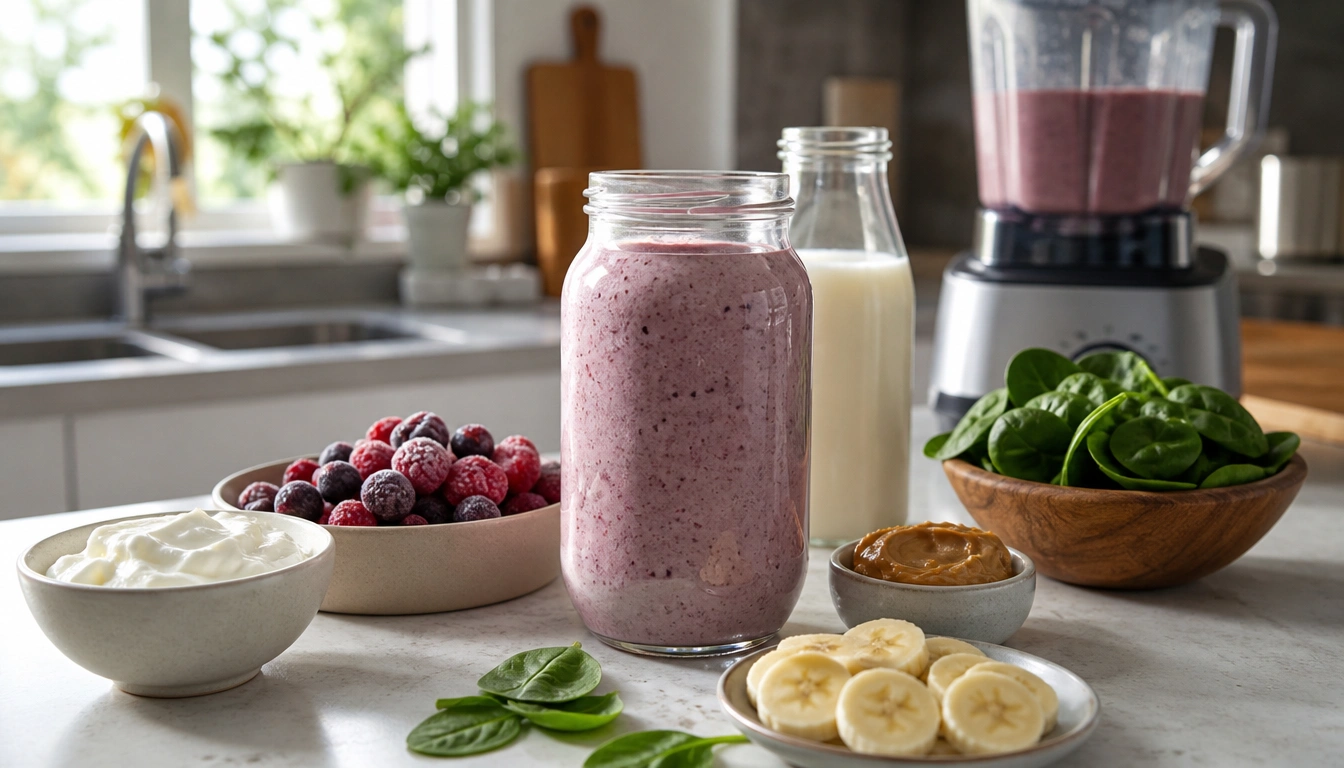
You can make a filling protein smoothie without protein powder by starting with a protein-rich liquid and base, then adding fruit or vegetables for flavor and fiber. For breakfast, aim for roughly 15–30 grams of protein; for a snack, about 10 grams is often enough. Greek yogurt, cottage cheese, silken tofu, soy milk, and nut or seed butters are the easiest whole-food options when time is tight.
Key Takeaways
- Fruit-only smoothies are often too light for breakfast because they digest quickly and may leave you hungry again soon.
- Whole-food proteins like Greek yogurt, skyr, cottage cheese, silken tofu, soy milk, and nut butters make smoothies creamier and more satisfying.
- For a meal-replacement smoothie, aim for about 15–30 grams of protein; for a smaller snack, about 10 grams is a useful target.
- Frozen fruit, mild greens, and thicker ingredients help smoothies taste better without the chalky texture many people dislike in powder-based drinks.
- Freezer bags, grab-and-blend ingredients, and a simple blender order can make weekday smoothies realistic for parents.
- Smoothies can help kids try fruits and vegetables, but they should not replace all whole produce experiences.
Why fruit-only smoothies fall short for busy parents
A smoothie made from fruit, juice, and ice can be refreshing, but it is usually not very satisfying as breakfast. The reason is simple: it is mostly quick-digesting carbohydrate with little protein or fat. That can mean a fast rise and fall in energy, followed by hunger again before you have finished school drop-off or your first meeting.
Protein changes the picture because it helps slow digestion and supports fullness. It also works well with fiber from fruit, oats, chia, or greens to make the smoothie feel more like a real meal. Johns Hopkins Medicine notes that protein-rich meals can help support satiety, which is exactly what busy parents need when breakfast has to last.
If you want a smoothie that actually holds you, think of it as a formula rather than a recipe: liquid, protein, fruit or vegetables, and one optional booster for staying power. That structure is easier to repeat on rushed mornings than trying to invent a different blend each time.
Best whole-food protein options for smoothies:
- Greek yogurt or skyr: thick, tangy, and very easy to blend into a breakfast smoothie.
- Cottage cheese: blends surprisingly smooth and adds a creamy texture without a strong flavor.
- Silken tofu: a mild plant-based choice that disappears into the blender and adds body.
- Milk or soy milk: useful as the liquid base when you want more protein than almond or coconut milk can provide.
- Nut butters: peanut, almond, or cashew butter add flavor, fat, and a moderate protein boost.
- Seeds: hemp, chia, and flax add protein plus fiber, which helps the smoothie feel more balanced.
For parents trying to move fast, the easiest win is often to choose one strong protein base first, then build the rest of the flavor around it.
How much protein to aim for without measuring obsessively
You do not need to weigh every ingredient to make a better smoothie. A helpful starting point is to think in two lanes. If the smoothie is breakfast or a meal replacement, roughly 15–30 grams of protein is a practical target. If it is more like an afternoon snack, about 10 grams may be enough to tide you over.
That target matters because a smoothie with only fruit may taste good but still function like a light snack. Once you add a meaningful protein source, the same blender drink can become much more useful as a meal. The goal is not perfection; it is building a smoothie that keeps you steady long enough to get through the morning.
A simple visual guide helps more than strict math. One cup of milk or soy milk, a generous scoop of Greek yogurt or a half-cup of cottage cheese, plus a spoonful of nut butter or seeds, usually moves a smoothie into the breakfast zone. For a lighter snack, you can scale the protein base down and keep the fruit portion smaller.
If you are using a smoothie as breakfast most days, make it closer to a balanced meal. If you are using it between meals, you can keep it lighter and still satisfy the need for something quick.
How to make a smoothie thick and creamy without protein powder
Texture is one of the main reasons people dislike powder-based smoothies. A chalky drink can be hard to finish, especially first thing in the morning. Whole-food ingredients solve that problem because many of them naturally create a thicker, milkshake-like texture.
Greek yogurt, skyr, cottage cheese, and silken tofu all add body before you even think about flavor. Frozen fruit also helps because it chills and thickens the smoothie without watering it down like too much ice can. Bananas, mango, and berries are especially useful when you want a smooth, creamy result.
For flavor, mild greens are easier than many parents expect. Spinach usually blends in quietly, especially with berries, banana, or peanut butter. A small handful is enough to add color and nutrients without making the smoothie taste “green.”
If your family has texture sensitivities, a few adjustments help: use less liquid, choose frozen fruit over fresh, and blend a little longer than you think you need. A stronger blender helps, but even a basic one can work if the ingredients are layered well. Start with liquid at the bottom, then soft ingredients, then frozen items on top.
To avoid chalkiness: skip unnecessary dry add-ins, use a creamy dairy or soy base, and lean on whole-food ingredients instead of trying to force body from powders or too much ice.
A busy-parent breakfast smoothie you can make fast
Here is a simple breakfast formula that is easy to repeat on weekdays and flexible enough to adapt to what is already in the fridge.
Busy-parent peanut butter banana smoothie
- 1 cup milk or fortified soy milk
- 1/2 to 3/4 cup plain Greek yogurt
- 1 frozen banana
- 1 to 2 tablespoons peanut butter
- Optional: a handful of spinach or a spoonful of chia seeds
Blend the liquid and yogurt first, then add the banana, peanut butter, and any extras. If the smoothie is too thick, splash in a little more milk. If it is too thin, add more frozen fruit or a few ice cubes. The result should be thick enough to sip slowly, but not so dense that it becomes a chore.
This style of smoothie works because each ingredient has a job. The milk or soy milk creates a protein-rich base. The yogurt makes it creamy. The banana adds sweetness without needing juice. The peanut butter adds staying power. Spinach is optional, but it is an easy way to add more variety without changing the flavor much.
If you are feeding yourself and a child, this same recipe can be split into two smaller servings. That often works better than making one giant smoothie and trying to drink it in a rush.
Dairy-free and plant-based ways to build the same result
If you avoid dairy, you can still make a high-protein smoothie without powder. The main shift is to choose a stronger plant-based protein base instead of a low-protein milk substitute. Fortified soy milk is usually a better everyday choice than almond or coconut milk when you want the smoothie to function as breakfast.
Silken tofu is one of the easiest plant-based ingredients for smoothies because it blends smoothly and has a neutral taste. It gives body the way yogurt does, but without a dairy flavor. Hemp seeds and peanut butter can also raise protein while making the smoothie richer.
A simple dairy-free version might use soy milk, silken tofu, frozen berries, banana, and hemp seeds. If you want a more dessert-like flavor, add unsweetened cocoa powder, cinnamon, or a little vanilla extract. Keep the sweeteners modest so the smoothie does not become just a cold fruit drink in disguise.
If you use coconut milk or almond milk, think of them as flavor choices, not protein strategies. They can still fit, but they usually need help from tofu, soy milk, nut butter, seeds, or another protein source to become filling enough for a meal.
For parents who want something dairy-free that still feels creamy, soy-based combinations usually offer the best balance of texture, convenience, and protein.
What smoothies can teach kids, and what they should not replace
Smoothies can be a helpful bridge for kids who are cautious about fruits or vegetables. Blending spinach with berries, or cauliflower with banana, can expose children to flavors and colors they might otherwise resist. For some families, that is a real win.
Still, smoothies should not become the only way children encounter produce. Kids also need the experience of seeing, touching, chewing, and recognizing fruits and vegetables in their whole form. That matters for food learning and mealtime confidence. A smoothie can support variety, but it should not replace every apple slice, carrot stick, or bowl of peas.
Parents should also pay attention to portion size and how often smoothies appear. A very large smoothie can crowd out other foods a child needs during the day. A smaller serving alongside toast, eggs, oatmeal, or a sandwich may be a better fit than using a smoothie as the whole meal every time.
For children, the most useful smoothie is usually one that is familiar, not flashy. A strawberry-banana base with yogurt or soy milk is often easier to accept than a complicated blend with many hidden ingredients.
If a child has allergies, feeding concerns, or growth issues, individualized advice from a clinician or registered dietitian is the safer route than trying to solve everything through smoothies alone.
How to prep smoothie ingredients ahead for weekday chaos
The fastest smoothie is the one you can assemble without thinking. That is why freezer bags and grab-and-blend prep work so well for parents. Instead of measuring ingredients every morning, portion the fruit, greens, and optional boosters ahead of time and store them in freezer bags or reusable containers.
A good prep bag might include frozen banana slices, berries, a handful of spinach, and chia or hemp seeds. In the morning, pour the bag into the blender, add milk or soy milk and your protein base, then blend. This cuts out the hunting, chopping, and decision-making that slow people down before school or work.
Pantry add-ins help too. Keep peanut butter, oats, chia, flax, and hemp seeds where they are easy to reach. Store your yogurt or tofu in front of the fridge so it is the first thing you grab. When the routine is visible, it is more likely to happen.
A simple blender workflow also matters. Start with liquid, add soft items, then frozen ingredients on top. That order usually helps the blade catch easier and reduces the need to stop and stir. If your blender is small or basic, use slightly smaller fruit pieces and less frozen mass per batch.
For many families, this is the point where smoothies become realistic: not by making them fancier, but by making them easier to repeat.
Serving tips that help a smoothie feel like a real meal
Even a well-built smoothie can leave you unsatisfied if you drink it too quickly. Liquid calories do not always register the same way solid food does, so slowing down matters. Try pouring the smoothie into a cup with a lid, taking a few minutes between sips, and pairing it with another food if breakfast needs to last longer.
A smoothie bowl can also help when you have a little more time. Eating it with a spoon adds chewing, which often makes the meal feel more substantial. Toppings such as berries, seeds, or a small amount of granola can add texture without changing the basic formula.
If you are using the smoothie as breakfast, it should have enough protein, some fiber, and at least one ingredient that adds creaminess or fat. If you are using it as a snack, keep the portion smaller and focus on protein plus fruit. That way it supports the moment without turning into an accidental second breakfast.
Timing matters too. A smoothie tends to work best when you want speed, portability, and a low-mess option. It is less helpful if you need a very long-lasting meal and have the time to sit down to eggs, toast, or oatmeal instead. The right choice is the one that matches your day.
For many busy parents, the best version is not the most elaborate one. It is the smoothie you can make, drink, and actually feel good about before the morning starts moving.
Frequently Asked Questions
What whole-food ingredients add the most protein to a smoothie?
The easiest high-protein whole foods for smoothies are Greek yogurt, skyr, cottage cheese, silken tofu, soy milk, nut butters, and seeds such as hemp, chia, or flax. They add protein plus texture, which makes the smoothie more filling than fruit alone.
How much protein should a smoothie have to work as breakfast or a snack?
A practical target is about 15–30 grams of protein for breakfast or a meal replacement, and around 10 grams for a snack. You do not need exact math every time, but the smoothie should contain a clear protein base, not just fruit and ice.
How do I make a smoothie thick and creamy without powder?
Use frozen fruit, reduce the liquid a little, and choose creamy whole foods such as Greek yogurt, cottage cheese, or silken tofu. Banana, mango, and avocado can also improve texture, and blending well helps remove any remaining graininess.
Are protein smoothies okay for kids, and what should parents watch for?
Yes, smoothies can be a helpful way to offer fruits, vegetables, and protein to kids. The main caution is not to let smoothies replace all whole produce or crowd out other meals. Keep portions age-appropriate and watch added sugars, especially if the smoothie is very fruit-heavy.
What are the best dairy-free options for a no-powder protein smoothie?
Fortified soy milk and silken tofu are usually the easiest dairy-free choices because they add more protein and better texture than almond or coconut milk. Hemp seeds and peanut butter can add extra staying power without changing the flavor too much.
The Bottom Line
A filling protein smoothie without protein powder is mostly about structure: use a protein-rich liquid or base, add fruit for flavor, and include something creamy or fatty so the smoothie actually lasts. That is what turns a quick drink into a useful breakfast or snack.
For busy parents, the most practical options are usually Greek yogurt, cottage cheese, silken tofu, soy milk, nut butter, and seeds. Prep ingredients ahead in freezer bags when you can, and keep the recipe simple enough that it still works on rushed mornings.
Medical disclaimer
Medical disclaimer: This content is for educational and informational purposes only and is not a substitute for professional medical advice, diagnosis, or treatment. Dietary needs and supplement suitability vary by individual.
Sources
- Johns Hopkins Medicine — hopkinsmedicine.org. Accessed October 2026.
