
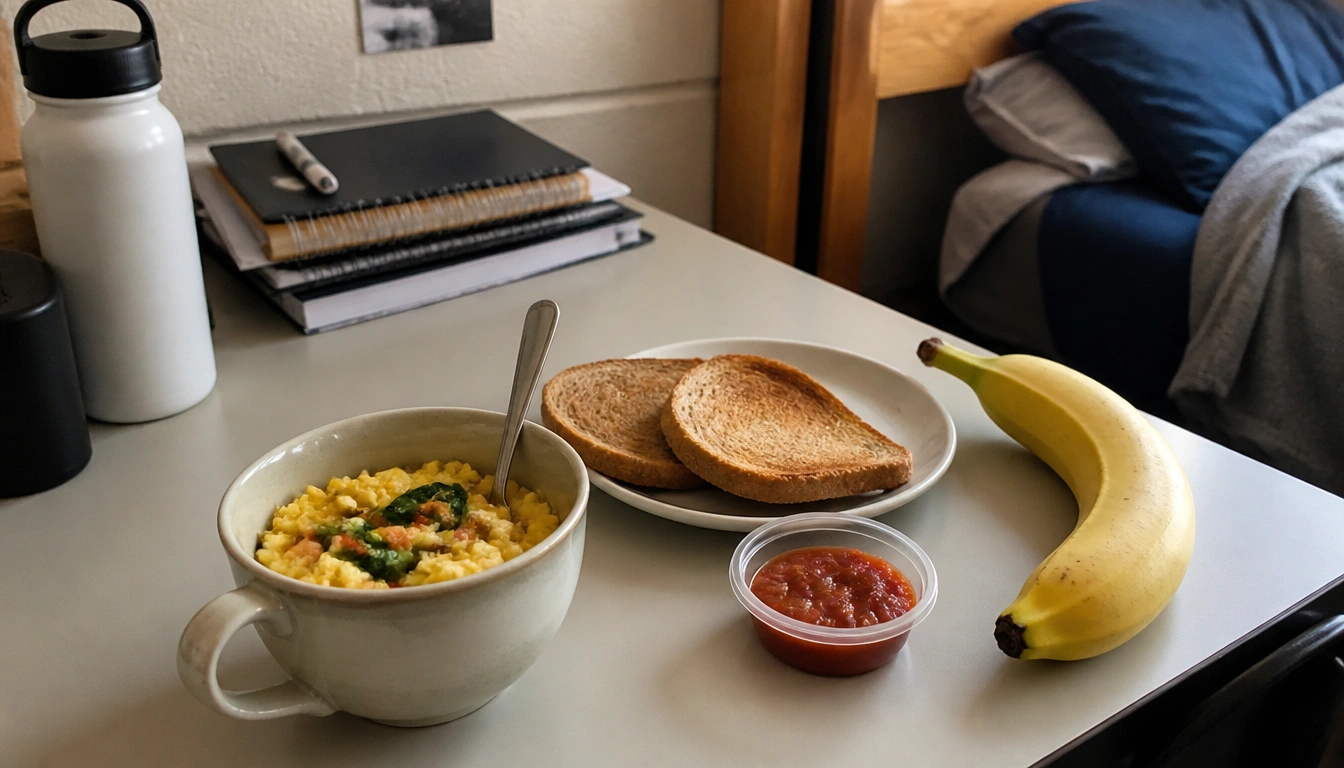
The fastest egg breakfasts for college students are microwave mug scrambles, egg-and-toast combinations, egg muffin cups made ahead, and simple egg bowls with beans or vegetables. They are quick, filling, and easy to adapt to a dorm setup with only a microwave, mini-fridge, or single skillet. Pair eggs with fiber-rich carbs and produce to stay fuller longer and avoid a mid-morning crash.
Key Takeaways
- Eggs are a fast base for breakfast because they cook quickly and bring protein plus nutrients like B12 and choline.
- For better staying power, pair eggs with whole grains, beans, fruit, or vegetables instead of eating them alone.
- Microwave mug scrambles and egg muffins are the most dorm-friendly options when you do not have a stove.
- Batch-prepped egg muffins can save time during the school week if you store and reheat them safely.
- If your dorm fridge is crowded, label containers and keep cooked eggs cold and sealed to reduce food-safety risks.
Dorm-realistic egg breakfasts by equipment level
The best quick egg breakfast ideas for college students are the ones you can make with what you already have. A microwave-only setup can still handle a solid breakfast. A hot plate or shared skillet opens up more choices, but it is not required.
If you only have a microwave, focus on mug scrambles, microwave egg cups, and reheated batch-prepped options. If you have a skillet, add toast, breakfast quesadillas, or a fried egg over beans. If you have a freezer or a little extra fridge space, cooked egg muffins and assembled breakfast wraps can make weekday mornings much easier.
The food-first goal is simple: get protein on the plate, then add a fiber source and something with color. That may mean eggs with whole-grain toast and fruit, eggs with beans and salsa, or eggs with spinach and avocado. According to Harvard, this kind of balanced plate pattern is more helpful than leaning on refined carbs alone for morning energy.
How to build a balanced student breakfast around eggs
Eggs work best as the protein anchor in a meal, not the whole meal. When you pair them with a fiber-rich carb and a produce item, the breakfast tends to feel more satisfying and steady through class time. A little healthy fat can help too, especially if the rest of the meal is very light.
A practical dorm formula is: eggs + whole grain or beans + fruit or vegetables. For example, scrambled eggs with whole-wheat toast and an orange, an egg mug with oats on the side, or a breakfast bowl with eggs, black beans, and salsa. The idea is not perfection; it is to avoid the quick spike-and-drop pattern that can happen with pastries, sweet cereal, or skipping breakfast altogether.
If you tend to get hungry again by late morning, increase the fiber side first. Add another slice of whole-grain toast, a handful of fruit, or a few spoonfuls of beans. If the meal feels heavy, keep the egg portion the same and trim the add-ons. That gives you a flexible way to match appetite, budget, and schedule.
Recipe cards for fast egg breakfasts
Microwave mug scramble
Time: about 3 to 5 minutes
Ingredients: 1 to 2 eggs, splash of milk or water, salt and pepper, pre-washed spinach or chopped vegetables, optional shredded cheese
Method: Coat a microwave-safe mug lightly. Beat the eggs with the liquid and seasonings, then stir in vegetables. Microwave in short bursts, stirring between bursts, until just set.
Pairing: Whole-grain toast or fruit on the side.
Egg and toast with avocado
Time: about 5 to 8 minutes
Ingredients: eggs, bread, avocado, salt, pepper, optional tomato slices or greens
Method: Cook eggs the way your setup allows, then serve over toast with mashed avocado. If you have only a microwave, use a mug scramble and spoon it onto toast.
Pairing: A piece of fruit or a small yogurt cup.
Southwest egg and bean bowl
Time: about 5 minutes
Ingredients: canned black beans or pinto beans, egg, salsa, optional avocado, optional whole-grain tortilla chips or toast
Method: Rinse and warm the beans, then top with a cooked egg and salsa. Add avocado if available. This is a strong option when you need something filling fast without much cleanup.
Pairing: Fresh fruit if you want a sweeter side.
Egg muffin cups for the week
Time: about 20 minutes active, plus baking time
Ingredients: eggs, chopped vegetables, optional cheese, optional cooked turkey sausage or beans, muffin tin
Method: Whisk eggs with add-ins, pour into a greased muffin tin, and bake until set. Cool, portion, and refrigerate. Reheat only the portion you plan to eat.
Pairing: English muffin, toast, or a banana.
Breakfast quesadilla
Time: about 7 to 10 minutes
Ingredients: tortilla, egg, cheese, optional beans, salsa, or spinach
Method: Cook the egg in a skillet or microwave, then fold it into a tortilla with cheese and any add-ins. Warm briefly until the cheese melts.
Pairing: Orange slices or berries.
Overnight breakfast wrap
Time: about 5 minutes the night before
Ingredients: cooked egg, tortilla, spinach, cheese, salsa, optional beans
Method: Assemble in the evening, wrap tightly, and refrigerate. Eat cold or warm it briefly if your setup allows. This works well for commuters and students with very early classes.
Pairing: Apple or pear for extra fiber.
Which options are best for speed, cleanup, and portability
| Option | Speed | Cleanup | Portability |
|---|---|---|---|
| Microwave mug scramble | Very fast | Low | Medium |
| Egg and toast | Fast | Low to medium | Medium |
| Bean breakfast bowl | Fast | Low | Low to medium |
| Egg muffin cups | Slow to prep, fast to eat | Medium once, then low | High |
| Breakfast quesadilla or wrap | Fast | Low to medium | High |
If your main issue is getting out the door quickly, egg muffin cups and wraps are the most practical. If your issue is no stove at all, the mug scramble and bean bowl are easiest. If you care most about cleanup, build around one mug, one plate, or a single container. For many students, the best answer changes by day: one microwave meal on busy mornings, one batch-prepped option for the rest of the week.
Budget-friendly swaps for convenience stores and campus markets
Students do not need specialty groceries to make a filling egg breakfast. Store-brand eggs, whole-wheat bread, tortillas, frozen vegetables, bagged spinach, canned beans, salsa, and fruit are usually enough to build several different meals. In a convenience store, look for plain Greek yogurt, bananas, pre-cut fruit cups, or a whole-grain sandwich thin if the bread aisle is limited.
If eggs are running low, stretch the meal with beans or oats rather than adding more processed snack foods. If fresh vegetables are too expensive, frozen spinach or mixed vegetables can fill the same role in a cooked breakfast. If avocado is not affordable, use a little cheese, hummus, or olive oil for a similar richness. The point is flexibility, not chasing a perfect ingredient list.
For students with tighter budgets, it helps to build one reusable template. Buy eggs, one grain, one bean, one fruit, and one vegetable. Rotate those across the week so breakfast stays different enough to be interesting without requiring a full shopping trip every few days.
Food safety and storage in a shared dorm fridge
Cooked eggs are convenient, but they need basic fridge discipline in a shared space. Keep your mini-fridge at or below 40°F (4°C), and store cooked egg dishes in sealed containers so they do not pick up odors or spill onto other foods. According to food-safety guidance used by university extension programs, cooked eggs should generally be eaten within 3 to 4 days when refrigerated properly.
Label containers with the prep date so you do not have to guess. Use clean utensils, wash hands after handling raw eggs, and do not leave cooked egg dishes sitting out while you get dressed or pack your bag. If the dorm fridge is crowded, keep egg containers on a shelf rather than in the door, where temperatures swing more.
When reheating, warm only what you plan to eat. Stir mug scrambles or chopped egg dishes so they heat evenly. If an egg dish has been left out for too long, smells off, or has a strange texture, throw it out. Shared kitchens are not the place to test the limits of leftovers.
Simple fixes for common dorm kitchen problems
Underpowered microwaves can make eggs rubbery if you cook them too long. Use shorter bursts, stir in between, and stop while the eggs still look slightly soft; they will finish cooking from residual heat. If your microwave heats unevenly, spread the egg mixture in a wider container instead of a deep mug.
If you have no stove or hot plate, focus on meals that work cold, reheated, or fully in the microwave. Egg muffin cups, cold breakfast wraps, and mug scrambles are the most realistic choices. If you do have a skillet, one-pan eggs with toast or beans are still simple, but keep the method short and the cleanup limited.
If mornings are chaotic, prep one or two parts the night before: wash fruit, portion bread, or assemble a wrap. If you are feeding a roommate too, double the egg muffins rather than making separate meals. Small preparation steps matter more than complex recipes when the goal is to eat before class.
When eggs may not be the best fit
Eggs are a strong breakfast option for many students, but they are not the right answer for everyone. If you have an egg allergy, follow a vegetarian pattern that excludes eggs, or notice digestive symptoms after eating eggs, choose another protein and ask a registered dietitian or healthcare professional for individualized advice. Students with specific medical nutrition needs may also need a more tailored breakfast plan.
If eggs are part of your diet, the most useful question is not whether they are “good” in isolation. It is whether your whole breakfast is balanced, affordable, and realistic for your schedule. A simple egg meal that you actually eat is usually a better choice than an elaborate plan that falls apart by Wednesday morning.
Frequently Asked Questions
How can I make a balanced egg breakfast with only a microwave or mini-fridge?
Start with eggs as the protein base, then add one fiber-rich carb and one produce item. A microwave mug scramble with whole-grain toast, or an egg wrap with fruit on the side, is usually enough to make the meal more filling and steady.
What egg breakfast ideas can be batch-prepped for the week in a dorm?
Egg muffin cups are the most practical batch-prep option. You can bake several at once, refrigerate them in a sealed container, and reheat one or two as needed. Breakfast wraps also work well if you assemble them ahead and keep them cold.
What should I pair with eggs to avoid a mid-morning energy crash?
Pair eggs with whole grains, beans, fruit, or vegetables. Those foods add fiber and slow down digestion, which tends to help with fullness and steadier energy. Eggs alone are fine in a pinch, but they are more useful as part of a balanced meal.
How do I store cooked eggs safely in a shared dorm fridge?
Keep the fridge at or below 40°F (4°C), store cooked eggs in a sealed container, label them with the prep date, and eat them within 3 to 4 days. Avoid leaving them out on the counter and reheat only what you plan to eat.
Are eggs a good breakfast choice for students trying to stay full and focused?
For many students, yes. Eggs provide protein and nutrients such as vitamin B12 and choline, and they are especially helpful when paired with fiber-rich foods. That said, the best breakfast is the one that fits your budget, schedule, and any dietary restrictions.
The Bottom Line
The easiest egg breakfasts for college students are the ones that match your equipment: a microwave mug scramble, a simple egg-and-toast plate, a bean bowl, or make-ahead egg muffins. All of them can be built fast with minimal cleanup.
If you want better staying power, do not stop at eggs alone. Add a whole grain, beans, fruit, or vegetables so the meal is more filling and less likely to leave you hungry before lunch.
For dorm life, convenience matters as much as nutrition. Keep cooked eggs cold, store them safely, and choose the version you are most likely to make on a busy morning.
Medical disclaimer
Medical disclaimer: This content is for educational and informational purposes only and is not a substitute for professional medical advice, diagnosis, or treatment. Dietary needs and supplement suitability vary by individual.
Sources
- Academic Research Institution — harvard.edu. Accessed October 2026.
- Academic Research Institution — sdstate.edu. Accessed October 2026.
- capecodhealth.org — capecodhealth.org. Accessed October 2026.
