
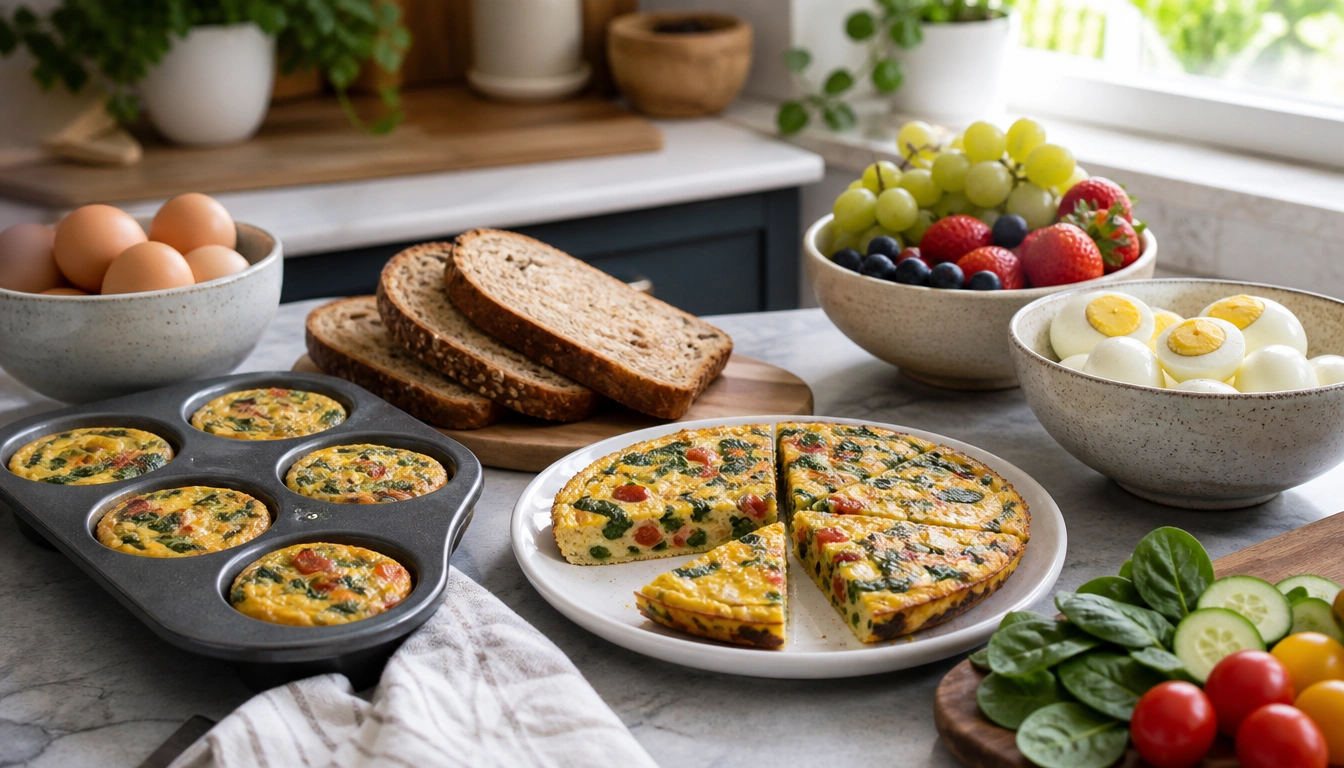
The easiest make-ahead egg breakfast options for meal-prep beginners are egg muffins or egg cups, a baked frittata or breakfast casserole, and hard-boiled eggs with simple add-ons. These options are affordable, high in protein, and hold up well for weekday mornings. Start with a small test batch, use pre-cooked vegetables when needed, and build each breakfast with fruit or whole grains for better staying power.
Key Takeaways
- Begin with a 4-serving test batch instead of trying to prep a full week right away.
- Egg muffins, baked frittatas, and hard-boiled eggs are the most beginner-friendly formats.
- Pre-cook or drain watery vegetables so your egg bakes do not turn soggy.
- Pair eggs with fruit, whole-grain toast, oats, or crackers to make breakfast more filling.
- Cooked egg breakfasts usually keep for 3 to 4 days in the fridge; some freeze better than others.
- Eggs work for many people, but allergy and cholesterol guidance should be individualized when needed.
Why eggs work so well for meal prep
Eggs are one of the easiest places to start if you want a quick egg breakfast idea that does not require advanced cooking skills. They are affordable, flexible, and naturally portion-friendly. A carton of eggs can become a batch of muffins, a sliced casserole, or a set of ready-to-eat hard-boiled eggs with very little effort.
They also fit the practical needs of busy mornings. Eggs provide high-quality protein, which helps breakfast feel more satisfying than a pastry or a bowl of cereal alone. When you combine eggs with vegetables and a fiber-rich carb, you get a more balanced meal that is easier to rely on during the workweek. That is especially useful for beginners who want a routine that feels simple, not strict.
Another reason eggs are so useful is that they hold their shape well after cooking. According to food safety guidance from the USDA, cooked eggs can be stored and reheated safely if they are handled properly. That makes eggs a strong choice for meal prep as long as you plan for cooling, storage, and reheating.
Three beginner-friendly egg breakfast formats
If you are new to meal prep, stay with formats that are forgiving and easy to repeat. You do not need a complicated recipe collection. You need one or two dependable options that you can make without stress.
Egg muffins or egg cups
Egg muffins are one of the most convenient formats because they are already divided into single servings. Whisk eggs, add chopped vegetables and optional cheese or cooked protein, then bake in a greased muffin tin. The result is a breakfast you can grab, reheat briefly, and eat with one hand if needed.
For beginners, this format is useful because it teaches portioning automatically. A small muffin tin batch lets you see whether you like the texture, seasoning, and ingredient mix before you commit to a larger prep cycle. It is also easy to swap ingredients based on what you already have.
Baked frittata or breakfast casserole
A frittata or casserole is the easiest choice when you want fewer steps. Instead of filling individual cups, you pour the mixture into one baking dish and slice it after it cools. This format works especially well if you prefer a softer, custardy texture or want to use leftover vegetables from dinner.
It can also be the most flexible option for families or heavier appetites. You can cut the bake into smaller or larger pieces depending on how much food you want at breakfast. If you are making breakfast for several mornings, this is often the least fussy route.
Hard-boiled eggs as a component
Hard-boiled eggs are the simplest of all because they can be made with almost no recipe at all. They are useful when you want to build breakfast around a component rather than a full dish. Keep them in their shells until you are ready to eat them, then pair them with fruit, whole-grain toast, crackers, yogurt, or vegetables.
This format is ideal if cooking in the morning feels overwhelming. It also gives you the most flexibility because you can assemble a different breakfast each day without making a brand-new meal.
How to build a balanced egg breakfast
Eggs are a strong base, but they do not have to carry breakfast alone. To make your meal more filling, aim to include protein plus fiber and a carbohydrate source that helps you stay satisfied longer. That could be as simple as eggs with fruit and toast, or eggs alongside oats and berries.
Vegetables add color, texture, and micronutrients. Spinach, bell peppers, onions, mushrooms, and chopped broccoli work well in baked egg dishes. If you want a more substantial breakfast, add whole-grain toast, a small bowl of oats, or whole-grain crackers. Those foods bring in fiber and make the meal feel more complete.
Dairy can also help when you want a little extra protein or creaminess. A small amount of cottage cheese, shredded cheese, plain Greek yogurt on the side, or milk in the egg mixture can improve texture and round out the meal. For a beginner, the best approach is usually to keep add-ins simple rather than loading the pan with too many ingredients.
If your appetite is bigger in the morning, combine your egg prep with a carb that is easy to portion ahead of time. For example, a slice of frittata with whole-grain toast and fruit often feels more substantial than eggs alone. If you need a higher-energy breakfast, a hard-boiled egg with oats or avocado toast may be a better fit than a small muffin by itself.
A simple beginner workflow for the first week
The easiest way to begin is to make one small batch and learn from it. A four-serving trial is usually enough to tell you whether you like the flavor, texture, and convenience. That is more useful than making seven days of food and then realizing you do not enjoy the recipe.
Start with a basic equipment list: a muffin tin or baking dish, a whisk, a bowl, a knife, and storage containers. Silicone cups can make egg muffins easier to remove, but a well-greased tin also works. If you are using hard-boiled eggs, you only need a pot, a lid, and a bowl of ice water for cooling.
Prep order matters more than fancy technique. Chop vegetables first, cook any watery or firm vegetables if needed, then whisk the eggs and combine everything. Bake or boil, cool the food before packing it away, and label the containers if that helps you remember what is inside.
For a first-week plan, pick one format and repeat it. For example, make four egg muffins for the first half of the week, or cook six hard-boiled eggs and use them in different ways across several mornings. Once you know what you actually eat, you can scale up. Beginners often do better with repetition than with variety.
How to avoid watery, rubbery, or soggy eggs
Most egg breakfast mistakes come down to moisture control or overcooking. The good news is that both are easy to prevent once you know what to watch for.
Watery vegetables are the most common reason egg bakes turn soft or soggy. Tomatoes, zucchini, mushrooms, and spinach can all release water during storage. If you want to use them, pre-cook them briefly and let excess liquid drain off before mixing them into the eggs. This is especially important for muffins and casseroles, where extra moisture stays trapped.
Rubbery texture usually means the eggs were baked too long or reheated too aggressively. Pull egg dishes from the oven when they are just set, not dry and browned all the way through. When reheating, use short bursts in the microwave or a low oven setting instead of blasting them for too long. Gentle reheating protects texture.
Soggy reheated eggs often happen when food is packed while still hot or stored with too much moisture. Let cooked eggs cool before sealing them in containers, and use containers that fit the portions closely. If you are adding toast or crackers, keep those separate until mealtime so they stay crisp.
If you dislike soft egg texture, choose hard-boiled eggs or a slightly firmer baked casserole. If you prefer a tender texture, stop baking as soon as the center is set and avoid overmixing the eggs before baking.
Storage, freezing, and reheating basics
For cooked egg breakfasts, refrigerator storage is the first food-safety priority. According to the USDA, cooked egg dishes should be cooled promptly and stored in the refrigerator in airtight containers. In general, they are best used within 3 to 4 days.
Freezing works better for some egg formats than others. Baked egg muffins and frittata wedges usually freeze well, which makes them useful if you want to prep ahead for later in the month. Hard-boiled eggs are different: whole hard-boiled eggs do not freeze well because the whites can become tough and watery after thawing. If you want to freeze egg-based breakfasts, choose the baked formats instead.
Reheating should be thorough but not harsh. The goal is to warm the eggs all the way through without drying them out. Microwave in short intervals, stirring or rotating if needed, or reheat baked portions in a low oven until hot. If the food smells off, has been stored too long, or sat out at room temperature for too long, it should be discarded.
Food safety also depends on handling after cooking. Cool food before refrigerating it, avoid leaving egg dishes on the counter for long stretches, and use clean utensils when portioning. Those habits matter just as much as the recipe itself.
Nutrition nuances and when to individualize
For many healthy adults, eggs can fit comfortably into a regular breakfast routine. They are a convenient source of protein and can help a meal feel more satisfying. The bigger picture matters most: what you eat with the eggs, how often you use highly processed add-ins, and whether the meal is balanced with fiber-rich foods.
That said, some people need individualized guidance. If you have familial hypercholesterolemia, cardiovascular disease, diabetes, or another condition that affects lipid management, your clinician or registered dietitian may want to look at your overall diet pattern rather than eggs alone. That is especially true if your breakfasts also include a lot of saturated fat from processed meats or cheese.
Egg allergy is a separate issue. People with an egg allergy should avoid eggs entirely and use an egg-free breakfast routine instead. A similar meal-prep pattern can still work with tofu scrambles, bean-based breakfast bowls, or overnight oats paired with fruit and nuts, but the ingredients need to match the person’s dietary needs.
If your energy needs are higher, eggs may need backup. Active adults, manual workers, and some teens or athletes may feel better with a larger breakfast built from eggs plus oats, toast, potatoes, or fruit. In that case, eggs stay the anchor, but the rest of the meal does the heavy lifting for energy and fullness.
The most practical approach is to start simple, notice how long the meal keeps you satisfied, and adjust from there. Meal prep works best when it matches your real mornings, not an ideal schedule you never follow.
Frequently Asked Questions
How do you meal prep egg breakfasts without making them watery or rubbery?
Use vegetables that have been pre-cooked or drained if they release a lot of moisture, such as mushrooms, spinach, zucchini, or tomatoes. Bake just until the eggs are set, then reheat gently. Watery texture usually comes from too much liquid in the mix, while rubberiness usually comes from overbaking or overheating.
How long do cooked egg breakfasts stay safe in the fridge?
For most cooked egg dishes, a 3 to 4 day fridge window is the practical target when they are cooled promptly and stored in airtight containers. If something has been left out too long or smells off, do not eat it. Food safety is about both time and handling.
Can egg meal prep be frozen and reheated successfully?
Yes, especially baked egg muffins and frittata-style portions. They usually freeze and reheat better than many people expect. Whole hard-boiled eggs are the exception because the whites do not thaw well. For freezing, choose baked formats and reheat them until hot throughout.
What are the easiest egg breakfast formats for complete beginners?
Egg muffins, baked frittatas, and hard-boiled eggs are the easiest starting points. Muffins give you built-in portions, frittatas need the fewest steps, and hard-boiled eggs require almost no recipe at all. If you are brand new to meal prep, start with a small batch of one format.
What should you pair with eggs so breakfast is more filling and balanced?
Add a fruit, a fiber-rich carb, or both. Good options include whole-grain toast, oats, whole-grain crackers, berries, or an apple. If you want extra protein or creaminess, add a little cottage cheese, Greek yogurt, or cheese in moderation.
The Bottom Line
The easiest quick egg breakfast ideas for meal-prep beginners are the ones that keep the process simple: egg muffins, baked frittatas, and hard-boiled eggs. Start small, use ingredients you already know, and make one four-serving test batch before scaling up.
To get a breakfast that actually holds you through the morning, pair eggs with fiber-rich foods like fruit, toast, oats, or crackers. Keep watery vegetables pre-cooked or drained, store cooked eggs safely, and remember that whole hard-boiled eggs and baked egg dishes do not behave the same in the freezer.
Medical disclaimer
Medical disclaimer: This content is for educational and informational purposes only and is not a substitute for professional medical advice, diagnosis, or treatment. Dietary needs and supplement suitability vary by individual.
Sources
- U.S. Government / Health Authority — usda.gov. Accessed October 2026.
- mcpress.mayoclinic.org — mayoclinic.org. Accessed October 2026.
