
Resistant Starch: Foods, Benefits, and How It Works
Resistant starch is a carbohydrate that escapes digestion in the small intestine and reaches the colon. It occurs naturally in some plant foods and can increase in certain cooked foods after cooling. It is one part of an overall fiber-rich eating pattern—not a treatment for digestive or metabolic conditions.
What is resistant starch?
Most dietary starch is broken down into glucose during digestion. Resistant starch is the portion that resists that process in the small intestine. It then reaches the large intestine, where it can be fermented by some gut microorganisms.
This type of starch is a broad category, not one single ingredient. Its amount can depend on the food, how it is processed, and how it is prepared. For example, a food’s starch structure may change as it cools after cooking. That does not make cooled food a medical intervention; it simply changes part of the carbohydrate’s digestibility.
Food-first
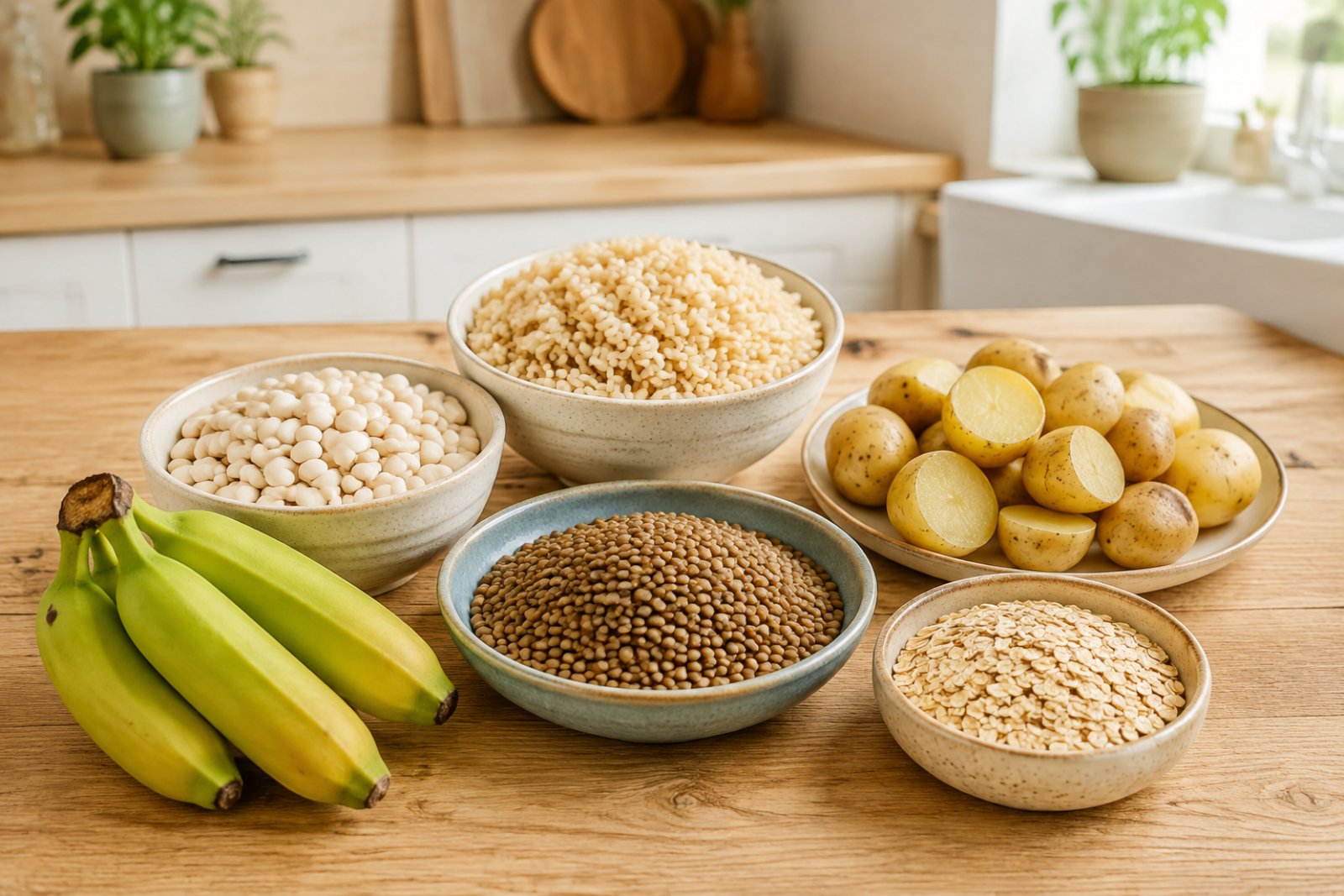
Legumes, whole grains, oats, green bananas, and cooked-and-cooled potatoes or rice are practical food examples.
Fermentation
After reaching the colon, resistant starch can be used by gut microbes and may contribute to short-chain fatty acid production.
Personal tolerance
Gas or bloating can occur when fermentable fiber rises quickly, especially with large supplemental amounts.
Resistant starch foods to know
Amounts vary by variety, ripeness, serving size, and preparation. Instead of chasing an exact number, include a mix of fiber-containing foods across the week.
| Food | Why it can contribute | Simple idea |
|---|---|---|
| Beans, lentils, and peas | Legumes provide resistant starch and other types of fiber. | Add a modest serving to soup, salad, tacos, or a grain bowl. |
| Green or just-ripe bananas | Less-ripe bananas generally contain more resistant starch than fully ripe fruit. | Blend part of one into a smoothie or slice over oats. |
| Oats and intact whole grains | Whole-grain structure can slow digestion and adds dietary fiber. | Use oatmeal, barley, or a whole-grain side dish. |
| Cooked and cooled potatoes or rice | Cooling can increase retrograded starch, one form of resistant starch. | Use chilled potatoes in a salad or cooled rice in a balanced bowl; refrigerate foods safely. |
Resistant starch benefits: keep the evidence in perspective
This carbohydrate is studied for fermentation, gut microbial activity, and metabolic outcomes. Fermentation can produce short-chain fatty acids, but people do not all respond in the same way. The type of resistant starch, the rest of the diet, and a person’s gut microbiome can influence results.
Clinical research suggests resistant starch may affect post-meal glucose responses or other metabolic measures in some settings, but findings are not uniform enough to treat it as a stand-alone strategy for blood sugar management, weight loss, or disease prevention. A 2024 narrative review noted that effects can differ by resistant starch type and food processing. If you have diabetes or another condition that affects blood glucose, use your care team’s guidance rather than changing your eating plan around a single ingredient.
How to add it gradually
More fermentable fiber is not always more comfortable. A gradual approach lets you see how your digestive system responds while maintaining a varied diet.
- Start with one change, such as adding beans to one meal or choosing oats at breakfast.
- Keep portions modest for several days before adding another source.
- Drink fluids regularly as your overall fiber intake rises.
- Notice gas, bloating, cramps, or changes in bowel habits; reduce the amount if symptoms are uncomfortable.
Resistant starch supplements and labels
It may also appear as an ingredient in powders, snack foods, or fiber products. Food sources are a useful starting point because they bring other nutrients and make it easier to build a varied eating pattern. A supplement should not replace prescribed care, balanced meals, or evaluation of persistent symptoms.
In the United States, the FDA’s dietary fiber guidance addresses high-amylose starch (resistant starch 2) among certain isolated or synthetic nondigestible carbohydrates. Product labels can help you compare serving sizes and total dietary fiber, but they do not show how every person will tolerate a product. Be cautious of products that promise to diagnose, treat, cure, or prevent disease.
For another evidence-based fiber resource, read our guide to psyllium husk benefits, uses, and safety.
Food safety for cooked-and-cooled starches
Cooling cooked starches is not a reason to leave food at room temperature for long periods. Refrigerate cooked rice, potatoes, and other leftovers promptly, keep them cold, and follow standard food-safety guidance when storing or reheating. When in doubt, discard food that has been left out too long.
When to seek medical advice
Talk with a qualified health professional if ongoing digestive symptoms, unexplained weight changes, persistent diarrhea or constipation, severe abdominal pain, blood in stool, fever, or dehydration are present. Those symptoms should not be self-managed with a fiber product or a dietary experiment.
Frequently asked questions
What foods are high in resistant starch?
Common examples include beans, lentils, green bananas, oats, intact whole grains, and some cooked-and-cooled potatoes or rice. Amounts vary by food and preparation.
Does cooling rice or potatoes create resistant starch?
Cooling can increase retrograded starch, a form of resistant starch. It does not make a food calorie-free or turn it into a treatment for a health condition.
Is resistant starch the same as dietary fiber?
Resistant starch behaves like a fermentable fiber in the digestive tract, but labeling and ingredient definitions depend on the specific carbohydrate and food context.
Can resistant starch cause gas or bloating?
It can, particularly when intake rises quickly. Start gradually and reduce the portion if symptoms are uncomfortable. People with digestive conditions may need individual guidance.
Should I take a resistant starch supplement?
Not necessarily. Food sources are often a practical starting point. Discuss supplements with a clinician or pharmacist if you have a medical condition, take medicines, or have persistent digestive symptoms.
References
- Baptista N, et al. Harnessing the power of resistant starch: a narrative review of its health impact and processing challenges. Frontiers in Nutrition. 2024.
- Tolerability and SCFA production after resistant starch supplementation in humans: a systematic review of randomized controlled studies. The American Journal of Clinical Nutrition. 2021.
- Birt DF, et al. Resistant starch: impact on the gut microbiome and health. Current Opinion in Biotechnology. 2019.
- U.S. Food and Drug Administration: Questions and Answers on Dietary Fiber.
Medical disclaimer: This article is for general education only and is not medical advice, diagnosis, or treatment. Discuss dietary changes, symptoms, and supplements with a qualified health professional.
