Microbiome Nutrition: Foods, Fiber, and Healthy Habits
Microbiome nutrition is the everyday eating pattern that supplies the gut’s microbial community with food and supports a varied diet. Fiber-rich plant foods, fermented foods when tolerated, and minimally processed meals can all fit—but there is no single “perfect” microbiome menu or supplement that works the same for everyone.
What is microbiome nutrition?
The gut microbiome is the community of microorganisms living in the digestive tract. Nutrition influences the material that reaches those microbes, particularly nondigestible carbohydrates such as dietary fiber. Researchers can measure changes in microbial composition and metabolites after dietary changes, but a change in a microbiome test does not by itself prove a health outcome.
That distinction matters. “Feed your microbiome” is a useful shorthand for eating a broad range of fiber-containing foods, but it is not a diagnosis, treatment plan, or promise to cure digestive symptoms.
Fiber variety
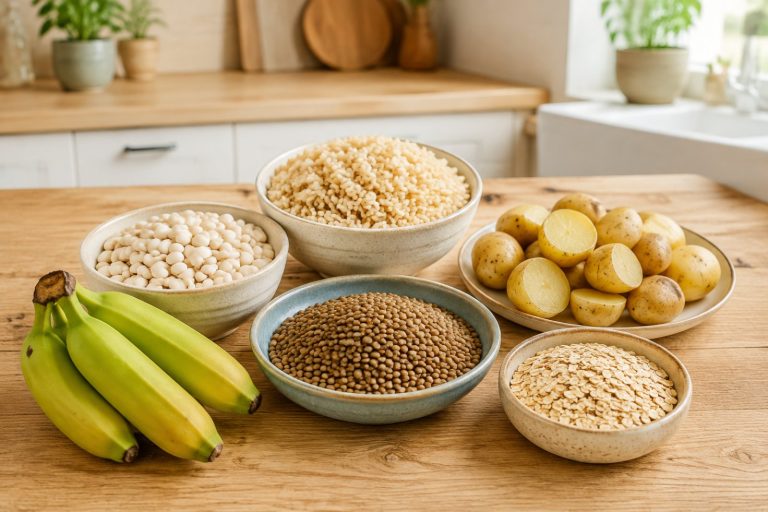
Beans, vegetables, fruit, oats, whole grains, nuts, and seeds provide different fibers and plant compounds.
Fermented foods
Yogurt, kefir, kimchi, and sauerkraut may fit some diets; portions and tolerance vary.
Individual response
Microbiomes differ considerably between people, so a food that feels good for one person may not suit another.
Microbiome nutrition foods to prioritize
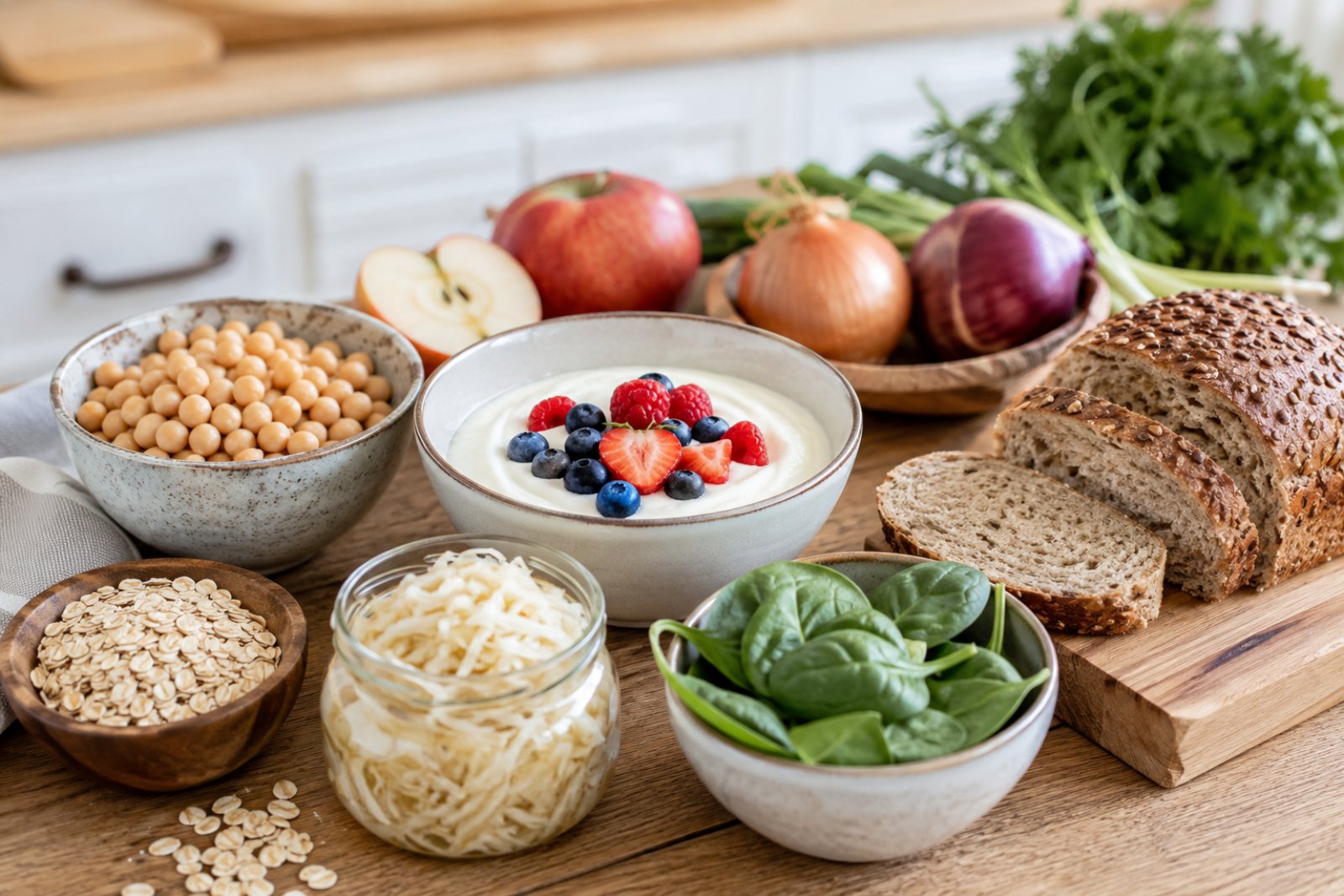
Rather than relying on one food, aim for repeatable meals that include several plant foods. USDA dietary guidance supports patterns built around vegetables, fruits, whole grains, legumes, and other nutrient-dense foods.
| Food group | Examples | Practical starting point |
|---|---|---|
| Legumes | Beans, lentils, chickpeas, peas | Add a small serving to soup, salads, or tacos. |
| Whole grains and fiber foods | Oats, barley, brown rice, whole-grain bread | Choose one whole-grain option at a meal. |
| Vegetables and fruit | Leafy greens, onions, berries, apples, asparagus | Mix colors and types over the week. |
| Fermented foods | Yogurt with live cultures, kefir, kimchi, sauerkraut | Try a modest amount if it fits your preferences and needs. |
Microbiome nutrition and fiber: what research suggests
Dietary fiber reaches the large intestine and can be fermented by resident microbes. Research consistently shows that fiber interventions can shift microbial communities, but the size and meaning of the response vary. A 2023 NIDDK research update describes a controlled feeding study in which a fiber-focused, minimally processed dietary pattern changed microbial composition and function; it does not mean every person should expect the same effect.
Practical nutrition advice can stay simple: use a food-first approach, increase fiber slowly, and focus on the total pattern. For a related guide, see resistant starch foods, benefits, and how it works.
How to build a microbiome-friendly eating pattern
- Start with one reliable fiber addition, such as oatmeal, beans, or an extra vegetable at lunch.
- Increase portions gradually over days or weeks instead of making a large change overnight.
- Pair plant foods with protein and healthy fats for satisfying meals.
- Choose fermented foods for enjoyment and variety, not as a substitute for medical care.
- Keep a simple note of meals and symptoms if you are identifying personal triggers.
Probiotics, prebiotics, and supplements
Probiotics are live microorganisms, while prebiotics are nondigestible components that may selectively support some microorganisms. They are not interchangeable, and results from one probiotic strain or product do not automatically apply to another. NCCIH notes that evidence for many probiotic uses remains limited or mixed.
Dietary supplements are not approved by the FDA for safety and effectiveness before marketing. A supplement should not replace prescribed treatment or evaluation of ongoing symptoms. Talk with a clinician or pharmacist before using one if you are pregnant or breastfeeding, have a chronic illness, take medicines, are immunocompromised, or are planning surgery.
When to seek medical advice
Get medical care for severe or persistent abdominal pain, blood in stool, unexplained weight loss, fever, dehydration, or a major ongoing change in bowel habits. These symptoms should not be self-treated with a probiotic, fiber powder, or microbiome test.
Frequently asked questions
What is the best food for the gut microbiome?
There is no single best food. A varied pattern that includes legumes, fruits, vegetables, whole grains, and other fiber-rich foods is more useful than focusing on one item.
Do fermented foods improve the microbiome?
They may influence the food and microbial exposures in a diet, but individual effects vary. Choose them based on preference and tolerance rather than expecting a guaranteed outcome.
Should I take a probiotic for microbiome health?
Not necessarily. Probiotic effects are strain- and condition-specific. Consider food first and discuss supplements with a qualified professional when you have a health condition or take medicines.
Can more fiber cause digestive symptoms?
Yes. Increasing fiber quickly can cause gas or bloating for some people. Gradual changes and adequate fluids can make the adjustment more comfortable.
Are at-home microbiome tests useful?
They can describe some features of a stool sample, but they do not diagnose disease or establish the right diet for every person. Discuss persistent symptoms with a clinician.
References
- National Institute of Diabetes and Digestive and Kidney Diseases: The Complex Interplay of Diet and the Gut Microbiome Influences Human Health.
- Diet and the Human Gut Microbiome: An International Review. Microorganisms. 2020.
- National Center for Complementary and Integrative Health: Probiotics—Usefulness and Safety.
- Dietary Guidelines for Americans.
Medical disclaimer: This article is for general education only and is not medical advice, diagnosis, or treatment. Discuss symptoms, diet changes, and supplements with a qualified health professional.