
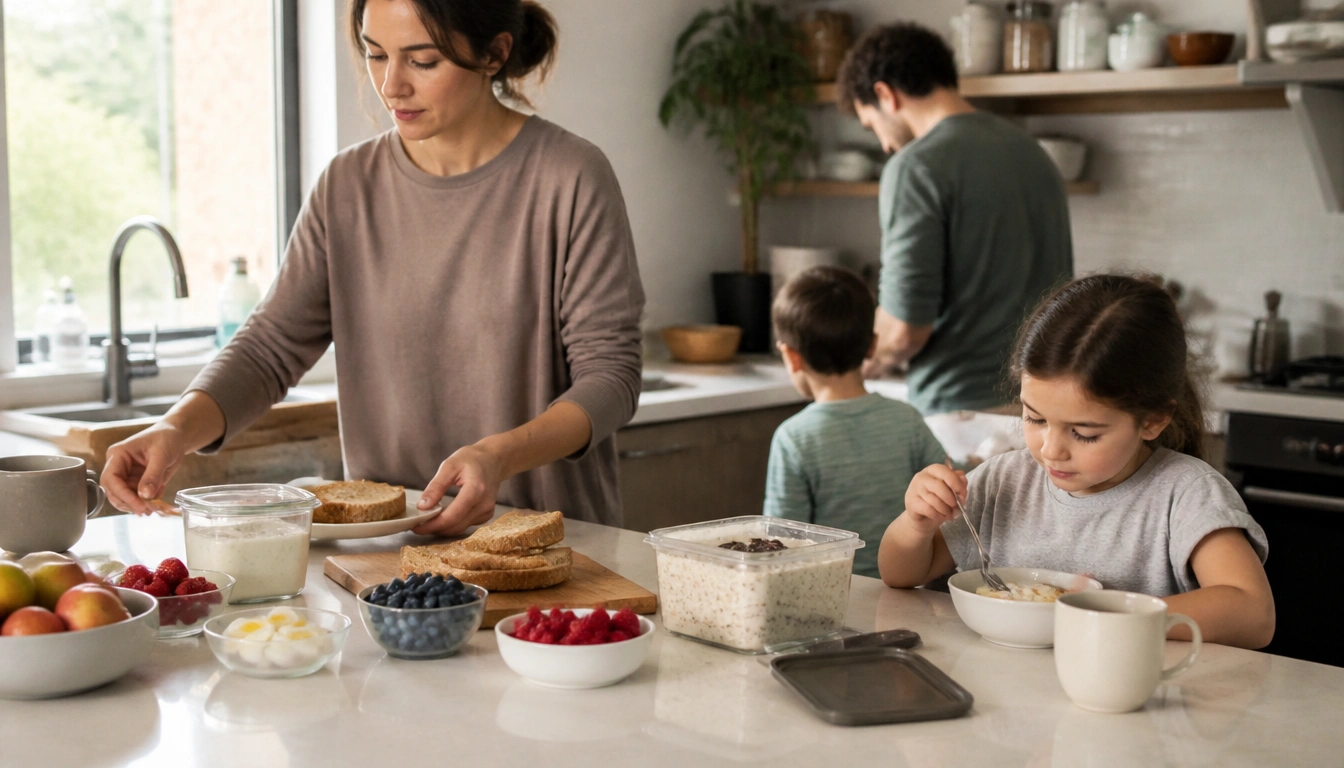
The fastest healthy family breakfasts are usually built from a few reliable parts: a whole grain, a protein, fruit or vegetables, and sometimes a healthy fat. That could be overnight oats with berries, toast with egg and avocado, yogurt with fruit and cereal, or a make-ahead egg muffin with fruit. The goal is not a perfect meal; it is a realistic one that gives your family steady energy and is easy to repeat on busy mornings.
Key Takeaways
- Aim for a simple breakfast formula: whole grain, protein, produce, and a little healthy fat.
- Highly processed sugary breakfasts can lead to a quick rise and drop in energy, which makes mornings harder for kids and adults.
- Make-ahead foods like overnight oats, egg muffins, and hard-boiled eggs can save time all week.
- Toddlers need softer textures and choking-safe portions, while teens often need larger servings and extra protein.
- If someone is not hungry early, start lighter and plan a nutrient-dense mid-morning snack instead.
- Choose school-safe swaps such as seed butter, dairy-free yogurt, or nut-free granola when needed.
Balanced breakfast framework for family mornings
A family breakfast works best when it follows a simple pattern instead of a complicated recipe. Public health guidance from the NHS and other nutrition authorities points toward meals that are higher in fiber and built from whole grains, protein foods, and produce. In practice, that means combining at least two food groups, and often three or four, so breakfast is satisfying without being heavy.
A practical formula is: whole grain + protein + fruit or vegetables + optional healthy fat. Examples include oats with yogurt and berries, wholegrain toast with egg and tomato, or a pita with cottage cheese and fruit on the side. This approach helps children get energy for school and gives adults a steadier start to the morning.
Think of the formula as flexible, not strict. A slice of toast with peanut butter and banana can be enough on a rushed day. On a bigger morning, add yogurt or a boiled egg. The point is to assemble a meal from normal foods you already keep at home, not to cook a full brunch before work.
Fastest breakfast paths for busy parents
Fast breakfast ideas usually fall into three lanes: zero-cook, five-minute assembly, and make-ahead. That structure makes it easier to pick the right option for the day instead of starting from scratch every morning.
Zero-cook options include yogurt with fruit and cereal, cottage cheese with berries, or a smoothie made from milk or a fortified plant drink, fruit, and oats. These are useful when everyone is behind schedule or someone is not very hungry first thing.
Five-minute assembly meals can be as simple as toast topped with avocado and egg, or wholegrain crackers with cheese and fruit. If your family likes savory breakfasts, keep hard-boiled eggs in the fridge and pair them with toast or a piece of fruit. If sweet breakfasts work better, try plain yogurt topped with berries and a sprinkle of low-sugar wholegrain cereal.
Make-ahead options are the real time-saver. Overnight oats, baked oatmeal, egg muffins, breakfast burritos, and cooked egg-and-vegetable frittatas can be prepared once and reused for several mornings. They are especially helpful on school days, because you can reheat and pack them quickly while handling everything else at home.
Make-ahead breakfast prep system that actually gets used
The best prep system is one you can repeat. Start by choosing one grain base, one protein, and one fruit or vegetable to prepare ahead. A small amount of planning on the weekend often prevents the weekday scramble.
Good staples include rolled oats, wholegrain bread, eggs, plain yogurt, berries, bananas, grated carrots, spinach, and cheese. From there, make a few components instead of full meals. Cook a tray of egg muffins, boil a batch of eggs, wash fruit, and portion oats into containers. That gives you building blocks for several combinations without boredom.
For example, one batch of overnight oats can become different breakfasts by changing the toppings: berries one day, sliced banana the next, or seeds and diced apple later in the week. Egg muffins can be eaten warm or cold, tucked into toast, or paired with fruit for a quicker meal. This kind of reuse is easier than trying to create a new recipe every morning.
If your household prefers grab-and-go food, prepare breakfast in containers with lids so the meal is already portioned. That reduces decision-making when everyone is tired and hungry. A few prepared items in the fridge can turn breakfast into assembly rather than cooking.
Kid-specific adaptations for toddlers, picky eaters, and teens
Children of different ages need different breakfast shapes, even when the foods are similar. Toddlers do best with soft textures, small portions, and foods cut safely. Whole grapes, large pieces of firm fruit, and thick spoonfuls of nut butter can be choking hazards, so they should be modified. Slice grapes lengthwise, soften firm foods, and spread nut or seed butter thinly.
Picky eaters often accept breakfast better when the meal looks familiar. A deconstructed plate can help: toast on one side, fruit on another, and yogurt in a separate bowl. Some children eat better when they can help choose the fruit, cereal, or topping the night before. Small choices reduce resistance without turning breakfast into a negotiation.
Teenagers are a different story. Many need larger portions and more protein because of growth, sports, and longer school mornings. A teen who only has toast may be hungry again quickly. A better option is toast plus eggs, yogurt plus oats, or a breakfast wrap with beans, egg, or cheese. If your teen skips breakfast often, a portable option is usually more realistic than a sit-down meal.
How to make breakfast more filling and avoid the sugar crash
Highly processed sugary breakfasts can look convenient, but they often do not hold kids or adults for long. Refined pastries, sugary cereals, and sweet bakery items can raise blood sugar quickly and then leave people tired, hungry, or irritable before lunch. Harvard Health and other clinical education sources describe this pattern as part of the sugar crash that comes after a fast-digesting breakfast.
A more filling breakfast usually includes fiber and protein together. Fiber slows digestion, while protein helps with satiety. That is why oatmeal with yogurt is more satisfying than plain oatmeal alone, and wholegrain toast with egg is more filling than toast with jam only. Adding fruit or vegetables also helps round out the meal without making it much harder to prepare.
On especially busy mornings, you do not need a large meal to avoid the crash. A smaller but balanced option can work well: a banana with milk, a yogurt cup with fruit, or a slice of wholegrain toast with nut or seed butter. If breakfast is too sweet and too refined, the morning can feel harder even if the food seemed quick at the time.
Allergy-aware and school-safe swaps
Family breakfast often has to fit allergy rules, classroom policies, and personal preferences. The good news is that most breakfast ideas are easy to adapt. If dairy is a problem, use fortified soy, oat, or other plant-based yogurt and milk alternatives. If nuts are not allowed for school, sunflower seed butter or pumpkin seed butter can take the place of peanut or almond butter.
For nut-free school mornings, choose foods that travel well and do not rely on spreads that may be restricted. Egg muffins, yogurt with fruit, cheese and crackers, oatmeal, and breakfast sandwiches made with seed butter are practical options. If you are sending breakfast in a lunchbox, keep the menu simple and familiar so children are more likely to eat it.
When making substitutions, remember the goal is balance, not imitation. A dairy-free yogurt bowl does not need to look exactly like a regular yogurt bowl to be useful. What matters is that the meal still offers protein, fiber, and enough energy to carry the family through the morning.
Food safety and storage basics for prep-ahead breakfasts
Make-ahead breakfasts are only helpful if they are stored safely. According to the NHS and U.S. public health guidance, cooked egg dishes and dairy-based breakfasts should be refrigerated promptly and kept cold until eaten. As a practical rule, most cooked egg items and similar refrigerated breakfasts are best used within about three to four days.
That timeline works well for egg muffins, breakfast casseroles, and overnight oats made with milk or yogurt. Store them in airtight containers in the refrigerator, and discard anything that smells off, looks unusual, or has been left out too long. If you are reheating egg dishes, heat them until steaming hot throughout.
Overnight oats are especially convenient because they need no cooking, but they still count as a perishable breakfast. Use clean containers, keep them refrigerated, and avoid leaving dairy-based mixtures on the counter for long periods. If your morning routine is rushed, packing the breakfast the night before can make food safety easier, not harder.
Night-before kitchen prep that lowers morning stress
A low-friction breakfast routine often starts the night before. Small setup steps can save several minutes when everyone is tired. Put bowls, spoons, cups, and the toaster in place before bed. Set out the oats, cereal, or bread you plan to use. If your child likes a smoothie, place the blender jar and ingredients together on the counter so they are ready to go.
Kid involvement can help too. Let children choose between two approved fruits, pick their yogurt topping, or help place berries into a container. That kind of participation makes breakfast feel more predictable and can reduce complaints. It also teaches children that breakfast is a normal routine rather than a daily battle.
If your household often runs late, create a backup plan. Keep a few shelf-stable items on hand, such as wholegrain cereal, fruit cups in juice, oats, crackers, or seed butter. Then even on the messiest mornings, you still have a realistic way to build a balanced meal without starting from zero.
Remember that breakfast does not have to be large to be useful. If someone truly is not hungry right away, offer a lighter option and plan for a mid-morning snack such as fruit, yogurt, cheese, or a sandwich half. That can work better than forcing a full meal before appetite has arrived.
Frequently Asked Questions
How can I make breakfast healthier without cooking from scratch every day?
Use a repeatable formula and rely on ready-to-use foods. Wholegrain toast, oats, yogurt, fruit, eggs, and seed butter can be mixed and matched into balanced breakfasts with very little cooking. Prep a few components ahead so mornings become assembly rather than full meal prep.
What are the best make-ahead breakfasts for kids and adults?
Overnight oats, egg muffins, baked oatmeal, breakfast burritos, and hard-boiled eggs are all practical options. They store well, reheat easily, and can be paired with fruit or yogurt for a more complete meal.
How do I build a balanced breakfast using simple food groups?
Use a whole grain for energy, a protein food for fullness, and fruit or vegetables for fiber and nutrients. Healthy fats can help with satisfaction. A simple example is wholegrain toast with egg and fruit, or oats with yogurt and berries.
What breakfast foods help keep children full and focused until lunch?
Breakfasts that combine fiber and protein tend to last longer, such as oatmeal with yogurt, eggs on wholegrain toast, or yogurt with fruit and cereal. These choices are more filling than sugary refined breakfasts that wear off quickly.
How can I adapt breakfast ideas for toddlers, picky eaters, or children with allergies?
For toddlers, use soft textures and safe sizes, and avoid choking hazards like whole grapes or thick spoonfuls of nut butter. For picky eaters, keep foods separate and familiar. For allergies, choose dairy-free yogurt or seed butter and follow school rules carefully.
The Bottom Line
A healthy family breakfast does not have to be elaborate. The easiest path is to use a simple pattern: whole grain, protein, produce, and a little healthy fat when needed. That formula works for toast, oats, yogurt bowls, wraps, and other quick meals.
Busy parents usually do best with a few repeatable systems: prep one or two items ahead, keep portable options on hand, and adjust for age, appetite, and school rules. With a little planning, breakfast can be fast, filling, and realistic instead of stressful.
Medical disclaimer
Medical disclaimer: This content is for educational and informational purposes only and is not a substitute for professional medical advice, diagnosis, or treatment. Dietary needs and supplement suitability vary by individual.
Sources
- National Health Service (NHS) — wchc.nhs.uk. Accessed November 2026.
- National Health Service (NHS) — www.nhs.uk. Accessed November 2026.
- U.S. Government / Health Authority — ca.gov. Accessed November 2026.
- Academic Research Institution — harvard.edu. Accessed November 2026.
