
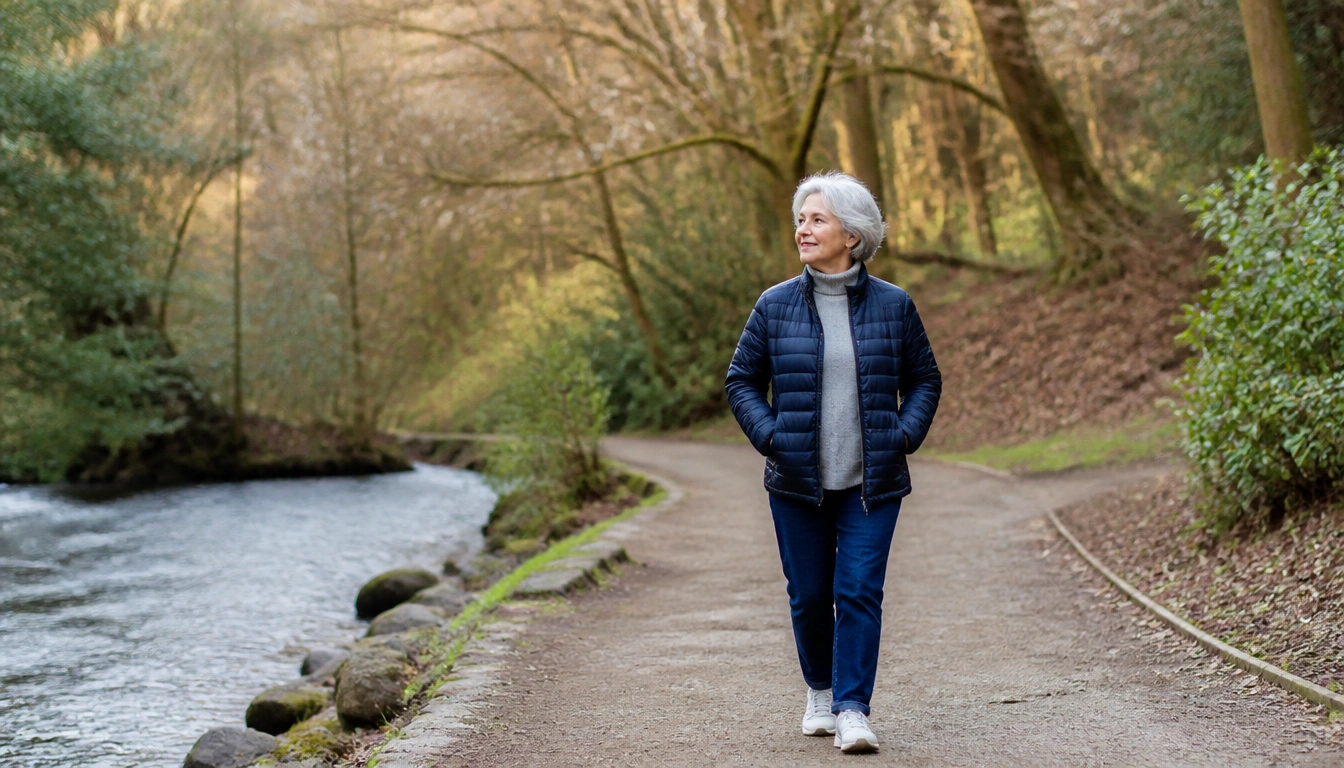
A simple mindfulness walk for adults over 50 is a slow, attentive walk where you notice your steps, breathing, surroundings, and body sensations without trying to “empty” your mind. Start with a short, safe route, keep the pace comfortable, and use the walk as both a stress-management practice and a gentle form of aerobic activity. If pain, dizziness, or shortness of breath appears, stop and adjust.
Key Takeaways
- Begin with 5 to 10 minutes on a familiar, low-risk route; shorter walks are often easier to sustain than ambitious plans.
- You do not need perfect concentration. When your mind wanders, notice it and return attention to your feet, breath, or surroundings.
- A mindfulness walk can support stress relief and also count toward weekly moderate aerobic activity if the pace is brisk enough for you.
- Choose safe footwear, weather-appropriate clothing, and indoor alternatives such as a treadmill or indoor track when outdoor conditions are poor.
- Older adults can adapt the practice for arthritis, fatigue, balance issues, or assistive devices by slowing down and prioritizing stability.
- Mindfulness walking is a helpful habit, but it should not replace medical care for ongoing pain, severe anxiety, depression, or new symptoms.
Why a mindfulness walk can be especially useful after 50
A mindfulness walk is useful after 50 because it combines two supportive habits at once: gentle movement and present-moment attention. Many adults find that a short walk can interrupt worry, reduce mental clutter, and make the day feel more manageable. At the same time, walking is a familiar form of movement that does not require special equipment or a steep learning curve.
This matters because healthy aging often depends on habits that are practical enough to repeat. According to the CDC, regular physical activity helps support heart health, mobility, and overall function, and walking is one of the easiest ways to get there. Mindful walking adds another layer: instead of rushing through the steps, you pay attention to how your body feels, which can make the practice more grounding and less automatic.
For many adults over 50, the appeal is that the walk does not have to be intense to be worthwhile. A steady, comfortable pace can still support mood and focus. Over time, this type of attention may also help you notice patterns early, such as stiffness, fatigue, or a tendency to tense your shoulders when stressed.
Who this practice is best for and when to be cautious
Mindfulness walking is a good fit for people who want a low-pressure way to manage stress, get moving, or ease into meditation without sitting still. It is especially appealing if traditional meditation feels frustrating, if your mind races when you sit, or if you prefer to focus on movement instead of silence.
It is also well suited to adults who need a slower pace, want a gentle habit after retirement or a life transition, or are trying to build consistency without a demanding workout plan. The National Institute on Aging and other public health bodies emphasize choosing activities that match your abilities rather than forcing a one-size-fits-all routine.
Use caution if you have chest pain, dizziness, severe shortness of breath, a recent fall, unstable blood pressure, or a health issue that makes exercise risky. If walking increases sharp joint pain, causes you to feel unsteady, or leaves you wiped out for hours afterward, scale back and ask a healthcare professional for guidance. Mindfulness should make the walk more attentive, not more stressful.
How to prepare: shoes, route, weather, hydration, and assistive devices
Preparation does not need to be elaborate. The goal is to make the walk easy to start and easy to repeat. Comfortable, supportive shoes matter more than special gear. Choose footwear that fits well, feels stable, and has good traction. Clothing should match the weather so you are not distracted by being too cold, too hot, or damp.
Your route should feel predictable. A flat sidewalk, quiet neighborhood loop, local park path, indoor track, or treadmill can all work. The best route is the one you can use safely and without much planning. If the weather is icy, very hot, smoky, or rainy, move indoors. According to the NHS, safe activity choices are the ones you can maintain consistently.
If you use a cane, walker, or trekking poles, keep using them. They do not interfere with mindfulness; they are part of how your body moves safely. A small bottle of water can help on warm days or longer walks. You do not need to overhydrate, but if you tend to forget water or take medications that affect thirst, a small amount carried with you may be useful. Before you begin, check that your phone is charged and that your route is well lit if you may be walking at dawn or dusk.
A simple 4-step mindfulness walk routine
The simplest version is also the most durable. You are not trying to perform a perfect meditation. You are practicing noticing, returning, and continuing.
Step into the walk gently
Stand still for a few seconds before you begin. Feel both feet on the ground. Notice whether your shoulders are lifted or relaxed. Take one easy breath and let your pace start naturally.
Set a comfortable rhythm
Walk a little slower than your usual “get somewhere” pace. The walk should feel deliberate, not strained. If you are breathless, slowing down is appropriate. If you want the walk to contribute to moderate aerobic activity, you can gradually increase the pace only as long as you remain able to speak in short sentences.
Anchor attention to movement
Choose one or two anchors. Many people use the feeling of the heel meeting the ground, the roll of the foot, the swing of the arms, or the rise and fall of breathing. You do not need to track everything. Narrow attention makes the practice easier, especially for beginners.
Redirect kindly when the mind wanders
Thoughts will show up. That is normal. When you notice planning, worrying, or replaying a conversation, label it lightly in your mind and return attention to the next step or breath. There is no need to force your mind blank. Each return is part of the practice, not a mistake.
How to adjust the practice for arthritis, balance issues, fatigue, or chronic conditions
Older adults benefit from a mindfulness walk when it respects the body’s current limits. If you have arthritis or stiffness, start with a slower pace and shorter time. A gentle warm-up at home, such as a few minutes of ankle circles or shoulder rolls, may make the first steps feel easier. If a joint becomes increasingly painful, stop and reassess rather than pushing through.
For balance concerns, choose a flat route, avoid distractions such as scrolling on your phone, and keep your gaze mostly forward so you can read the terrain ahead. Trekking poles can help with stability on uneven surfaces. A walker or cane can also be part of the practice. What matters is steady, safe movement, not walking hands-free.
If fatigue is an issue, consider shorter walks done more often. On low-energy days, even a few minutes of attentive walking indoors can count as a meaningful practice. People managing chronic conditions such as heart disease, COPD, diabetes, or high blood pressure should follow individualized medical advice about exertion. The goal is comfort-first movement, not proving fitness.
If you have neuropathy, foot pain, or a history of falls, a safer environment matters more than the exact duration. An indoor track, hallway loop, or treadmill with rails may be better than an uneven path. For many people, the best adaptation is simply to slow down enough to feel stable and present.
How to build the habit without overcomplicating it
A mindfulness walk is easier to keep when it is attached to something you already do. You might walk after breakfast, after lunch, after a phone call, or before you sit down for the evening. A routine cue often works better than relying on motivation alone.
Start small. The briefest regular practice is often more useful than an ambitious plan you avoid. Many beginners do well with 5 to 10 minutes a few times a week, then gradually add time if the habit feels comfortable. If you want the walk to support weekly aerobic goals, you can slowly lengthen it or add days as your stamina improves.
Track success by consistency, not perfection. A walk that feels calm and repeatable is more valuable than one that feels forced. It can help to decide in advance what “good enough” looks like: shoes on, safe route, a few minutes of attention, and a gentle finish. That simple formula makes it easier to return to the habit after missed days, bad weather, or a busy week.
Common mistakes that make the practice feel harder than it needs to be
One common mistake is treating a mindfulness walk like a test. If you expect constant focus, you may end up judging yourself whenever your mind drifts. That expectation makes the practice feel stricter than it needs to be. The better approach is to expect distraction and treat redirection as the skill you are building.
Another mistake is choosing a route that is too demanding. Busy traffic, uneven ground, poor lighting, and crowded spaces all raise the mental load. A calmer environment reduces the chance that you will spend the whole walk worrying about safety instead of noticing the moment.
Some people also walk too fast at the start. If the pace is brisk enough that you cannot pay attention to your body or you feel tense, slow down. The practice should feel smooth enough that awareness can fit inside it. If you use a device for balance, do not set it aside to “do mindfulness correctly.” Stability is part of the practice.
Finally, do not turn the walk into a performance. You do not need a perfect posture, special breathing pattern, or silent mind. A natural walk with honest attention is enough.
When mindfulness walking should not replace medical or mental health care
Mindfulness walking is a useful self-care tool, but it is not a substitute for diagnosis or treatment. If you have ongoing low mood, persistent anxiety, panic symptoms, grief that feels unmanageable, or thoughts of self-harm, talk with a licensed mental health professional or your physician. The American Psychological Association supports simple self-care practices, but it does not suggest they replace professional care when symptoms are significant.
You should also seek medical advice if walking causes chest discomfort, faintness, new weakness, severe breathlessness, or pain that keeps returning. If you notice worsening balance, repeated falls, or a sudden change in memory or thinking, get checked. These are not issues to push through on your own.
Use the walk as a supportive habit alongside appropriate care. For many adults over 50, that is where it works best: as a realistic tool for stress relief, gentle movement, and clearer attention, without pretending to solve every health concern.
Frequently Asked Questions
How long should a mindfulness walk be for beginners over 50?
A good starting point is 5 to 10 minutes. Shorter walks are easier to repeat, and repetition matters more than duration at first. If that feels comfortable, you can slowly add time or a second short walk later in the day.
Is a mindfulness walk different from regular walking exercise?
Yes. The movement may look similar, but the attention is different. In a mindfulness walk, you deliberately notice sensations, breathing, and surroundings instead of letting your mind run on autopilot. It can still count as exercise if your pace is brisk enough.
What if I have arthritis, balance issues, or need a cane or walker?
You can still practice. Slow the pace, choose a flat and familiar route, and use your cane, walker, or poles if they help you feel stable. If pain, dizziness, or instability increases, stop and get medical guidance before trying again.
Can a mindfulness walk count toward weekly aerobic activity goals?
Yes, if the pace and duration meet your personal moderate-intensity level. The CDC recommends that older adults build toward regular aerobic activity, and a mindfulness walk can contribute when it is steady enough to raise your effort without straining you.
What should I do if my mind keeps wandering during the walk?
That is normal. Notice the thought, label it gently if helpful, and return attention to your steps, breath, or the feeling of contact with the ground. You do not need to empty your mind for the practice to work.
The Bottom Line
A mindfulness walk for adults over 50 works best when it is simple, safe, and flexible. Start with a short route, a comfortable pace, and one or two sensory anchors so the practice feels manageable rather than demanding.
If your body needs extra support, use it. Shoes, walking aids, indoor alternatives, and slower pacing are all compatible with mindfulness. The practice is about awareness and steadiness, not proving fitness or ignoring discomfort.
Used consistently, a mindful walk can support stress relief, clearer attention, and regular movement. If symptoms are persistent or concerning, pair the habit with professional medical or mental health care instead of relying on it alone.
Medical disclaimer
Medical disclaimer: This content is for educational and informational purposes only and is not a substitute for professional medical advice, diagnosis, or treatment. Dietary needs and supplement suitability vary by individual.
Sources
- National Institutes of Health (NIH) — nih.gov. Accessed October 2026.
- Centers for Disease Control and Prevention (CDC) — cdc.gov. Accessed October 2026.
- National Health Service (NHS) — www.nhs.uk. Accessed October 2026.
- Academic / Medical Research Institution — apa.org. Accessed October 2026.
