
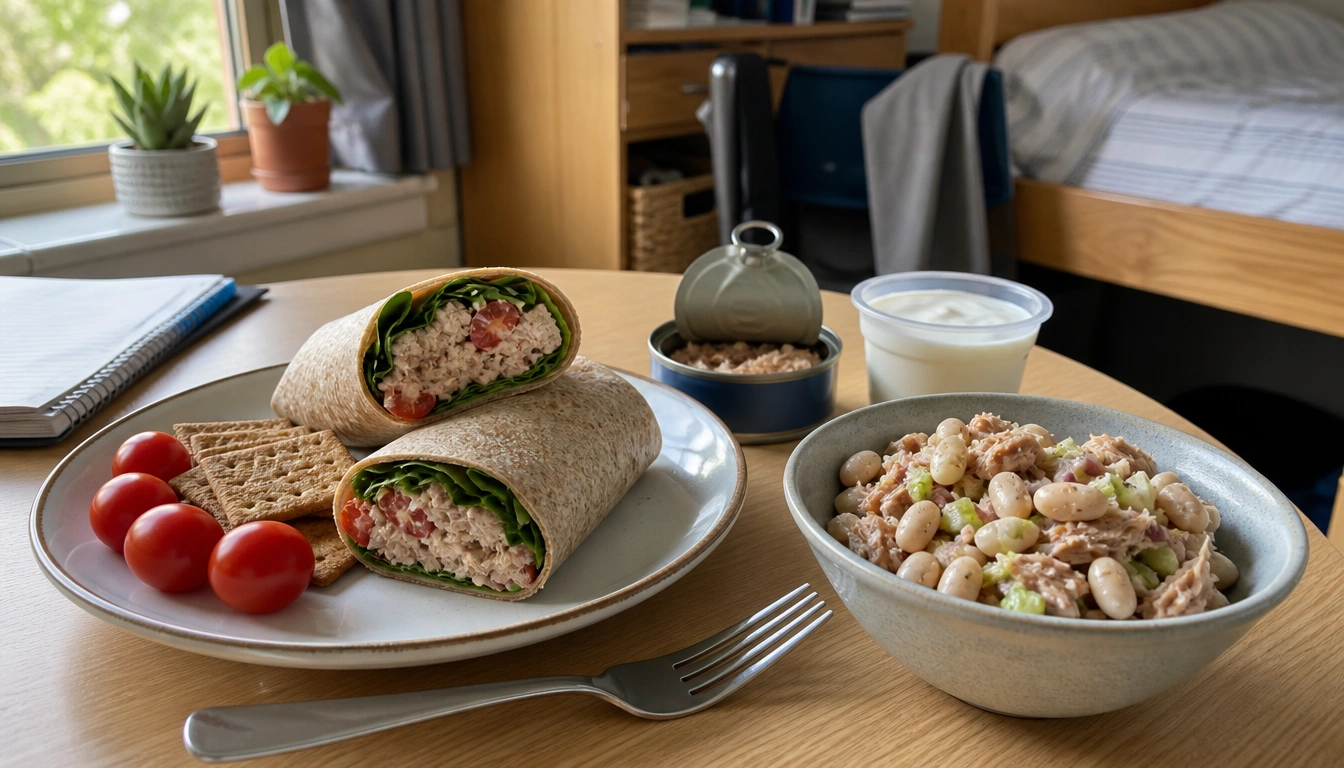
The easiest healthy tuna lunches for a dorm or small kitchen are no-cook meals built from canned light tuna, whole grains, beans, and vegetables. Try tuna in a Greek yogurt wrap, a Mediterranean bean salad, avocado tuna toast, or a microwave rice bowl. These options stay affordable, need very little equipment, and can be made healthier without relying on lots of mayo.
Key Takeaways
- Canned tuna works well for student lunches because it is shelf-stable, inexpensive, and ready to eat straight from the can.
- For a more filling meal, pair tuna with fiber-rich foods like whole-wheat wraps, crackers, beans, rice, greens, or chopped vegetables.
- Canned light tuna is usually the better everyday choice than albacore because it has lower mercury levels.
- Greek yogurt and avocado can replace some or all of the mayo without making the meal complicated or expensive.
- Opened tuna should be refrigerated promptly in a covered container and used soon; don’t count on room-temperature storage in a dorm.
Why tuna fits student life
If you need a tuna lunch idea for college students that is cheap, fast, and realistic, canned tuna checks a lot of boxes. It needs no stove, it stores well in a desk drawer or pantry, and it gives you a dependable hit of protein when you do not have time for a full cook session. That makes it especially useful on days packed with classes, lab work, commuting, or studying.
Tuna is also easy to mix into whatever you already have. A can can become a wrap, salad, toast topping, cracker plate, or rice bowl with only a few extra ingredients. According to MyPlate and the U.S. Dietary Guidelines, meals work best when protein foods are paired with fruits, vegetables, whole grains, and other nutrient-dense foods. Tuna is the protein anchor; the rest of the meal is what turns it into something more balanced and satisfying.
Another reason students lean on tuna is control. You can keep the base ingredients simple, then change the flavor with mustard, lemon, hot sauce, herbs, pickles, yogurt, avocado, or beans depending on what is in your dorm fridge or cabinet. That flexibility matters when you are buying food one small grocery run at a time.
How to build a better tuna lunch from pantry, fridge, and shelf-stable foods
The easiest way to make tuna lunch ideas work on a budget is to think in parts: protein, fiber, produce, and flavor. Tuna covers the protein. The biggest upgrade comes from adding foods that bring fullness and texture, especially whole grains and vegetables.
A good dorm-friendly formula is: tuna + one whole grain + one fiber-rich add-in + one crunchy or fresh produce item. For example, tuna on whole-wheat crackers with baby carrots, tuna in a whole-wheat wrap with lettuce, or tuna mixed with beans and served over brown rice. These combinations help the meal feel more complete than tuna alone and can make it easier to stay satisfied through the afternoon.
For shelf-stable backup options, keep a few items on hand that do not need much prep: canned beans, whole-grain crackers, microwaveable rice, shelf-stable pouches, shelf-stable olives, mustard packets, vinegar, and spice blends. On the fridge side, choose produce that holds up well in small spaces, such as carrots, cherry tomatoes, cucumbers, cabbage slaw mix, apples, and lemons. If you have limited fridge room, these foods usually give more value than delicate produce that spoils fast.
Here is a simple way to think about the ingredient job:
- Protein: canned tuna
- Fiber and staying power: beans, whole grains, or both
- Freshness and crunch: lettuce, cucumber, celery, carrots, cabbage, tomatoes
- Flavor: mustard, lemon, vinegar, pepper, dill, chili sauce, garlic powder
That structure keeps you from building a lunch that is cheap but not satisfying. It also makes grocery shopping easier because you are not trying to buy a dozen random ingredients for one recipe.
Greek yogurt crunch wrap
This is one of the simplest tuna lunch ideas for students who want something creamy without leaning on mayo. Drain a can of tuna, then mix it with plain Greek yogurt, a little Dijon mustard, and chopped celery or shredded carrot if you have it. Spoon the mixture into a whole-wheat tortilla and add lettuce, spinach, or shredded cabbage for crunch. Roll it tightly and slice it in half if that makes it easier to pack.
Why it works: Greek yogurt keeps the filling creamy while adding more protein. The vegetables bring texture and fiber, and the tortilla gives you an easy handheld lunch. If you want more flavor, add black pepper, a squeeze of lemon, or a small spoonful of relish.
Variation ideas are easy. Swap the tortilla for whole-grain bread if that is what you have. Add chopped pickles for a deli-style version. If your fridge is tiny, keep pre-washed greens or a bag of coleslaw mix instead of buying multiple vegetables. The goal is not to create a complicated wrap; it is to turn one can of tuna into a more complete meal with almost no cleanup.
Mediterranean tuna and bean lunch ideas
For a no-cook lunch that feels more like a full meal, tuna and beans are a strong combination. Rinse and drain canned white beans, then mix them with tuna, cherry tomatoes, cucumber, olive oil, lemon juice or vinegar, and a pinch of salt and pepper. You can eat it as a salad, stuff it into a pita, or pack it in a jar for a grab-and-go lunch.
This is one of the most practical Mediterranean-style tuna lunch ideas for college students because it uses shelf-stable ingredients that still taste fresh. Beans add fiber and extra protein, which helps the meal hold you over longer than tuna alone. The vegetables add volume without driving up the cost very much.
If you want a little more variety, use chickpeas instead of white beans, add chopped olives, or toss in a handful of greens. If you do not have a knife or cutting board, you can still make this work with pre-cut cucumber, cherry tomatoes, or a bagged salad kit. A jar lunch is especially useful when you need to make food the night before and carry it to class the next morning.
Avocado tuna toast and a fast rice bowl
Two more easy options work well when you want something filling with very little effort: avocado tuna toast and a spicy tuna rice bowl. Both rely on a small number of ingredients and can be adjusted to whatever is in your dorm fridge.
For avocado tuna toast, mash half an avocado with drained tuna, black pepper, and a little garlic powder or lemon juice if you have it. Spread it on whole-grain toast or pile it onto sturdy crackers. Avocado replaces mayonnaise with a creamy texture and brings a different kind of richness. If the avocado is not quite ripe, mix in a little Greek yogurt to soften the texture.
For the rice bowl, use microwaveable brown rice or another ready-to-heat grain. Top it with tuna, a small amount of soy sauce or hot sauce, and whatever crunchy vegetables you have, such as cucumbers, shredded carrots, or cabbage. This is a budget-friendly way to make the meal feel warm and substantial without needing a stove. If you want more texture, add sesame seeds, scallions, or a spoonful of canned corn.
Both meals are useful when you are tired of sandwiches. They also show how tuna can move beyond tuna salad and still stay affordable.
Mayo, Greek yogurt, or avocado: which swap makes sense
There is no one best binding ingredient for every tuna lunch. Mayo is fine in moderation, but many students want lighter, less expensive, or higher-protein options. Greek yogurt, avocado, and mayo each do a different job.
| Option | Best for | What it adds | When to use it |
|---|---|---|---|
| Mayo | Classic tuna salad flavor | Creaminess and familiar taste | When you want the traditional texture and already have it on hand |
| Plain Greek yogurt | A lighter, protein-forward filling | Creaminess plus more protein | When you want a healthier-feeling tuna salad without much extra cost |
| Avocado | Toast, crackers, or a richer spread | Creaminess and heart-healthy fats | When you have ripe avocado and want a fresher, less tangy flavor |
A practical approach is to mix and match. Use mostly Greek yogurt with a small spoonful of mayo if you like the taste of classic tuna salad but want a lighter version. Use avocado when you want a spread that works well on toast or crackers. If you are watching cost closely, plain Greek yogurt often stretches well because a small amount goes a long way, especially when mixed with tuna and crunchy vegetables.
The best choice is the one you will actually make and eat. A simple recipe that fits your dorm setup is more useful than a “healthier” idea that is too fussy or expensive to repeat.
Choosing the right tuna for regular meals
For routine student lunches, canned light tuna is usually the better default. The FDA and EPA list canned light tuna as a lower-mercury choice than albacore tuna. That matters if tuna is one of your go-to proteins during the school week. Mercury exposure is not about one lunch; it is about repeated intake over time, so choosing the lower-mercury option for frequent meals is a smart habit.
Albacore tuna can still fit into a healthy eating pattern, but it generally contains more mercury than light tuna. If you are eating tuna often, light tuna is the safer everyday pick. For most adults, variety is helpful too: rotate tuna with beans, eggs, yogurt, peanut butter, chicken, or other quick proteins so you are not leaning on the same food every day.
Label reading is simple. Look for words like light tuna or albacore on the can, and check whether it is packed in water or oil. Water-packed tuna is often the easiest choice for quick lunches because it is lighter and can be mixed with whatever sauce or binder you choose. If sodium is a concern, compare labels and choose lower-sodium options when possible.
The same official guidance also matters for pregnant or breastfeeding students. They should follow specific FDA and EPA advice on seafood choices and mercury limits, with light tuna generally preferred over albacore. If that applies to you, the safest path is to choose a variety of lower-mercury seafood options and avoid making tuna the only fish you eat.
Food safety and storage in a small dorm fridge
Food safety is part of making tuna lunch ideas work in a dorm. Once a can is opened, the tuna should not be left at room temperature for long. If you are not eating it right away, transfer leftovers to a clean, covered container and refrigerate them promptly. Small dorm fridges can get crowded, so it helps to portion tuna into a small airtight container instead of keeping it in the open can.
Do not rely on a “I’ll eat it later” plan if the tuna has been sitting out during class prep or a study session. Tuna salad and mixed tuna dishes can spoil if they are left unrefrigerated too long, especially in warm rooms. Use clean utensils, wash your hands before assembling lunch, and keep the fridge cold enough to protect leftovers.
If you make a jar salad or wrap ahead of time, assemble it with storage in mind. Keep wet ingredients away from bread or greens when possible, and eat the meal within a reasonable time after making it. For best quality and safety, avoid storing opened tuna for more than a few days, and when in doubt, discard it. A food-safe lunch is not more complicated; it just needs a few habits that are easy to repeat.
What to stock for several cheap lunches
The most useful budget strategy is to buy a short list of ingredients that can turn into multiple lunches. That way, you are not spending money on one-off items that spoil before you use them. A student-friendly tuna shelf list might include canned light tuna, whole-wheat tortillas or bread, whole-grain crackers, microwave brown rice, canned beans, plain Greek yogurt, mustard, and a couple of long-lasting vegetables.
Think in combinations. Tuna and beans can become a salad one day and a wrap the next. Tuna plus yogurt can become a creamy sandwich filling. Tuna plus rice can become a bowl. If you keep a few seasonings on hand, the same base ingredients can taste different enough that you do not get bored quickly. Garlic powder, pepper, chili flakes, dill, and vinegar are cheap ways to change the flavor without making the grocery list bigger.
That kind of stock-up plan also reduces waste. Instead of buying a lot of perishable ingredients for a single recipe, you are building a small dorm pantry around foods that last and can be mixed in different ways. For students with little time and money, that is often the most realistic path to better lunches.
Frequently Asked Questions
How can I make tuna lunch recipes healthier without using a lot of mayo?
Use plain Greek yogurt for creaminess, then add crunch and flavor with celery, cucumber, shredded carrots, mustard, pepper, lemon juice, or herbs. You can also use avocado for a richer spread, especially on toast or crackers.
Which kind of canned tuna is best for regular meals if I’m worried about mercury?
Canned light tuna is usually the better routine choice because FDA and EPA guidance treats it as lower in mercury than albacore. If tuna is a frequent lunch staple, light tuna is the safer default.
What are the safest ways to store tuna after opening it in a dorm fridge?
Move leftovers to a clean covered container and refrigerate them promptly. Do not leave opened tuna or tuna salad at room temperature for long, and use it within a few days for best safety and quality.
How do I build a filling tuna lunch with shelf-stable ingredients and minimal equipment?
Start with tuna, then add one fiber source like beans or whole grains and one produce item like carrots, cabbage, cucumbers, or greens. Use a bowl and fork, or assemble it in a wrap, on toast, or in a jar.
How much tuna is okay to eat each week for most adults versus pregnant or breastfeeding students?
Most adults can include tuna as part of a varied seafood pattern, but exact amounts depend on the type of tuna and the rest of the diet. Pregnant or breastfeeding students should follow FDA and EPA seafood guidance more carefully and favor lower-mercury choices like light tuna.
The Bottom Line
For college students, the best tuna lunch ideas are the ones that are cheap, no-cook, and easy to repeat. Tuna works especially well when you pair it with whole grains, beans, and vegetables so the meal has more fiber and stays filling longer.
Canned light tuna is the better everyday choice for frequent lunches, and simple swaps like Greek yogurt or avocado can make tuna salad healthier without much extra effort. Keep food safety in mind: refrigerate leftovers promptly and do not leave opened tuna sitting out in a dorm room.
A small student pantry can go a long way if you stock a few flexible staples and use them in different combinations. That makes tuna lunches practical for busy weeks, tight budgets, and limited kitchen access.
Medical disclaimer
Medical disclaimer: This content is for educational and informational purposes only and is not a substitute for professional medical advice, diagnosis, or treatment. Dietary needs and supplement suitability vary by individual.
Sources
- U.S. Food and Drug Administration (FDA) — fda.gov. Accessed November 2026.
- U.S. Government / Health Authority — epa.gov. Accessed November 2026.
- U.S. Food and Drug Administration (FDA) — fda.gov. Accessed November 2026.
- Academic Research Institution — unh.edu. Accessed November 2026.
- myplate.food — myplate.food. Accessed November 2026.
