
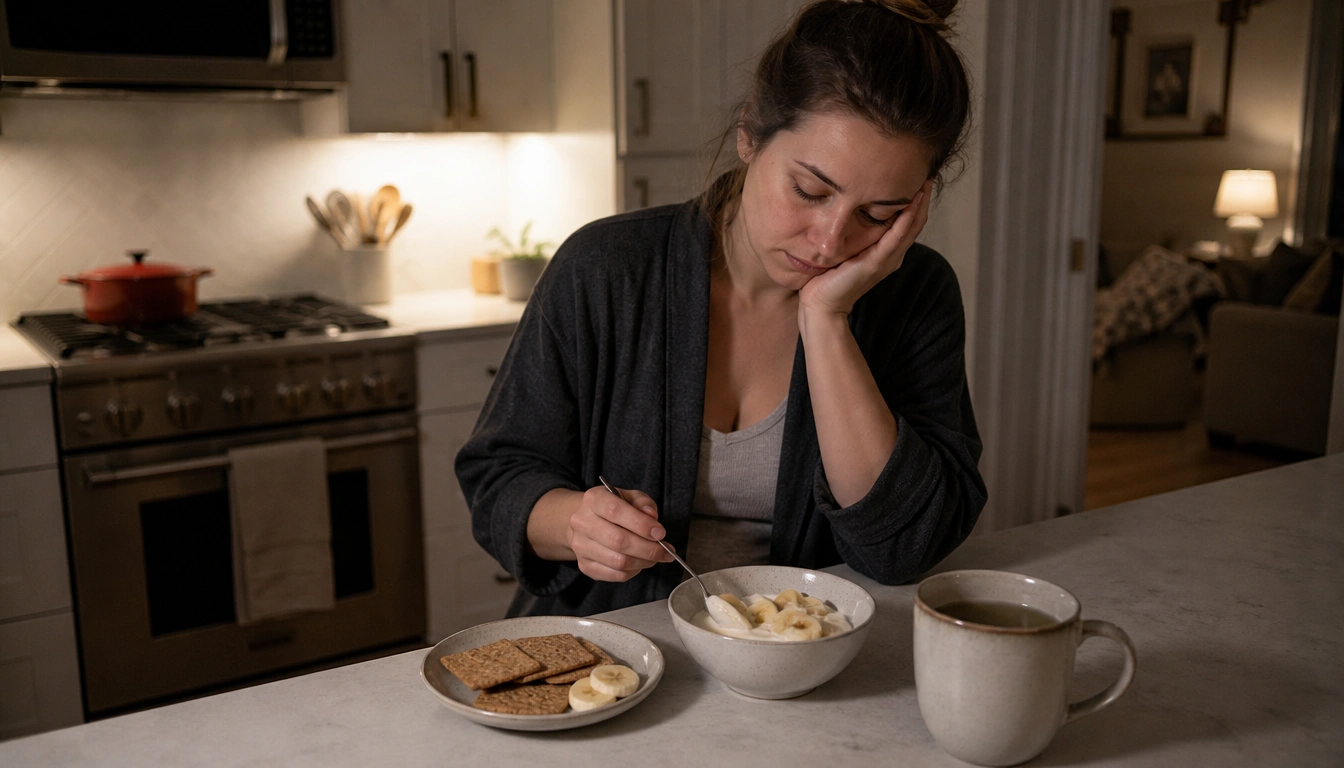
Yes—if you truly need food at night, the best choice is a small, easy-to-digest snack about 1 to 2 hours before bed. Look for a gentle carbohydrate plus protein pairing, such as yogurt and fruit, crackers and cottage cheese, or oatmeal with milk or soy milk. That kind of snack is more likely to satisfy hunger without making sleep worse than a large, greasy, sugary, or spicy late meal.
Key Takeaways
- A bedtime snack works best when it is small, simple, and eaten before you are already lying down.
- Pairing a light carbohydrate with protein can help with satiety and may be friendlier for sleep than sweets alone.
- If you are stressed, overtired, or emotionally depleted, a snack may not fix the problem; a calming ritual may work better.
- Reflux, diabetes, and prediabetes can change which evening foods feel comfortable and appropriate.
- No-cook options are often best for parents: yogurt, fruit, oatmeal, crackers, nuts, and caffeine-free herbal tea.
- Heavy, high-fat, spicy, or very sugary foods are more likely to fragment sleep and trigger discomfort.
Why parents get hungry at night
Late-evening hunger is common for parents because the day often runs on irregular meals, unfinished tasks, and constant interruptions. You may have skipped lunch, eaten in a rush, or gone too long between meals while taking care of everyone else. By the time the house is quiet, your body finally notices the deficit.
Stress adds another layer. After a full day of decisions, noise, and alertness, the brain often wants fast comfort. That can feel like hunger even when the deeper driver is fatigue, frustration, or the need for a transition from “on duty” to “off duty.” If you keep reaching for food at the same time every night, it can also become a habit cue: couch, kitchen, snack, bed.
A helpful first step is to ask one simple question: Would a plain glass of water, a short pause, or a calming ritual make this feeling better? If yes, the issue may be tiredness or stress rather than true hunger. If no, a small snack may be the more supportive choice.
The sleep-friendly snack formula
The most sleep-friendly evening snack is usually small, bland enough to digest comfortably, and built around a calming carbohydrate-plus-protein combination. That pairing is popular because it is satisfying without being heavy. It can help take the edge off hunger while avoiding the sharper blood sugar swings that come from sugary snacks alone.
Carbohydrates and protein also fit the practical needs of an exhausted parent. The goal is not a perfect nutrition formula; it is a snack that feels settled, keeps you from waking up hungry, and does not sit like a brick in your stomach. Warm or room-temperature foods are often easier to tolerate than rich, greasy, or heavily spiced options.
Some parents ask about tryptophan, which is found in foods such as dairy, soy, nuts, and seeds. In simple terms, a modest carb plus a tryptophan-containing food may be a reasonable bedtime pairing because it is consistent with a sleep-supportive routine. You do not need to chase a special “sleep food.” You just need a light snack that feels calm, familiar, and easy to digest.
Best no-cook snack ideas for busy nights
When your energy is low, the best snack is the one you can assemble quickly from ingredients you already have. The most useful options tend to be low-effort, low-mess, and easy to portion.
- Plain yogurt with a little honey or sliced fruit. This is quick, cool, and generally easy to eat after a long evening.
- Oatmeal made with milk or soy milk. A small bowl can feel comforting and more filling than a sugary snack.
- Whole-grain crackers with cottage cheese. This gives you a simple carb-protein pairing with very little prep.
- Banana or kiwi with nut butter. Keep the portion modest so it stays light rather than rich.
- A small handful of nuts, such as walnuts or pistachios, if you need something very fast and you tolerate nuts well.
- Caffeine-free herbal tea, such as chamomile or lemon balm, when you want a warm wind-down but do not really need food.
If you need something especially gentle, think in terms of “small and boring.” That is often better for sleep than trying to turn the snack into a full evening treat. For many parents, the best bedtime snack is the one that takes two minutes, does not create a pile of dishes, and does not invite more eating once it is finished.
When a snack helps and when it backfires
A snack can help if you are genuinely hungry, if your last meal was early, or if you know you tend to wake up hungry overnight. It can backfire if the portion is large, the food is very rich, or you eat right before lying down. Even healthy foods can cause trouble when timing is off.
That timing matters because lying down soon after eating can increase the chance of reflux and make sleep feel more fragmented. High-fat foods are a common problem here because they tend to sit longer in the stomach. So a large bowl of ice cream, a heavy cheese plate, or a greasy leftover meal is less likely to support sleep than a modest snack.
Sugar and caffeine deserve special attention. A candy bar, dessert, sweet coffee drink, chocolate-heavy snack, or caffeinated tea can create a short burst of energy that does not match the body’s need for rest. Highly spicy foods can also be uncomfortable at night, especially if you are prone to heartburn or a sour stomach. If you notice that a snack leaves you more alert, more bloated, or more reflux-prone, that is a sign to scale back the portion, adjust the ingredients, or skip food and use a wind-down ritual instead.
How to choose the right snack fast
When you are tired, a decision filter helps. You do not need a full meal plan; you need a quick way to decide whether to eat, what to eat, and how much.
| What you notice | Best next step |
|---|---|
| Empty, physical hunger | Choose a small snack with carb plus protein, and keep the portion modest. |
| You are tired, wired, or emotional | Try a calming ritual first; food may not solve the feeling. |
| Bedtime is close | Skip large food portions and choose something very light or a warm caffeine-free drink. |
| Your stomach is sensitive | Avoid spicy, greasy, or high-fat foods and keep the snack simple. |
| You expect to wake up hungry | Plan an earlier, balanced snack rather than grazing right before sleep. |
A good rule for parents is to ask: Do I need nourishment, or do I need a transition? If you need nourishment, eat. If you need a transition, use something that changes your state without adding more digestion work. That distinction saves time, reduces indecision, and makes the evening feel less chaotic.
Special considerations for reflux, blood sugar, and stress eating
If you have reflux or are prone to heartburn, the safest evening choice is usually the lightest one you can comfortably tolerate. Even a nutritious snack can feel bad if you eat too close to bed or choose a high-fat version. For some people, dairy is fine; for others, it can feel too heavy at night. Pay attention to your own pattern rather than assuming one food is universally right.
If you have diabetes or prediabetes, the same general principle applies, but portion size and carb quality matter more. A snack that is mostly sugar is more likely to leave you feeling unsettled. A more balanced option with protein or fiber is often a better fit, but individualized medical guidance matters here. If you monitor blood glucose, use your own pattern and your clinician’s advice to decide whether late-night food helps or hurts.
Stress-driven cravings are different from stomach hunger. They often show up as a strong desire for something specific: sweet, salty, crunchy, or comforting. That does not mean you are doing anything wrong. It just means food may be meeting an emotional need, not a hunger need. In those moments, a mug of herbal tea, a warm shower, a few minutes of quiet, or sitting down without screens can help interrupt the loop before you reach for a bigger snack than you actually wanted.
Simple bedtime routine add-ons that can replace snacking
Not every evening hunger signal needs food. Sometimes your body is asking for rest, not calories. A short routine can help bridge the gap between “parent mode” and sleep mode, especially when the urge to snack is tied to exhaustion.
Try a repeatable cue that is easy enough to do even on messy nights. A caffeine-free herbal tea can become a signal that the kitchen is closed. So can a brief stretch, dimming the lights, brushing teeth earlier, or sitting with your feet up for five minutes after the kids are down. These small actions do not sound dramatic, but they can reduce the feeling that the only relief available is food.
If you want a food-free option, make it specific: tea plus a blanket, tea plus reading, or tea plus a shower. The point is to give your nervous system a predictable landing strip. For many busy parents, that predictability is just as helpful as the snack itself.
Quick prep and pantry-staple strategies
The best evening snack plan is the one that survives real life. If you have to search, chop, or cook every night, the habit will probably fall apart on the busiest days. Make the easy choices visible and the tempting heavy ones less convenient.
Keep a few options in reach: plain yogurt, oats, shelf-stable nuts, whole-grain crackers, nut butter, fruit that lasts well, and a caffeine-free tea you actually enjoy. If possible, pre-portion a few snack servings earlier in the week so you are not deciding from scratch when you are already depleted. A small container in the fridge can be enough to prevent a drift toward random grazing.
It also helps to decide in advance what “enough” looks like. That might mean one small bowl, one piece of fruit with a spoonful of nut butter, or one cup of tea. A clear endpoint keeps the snack from turning into a second dinner, which is where sleep often starts to suffer. According to the National Health Service and sleep-focused public health guidance, a light snack earlier in the evening is usually a better fit than eating right as you lie down.
Frequently Asked Questions
What is the best time to eat an evening snack before bed?
If you need a snack, aim for about 1 to 2 hours before bed. That gives your body time to start digestion and may lower the chance of reflux or a restless stomach. Eating right as you lie down is more likely to feel uncomfortable.
Which snacks are most likely to support sleep rather than disrupt it?
Small snacks that combine a gentle carbohydrate with protein are often the most sleep-friendly. Good examples include yogurt with a little fruit, crackers with cottage cheese, oatmeal with milk or soy milk, or banana with a small amount of nut butter.
How can I tell if I’m truly hungry or just stressed and tired?
Physical hunger usually builds gradually and feels broad rather than specific. Stress or fatigue cravings often show up as a strong pull toward sweets, salty snacks, or comfort foods. If a warm drink, a pause, or another calming ritual helps, you may be responding to exhaustion rather than hunger.
What should parents avoid eating at night if they have reflux or blood sugar concerns?
Try to avoid large portions, very fatty foods, heavy spice, and sugary snacks close to bedtime. For reflux, timing matters as much as food choice. For blood sugar concerns, balanced, modest portions are usually a better fit than sweets or late-night grazing.
Are warm drinks like herbal tea a good alternative to food before bed?
Yes. Caffeine-free herbal tea can be a useful substitute when you are not truly hungry but want a soothing transition into sleep. Chamomile or lemon balm tea can become part of a consistent bedtime routine, especially on nights when you mainly need to wind down.
The Bottom Line
If you are genuinely hungry at night, a small snack can help you feel settled without making sleep worse. The safest pattern is usually simple: eat a modest portion, choose an easy-to-digest carb-plus-protein combination, and avoid lying down immediately afterward.
If you are not really hungry, use a calming routine instead of food. Herbal tea, dim lights, a short stretch, or a few quiet minutes can meet the need for transition without adding digestive work. For reflux, diabetes, or persistent nighttime waking, individualized medical guidance matters.
Medical disclaimer
Medical disclaimer: This content is for educational and informational purposes only and is not a substitute for professional medical advice, diagnosis, or treatment. Dietary needs and supplement suitability vary by individual.
Sources
- National Health Service (NHS) — oxfordhealth.nhs.uk. Accessed October 2026.
- National Institutes of Health (NIH) — nih.gov. Accessed October 2026.
