
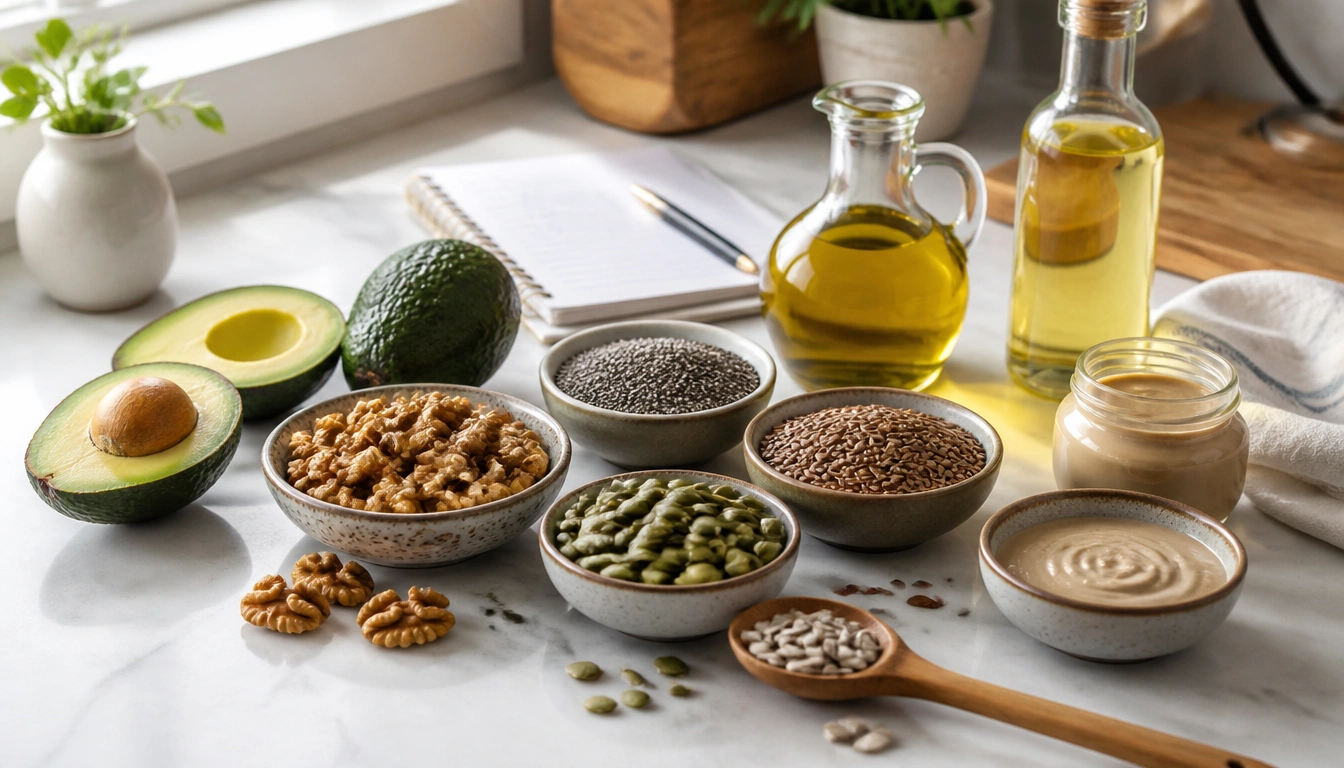
For vegetarian beginners, the best grocery-store fats usually come from whole plant foods and minimally processed oils: avocados, olives, nuts, seeds, natural nut and seed butters, extra-virgin olive oil, canola oil, avocado oil, and small amounts of flax, chia, hemp, walnuts, and pumpkin seeds. These choices give you more unsaturated fat, plus fiber and protective plant compounds, without relying on butter, coconut oil, or highly processed meat substitutes.
Key Takeaways
- Choose whole-food fat sources first: avocados, olives, nuts, and seeds give you unsaturated fat plus fiber, minerals, and antioxidants.
- Keep a few reliable oils on hand: extra-virgin olive oil for dressing, canola or avocado oil for everyday cooking, and flax or walnut oil only for cold use.
- Vegetarian omega-3 needs are usually met with regular servings of flax, chia, hemp, and walnuts, especially if you eat them often.
- Read labels on nut butters, oils, and packaged vegetarian foods for added sugar, hydrogenated oils, and high sodium.
- If you have a nut allergy, seed butters and seeds can fill the gap, but check for cross-contact and ingredient lists carefully.
- Pregnant people, growing children, and athletes may need more energy-dense fats, so portion size and food quality both matter.
What healthy fats mean for vegetarian beginners
For a new vegetarian, healthy fats usually means fats that are mostly unsaturated and come with useful nutrients, not just calories. That includes monounsaturated and polyunsaturated fats from foods such as avocados, olives, nuts, seeds, and plant oils. These fats can help support fullness, hormone production, and absorption of vitamins A, D, E, and K.
The best vegetarian fat choices also tend to fit the matrix effect: they come packaged with fiber, plant sterols, magnesium, and antioxidants. Whole nuts and seeds are not the same as isolated oils, and they are not the same as butter or coconut oil. According to Harvard and the American Heart Association, replacing saturated fats with unsaturated plant fats is a better pattern for heart health than simply adding more fat of any kind.
As you shop, think in three grocery zones. In produce, look for avocados and olives. In the nuts-and-seeds aisle, look for walnuts, almonds, pistachios, chia, flax, hemp, pumpkin, and sunflower seeds. In oils and condiments, look for extra-virgin olive oil, canola oil, avocado oil, and simple nut or seed butters with short ingredient lists.
How to shop aisle by aisle for vegetarian fat sources
Produce: Avocados are one of the easiest starter foods because they are creamy, versatile, and naturally rich in monounsaturated fat. Olives, whether in jars, pouches, or the olive bar, also provide unsaturated fat. If you buy olives, check sodium if you are watching blood pressure or prefer milder flavors.
Nuts and seeds: Walnuts are especially useful because they are a dependable plant source of omega-3 ALA. Almonds, pecans, hazelnuts, and pistachios bring mostly monounsaturated fats, while chia, flax, hemp, pumpkin, and sunflower seeds add a mix of healthy fats, protein, magnesium, zinc, and fiber. For flax, ground flaxseed is the practical choice unless you grind whole seeds at home, because the body absorbs nutrients better from the ground form.
Oils and condiments: Extra-virgin olive oil is a strong default for dressings and low- to medium-heat cooking. Avocado oil and canola oil are flexible everyday options for cooking. Flaxseed oil and walnut oil are better used cold, such as in a finished dressing or drizzled over cooked grains, because heat can damage their delicate fats.
For nut butters and seed butters, aim for products that are mostly the nut or seed itself. A short ingredient list is usually a good sign. Tahini, peanut butter, almond butter, sunflower seed butter, and pumpkin seed butter can all be useful, especially when you want a simple spread or a quick way to add calories and satiety.
How to build a vegetarian fat routine for meals and snacks
Beginners often do better with a few repeatable habits instead of a complete kitchen overhaul. Start by adding one fat source to the meals you already eat. At breakfast, stir chia, hemp hearts, or ground flax into oatmeal, yogurt, or a smoothie. On toast, use avocado or a thin layer of natural nut butter instead of butter or sugary spreads.
For lunch or dinner, dress salads and cooked vegetables with olive oil and lemon or vinegar, then add walnuts, pumpkin seeds, or sunflower seeds for texture. For grain bowls, mix in avocado slices, olives, or a spoonful of tahini-based dressing. For snacks, pair fruit with nut butter, crackers with hummus and seeds, or a small handful of nuts.
The easiest rule is to add fats where they improve taste, texture, and satisfaction without forcing giant portions. That helps you avoid the common beginner pattern of replacing meat with refined carbs and ultra-processed convenience foods that do not feel filling for long.
How much fat and omega-3 matter
Most major health guidance places total fat intake in a moderate range for adults, with a focus on unsaturated fats rather than saturated fats. That does not mean you need to count grams every day. It means your regular choices should favor nuts, seeds, avocados, olives, and plant oils over butter, cream, and tropical oils.
Omega-3 matters because vegetarian diets rely on alpha-linolenic acid, or ALA, from foods rather than fish. The National Institutes of Health lists adequate intake targets for ALA at about 1.6 grams a day for adult men and 1.1 grams a day for adult women. You do not need a supplement to start making progress, but you do need consistency. Flax, chia, hemp, and walnuts are the most practical food-first options.
Because the body converts ALA to EPA and DHA only in limited amounts, it makes sense to include ALA-rich foods often instead of treating them as occasional add-ons. A small daily serving of seeds or walnuts is usually easier than trying to “catch up” with one big serving once a week.
What to limit in the store
Vegetarian shopping gets tricky when a product is technically meat-free but still high in saturated fat or heavily processed. In general, limit coconut oil, palm oil, butter-heavy spreads, and many cheese-forward convenience foods if you are trying to keep saturated fat lower. These foods can fit into an overall diet, but they should not be the main fat sources for a beginner trying to build a heart-friendly pattern.
Also watch for trans fats and partially hydrogenated oils in packaged foods. Even when labels are cleaner than they used to be, some products still use processed fats in baked goods, frostings, snack bars, and shelf-stable spreads. If a label lists hydrogenated or partially hydrogenated oil, choose another option.
Ultra-processed vegetarian burgers, nuggets, and frozen meals can be convenient, but they often bring extra sodium, refined starches, and less favorable fat profiles. That does not mean never buying them. It means making them occasional supports rather than your main strategy for fat, protein, or meal structure.
How to shop with a nut allergy or a tighter budget
If you cannot use nuts, you still have several strong plant-based fat options. Sunflower seed butter is the most common swap for peanut or tree-nut butter. Hemp seeds, pumpkin seeds, sunflower seeds, chia, and sesame products such as tahini can all help fill the gap. These are especially useful for snacks, breakfast bowls, and sauces.
If budget is the barrier, focus on the foods that stretch across multiple meals. A jar of peanut butter, a bag of ground flax or chia, rolled oats, tahini, and canola or olive oil can cover breakfast, lunch, dinner, and snacks with relatively little waste. Store brands are often fine if the ingredient list is short and the product is unsweetened.
For allergy safety, read labels carefully for cross-contact statements, especially on bulk-bin foods and mixed seed products. If you are buying for a family, keep separate knives and jars for peanut, tree-nut, and seed spreads when needed.
Life-stage and lifestyle adjustments
Pregnant people, growing children, and athletes may need more energy-dense foods, and fats can help with that. For those groups, avocados, nut butters, seeds, olives, and oils are useful because they add energy without huge volume. They also make meals more satisfying, which matters when appetite is changing or energy needs are higher.
That said, “more” should still mean better quality, not just heavier foods. For children, use familiar formats such as toast with nut butter, yogurt with seeds, or avocado on sandwiches. For pregnancy, prioritize variety and food safety, and if nausea is a problem, bland fats such as toast with nut butter or smoothies with chia may be easier than large rich meals. For athletes, fats should complement carbohydrate and protein intake rather than crowd them out.
If you have gallbladder disease, pancreatitis, or a medical condition affecting fat absorption or blood lipids, your needs may be very different. In that case, individualized advice from a clinician or registered dietitian matters more than general grocery tips.
How to read labels and build a starter cart
Label reading does not need to be complicated. For oils, choose bottles that list a single oil or a simple blend without added flavors, sugars, or hydrogenated ingredients. For nut butters, aim for short ingredient lists: nuts or seeds, maybe salt, and little else. For packaged vegetarian foods, check sodium, added sugar, and the type of fat used.
A starter cart can be simple: avocado, olives, a bag of walnuts, chia or ground flax, pumpkin or sunflower seeds, natural peanut or sunflower seed butter, extra-virgin olive oil, canola or avocado oil, and tahini. From there, build mix-and-match meals: oatmeal with flax and nut butter, salad with olive oil and seeds, toast with avocado, rice bowls with tahini dressing, and fruit with seed butter.
If you want one practical shopping habit, use it this way: buy one whole-food fat, one seed or nut butter, and two oils each week. That gives you flexibility without filling the kitchen with products you will not use.
Frequently Asked Questions
Which nuts, seeds, and oils are the best everyday vegetarian sources of healthy fats?
For everyday use, the most practical choices are walnuts, almonds, pistachios, chia, ground flax, hemp seeds, pumpkin seeds, extra-virgin olive oil, canola oil, and avocado oil. Avocados and olives are also excellent whole-food options because they bring fiber and other plant compounds along with fat.
How much omega-3 ALA do vegetarian beginners need, and which foods help meet it?
The NIH lists adequate intake targets for ALA at about 1.6 grams a day for adult men and 1.1 grams a day for adult women. Flax, chia, hemp, and walnuts are the easiest food sources to use regularly. You do not need to chase a special supplement routine to start; consistency with these foods matters most.
What fats should vegetarian beginners limit or avoid at the store?
Limit coconut oil, palm oil, butter-heavy spreads, and many highly processed vegetarian snacks and frozen foods if they are your main fat sources. Also avoid products with hydrogenated or partially hydrogenated oils. These choices can push saturated fat and trans fat higher than you probably want.
How do I choose between olive oil, avocado oil, canola oil, and other cooking oils?
Use extra-virgin olive oil for salads and everyday cooking, avocado oil for higher-heat cooking, and canola oil when you want a neutral, versatile option. Flaxseed and walnut oils are better for cold use only. The best oil is usually the one that fits the recipe and that you will actually use consistently.
What should I do if I have a nut allergy and still want healthy plant-based fats?
Use seed-based options instead of nuts: sunflower seed butter, tahini, hemp seeds, pumpkin seeds, chia, and flax are all useful. Read labels for cross-contact, especially on bulk-bin foods and packaged butters. If your allergy is severe, choose products from brands with clear allergen controls.
The Bottom Line
For vegetarian beginners, the healthiest grocery-store fats are usually whole plant foods and simple oils, not butter-heavy spreads or ultra-processed substitutes. Start with avocados, olives, nuts, seeds, natural nut or seed butters, and basic oils such as olive, canola, and avocado oil.
If you want an easy routine, build meals around one fat source at breakfast, one at lunch or dinner, and one snack option you can repeat all week. That makes it easier to meet omega-3 needs, stay satisfied, and avoid overrelying on refined carbs.
If you have a nut allergy, higher energy needs, or a medical condition that affects fat intake, use the same food-first approach but adapt the food choices. A registered dietitian can help you tailor the plan without guesswork.
Medical disclaimer
Medical disclaimer: This content is for educational and informational purposes only and is not a substitute for professional medical advice, diagnosis, or treatment. Dietary needs and supplement suitability vary by individual.
Sources
- National Institutes of Health (NIH) — nih.gov. Accessed October 2026.
- National Health Service (NHS) — www.nhs.uk. Accessed October 2026.
- National Health Service (NHS) — fhft.nhs.uk. Accessed October 2026.
- U.S. Government / Health Authority — realfood.gov. Accessed October 2026.
- Academic Research Institution — harvard.edu. Accessed October 2026.
- Academic / Medical Research Institution — heart.org. Accessed October 2026.
